
 By Evan Lee Salim
A thin slice of fresh, local tuna—brushed with a delicate infusion of yuzu and scotch-bonnet shoyu—is laid atop a bed of crisp escovitch vegetables. As it arrives at the table, the dish feels less like a mere appetizer and more like a briny, edible map of the island. This single bite serves as a micro-history of Grand Cayman: the fiery influence of Jamaican jerk seasoning, the disciplined precision of Japanese tataki technique, the historic acidity of Caribbean escovitch pickles, and the bounty of the local sea. It is a quintessential expression of an island where global influences have, over centuries, settled into a flavor profile that is uniquely, undeniably Caymanian.
The Foundations of a Culinary Capital
This layered culinary identity finds its roots in the shallow, turquoise banks surrounding the island. Teeming with conch, snapper, wahoo, and spiny lobster, the sea has served as the bedrock of both daily life and local gastronomy for generations. However, the island’s palate has never remained static.
Successive waves of immigration have consistently expanded the culinary foundation. Today, residents hailing from more than 130 nationalities call Grand Cayman home, bringing their ancestral traditions into the kitchens of George Town. This demographic shift has transformed the capital into one of the most dynamic, high-concept dining scenes in the Caribbean. The evolution reached a global crescendo when celebrity chef Eric Ripert established the Cayman Cookout along the world-famous Seven Mile Beach. This annual gathering has since become a pilgrimage site for the world’s foremost culinary titans, from José Andrés to the late Anthony Bourdain, cementing the island’s reputation as a destination for the discerning epicurean.
ONE|GT: A New Chapter in Hospitality
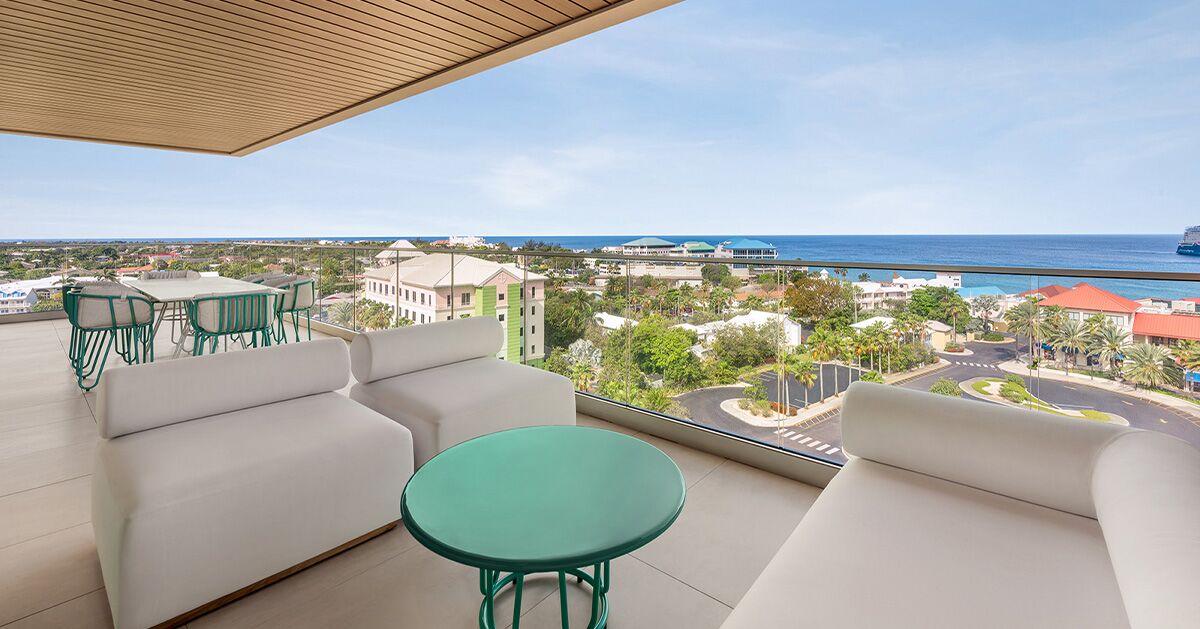
Rising ten stories above Goring Avenue, ONE|GT stands as a deliberate departure from the traditional, sprawling beachside resorts that have long dominated the island’s tourism landscape. As the first property in the Cayman Islands to join the prestigious Small Luxury Hotels of the World portfolio, the hotel offers a refined, vertical approach to luxury that feels like a natural extension of George Town’s historic evolution.
The interiors are a masterclass in local storytelling. Design elements emphasize the island’s maritime heritage through organic textures, custom furnishings, and intricate woven seagrass wall hangings. By showcasing the work of local artists, the space achieves a harmony between modern architecture and the surrounding sea.
The hotel’s culinary strategy further grounds it in its location. Its signature restaurant, Perle, functions as a stage for an open-kitchen concept, serving a seafood-forward menu that highlights local staples—lobster, snapper, and native conch—all paired with an extensive European wine list. For a more eclectic experience, Byō—derived from the Japanese word for "view"—showcases the island’s multicultural palate. The menu features innovations such as lobster-tail maki using Caribbean catch, jerk-chicken wontons finished with a smoky scotch-bonnet mayo, and house-made vegetable chips paired with traditional conch salad. At street level, Café Bellini offers an Italian-inspired reprieve, serving specialty coffees and artisanal pastries to both busy commuters and unhurried travelers.
A Destination Designed for the Long-Stay Traveler
George Town’s reputation as the "Wall Street of the Caribbean" is well-earned. While locals often recount the folklore of the 1794 "Wreck of the Ten Sail"—a legendary event where islanders saved British sailors from a shipwreck, supposedly earning the territory a perpetual tax-free status from King George III—the modern reality is grounded in finance. The city hosts branches of the world’s largest banking institutions, attracting professionals from London, Tokyo, and São Paulo who often reside on the island for extended periods.
ONE|GT was conceived with these "long-stay" visitors in mind. Its 97 condo-style suites, ranging from one- to three-bedroom configurations, bridge the gap between a high-end hotel and a private residence. Each unit features a full-sized kitchen, empowering guests to source fresh ingredients from the local Saturday farmers’ market. The hotel’s pre-arrival grocery-stocking service acknowledges that for the modern traveler, a hotel should function as a home base rather than a rigid, time-bound itinerary.
For the digital nomad, the design is equally intentional. The floor plans provide distinct, ergonomic spaces for work, contrasted by communal zones meant to facilitate total detachment from professional obligations. The property features two distinct pool experiences: the Oasis Pool, nestled under the shade of palm trees, and the island’s first rooftop infinity-edge pool, which offers panoramic views of the capital.
Historical Context: Navigating George Town
While many tourists limit their experience to the white sands of Seven Mile Beach, ONE|GT’s central address encourages a deeper engagement with the island’s history. George Town, historically known as "Hog Sty Bay," served as a vital maritime refuge for centuries.
A short walk from the hotel reveals the Elmslie Memorial Church, an architectural marvel completed in 1922 by legendary local shipbuilder Captain Rayal Bodden. Its interior mahogany ceiling, salvaged from shipwreck timber, is framed to resemble the inverted hull of a sailing vessel—a poignant tribute to the island’s shipbuilding past. Nearby, the Cayman Islands National Museum, housed in an 1830s-era building, curates 9,000 artifacts that detail the intersection of maritime life and political heritage.
Further exploration leads to Pedro St. James Castle. Built in 1780, it stands as the oldest surviving stone structure on the island. It serves as a complex reminder of the colonial era; it was constructed using enslaved labor but later became the site of the territory’s first elected parliament in 1831, and eventually, the location where the proclamation abolishing slavery in the British Empire was read.
Culinary and Cultural Synergy
The spirit of global exchange that defines George Town’s streets is mirrored in the island’s broader culinary ecosystem. The Cayman Spirits Company offers a unique insight into local export innovation with their "Seven Fathoms Rum," which is matured in bourbon barrels submerged 42 feet underwater, where ocean currents provide a natural aging process.
Further afield, establishments like Kaibo on the North Side offer tasting menus centered on seasonal catches, maintaining a legacy that stretches back to Queen Elizabeth II’s 1983 visit. Agua at Camana Bay successfully marries Italian and Peruvian techniques with local seafood, while Jack’s Beach Bar remains a staple for those seeking a more casual afternoon of fish tacos and jerk bowls by the water.
Logistics: Arriving and Navigating Grand Cayman
Accessing the island is streamlined for international travelers. Most visitors arrive at Owen Roberts International Airport (GCM), located just a 10-minute taxi ride from the heart of George Town. The airport is well-served by nonstop flights from major US hubs, including Miami and New York.
Upon arrival, the government-regulated taxi rank ensures transparent pricing, eliminating the uncertainty often found in international transit. While rental cars are available, the walkability of George Town makes many of the city’s historic sites easily accessible on foot. For those wishing to explore beyond the city center, the hotel provides a complimentary shuttle service covering a six-mile radius, including Seven Mile Beach. While ride-sharing apps like Uber and Lyft are not currently operational on the island, the local taxi network remains a reliable, if premium, method of transport for those venturing toward remote attractions like Rum Point or Pedro St. James.
Implications for the Future of Caribbean Tourism
The emergence of properties like ONE|GT signals a shift in the Caribbean travel paradigm. By moving away from the "secluded resort" model and integrating directly into the capital’s commercial and cultural fabric, the hotel provides a blueprint for sustainable, immersive tourism.
The success of such a model implies that modern travelers are seeking more than just a beach; they are seeking a connection to the host culture. Whether it is through the curation of local art, the utilization of local supply chains for culinary programs, or the support of historic preservation, ONE|GT illustrates that luxury and authenticity are not mutually exclusive. As Grand Cayman continues to mature as a global hub, its ability to weave the threads of 130 nationalities into a cohesive, distinct island identity will remain its greatest asset. The result is an experience that is, quite literally, a reflection of the world, brought together by the unique, resilient spirit of the Cayman Islands.
 Nana Wu
  Jia Lissa