
 By Neng Nana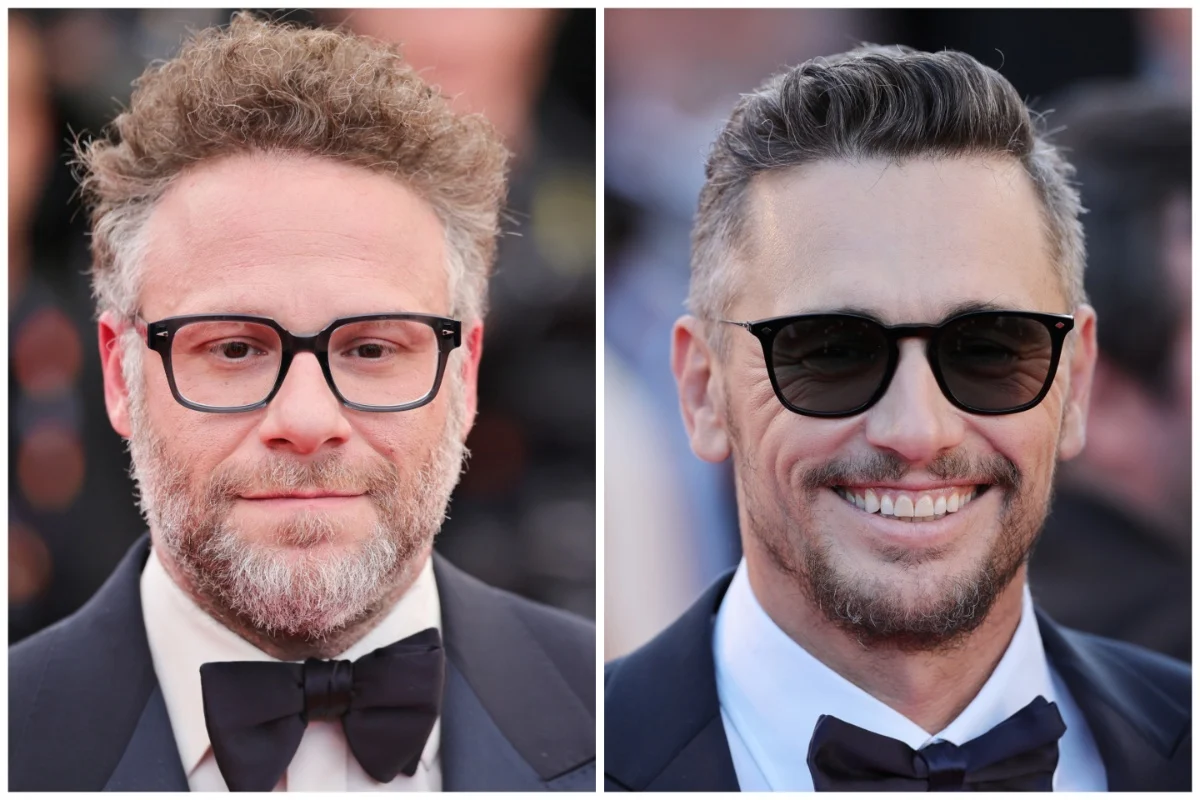
The long-standing creative partnership between Seth Rogen and James Franco—once considered the definitive comedic duo of a generation—has reached a definitive, public impasse. In a recent, candid interview with The New York Times, Seth Rogen confirmed that he has not spoken to his former collaborator in a “long time” and maintains no intention of ever working with him again. This statement serves as the most recent, and perhaps final, punctuation mark on a professional relationship that helped define the raunchy, high-concept comedy landscape of the early 21st century.
The Current Stance: A Firm Professional Divide
During his conversation with Lulu Garcia-Navarro, Rogen was pressed on the state of his personal and professional ties to Franco, particularly in the wake of the sexual misconduct allegations that derailed Franco’s career beginning in 2018. Rogen’s response was measured, acknowledging the complexity of the situation while refusing to leave any ambiguity regarding their future together.
“I honestly think the nuance of it is too personal for me to get into right now,” Rogen told the Times. “It is a very personal thing. There’s the public-facing side of it, which I’ve spoken about, and I have the same stance publicly that I’ve had, and I think the proof is in the pudding—I have not worked with him in years. But the personal side of it is just so nuanced, and it involves people that I don’t know if I should be dragging into this. I don’t know what I would benefit from getting deeply into it. Nothing has changed since the last time I talked about all this.”
When asked directly if the two men still communicate, Rogen provided a blunt, unequivocal: “I haven’t talked to him in a long time, no.”
A History Forged in the Halls of High School
To understand the weight of this estrangement, one must look back to the origins of their collaboration. The bond between Rogen and Franco was forged on the set of the cult classic NBC series Freaks and Geeks. Premiering in 1999, the show served as a launchpad for a new generation of talent. Rogen, then only 16, and Franco, 21, formed an immediate rapport that would become the backbone of their future endeavors.
Following the cancellation of Freaks and Geeks, the duo became inseparable in the industry. They capitalized on their chemistry to create a series of films that defined the “stoner comedy” genre and pushed the boundaries of the R-rated studio blockbuster. Their filmography together reads like a retrospective of modern comedy: Knocked Up (2007), Pineapple Express (2008), This Is the End (2013), and The Interview (2014).
For years, the pair operated as a self-contained creative engine. They were not merely co-stars; they were frequent creative partners who leaned into a brand of improvisational, fraternal humor that resonated deeply with young audiences. Their projects were characterized by a sense of genuine camaraderie, which made their public dissolution all the more jarring for fans of their work.
The Catalyst: Allegations and Accountability
The trajectory of the Rogen-Franco partnership shifted dramatically in January 2018. Following Franco’s Golden Globe win for The Disaster Artist, five women—four of whom were students at Studio 4, the acting school founded by Franco—publicly accused the actor of sexually exploitative behavior.
The allegations were serious and systemic. The women detailed a culture within the school where, they claimed, Franco leveraged his position of power to pressure students into performing increasingly explicit sexual acts on camera under the guise of “auditions” or “professional development.”
In 2019, two of those students, Sarah Tither-Kaplan and Toni Gaal, filed a class-action lawsuit against the actor. The filing alleged that Franco had “engaged in widespread inappropriate and sexually charged behavior towards female students by sexualizing their power as a teacher and an employer by dangling the opportunity for roles in their projects.”
The legal battle continued for two years, ultimately concluding in 2021 when Franco agreed to a $2.23 million settlement. While the settlement did not constitute an admission of guilt, the damage to Franco’s public image and his professional standing in Hollywood was substantial. Projects were shelved, and his once-prolific output slowed to a crawl.
Evolution of a Stance: Rogen’s Growing Distance
Rogen’s current position was not arrived at overnight. In the immediate aftermath of the 2018 allegations, Rogen’s stance was notably softer. In an interview conducted shortly after the accusations broke, Rogen suggested he would be open to working with Franco again, a comment that drew significant criticism from those who felt the industry was failing to hold its stars accountable.
However, as the gravity of the allegations became more apparent and the legal proceedings unfolded, Rogen’s tone shifted. By 2021, in an interview with The Sunday Times, Rogen expressed regret for his earlier, more conciliatory comments.
“I also look back to that interview in 2018 where I comment that I would keep working with James, and the truth is that I have not and I do not plan to right now,” Rogen stated at the time. This was a clear pivot, acknowledging that the public perception—and his own internal assessment—had evolved. He effectively put the possibility of a creative reunion to bed, prioritizing his own reputation and moral alignment over his loyalty to a long-time friend.
Perspectives from the Other Side: Franco’s Response
The silence from Rogen’s end has been noted by Franco as well. In a 2024 interview with Variety, Franco addressed the state of his friendship with the actor. His tone was one of resignation, reflecting a realization that the bridge had been burned beyond repair.
“No. I haven’t talked to Seth,” Franco said. “I love Seth, we had 20 great years together, but I guess it’s over. And not for lack of trying. I’ve told him how much he’s meant to me.”
This disparity in their accounts—Franco expressing a desire for reconciliation, and Rogen expressing a firm commitment to distance—highlights the personal toll of the situation. For Franco, the end of the partnership represents the loss of a foundational professional relationship. For Rogen, it represents a conscious choice to distance himself from a toxic chapter of his career, suggesting that the “nuance” he references is likely the painful process of reconciling his personal affection for a friend with the reality of the harm that friend allegedly caused.
The Broader Implications for Hollywood
The Rogen-Franco saga serves as a microcosm of Hollywood’s ongoing reckoning with power dynamics and accountability. It highlights the difficult position in which many A-list figures find themselves: when a close peer is accused of misconduct, the individual is forced to choose between personal loyalty and the broader social demand for accountability.
In the past, the "boys’ club" mentality of Hollywood often shielded stars from the consequences of their actions, with friends and colleagues frequently staying silent or offering public support to avoid damaging their own reputations. Rogen’s shift from support to silence to total professional dissociation tracks the broader industry movement away from protecting “talent” at the expense of victims.
Furthermore, the public nature of their split serves as a deterrent for future collaborations where such allegations exist. Studios and producers are increasingly risk-averse, and the precedent set by Rogen—who is a major producer in his own right—sends a clear message that there is no longer a “safe harbor” for those tainted by such serious allegations.
Conclusion: The Finality of Silence
The era of Seth Rogen and James Franco as the quintessential Hollywood duo has concluded. What remains is a stark reminder that professional relationships, no matter how iconic or long-standing, are subject to the same moral and legal realities as any other human connection.
Rogen’s latest comments in The New York Times leave no room for speculation. He has moved on, and he has explicitly stated that he has no plans to return to that past. While the “nuance” of their personal history may remain a private matter between the two men, the professional reality is clear: the curtain has fallen on their collaboration, and there is no encore planned.
 Siti Muinah
  Iffa Jayyana
  Ammar Sabilarrohman