
 By Jia Lissa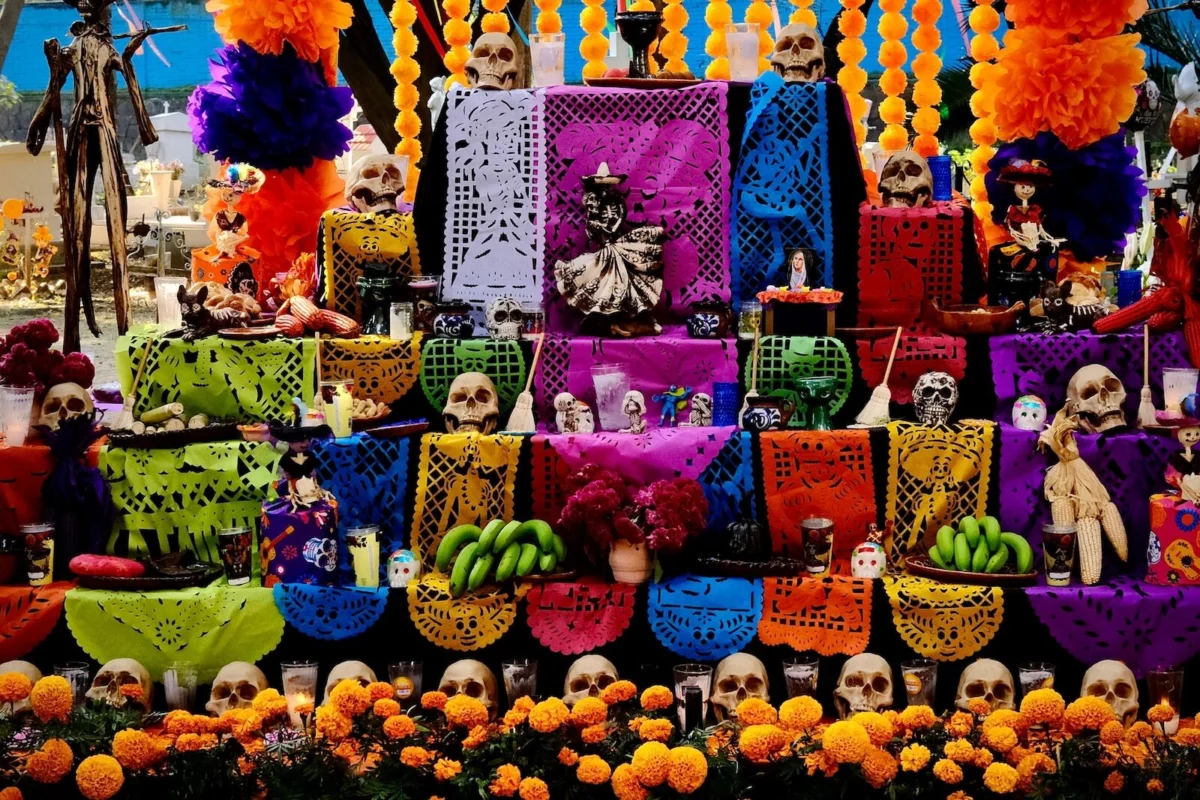
In the vibrant tapestry of Mexican culture, few images are as instantly recognizable—or as deeply misunderstood—as the elegant, skeletal figure known as La Calavera Catrina. Often mistaken for a mere mascot of the Día de los Muertos (Day of the Dead), this iconic lady in the feathered hat is actually a complex fusion of political satire, indigenous cosmology, and artistic evolution. To understand La Catrina is to understand the heartbeat of Mexico itself: a nation that does not fear death, but rather embraces it as the ultimate equalizer.
The Roots of Satire: José Guadalupe Posada’s Vision
The story of La Catrina begins not with religious ritual, but with biting social commentary. In the early 1900s, the Mexican lithographer and printmaker José Guadalupe Posada created a zinc etching of a female skeleton adorned in an ornate, feathered hat. He titled it La Calavera Garbancera.
At the time, the term "garbancera" was a derogatory label for Indigenous Mexicans who renounced their heritage and donned European fashion and customs to appear more "civilized" or wealthy. Posada’s skeletal dame was a stinging rebuke: no matter the hat, the perfume, or the social posturing, she was, at her core, a skeleton.
"La Calavera Catrina is a modern satirical image and symbol reminding us that no matter how much money we might have or our station in life, it is vanity to believe that we are somehow immune to death," explains Dr. Helia Bonilla, founder of the Posada Art Foundation. "The phrase memento mori comes to mind, reminding us to live fully and perhaps that we should live with respect and kindness for each other; after all, we all die."
Chronology: From Newspaper Print to National Icon
The evolution of the Catrina is a centuries-long narrative that bridges pre-Hispanic beliefs with modern identity.
- Pre-Hispanic Era: Long before the arrival of the Spanish, Mesoamerican civilizations—including the Aztecs and Maya—viewed death as a natural phase in the life cycle. Rituals like Miccailhuitontli and Huey Miccailhuitl honored the dead in alignment with the agricultural harvest.
- 1910–1913: Posada publishes his calaveras (skulls) in newspapers, using them to mock the corruption of the Porfiriato era and the societal obsession with Europeanization.
- 1947: Diego Rivera immortalizes the figure in his mural Sueño de una Tarde Dominical en la Alameda Central. By placing her in a grand composition alongside himself, his wife Frida Kahlo, and Posada, Rivera elevates a humble newspaper illustration to the status of high art.
- Mid-20th Century to Present: La Catrina transitions from a satirical caricature to the symbolic face of Día de los Muertos, becoming an emblem of Mexican nationalism and a global cultural phenomenon.
Supporting Data: The Mesoamerican Synthesis
The power of the Catrina lies in how she weaves together the modern and the ancient. Anthropologist Dr. Andrés Medina Hernández of the National Autonomous University of Mexico (UNAM) notes that while the Catrina appears "modern," her resonance is rooted in the deep history of the milpa—the traditional Mesoamerican farming system.
"The fundamental reference point is the bones, which are considered the seed from which life emerges, exactly like maize itself," Dr. Medina Hernández explains. "This is why sugar skulls and breads shaped like bones are so ubiquitous."
This agricultural cycle informs the entire philosophy of the holiday. The Día de los Muertos is not a day of mourning; it is a harvest festival of memory. The offerings (ofrendas) laid out for the deceased serve as a symbolic bridge, a path marked by marigolds and candles, allowing the spirits to return to the living. The skeleton, therefore, is not a symbol of an end, but of a transition—a seed waiting to germinate.
Official Responses and Artistic Reinterpretation
When Diego Rivera painted the Catrina in his 1947 mural, he did more than just depict a woman in a hat; he infused her with layers of pre-Hispanic mysticism. Dr. Bonilla points out that Rivera’s addition of a feather boa—which resembles the plumed serpent, Quetzalcóatl—serves as a bridge to ancient mythology.
"Around her shoulders is a feather boa, but it has a rattle on one end and the head of a snake on the other," Bonilla says. "It’s a rattlesnake, which is known to cause death from its bite. Next, look at the fangs and blood in the mouth of La Calavera Catrina. This depiction, more than anything, connected her to the realm of the dead."
This artistic choice by Rivera solidified the Catrina as a vessel for Mexico’s "layered cultural identity." She became a screen upon which every generation could project its own struggles and celebrations.
Regional Implications: Living Traditions
Today, the legacy of the Catrina is curated across Mexico, each region offering a different perspective on her influence:
Mexico City: The Artistic Heart
The Museo Mural Diego Rivera stands as the primary pilgrimage site for those wishing to see the genesis of the "modern" Catrina. The surrounding neighborhoods, rich with museums like the Museo de Arte Popular, allow visitors to see how the figure has been reinterpreted through folk art and contemporary sculpture.
San Miguel de Allende: The Contemporary Celebration
In the UNESCO World Heritage city of San Miguel de Allende, the Desfile de Muertos y Catrinas serves as a high-energy, contemporary manifestation of the tradition. During the La Calaca Festival, the streets are filled with people in elaborate makeup and couture skeletons, proving that the tradition is not static but a living, breathing performance art.
Aguascalientes: The Satirical Roots
For those interested in the "truth" behind the image, Aguascalientes serves as the historical foundation. The Museo José Guadalupe Posada preserves the original printing plates that birthed the Catrina, offering a somber look at the political turmoil that necessitated such a powerful symbol.
Capula: The Ceramic Renaissance
In the town of Capula, the Catrina has become an economic and cultural engine. The town is famous for its ceramic Catrinas—sculptures that range from small table-top figures to towering, monumental works. As Dr. Medina Hernández notes, "The elements that accompany La Catrina refer to a thousand-year-old history that is reactivated and enriched every time the Festival of the Dead is celebrated."
Conclusion: The Persistence of Memory
The Catrina remains a paradox. She is a reminder of the fragility of life and the inevitability of death, yet she is celebrated with vibrant colors, elaborate costumes, and joyful family reunions. Her transformation from a political jab at 20th-century social climbers to a beloved icon of Mexican heritage illustrates the resilience of culture.
Whether she is depicted as a high-society dame or a simple ceramic figure in a village market, La Catrina continues to hold a mirror to society. She asks us to reflect on our own vanity, to honor our ancestors, and to recognize that, at the end of the journey, we all return to the earth. In this way, she is not merely a symbol of death, but one of the most enduring symbols of life.
 Sagoh
Sagoh  Nana Wu