
 By Lina Hope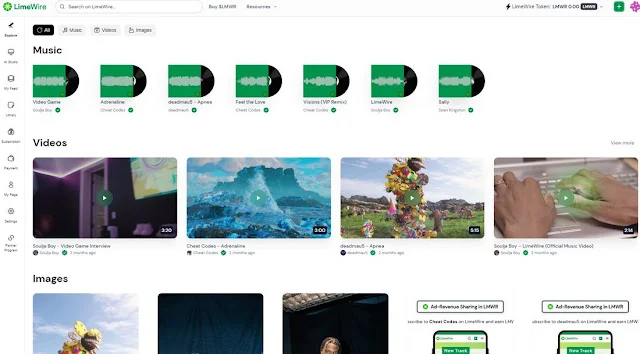
Introduction
The digital landscape is littered with the remnants of early 2000s tech giants, most of which faded into obscurity following the rapid evolution of the internet. Yet, few brands possess the cultural resonance of LimeWire. Once synonymous with the peer-to-peer file-sharing revolution, the brand has undergone a radical metamorphosis. Today, LimeWire has shed its controversial past to emerge as a sophisticated, forward-thinking generative AI studio and content monetization platform. This shift represents more than a rebranding; it is a strategic repositioning at the intersection of artificial intelligence, blockchain technology, and the creator economy.
Main Facts: A New Era for Content Creation
Modern-day LimeWire functions as a comprehensive ecosystem designed for digital artists, musicians, and content creators. Unlike traditional AI generators that merely output images for local storage, LimeWire integrates the creation process with a robust publishing and monetization infrastructure.
At its core, the platform allows users to generate high-quality AI imagery using industry-leading models, including Stable Diffusion 2.1, Stable Diffusion XL, and DALL-E 2. However, the true innovation lies in the "Studio" interface, where these generated assets are seamlessly minted as Non-Fungible Tokens (NFTs) on the Polygon or Algorand blockchains. This transition from raw file to blockchain-authenticated asset grants creators digital scarcity and ownership, transforming a simple prompt-based image into a tradable commodity.
Chronology: The Rebirth of an Icon
The timeline of LimeWire’s resurgence is a study in calculated digital transformation:
- The P2P Era (2000–2010): LimeWire established itself as a household name, facilitating the exchange of music and files globally. Its legacy, however, was defined by legal battles and the subsequent shutdown of its file-sharing operations.
- The Strategic Acquisition (2022): The brand was acquired by Paul and Julian Zehetmayr, who recognized the latent value in the iconic name. They pivoted the business model entirely toward the emerging Web3 and NFT sectors.
- The AI Pivot (2023–Present): Building on its NFT foundation, the platform launched its AI Studio. This phase marked the transition from a passive marketplace to an active content creation hub, integrating generative AI tools to lower the barrier to entry for digital artists.
- The Monetization Expansion: The platform introduced the LMWR token, creating an internal circular economy where creators earn royalties and ad revenue, effectively incentivizing long-term participation.
Supporting Data: The Mechanics of the Platform
The LimeWire ecosystem is built upon a tiered architecture that balances accessibility with professional-grade utility.
Technical Capabilities
The platform’s generative engine is highly modular. Users can move beyond simple text-to-image prompts by utilizing advanced samplers and style modifiers. Whether a user is aiming for the hyper-realism of cinematic photography, the nostalgia of analog film, or the stylistic flair of anime and pixel art, the toolset provides granular control. Future roadmaps indicate the integration of AI-driven music and video generation, signaling a move toward a multimodal content creation suite.
The Economic Model
LimeWire operates on a unique revenue-sharing model that differentiates it from free-to-use competitors:
- Ad Revenue: When users publish content, they are eligible to earn a portion of the ad revenue generated by their posts. This share increases with higher-tier subscription plans, ranging from 50% to 70%.
- Royalty Structure: Every time an NFT created on the platform is traded on the secondary market, the original creator receives a 2.5% royalty. This creates a perpetual incentive for artists to build high-value, collectible content.
- The LMWR Token: All financial activity is denominated in the platform’s native cryptocurrency, LMWR. This token is tradeable on major global exchanges like Kraken, ByBit, and Uniswap, providing liquidity to creators.
Subscription Tiers
To cater to varying levels of creative output, LimeWire offers a tiered pricing structure:
- Free Plan: Provides 10 credits and 50% ad revenue share.
- Pro Plans ($9.99 to $99.00/mo): Scales from 1,000 to 11,250 monthly credits, increased ad revenue participation, and priority access to new, proprietary AI models. These tiers also include functional benefits such as faster generation speeds and the removal of platform advertisements.
Official Responses and Creator Adoption
The platform has gained traction not only among hobbyists but also among established figures in the entertainment industry. Notable artists, including Deadmau5, Soulja Boy, and Sean Kingston, have utilized LimeWire to drop exclusive music and digital content. By providing a "verified" space, LimeWire has managed to bridge the gap between legacy celebrities and the decentralized web.
From the developers’ perspective, the focus is on "democratization." The leadership team has consistently emphasized that the goal is to remove the technical hurdles that once prevented non-technical users from participating in the NFT and AI art space. By automating the minting process and providing a user-friendly interface, LimeWire effectively acts as an entry point for creators who have the vision but lack the coding expertise to interact directly with smart contracts.
Implications for the Creative Landscape
The emergence of a platform like LimeWire has profound implications for the future of digital media.
The Death of the "Passive Consumer"
LimeWire is actively pushing for a future where every consumer is a potential creator. By making AI tools free and accessible, the platform encourages users to stop being passive observers of media and start participating in the production chain. This shift is likely to result in a massive influx of AI-generated content, raising important questions about the nature of copyright and original creativity.
Monetization of AI Art
One of the most contentious issues in the generative AI space is the question of how to compensate human creators when AI models are trained on their work. LimeWire’s model attempts to address this by focusing on the distribution of AI art rather than just the generation. By turning AI images into ownable digital assets and sharing ad revenue, the platform acknowledges the creator’s role as the curator and prompt-engineer of the final output.
The Role of Web3 in Mainstream Media
The integration of Polygon and Algorand blockchains into the background of the user experience is a masterclass in UX design. Most users interact with LimeWire without needing to understand the underlying blockchain mechanics, yet they reap the benefits of decentralized ownership. If this model succeeds, it could set a standard for how social platforms adopt Web3 technology—not as a gimmick, but as a silent, efficient backbone for digital commerce.
Conclusion: Looking Ahead
LimeWire’s evolution from a file-sharing utility to an AI-driven creative powerhouse serves as a case study in corporate reinvention. By aligning its technological roadmap with the two most disruptive trends of the decade—Generative AI and the Creator Economy—LimeWire has carved out a unique space in the digital ecosystem.
As the platform continues to refine its proprietary AI models and expands into the realms of video and audio generation, its influence on how we produce, share, and monetize digital content will only grow. For the aspiring artist, the musician looking for new revenue streams, or the curious tech enthusiast, LimeWire offers a compelling sandbox. The "new" LimeWire is no longer about sharing what others have created; it is about providing the tools to create, own, and profit from the digital future. As we look toward the horizon, the platform stands as a testament to the fact that in the digital age, adaptability is the ultimate competitive advantage.
 Ammar Sabilarrohman
  Ali Ikhwan
  Pevita Pearce