
 By rifanmuazin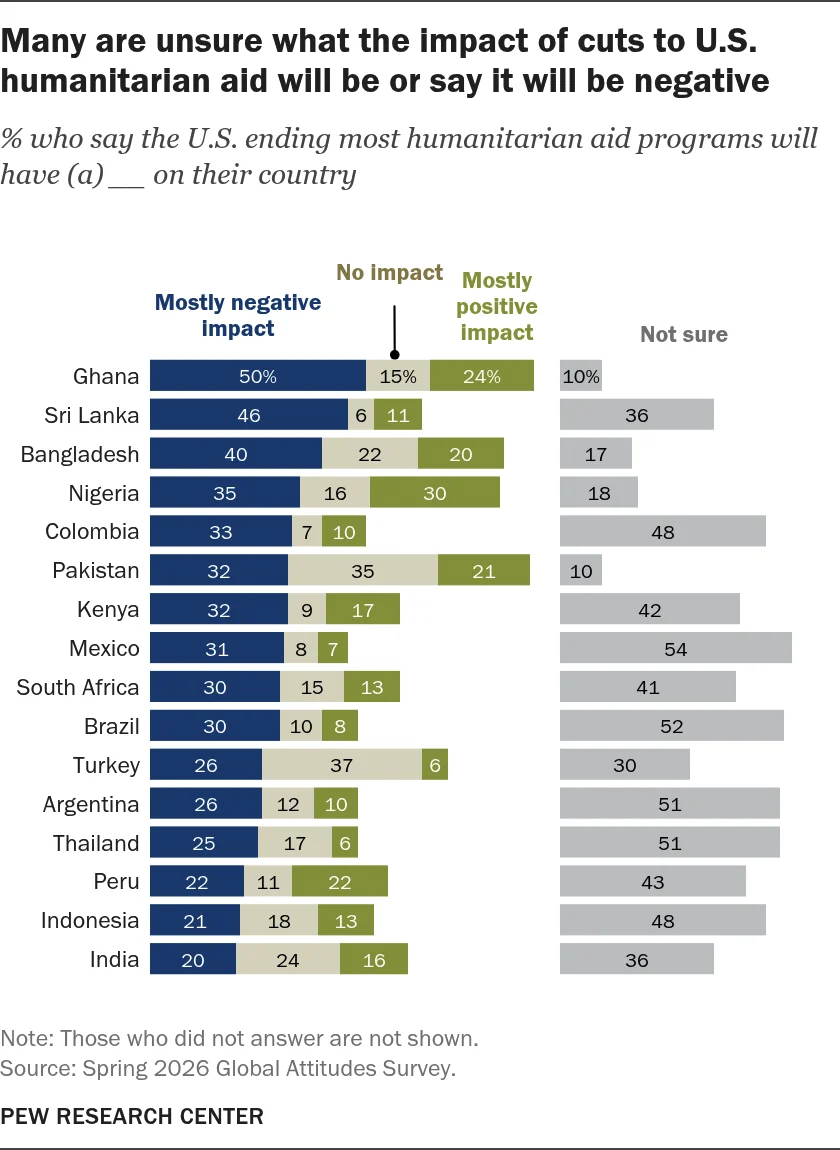
One year after the United States Agency for International Development (USAID) officially ceased operations, the geopolitical landscape remains in a state of profound recalibration. The agency’s closure, a cornerstone of the Trump administration’s “America First” fiscal overhaul, marked the end of an era of American humanitarian hegemony. As the U.S. transitions toward a more isolationist foreign policy, a new comprehensive survey from the Pew Research Center reveals a striking reality: across 16 key middle-income nations, uncertainty regarding the future of humanitarian stability is widespread, and where opinions are formed, they tilt heavily toward the pessimistic.
The dismantling of USAID—and the subsequent absorption of its residual functions into the State Department—was intended to streamline government spending and curb what critics termed “foreign waste.” However, for the millions in the Global South who relied on American-funded medical supplies, food security programs, and infrastructure development, the sudden withdrawal of support has created a vacuum that many local governments are struggling to fill.
The Chronology of Withdrawal: From Global Partner to Strategic Retrenchment
The erosion of U.S. humanitarian aid did not happen overnight, but the final dissolution of USAID in July 2025 served as the definitive coda to a multi-year policy shift.
- Fiscal Year 2024: USAID continued to operate as the primary arm of U.S. soft power, distributing billions in development assistance across the globe.
- Early 2025: The Trump administration accelerated its pivot, signaling a sharp reduction in non-military foreign assistance.
- July 1, 2025: USAID officially shut its doors. Remaining administrative duties were folded into the State Department, signaling a shift where aid would be strictly prioritized as a tool for transactional diplomacy rather than independent humanitarian development.
- Spring 2026: As the dust settled, the Pew Research Center conducted a survey of 20,888 adults across 16 countries to gauge the pulse of nations most affected by these drastic budget cuts.
The fiscal reality is stark. The 16 nations surveyed—ranging from Ghana and Nigeria to India and Mexico—collectively saw their U.S. aid intake plummet from $5 billion in fiscal year 2024 to just over $500 million in fiscal year 2026. This represents a reduction of over 75% for each country, a fiscal shock that has forced local ministries and NGOs to scramble for alternative funding sources.
Supporting Data: A Global Map of Concern
The survey data paints a complex picture of public sentiment. In countries like Ghana, 50% of the population expects a “mostly negative” impact from the U.S. withdrawal. Similarly, in Sri Lanka and Bangladesh, the sentiment is overwhelmingly apprehensive, with 46% and 40% respectively predicting negative outcomes.
Perhaps most telling is the sheer volume of respondents who expressed that they are “not sure” what to expect. In countries like Mexico (54%), Brazil (52%), and Argentina (51%), the majority of the population lacks a clear understanding of the long-term consequences of the aid cuts. This high level of uncertainty suggests that for many of these nations, the U.S. presence was so deeply embedded in the social and medical infrastructure that its absence is not yet fully understood by the average citizen.
In contrast, nations like Pakistan and Turkey exhibit a different trend. A significant portion of their populations—roughly one-third—believe the cuts will have “no impact” at all. This may reflect a long-standing public cynicism toward foreign aid, or perhaps an acknowledgment that, even before the cuts, American assistance was not significantly influencing the daily lives of their citizens.
Implications for Public Health and Stability
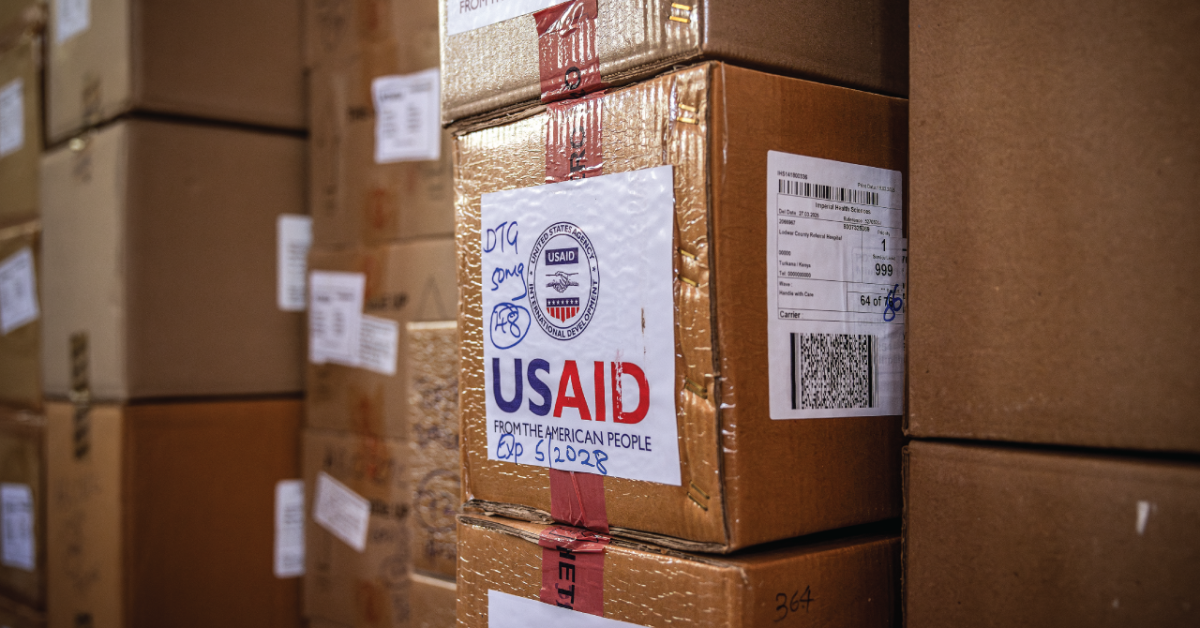
The image of abandoned drug boxes in a pharmacy storeroom in Lodwar, Kenya, serves as a haunting visual metaphor for this transition. When the lifeblood of health programs—vaccines, antiretrovirals, and maternal health resources—is severed, the immediate consequence is often a resurgence of preventable diseases and a spike in mortality rates among the most vulnerable populations.

The survey highlights that when people do form an opinion, they are rarely neutral. In almost every country surveyed, the number of people who believe the aid cuts will have a negative impact significantly outweighs the number of those who see them as a positive development. This perception has direct implications for the U.S. "soft power" index. As the world’s largest donor withdraws, other geopolitical actors—most notably China and the European Union—are being closely watched to see if they will fill the void.
For the United States, this withdrawal is a gamble. The administration’s supporters argue that the domestic economy is the priority and that American tax dollars should not be used for social engineering abroad. However, the loss of goodwill and influence in strategic regions like Southeast Asia, Latin America, and Sub-Saharan Africa may have long-term consequences that outweigh the short-term budgetary savings.
The American Perspective: A Divided Electorate
The Pew Research Center’s data also provides a mirror for American attitudes, which are far from monolithic. A 2025 survey found that while there is skepticism about foreign aid in general, there is deep, persistent support for specific, tangible humanitarian efforts. For instance, 83% of Americans support the provision of medical supplies to developing countries.
There is a disconnect between the political rhetoric in Washington and the humanitarian instincts of the American public. While the political class has moved toward isolationism, a significant portion of the public still views the U.S. role in global health and poverty alleviation as a moral imperative. When asked in a 2023 survey whether aid benefits developing countries, 37% of Americans argued that it provides a mix of benefits and harms, suggesting that the debate is not as black-and-white as the policy decisions might suggest.

Looking Ahead: The Post-USAID Era
The dissolution of USAID is not merely an administrative reshuffling; it is a fundamental transformation of the American footprint on the global stage. As the 16 countries surveyed by Pew grapple with the new reality, the world is waiting to see how this transition affects regional stability, health outcomes, and, ultimately, the global standing of the United States.
The findings from the Spring 2026 Global Attitudes Survey suggest that the "America First" strategy is being felt most acutely in the places where the U.S. was once seen as a reliable partner. In Nigeria, for example, the divergence in opinion between Christian and Muslim populations—with the former being more concerned about the loss of aid—reveals how domestic social fabrics are being strained by the withdrawal of external support.
As the international community monitors the aftermath, one thing is clear: the era of large-scale, U.S.-led humanitarian development has concluded. Whether this leads to a more self-sufficient Global South or a new era of humanitarian crisis remains the defining question of the decade. The data suggests that for those living on the front lines of these cuts, the immediate outlook is one of anxiety, uncertainty, and a palpable sense of abandonment by a partner that once claimed to stand for global progress.
As we move further into the post-USAID landscape, researchers and policymakers will continue to track these metrics. The long-term impact on global health indicators, regional trade, and democratic stability will serve as the final verdict on whether this dramatic retrenchment was a necessary correction or a historic strategic miscalculation. For now, the world remains in a holding pattern, watching to see how the loss of $4.5 billion in annual aid will fundamentally reshape the trajectory of the 16 nations that were once at the heart of the American development mission.
 Pevita Pearce
  Neng Nana