
 By Ali Ikhwan
Few items in the modern grocery landscape command the cultural reverence, economic scrutiny, and fiercely loyal followings enjoyed by the warehouse club rotisserie chicken. For millions of busy households across the United States, these unpretentious, warm birds serve as the ultimate kitchen anchor—a frictionless bridge between a grueling workday and a comforting, budget-friendly dinner.
While supermarkets nationwide offer their own iterations of roasted poultry, the discourse inevitably narrows down to two wholesale titans: Costco and Sam’s Club. Selling millions of birds annually, both retailers have transformed a humble deli staple into a cornerstone of their respective business models. Yet, beneath their nearly identical price tags and comparable three-pound frames lie distinct operational philosophies, seasoning approaches, and culinary identities.
For the money-savvy shopper navigating aisles of bulk goods, choosing between Costco’s Kirkland Signature bird and Sam’s Club’s Member’s Mark rival is more than a casual checkout decision. It is an exploration of flavor, value, consistency, and corporate strategy.
Main Facts
At first glance, the parallels between the Costco and Sam’s Club rotisserie chicken programs are striking. Both warehouse clubs price their birds under the symbolic $5 threshold—Costco steadfastly holding the line at $4.99 since 2009, and Sam’s Club undercutting its competitor by a single penny at $4.98. Both options yield an average weight of approximately three pounds, offering an exceptionally high yield of meat relative to their cost.
However, the divergence begins the moment a consumer unwraps the packaging.
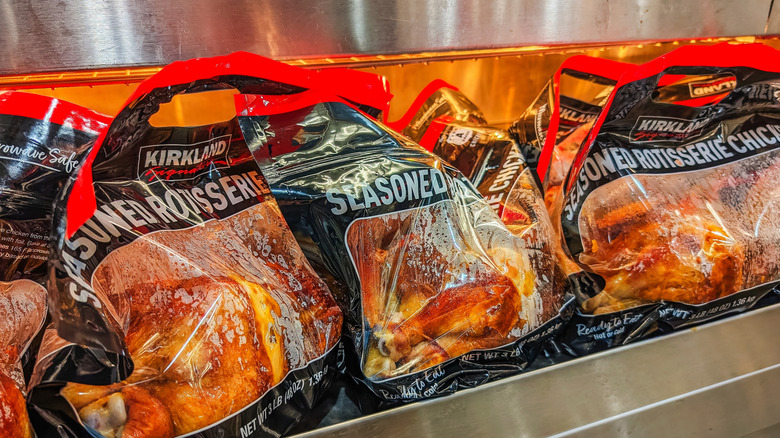
- Costco’s Kirkland Signature Chicken relies on a classic, savory bouillon-style seasoning profile. It is designed to be a blank canvas—neutral enough to be shredded into tacos, tossed into pasta salads, or simmered in chicken soup without clashing with secondary ingredients.
- Sam’s Club’s Member’s Mark Chicken favors a bolder approach, utilizing a paprika-forward rub infused with authentic notes of onion and garlic. This yields a deeply colored, golden-brown skin and a flavor profile robust enough to be enjoyed straight off the bone.
Beyond flavor, consumer testing panels and independent evaluations consistently highlight differences in moisture retention and consistency. While Costco boasts legendary cultural status, independent taste tests—including evaluations by Consumer Reports—have frequently awarded top marks to Sam’s Club for superior juiciness and flavor depth.
Chronology: The Evolution of the Wholesale Rotisserie Chicken
To understand how these two roasted birds became economic and cultural phenomena, it is necessary to examine the historical trajectory that turned a simple deli item into a corporate loss leader.
The Early Decades: The Rise of Supermarket Poultry
Rotisserie chicken was not always a wholesale club staple. Popularized in European markets for decades, mechanical vertical roasting gained traction in American grocery stores during the late 20th century. Initially viewed as a convenient way to merchandise older or surplus whole fryers, grocery stores quickly realized that the aroma of roasting chicken was one of the most powerful olfactory marketing tools available. Foot traffic surged wherever heat lamps glowed.
2009: Costco Locks the Price
The defining moment of the modern warehouse chicken era occurred in 2009. Amid shifting global economies and rising operational costs, Costco made the strategic decision to lock the price of its Kirkland Signature rotisserie chicken at $4.99. As inflation compounded over the next decade and a half, the price remained frozen, turning the bird into an inflation-defying legend and cementing its status as a masterclass in customer retention.
The 2010s: Vertical Integration and Supply Chain Control
As demand soared into the tens of millions of birds per year, relying on third-party suppliers became financially and logistically risky. Costco took the unprecedented step of investing hundreds of millions of dollars into a massive, vertically integrated poultry complex in Nebraska. This facility allowed the company to control every facet of the supply chain—from hatching and feed to processing and delivery—insulating the company from volatile market fluctuations and securing its ability to sell the bird at a structural loss.
The 2020s: The Rivalry Intensifies and Consumer Testing Evolve
In recent years, Sam’s Club elevated its culinary game to challenge Costco’s hegemony. By tweaking its rub formula to emphasize paprika, garlic, and onion, and refining its in-club cooking schedules to minimize the time birds spend drying out under heat lamps, Sam’s Club began winning major comparative taste tests. Publications and consumer advocacy groups began formally pitting the Member’s Mark bird against the Kirkland classic, transforming a quiet grocery run into an active debate over which warehouse club claims the crown.
Supporting Data and Economic Mechanics
The economics of the $5 warehouse rotisserie chicken are a frequent subject of study in business schools and financial journalism. To the untrained eye, selling a three-pound cooked protein for under $5 appears to be a guaranteed path to financial ruin. In reality, these birds function as classic loss leaders.
The Loss-Leader Strategy
A loss leader is a pricing strategy where a product is sold at a price below its market cost to stimulate other, more profitable sales. Neither Costco nor Sam’s Club makes a direct profit on the sale of a rotisserie chicken. When factoring in the cost of the raw bird, packaging, seasoning, labor, electricity for the rotisserie ovens, and ongoing maintenance, retailers routinely absorb losses on every unit sold.
Financial analysts estimate that Costco absorbs tens of millions of dollars annually in gross margins to keep the $4.99 price point intact. Why do they do it?
- Foot Traffic: The aroma and reliability of the cheap rotisserie chicken draw members into the physical warehouses on a weekly, sometimes bi-weekly, basis.
- The "Basket Effect": Consumers rarely leave a warehouse club having purchased only a rotisserie chicken. The psychological comfort of securing a cheap dinner lowers consumer resistance to making additional, higher-margin purchases—such as bulk paper towels, electronics, or clothing.
- Membership Renewals: The rotisserie chicken is viewed by members as a tangible, undeniable perk of their annual membership fee. It serves as perpetual proof that being a club member saves them money.
Comparative Metrics
| Feature | Costco (Kirkland Signature) | Sam’s Club (Member’s Mark) |
|---|---|---|
| Price | $4.99 | $4.98 |
| Average Weight | ~3 lbs or more | ~3 lbs or more |
| Seasoning Profile | Savory, bouillon-forward, basic salt and spice | Paprika-forward, garlic, onion, robust |
| Skin Texture & Color | Thin, moderately crisp, pale to golden | Rich golden-brown, visually caramelized |
| Moisture Consistency | Generally moist, can vary by batch/time under lamps | Highly rated for moisture retention and juiciness |
| Primary Culinary Use | Ideal all-purpose blank canvas for home recipes | Excellent for standalone eating, salads, and soups |
Official Responses and Corporate Strategy
Executives from both parent companies have addressed the intense public interest surrounding their respective rotisserie chicken programs, shedding light on the immense logistical machinery required to keep heat lamps stocked from open to close.
Costco’s Commitment to Price Stability
Costco executives have repeatedly doubled down on their commitment to the $4.99 price point, even when questioned by financial analysts during quarterly earnings calls. Former CEO Craig Jelinek famously noted that when company leadership once suggested raising the price to offset rising costs, co-founder Jim Sinegal responded bluntly: "If you raise [the price of] the rotisserie chicken, I’ll kill you."
To preserve this price without compromising quality, Costco’s multibillion-dollar investment in its Nebraska supply chain serves as the ultimate corporate shield. By cutting out middleman suppliers and controlling grain production, hatcheries, and processing plants, Costco offsets the losses incurred at the deli counter through hyper-optimized upstream efficiencies.
Sam’s Club’s Focus on Taste and Innovation
Sam’s Club, a division of Walmart Inc., approaches its Member’s Mark program with a keen focus on consumer-driven product optimization. Corporate representatives have emphasized that recipe adjustments—such as the incorporation of their signature savory-sweet rub featuring paprika and garlic—are direct responses to member feedback and blind taste panels.
Furthermore, Sam’s Club has leveraged technology within its clubs to optimize inventory flow. By tracking peak shopping hours and adjusting roasting schedules dynamically, Sam’s Club aims to minimize the amount of time cooked birds sit under warming lights, directly addressing the common consumer complaint of dried-out breast meat.
Implications for the Modern Shopper
The rivalry between Costco and Sam’s Club rotisserie chickens extends far beyond corporate balance sheets; it directly impacts how modern consumers manage their time, budgets, and nutrition.
Convenience in a Fast-Paced World
As dual-income households and busy schedules become the norm, the demand for frictionless meal solutions has skyrocketed. The wholesale rotisserie chicken represents the pinnacle of convenience: zero prep time, zero cooking required, and an instant source of lean protein. Whether sliced immediately for a quick weeknight dinner or deboned to fuel meal-prep containers for the week ahead, these birds save consumers hours of kitchen labor.
The Cul-de-sac of Culinary Versatility
Understanding the flavor profiles of each bird empowers shoppers to make choices aligned with their culinary goals:
- Choose Costco if your plan involves heavily seasoning the meat yourself or integrating it into dishes with complex sauces—such as enchiladas, creamy chicken alfredo, or curries—where a neutral, bouillon-forward base prevents flavor clashes.
- Choose Sam’s Club if you intend to eat the chicken straight off the bone, or if you want to elevate simple preparations like chicken salad, grain bowls, or classic chicken noodle soup where the rub’s garlic and paprika notes can shine through.
The Future of Warehouse Loss Leaders
As inflation continues to pressure the global food supply chain, the resilience of the sub-$5 rotisserie chicken remains a marvel of modern retail engineering. While smaller grocery chains have steadily crept their prices upward to $7 or $8 per bird, Costco and Sam’s Club have chosen to absorb the financial blow. For the consumer, this corporate battleground translates into a rare economic victory—a high-protein, ready-to-eat meal that remains blissfully frozen in time.
Ultimately, whether you align with the cult-like devotion of Costco’s Kirkland faithful or champion the well-seasoned excellence of Sam’s Club’s Member’s Mark, the humble warehouse rotisserie chicken remains an undisputed triumph of modern grocery retail.
 Siti Muinah
  Muslim
  Pevita Pearce