
 By Nana Wu
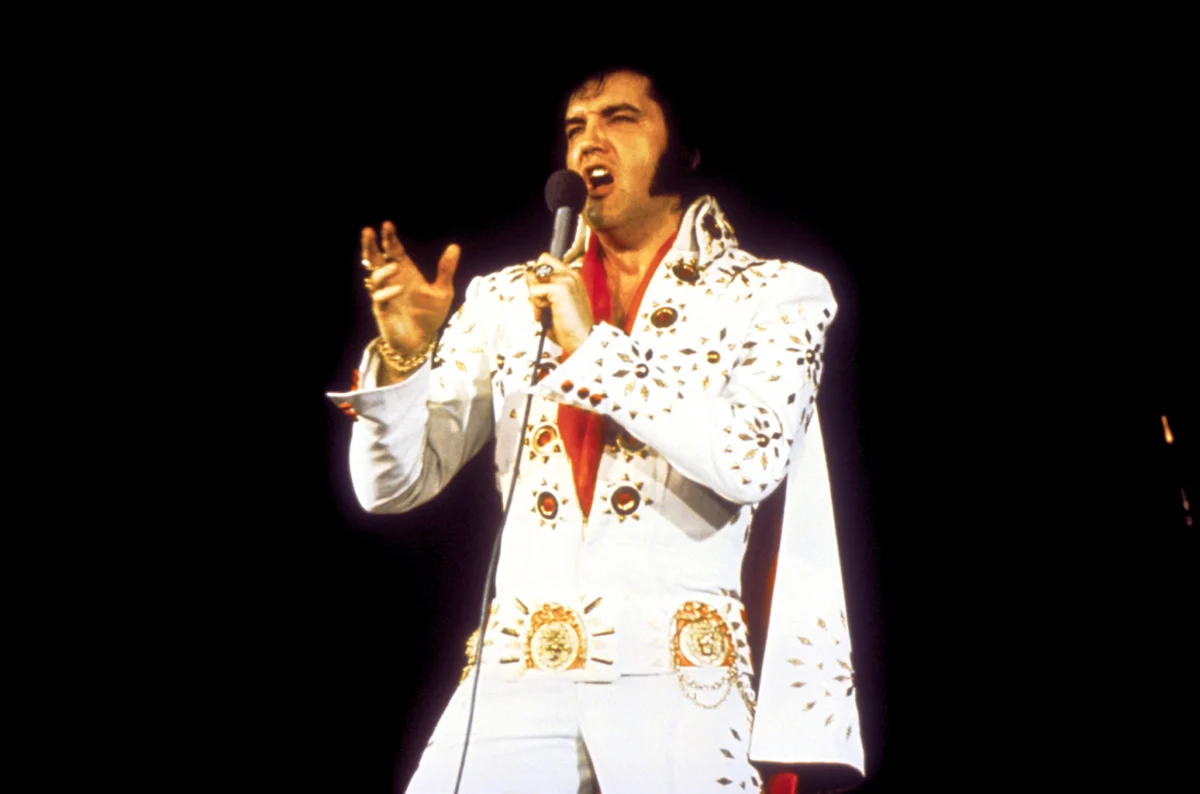
In a move that marks a definitive escalation in the ongoing war between the creative industry and the burgeoning artificial intelligence sector, the estate of Elvis Presley—one of the most commercially and culturally significant figures in music history—has filed a sweeping lawsuit against the tech giant Anthropic. The litigation, initiated late last week, alleges that the AI firm utilized hundreds of the rock-and-roll legend’s iconic songs to train its large language models (LLMs) without authorization, compensation, or attribution.
This legal challenge is not merely a dispute over royalties; it is a fundamental clash between the sanctity of human artistic legacy and the unbridled data-harvesting practices that fuel modern generative AI. By targeting Anthropic—a company currently valued as one of the preeminent leaders in the field—the Presley estate has thrust the debate over “fair use” into the highest echelons of the entertainment industry.
The Core Allegations: A Massive Infringement
The lawsuit, filed on Friday, October 23, asserts that Anthropic’s AI model, "Claude," was built upon a foundation of mass copyright infringement. The plaintiffs, led by a unit of Authentic Brands Group (ABG)—the entity that maintains tight control over the Presley name, image, and likeness—allege that the tech company ingested 274 of the King’s copyrighted compositions.
Among the works cited in the complaint are some of the most recognizable songs in the American canon: “Can’t Help Falling in Love,” “A Little Less Conversation,” “Don’t Be Cruel,” “All Shook Up,” “Return to Sender,” and “(You’re The) Devil in Disguise.”
The legal filing, spearheaded by veteran litigator Richard Busch, pulls no punches. Busch, who famously secured a landmark victory for the Marvin Gaye estate in the Blurred Lines case, frames the lawsuit as an existential necessity. "The Elvis Plaintiffs bring this action to enforce these exclusive rights against the defendant that has built its entire business model based on copyright infringement at a scale never seen before," the filing states. "The Elvis Plaintiffs are deeply protective of these iconic songs."
A Chronology of the AI-Music Conflict
The tension between the music industry and AI developers has been building for years, but 2024 and 2025 have served as a turning point for litigation. To understand the gravity of the Presley lawsuit, one must look at the timeline of the conflict:

- Early 2023: As generative AI tools like ChatGPT and Claude began to gain mainstream adoption, music publishers and labels began raising concerns about the ingestion of song lyrics and metadata into training datasets.
- June 2024: A coalition of major record labels, including Universal Music Group, Sony Music, and Warner Music Group, launched a massive lawsuit against Suno and Udio, the companies behind leading AI music generation platforms.
- Late 2024: Warner Music Group reached a surprise settlement with Suno, signaling a potential shift toward a licensing-based ecosystem. However, litigation between UMG, Sony, and the AI platforms continued to intensify.
- March 2026: Taylor Swift filed for a trademark on her voice and image, highlighting the industry-wide anxiety regarding the unauthorized digital replication of artist personas.
- October 2026: The Elvis Presley estate formally enters the fray, bringing the specific, high-profile weight of a legacy artist to a fight that had previously been dominated by corporate labels.
Supporting Data: The Scale of the Ingestion
The core of the legal argument lies in the technical process of "training." Anthropic, like its competitors, utilizes massive datasets—often containing billions of parameters—to teach its models how to generate human-like text and creative content. The plaintiffs argue that this process involves "ingesting" copyrighted material in a manner that produces unauthorized derivative works.
The lawsuit specifically highlights that the model’s ability to generate lyrics, discuss song structures, and even provide stylistic analysis of Presley’s work is a direct byproduct of the unlawful use of his catalog. By feeding these songs into their models, the plaintiffs argue, Anthropic has effectively commodified the creative labor of Presley and his songwriters, turning a multi-decade career of artistic output into a "free" training resource for a multi-billion dollar tech enterprise.
The Legal Battlefield: Fair Use vs. Ownership
The central point of contention in this, and every other pending AI copyright lawsuit, is the "fair use" doctrine. Anthropic and other AI developers maintain that the ingestion of copyrighted material for the purpose of training a model is "transformative" and therefore protected under U.S. copyright law. They argue that the AI is not simply copying the music, but "learning" from the statistical patterns of language and structure found within it.
The Elvis estate, however, contends that this is a smokescreen for a business model predicated on theft. They argue that the output of these models—often capable of mimicking the style and lyrical cadence of artists—creates a direct market substitute for the original works.
Richard Busch’s involvement brings a specific history of success to the plaintiffs. His experience navigating the complexities of music copyright—from the Eminem digital download cases of the early 2000s to the high-stakes Blurred Lines litigation—suggests that the estate is not merely looking for a settlement, but is prepared to set a new judicial precedent regarding the rights of deceased artists in the digital age.
Official Responses and Industry Reaction
As of the time of publication, Anthropic has remained notably quiet. A spokesperson for the company did not return requests for comment on Saturday, maintaining a strategy often employed by tech firms during the early stages of litigation: silence until the formal court filing response is required.

Industry analysts suggest that Anthropic’s defense will likely hinge on the precedent set by cases involving search engines and large-scale data indexing. However, legal scholars are divided on whether those precedents apply to generative AI, which does not just index content, but actively synthesizes and reproduces the essence of that content in new forms.
Implications for the Future of Music
The implications of the Presley lawsuit extend far beyond the courtroom. If the estate succeeds, it could force a radical restructuring of how AI companies acquire data.
- The Licensing Mandate: A ruling in favor of the Presley estate could effectively kill the "wild west" era of AI training. It would necessitate a system where AI companies must pay for the right to train on music, likely through massive, industry-wide licensing deals similar to those seen in the streaming music market (Spotify, Apple Music).
- The "Persona" Protection: The lawsuit brings the concept of "likeness" into the digital age. If a dead artist’s estate can successfully sue to prevent their music from being used in AI, it sets a massive precedent for how living artists, such as Taylor Swift, can protect their vocal signatures and lyrical styles from being replicated by "voice-cloning" AI models.
- A Consolidation of Power: Critics of the lawsuit argue that if only the wealthiest estates and major labels can afford to sue tech giants, the smaller, independent artists—who are just as vulnerable to AI exploitation—will be left behind. The result could be an ecosystem where only the "biggest" artists are protected by licensing deals, while the rest of the industry struggles to survive against a flood of AI-generated content.
- Cultural Preservation: The Presley estate’s emphasis on the "revolutionary" and "enduring" nature of the music highlights a growing cultural anxiety: the fear that the human history of music is being diluted by synthetic approximations.
Conclusion
The battle between the Elvis Presley estate and Anthropic is more than just a legal skirmish over song lyrics. It is a defining conflict for the 21st-century entertainment industry. As the line between human creation and machine generation continues to blur, the judiciary will be tasked with deciding whether copyright law—designed in the era of printing presses and vinyl records—can sufficiently protect the human soul of music in the era of artificial intelligence.
With the legal heavyweights already lining up and billions of dollars in potential damages hanging in the balance, the industry waits with bated breath. One thing is certain: the King of Rock and Roll is back in the spotlight, and this time, he is fighting to ensure that his legacy remains in the hands of the people who created it, rather than the algorithms that seek to replicate it.
 Lina Irawan
 Lina Hope
 Siti Muinah
