
 By Ammar Sabilarrohman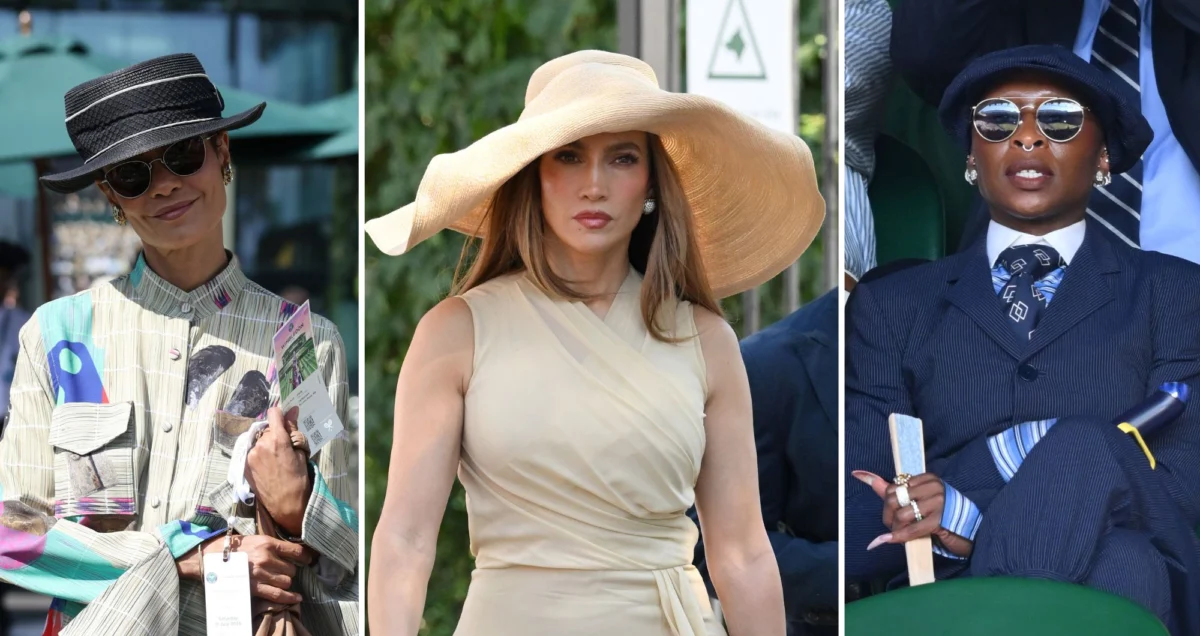
At the 2026 Wimbledon Championships, the most intense battle was not fought on the grass of Centre Court, but rather in the stands, where a sophisticated accessory war played out under the unrelenting glare of a historic heatwave. As temperatures soared past 30 degrees Celsius (86 degrees Fahrenheit) for six consecutive days, the celebrity-studded Royal Box transformed into an impromptu runway for high-fashion sun protection.
From Jennifer Lopez’s architectural, 17-inch wide-brim statement piece to the sharp, structured silhouettes favored by Cynthia Erivo and Thandiwe Newton, the 2026 final weekend proved that the hat—a long-contentious item in the All England Lawn Tennis and Croquet Club’s rigid dress code—has reclaimed its status as the season’s most essential, and controversial, accessory.
The Intersection of Practicality and Pageantry
For the casual observer, the influx of elaborate headwear might have seemed like a simple nod to summer aesthetics. However, fashion historians and style analysts point to a deeper narrative: the convergence of climate-conscious dressing and a burgeoning trend toward architectural elegance.

Jennifer Lopez, arriving for the gentlemen’s singles final in a monochromatic cream Ralph Lauren ensemble, set the tone for the weekend. Her chosen accessory—a hemp-blend wide-brim hat—was more than a mere stylistic flourish. With a sweep of woven material roughly 17 inches in diameter, it functioned as a personal, portable canopy. In a summer defined by record-breaking temperatures in London, the piece was as sensible as it was glamorous.
This duality defined the tournament’s fashion footprint. Wimbledon has historically maintained a "no-hats-in-the-Royal-Box" policy during active play, largely to avoid obstructing the sightlines of fellow guests. Yet, the 2026 heatwave forced a shift in the social contract. Celebrities and royals alike found themselves navigating the balance between the tournament’s traditional etiquette and the sheer physical necessity of sun protection.
A Chronology of the Final Weekend’s Style
The evolution of the "Wimbledon Hat" trend was palpable as the tournament reached its crescendo over the final two days.

Saturday: The Rise of Structure
As the anticipation for the finals built, the fashion tone was set by stars like Thandiwe Newton. Eschewing the floppy, bohemian styles of past summers, Newton arrived in a sharp, black boater hat featuring a shallow crown and a perfectly straight, narrow brim. Paired with a vibrant, printed pleated set by Thebe Magugu, the look served as a masterclass in modern, architectural accessorizing.
Sunday: The Battle of the Silhouettes
By Sunday’s Gentlemen’s Singles Final, the Royal Box was a study in contrasts. Jennifer Lopez opted for maximum coverage with her sweeping Ralph Lauren design, creating a dramatic, sun-shielding halo effect. In direct contrast, Cynthia Erivo showcased the versatility of the trend. She opted for a navy woven piece that sat firmly in the territory between a bucket hat and a cloche. The structured, precise fit of her hat mirrored the refined nature of her pinstriped Ralph Lauren suit and tie, highlighting a move away from casual straw accessories toward more tailored, boutique-inspired headwear.
Meanwhile, industry icons Nicole Kidman and Twiggy leaned into the tournament’s heritage. Kidman’s ivory straw trilby, complete with a classic brown band, provided a nod to the timeless elegance of the event. Similarly, Twiggy leaned into a natural straw fedora, a staple of the Wimbledon aesthetic that has remained a constant throughout the decades, paired with a sophisticated white trouser suit and pink waistcoat.

Supporting Data: The Anatomy of a Trend
The "hat resurgence" at Wimbledon 2026 was not an isolated incident but rather the culmination of a broader shift in luxury fashion. Over the past twelve months, the industry has seen a resurgence in headwear that prioritizes silhouette over simplicity.
According to retail analytics, the popularity of the "structured summer hat"—characterized by stiffened straw, pillbox shapes, and clean lines—has seen a 40% uptick in market interest compared to the previous year. This trend has been driven largely by a "post-maximalist" shift, where consumers are moving away from oversized, logo-heavy accessories in favor of pieces that offer both sun protection and an architectural edge.
The influence of high-profile weddings and red-carpet events has also played a significant role. The "Dua Lipa effect," characterized by bridal-inspired wide-brim hats, has normalized the presence of dramatic headwear in non-beach environments. This has effectively "de-stigmatized" the wearing of hats in formal settings, providing the fashion-forward crowd at Wimbledon with the social license to experiment with larger, more daring pieces.

Navigating the Royal Box: Etiquette and Evolution
The tension between the All England Club’s rules and the celebrity need for style remains one of the most fascinating subplots of the tournament. The Royal Box, the epicenter of status and tradition, explicitly requests that women refrain from wearing hats that could obscure the view of those seated behind them.
This rule has created a unique "hat-removal ritual" among high-profile attendees. Nicole Kidman, who has become something of a case study for this evolving etiquette, demonstrated the perfect compromise during the 2026 final. Upon arriving in the sun-drenched stadium, she kept her trilby on, utilizing it as a shield against the midday heat. Once seated in the Royal Box, she respectfully removed the hat, placing it in her lap.
This behavior highlights a shift in how fashion is consumed in public spaces. It is no longer enough for an accessory to be "on-trend"; it must also be "functional and removable." The designers have responded accordingly, creating hats that hold their shape even after being tucked away for hours, ensuring that the wearer remains photo-ready from the moment they step off the court to the moment they return to the stands.

The Broader Implications for Summer Fashion
What does the 2026 Wimbledon trend mean for the wider world of fashion? The implications are twofold:
- The Death of the "Optional" Accessory: In an era of increasing global temperatures, the hat is transitioning from a decorative finishing touch to an essential piece of daily utility. Designers are now tasked with merging the technical requirements of UV protection with the aesthetic demands of luxury fashion.
- The Return of Formality: The shift toward trilbies, boaters, and structured cloches signals a move away from the "athleisure" dominance of previous years. Even at a sporting event, the appetite for tailored, structured, and deliberate dressing is at an all-time high.
As we look toward the remainder of the summer season, it is clear that the "Wimbledon Hat" has become a shorthand for a specific kind of modern, mindful luxury. It is a look that respects tradition while adapting to a changing climate—a rare instance where the demands of the environment and the dictates of the runway align perfectly.
Whether it was the dramatic shade of Lopez’s wide-brimmed masterpiece or the precise, compact elegance of Erivo’s navy cloche, the message from the 2026 Championships was clear: the hat is back, and it is here to stay. After the most intense, scorching stretch of weather in the tournament’s history, the accessory was no longer just a trend—it was the MVP of the season.
 Neng Nana
  Ali Ikhwan
  Lina Hope