
 By Laily UPN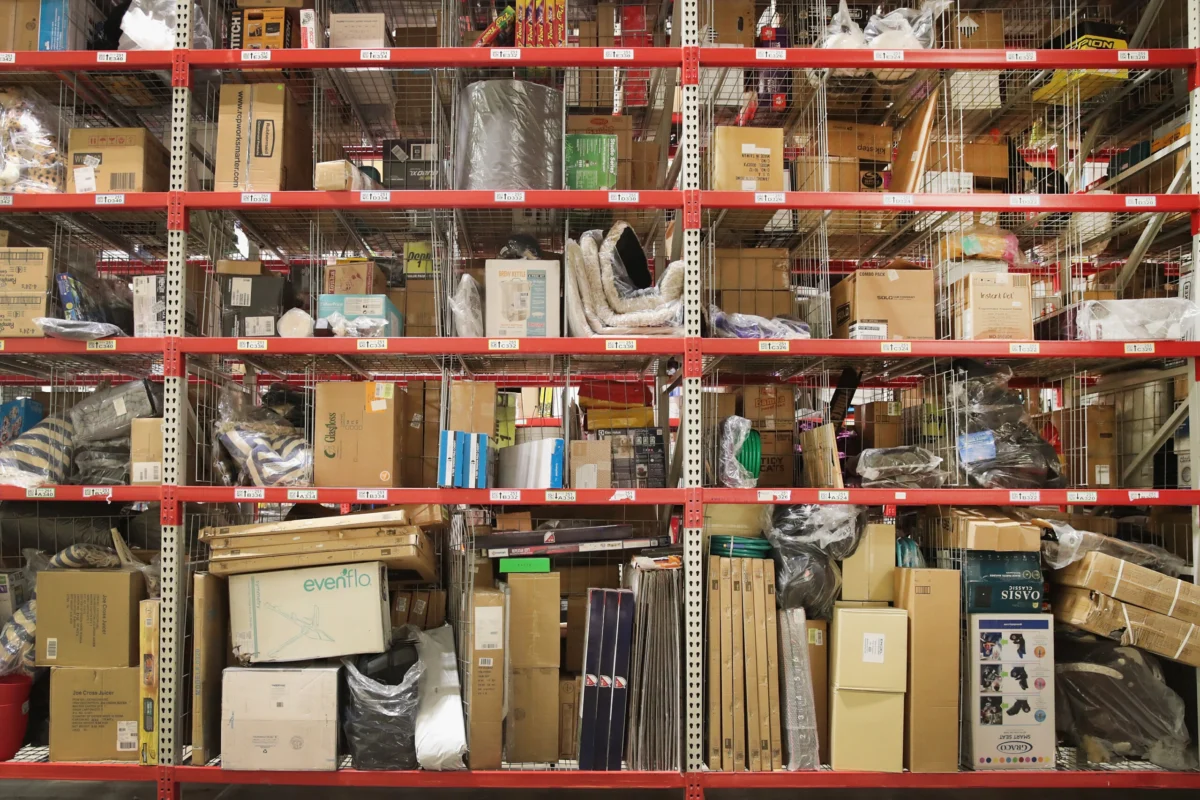
In a climate of shifting trade policies and cooling consumer sentiment, the retail industry is grappling with a precarious inventory paradox. In an attempt to insulate themselves against the looming specter of higher import tariffs, many fashion and general merchandise retailers front-loaded their supply chains, aggressively stockpiling goods. However, this defensive maneuver has backfired, resulting in a “perfect storm” of bloated warehouses and stagnant sales as persistent inflation forces the average consumer to tighten their purse strings.
The current situation is reminiscent of the logistical bottlenecks experienced in the immediate aftermath of the pandemic in 2022. Today, however, the pressures are driven not by supply chain disruptions, but by a fundamental misalignment between corporate strategy and macroeconomic reality.
The Perfect Storm: A Convergence of Pressures
According to Kylee Hall, vice president of marketing at B-Stock—a premier B2B platform facilitating the liquidation of returned, excess, and trade-in inventory—the retail sector is currently witnessing a historic shift in product movement. B-Stock, which operates storefronts for retail giants including Walmart, Costco, Target, and Amazon, manages an annual flow of approximately 140 million units. Its vantage point provides a unique, high-resolution look at the health of the retail ecosystem.
“It’s a bit of a perfect storm,” Hall explained in a recent interview. “Retailers overstocked in a preemptive strike against volatile trade policy. Simultaneously, the consumer is pulling back due to broader economic uncertainty. The result is a system where warehouses are at capacity, and the velocity of goods moving through traditional retail channels has slowed significantly.”
This accumulation has forced a rethink of inventory management, moving it from a standard logistical task to a critical financial survival mechanism.
Chronology of the Inventory Surge
To understand how the industry reached this point, one must look at the timeline of the past 18 months.
Early 2024: The Tariff Fear Index
As rhetoric surrounding potential new trade policies and tariffs began to heat up, retail procurement teams shifted into "protection mode." Fearing that the cost of goods sold would skyrocket due to import levies, companies accelerated their procurement cycles, bringing inventory into their domestic warehouses months earlier than historically required.
Q1 2025: The Wall of Goods
By the first quarter of 2025, the initial shipments began to land. Retailers, anticipating a surge in demand that did not materialize, found themselves with high carrying costs. As inflation remained sticky, consumer spending on discretionary items—specifically apparel and home goods—began to wane.
Q2 2025: The Liquidation Pivot
Between March and May 2025, the data from B-Stock revealed a sharp uptick in surplus goods. While the company typically deals with a mix dominated by customer returns (which usually comprise 75 percent of their volume), that ratio has shifted dramatically toward a 50-50 split between returns and pure overstock. This transition serves as a bellwether for the industry: the problem is no longer just "unwanted goods" being returned by customers, but "unsold goods" that never had a chance to reach the consumer in the first place.
Supporting Data: By the Numbers
The scale of the current inventory surplus is measurable and alarming. B-Stock reports that overstock items flowing through their platform increased by an average of 2 million units per month from March to May 2025 compared to the same period in the previous year.
In May 2025 alone, liquidation volumes rose 20 percent year-over-year. While this data covers a broad spectrum of consumer goods, apparel remains one of the most prominent categories impacted. This surge suggests that retail capacity for inventory is nearing a breaking point, forcing many firms to seek alternative channels for liquidation earlier in the product lifecycle than they would prefer.
The Disparity Between Retail Tiers
A critical nuance in this crisis is the uneven impact across the retail landscape. Hall notes that while the industry as a whole is suffering, the pain is not distributed equally.
Large-scale retailers, such as Walmart, have managed to mitigate some of the damage through what Hall describes as “sophisticated operational footprints.” These entities have the predictive analytics and logistics infrastructure to absorb fluctuations in demand without triggering a full-scale inventory crisis.
In contrast, the middle market and smaller retailers are struggling disproportionately. Without the deep pockets or the advanced supply chain visibility of their larger counterparts, these businesses are more prone to inventory paralysis. For these players, the cost of holding unsold inventory—including warehousing fees, insurance, and the opportunity cost of tied-up capital—is rapidly eroding their thin profit margins.
Implications: Resale as a Strategic Necessity
The ongoing inventory backlog is prompting a significant philosophical shift in how retailers view their secondary markets. Historically, liquidation and resale platforms were viewed as a “last resort”—a way to recoup pennies on the dollar once a product failed to move through primary retail channels.
B-Stock and other industry advocates are now arguing that this mindset is obsolete. In a world where supply and demand can never be perfectly balanced due to unpredictable consumer behavior, fashion trends, and geopolitical trade shifts, resale must be treated as a “strategic channel.”
Moving Beyond the "Last Resort"
If retailers integrate secondary market strategies into their core operations, they can better manage the volatility of the retail cycle. Instead of waiting for a warehouse to reach a breaking point, firms could utilize data-driven liquidation strategies to move overstock efficiently, keeping supply chains fluid and capital circulating.
“Supply and demand is never a perfect science,” Hall noted. “There will always be extra inventory and unanticipated consumer behavior changes. The retailers who succeed in the coming years will be those who view the liquidation of that excess not as a failure, but as a standard, optimized part of their business model.”
The Road Ahead
As the retail industry navigates the remainder of 2025, the focus will undoubtedly shift toward inventory optimization. The "build-up to protect" strategy has proven that while it may mitigate the risk of rising import costs, it introduces a new, equally dangerous risk: the erosion of working capital through inventory stagnation.
The lesson for the industry is clear: the future of retail resilience lies in agility. As trade policies continue to shift and the economic climate remains sensitive to inflationary pressures, retailers must invest in the technologies and partnerships that allow them to pivot quickly. The goal is to transition from a rigid, "just-in-case" inventory model to a dynamic, "just-in-time" liquidation approach.
Ultimately, the companies that thrive will be those that accept the inherent volatility of the market and build a secondary infrastructure that is just as sophisticated as their primary sales channels. In the modern retail environment, the warehouse is no longer just a place to store goods; it is a point of contention that must be managed with as much precision as the storefront itself. Whether this current crisis serves as a catalyst for a more sustainable, circular retail model remains to be seen, but the data suggests that the industry is at a crossroads. The era of the "overstuffed warehouse" must come to an end, replaced by a more strategic, fluid approach to product lifecycle management.
 Nana Muazin
  Nana
Nana  Ali Ikhwan