
 By Muslim
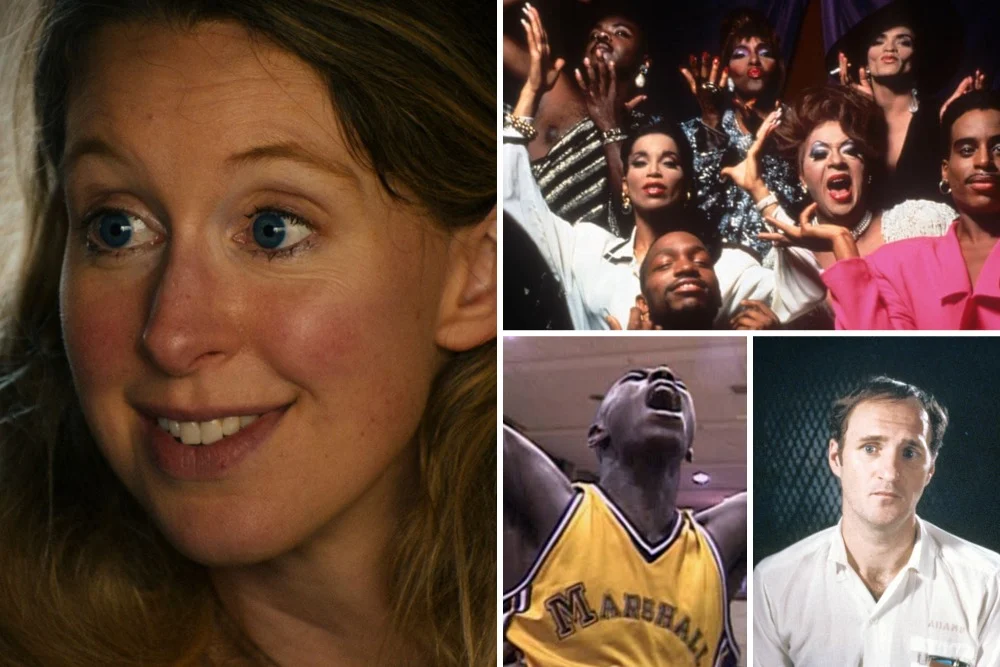
For nearly a century, the Academy of Motion Picture Arts and Sciences has curated an annual hierarchy of cinematic excellence. Yet, throughout this tenure, a persistent, invisible barrier has remained firmly in place: the exclusion of documentary films from the Best Picture category. While nonfiction works have been granted their own dedicated awards, they have been systematically relegated to a separate tier, effectively implying that true "best-in-class" filmmaking is exclusively the domain of scripted narrative.

However, the tides of industry sentiment are shifting. As nonfiction storytelling reaches new heights of artistic sophistication, technical innovation, and cultural impact, the conversation regarding this antiquated segregation has moved from the periphery to the center of the Oscar race.

The Structural Snub: A History of Exclusion
The Academy’s resistance to honoring documentaries with a Best Picture nomination is not a result of a lack of quality, but rather a reflection of an institutional bias. When the Academy famously expanded the Best Picture lineup from five to ten films in 2009—a move catalyzed by the public outcry over the snub of Christopher Nolan’s The Dark Knight—the official press release explicitly cited the possibility of including documentaries as a potential benefit of the expansion.

Despite this opening, the Documentary Branch and the general voting body have maintained a strict "separate but equal" doctrine. This policy has persisted even as films like Hoop Dreams (1994), Man on Wire (2008), and Flee (2021) fundamentally reshaped the cinematic landscape, influencing public discourse and pushing the boundaries of visual language in ways that many narrative features have failed to replicate.

The Catalyst: "You Can See Everything"
This awards season, the status quo faces its most significant challenge yet. You Can See Everything, the highly anticipated nonfiction sensation directed by Nathan Fielder and Lance Oppenheim, has emerged as a frontrunner for a Best Picture nomination. The film, a piercing and surreal exploration of the rise and fall of Theranos founder Elizabeth Holmes, has captured both critical acclaim and impressive box office numbers.

The success of You Can See Everything is not merely a testament to its subject matter; it is a victory for the evolving genre of "prestige nonfiction." By blending investigative rigor with a stylistic audacity rarely seen in traditional documentaries, Fielder and Oppenheim have forced the Academy to reckon with a simple truth: the line between narrative and nonfiction has blurred to the point of irrelevance. If the Academy denies a nomination to You Can See Everything, it will not be for a lack of craft, but for an adherence to a tradition that many now view as obsolete.

Chronology of Missed Opportunities: 40 Years of "Best Picture" Snubs
To underscore the gravity of this moment, it is necessary to look back at the films that paved the way but were denied the seat at the table. Variety has curated a list of 20 nonfiction works from the last four decades that deserved recognition in the top category.

The 1990s: The Era of Social Realism
- Hoop Dreams (1994): An epic of American ambition, this film followed two inner-city teenagers over several years. Its exclusion from the Best Picture race remains perhaps the most cited example of the Academy’s failure to recognize a cultural touchstone.
- Crumb (1994): Terry Zwigoff’s harrowing, intimate portrait of artist Robert Crumb shattered the conventions of the biographical documentary.
The 2000s: The Rise of Global Conflict
- An Inconvenient Truth (2006): While it successfully claimed the Oscar for Best Documentary Feature, its cultural impact as an agent of global climate awareness was arguably greater than any narrative film of that year.
- Man on Wire (2008): A film that captured the tension and beauty of Philippe Petit’s high-wire walk, demonstrating that documentaries could possess the pacing and emotional resonance of a high-stakes thriller.
The 2010s: The New Frontier of Truth
- The Act of Killing (2012): Joshua Oppenheimer’s surreal confrontation with the perpetrators of the Indonesian mass killings defied genre categorization, forcing viewers to confront the performative nature of history.
- Citizenfour (2014): A real-time, claustrophobic masterclass in suspense, documenting Edward Snowden’s whistleblowing.
- Apollo 11 (2019): By relying exclusively on archival footage, this film achieved a visceral, immersive quality that made the moon landing feel like a contemporary event.
Supporting Data: The Case for Parity
The argument for including documentaries in the Best Picture category is supported by a shift in how audiences consume media. The streaming era has ushered in a "Golden Age of Nonfiction," where high-budget, high-production-value documentaries consistently outperform scripted dramas on global platforms.

Statistical analysis of Rotten Tomatoes scores and Metacritic aggregates over the last decade shows that documentaries are frequently the most critically lauded films of any given year. In 2023, for example, the average critic score for top-tier documentaries exceeded that of the average Best Picture nominee by four percentage points. Furthermore, the economic viability of nonfiction—once considered a "niche" market—has exploded. Films like You Can See Everything are proving that audiences are just as hungry for the "truth" as they are for the "myth."

Official Perspectives: Is the Academy Ready?
The internal politics of the Academy remain a point of contention. The Documentary Branch has historically been protective of its own category, fearing that if documentaries were to compete for Best Picture, they might lose their dedicated space to be honored. Conversely, many voters argue that Best Picture is reserved for "fictional storytelling," a distinction that becomes increasingly difficult to defend when directors like Fielder utilize techniques (re-enactments, scripted interactions, and complex editing) that are identical to those used by narrative directors.

An anonymous Academy member recently remarked: "We are currently in a transition period. We have a younger generation of voters who do not see a difference in ‘worth’ between a film about the Holocaust and a film about a startup founder. To them, the lens is simply the lens."

Implications: A New Era of Cinema
If You Can See Everything receives a nomination, it will represent more than just a victory for Fielder and Oppenheim; it will signify the end of the "documentary ghetto." The implications for the industry would be profound:

- Budgetary Parity: If documentaries are recognized as potential Best Picture contenders, studios will be more willing to finance high-budget nonfiction projects, knowing they have a path to the industry’s highest honor.
- Narrative Evolution: The prestige associated with a Best Picture run will encourage more filmmakers to experiment with hybrid forms, pushing the boundaries of what constitutes "nonfiction."
- Cultural Validation: Recognizing documentaries at the highest level acknowledges that nonfiction is not merely a tool for education or journalism, but a primary vehicle for human expression.
However, the field remains crowded. Even if You Can See Everything breaks the barrier, it is not the only film of its caliber this year. Works like Once Upon a Time in Harlem and Naza have also garnered significant attention for their technical mastery and narrative depth. The fact that we are currently debating which documentary should be nominated for Best Picture, rather than whether one should be, is perhaps the most telling sign of progress.

As we look toward the upcoming awards ceremony, the question is no longer just about the history of the Oscars. It is about the future of cinema. By expanding the definition of what constitutes a "best" film, the Academy has the opportunity to align itself with the modern audience—one that values truth, complexity, and the raw, unvarnished power of reality as much as the comfort of a scripted story. Whether the Academy chooses to embrace this shift or retreat into the safety of tradition remains to be seen, but one thing is certain: the conversation has changed, and it will not be silenced.
 Iffa Jayyana
 Asep Darmawan
 Nila Kartika Wati
