
 By Lina Irawan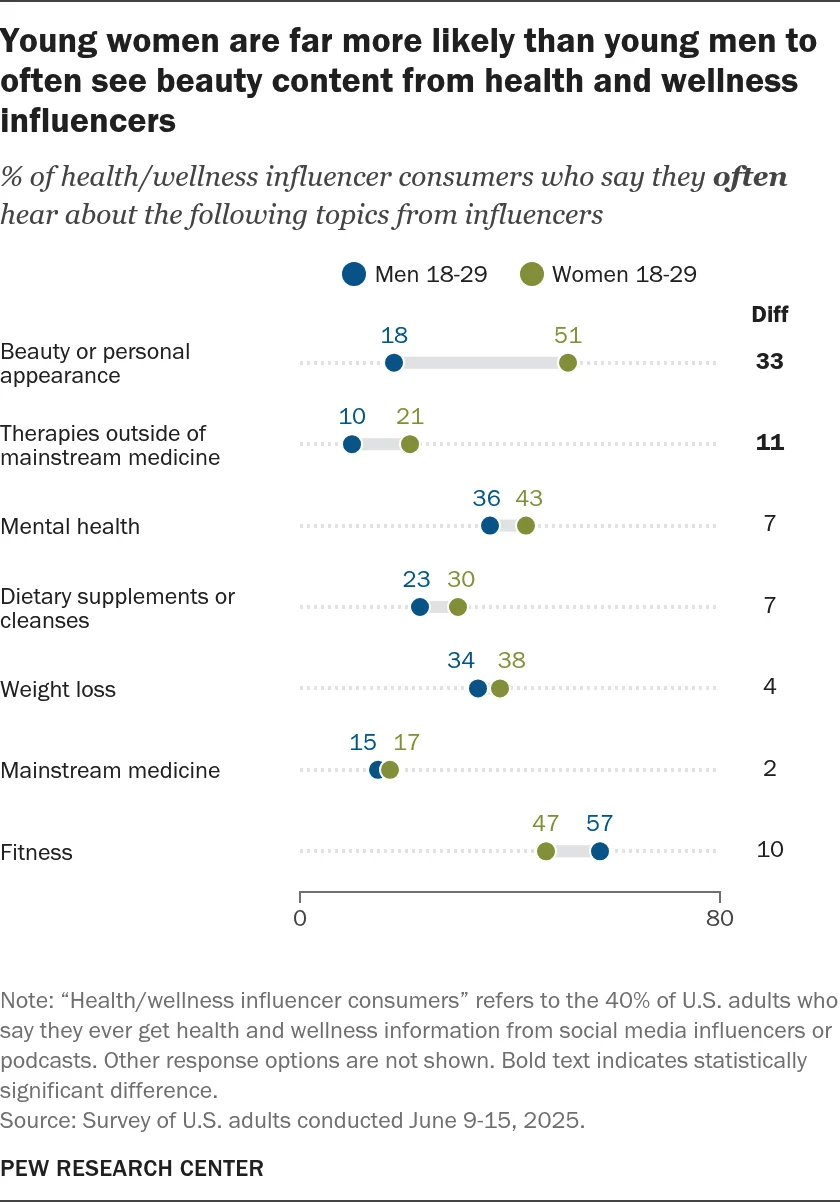
While the traditional doctor’s office remains the bedrock of American medical guidance, a profound shift in how young adults consume health information is underway. In an era defined by digital connectivity, social media influencers and podcasters have emerged as secondary—and increasingly influential—primary care surrogates. According to recent data from the Pew Research Center, the landscape of health communication is fracturing, with millions of young Americans turning to online personalities for advice on everything from fitness and nutrition to mental health and alternative medicine.
This cultural shift raises critical questions about the nature of expertise, the credibility of online information, and the evolving relationship between patient autonomy and professional medical advice.
Main Facts: The Digital Shift in Wellness
The data, drawn from comprehensive surveys conducted by the Pew Research Center in 2025, reveals a clear demographic divide. While medical professionals remain the most trusted and frequent point of contact for health concerns, the "influencer economy" has successfully carved out a significant niche.
Across the board, 40% of U.S. adults report obtaining health or wellness information from social media influencers or podcasts. However, this engagement is not uniform. The most striking finding is the disparity between genders and age groups: young women are significantly more likely to look to digital creators for health guidance than their male counterparts. Specifically, 57% of women between the ages of 18 and 29 rely on these sources, compared to 47% of young men in the same age bracket.

The study indicates that this is not merely a passive trend but a deliberate choice. For many, influencers provide a level of accessibility, relatability, and ongoing engagement that a clinical setting often lacks.
Chronology: Understanding the Research Lifecycle
To capture the nuances of this behavioral change, the Pew Research Center conducted two massive surveys, utilizing the American Trends Panel. The investigative process spanned several months:
- June 2025: The initial survey of 5,023 U.S. adults was launched to establish a baseline for how, where, and why individuals seek health information outside of traditional medical pathways.
- October 2025: A follow-up survey of 5,111 adults was conducted to refine the findings and probe deeper into the specific topics and motivations driving the engagement of younger demographics.
- May 2026: The release of supporting methodology and detailed topline data provided a granular look at the statistical significance of these trends.
- July 2026: Official reporting finalized the analysis, highlighting the specific content categories—such as beauty, mental health, and fitness—that dominate the influencer-follower dynamic.
Supporting Data: What Young Adults Are Consuming
The "content menu" consumed by young followers is vast, yet it reveals clear gendered preferences. For those who consume wellness content, the topics heard are often a mix of lifestyle advice and medical guidance.
The Beauty and Appearance Divide
Perhaps the most notable finding is the chasm between young men and women regarding beauty and personal appearance content. Among those who follow health and wellness influencers, 51% of young women report frequently hearing about beauty or appearance-related topics. In contrast, only 18% of young men report the same frequency. This 33-percentage-point gap suggests that for young women, the line between "health" and "aesthetic" is frequently blurred in the influencer space.

Alternative vs. Mainstream Medicine
The appeal of "alternative" medicine is also notably higher among women. Young women are twice as likely as young men to report hearing about therapies outside of mainstream medicine. However, when it comes to the bedrock of health—mainstream medicine—the engagement is low for both groups, with only 17% of young women and 15% of young men reporting frequent content on this subject.
The Shared Concerns: Fitness and Mental Health
Despite the differences in beauty and alternative therapies, both genders converge on key issues. Both young men and women report high levels of exposure to fitness content, with half or more of each group frequently encountering these topics. Similarly, mental health and weight loss content are staples for both, with at least a third of both groups reporting frequent exposure to these discussions.
The Motivations: Why They Turn to Influencers
Why are young adults bypassing the clinical setting for the digital one? The research suggests several core drivers:
- Desire for Lifestyle Transformation: For 51% of young women, the primary motivation is a desire to make a change in their health or lifestyle. Men, while also motivated, report this at a lower rate of 37%.
- Relatability and Shared Identity: Young women are notably more likely than young men to seek out creators who mirror their own background or personal beliefs (23% vs. 14%).
- Bridging the "Ask Gap": Perhaps most concerning for the medical establishment is the finding that 19% of young women use influencers to learn about topics they feel uncomfortable or unable to discuss with their own doctors. This "ask gap" represents a significant opportunity for healthcare providers to improve patient communication and reduce the stigma surrounding sensitive health topics.
Official Perspectives and Implications
The rise of the "wellness influencer" carries significant implications for public health. While these figures can provide motivation and community, they often operate without the rigorous evidence-based oversight that governs medical practice.

The Role of Medical Professionals
Pew Research Center’s Data Labs, led by Director Aaron Smith, emphasizes that while this digital shift is transformative, the medical profession must acknowledge the void they have left behind. If young adults feel they cannot ask their doctors about certain topics, or if they find the traditional medical experience too sterile or detached, they will continue to fill that vacuum with digital content.
Implications for Future Health Literacy
The findings suggest a need for a more integrated approach. Healthcare providers may need to become more "digitally fluent," understanding the types of information their patients are encountering online. Rather than dismissing influencer content, providers might find more success by addressing these trends head-on—helping patients parse through the misinformation while validating their desire for accessible, relatable health information.
Furthermore, the data underscores a potential public health risk: when alternative, unverified, or commercially driven influencers become the primary source of health advice, the potential for the spread of medical misinformation grows. As the line between "lifestyle influencer" and "health expert" continues to dissolve, the burden falls on both the platforms hosting this content and the consumers themselves to practice higher levels of digital health literacy.
In conclusion, the 2025-2026 data serves as a wake-up call. The next generation of adults is not ignoring their health; they are simply redefining the sources from which they curate their medical reality. Whether this shift will lead to better health outcomes or a new era of medical confusion remains a central challenge for the coming decade.
 Pevita Pearce
  Neng Nana