
 By Asep Darmawan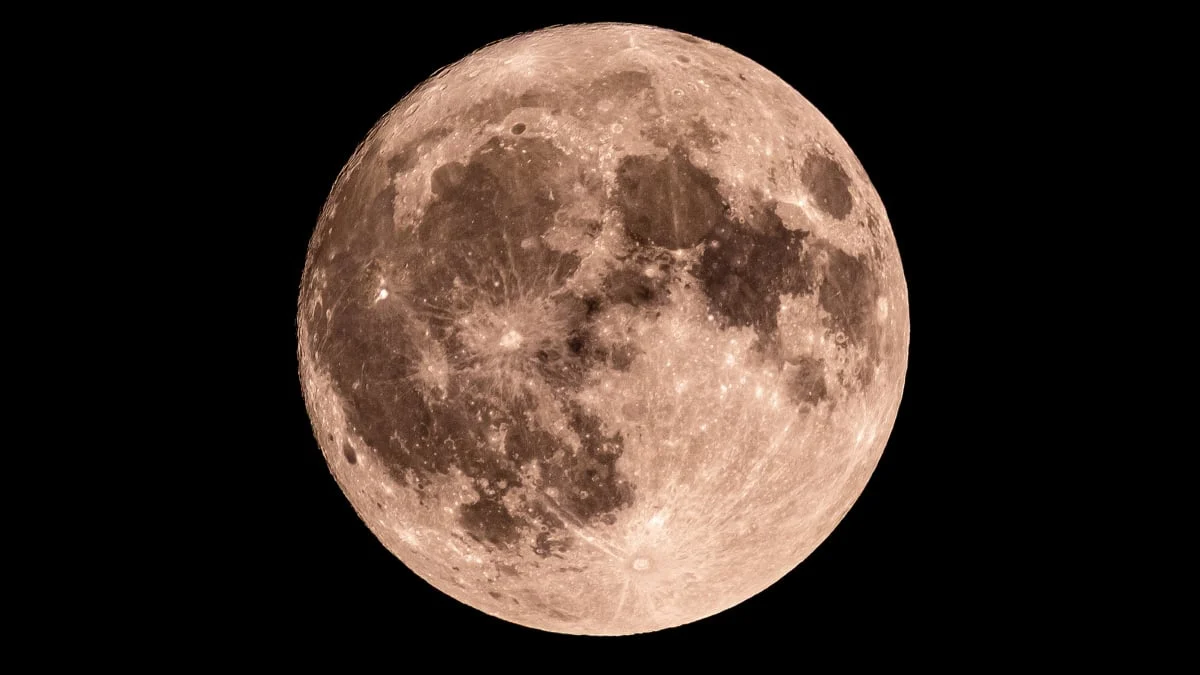
Main Facts: The July 18 Skywatch and Current Illumination
As the night sky clears on Saturday, July 18, stargazers and astronomers worldwide are turning their attention upward to witness the return of lunar illumination. Following a period of near-total darkness during the New Moon phase, the Moon has progressed into its Waxing Crescent phase. According to telemetry data from NASA’s Daily Moon Guide tracker, the lunar surface is currently illuminated at approximately 19%. This specific level of illumination offers an ideal window for observation, as the low angle of sunlight casts long shadows that accentuate the Moon’s dramatic topography.
At 19% illumination, the Moon is visible shortly after sunset in the western sky. For observers utilizing the naked eye, two major lunar maria—large, dark, basaltic plains formed by ancient volcanic eruptions—are clearly visible on the eastern limb of the Moon: Mare Crisium (the Sea of Crises) and Mare Fecunditatis (the Sea of Fecundity).
For those equipped with basic optical aids, such as standard binoculars or a modest backyard telescope, the viewing opportunities expand significantly. The prominent Endymion Crater, located near the northeastern limb of the Moon, becomes a primary target. Its high-contrast shadows provide amateur astronomers with an exceptional look at impact cratering dynamics.
As this celestial cycle progresses, astronomers are also marking their calendars for the next major lunar event: the upcoming Full Moon, which is scheduled to take place on July 29. Until then, the gradual increase in daily illumination will continue to reveal new geological features night by night.
Chronology: The 29.5-Day Lunar Cycle and Phase Progression
To understand the appearance of the Moon on July 18, it is necessary to examine the underlying orbital mechanics that govern our satellite. The Moon completes one full synodic orbit around the Earth in approximately 29.5 days. During this cycle, the Moon progresses through eight distinct phases, determined by its position relative to the Earth and the Sun.
[Sunlight] --->   (New Moon) -> (Waxing Crescent) -> (First Quarter) -> (Waxing Gibbous)
                        |                                                    |
                        v                                                    v
                 (Waning Crescent) <- (Third Quarter) <- (Waning Gibbous) <- (Full Moon)
Although tidal locking ensures that the same side of the Moon (the near side) always faces Earth, the portion of that face illuminated by the Sun changes continuously. The chronology of this 29.5-day cycle is structured as follows:
1. New Moon
The cycle begins when the Moon is positioned directly between the Earth and the Sun. In this alignment, the illuminated side of the Moon faces entirely away from our planet, rendering the lunar disk invisible to the naked eye. This phase represents the astronomical starting point of the lunar month.
2. Waxing Crescent (Current Phase)
As the Moon moves eastward in its orbit, a small sliver of sunlight begins to illuminate the right edge of the disk (as viewed from the Northern Hemisphere). The current phase observed on Saturday, July 18, sits firmly within this window at 19% illumination. This phase is characterized by a thin, crescent shape that grows wider each night.
3. First Quarter
Approximately seven days after the New Moon, the Moon reaches a 90-degree angle relative to the Earth-Sun line. From our perspective, exactly half of the lunar disk is illuminated on the right side. This phase is commonly referred to as a "half-moon."
4. Waxing Gibbous
Following the First Quarter, the illuminated portion continues to expand. During the Waxing Gibbous phase, more than half of the Moon’s face is lit, though it has not yet reached full illumination. The terminator line—the boundary dividing light and shadow—creeps toward the western edge.
5. Full Moon
Occurring roughly two weeks after the New Moon, the Full Moon represents the midway point of the cycle. The Earth is positioned between the Sun and the Moon, allowing the entire near side of the Moon to be fully illuminated. This month, this peak astronomical event will occur on July 29.
6. Waning Gibbous
After reaching peak illumination, the cycle reverses. The Moon begins its return journey toward darkness, losing light on its eastern side. The Waning Gibbous phase shows a slightly diminished disk, with the shadow encroaching from the right side (in the Northern Hemisphere).
7. Third Quarter (Last Quarter)
Opposite to the First Quarter, the Third Quarter phase presents another half-Moon, but with the left side illuminated. This phase rises late in the evening and is highly visible in the early morning sky.
8. Waning Crescent
The final phase of the cycle features a thin sliver of light remaining on the left edge. This crescent continues to shrink daily until the Moon once again aligns between the Earth and the Sun, commencing a new New Moon phase.
Supporting Data: Geological Analysis of Visible Lunar Features
For observers targeting the Moon on July 18, the 19% illumination profile highlights specific geological structures located on the eastern limb of the lunar disk. The lack of overwhelming glare from a fully lit Moon makes this an ideal time for high-contrast imaging and topographical study.
| Lunar Feature | Type | Dimensions (Diameter) | Visibility Level | Recommended Equipment |
|---|---|---|---|---|
| Mare Crisium | Impact Basin / Plain | ~556 km | High | Naked Eye / Binoculars |
| Mare Fecunditatis | Volcanic Plain | ~909 km | High | Naked Eye / Binoculars |
| Endymion Crater | Impact Crater | ~125 km | Moderate | Binoculars / Telescope |
Mare Crisium (The Sea of Crises)
Located in the northern hemisphere near the eastern edge of the Moon, Mare Crisium is an isolated, circular impact basin filled with dark basaltic lava. It spans approximately 556 kilometers in diameter and is famous for its distinct separation from the larger lunar maria networks. Under 19% illumination, the low angle of sunlight catches the wrinkle ridges (dorsa) on the basin’s floor, revealing the volcanic history of the region.
Mare Fecunditatis (The Sea of Fecundity)
Positioned directly south of Mare Crisium, Mare Fecunditatis is a sprawling, irregular lunar plain covering roughly 909 kilometers. The basin floor is relatively thin compared to other maria, but it features fascinating geological formations, including the Langrenus crater on its eastern edge and the Messier crater pairs. At 19% illumination, the eastern rim of this mare is sharply defined, making it an easy target for naked-eye observers.
Endymion Crater
For observers utilizing binoculars or a small telescope, the Endymion Crater is a premier target tonight. Located in the far northeast region of the Moon, north of Mare Frigoris, this ancient impact crater measures 125 kilometers across. It features a dark, lava-flooded floor that matches the reflectivity of the nearby maria. Because it is positioned near the lunar limb, it appears elongated due to foreshortening, adding a unique sense of spherical depth to the observer’s view.
Official Responses and Expert Observation Techniques
Astronomical agencies and planetary scientists emphasize that the transition from a New Moon to a Waxing Crescent offers some of the best viewing conditions of the month.
NASA’s Planetary Science Division frequently notes in its observation guides that many beginner astronomers mistakenly believe the Full Moon is the best time for viewing. In contrast, professional astronomers point out that the intense, direct sunlight of a Full Moon washes out shadows, making the lunar surface appear flat and featureless.
"The terminator line—the moving boundary between day and night on the Moon—is where the real magic happens," states NASA’s Daily Moon Guide team. "Along this line, mountains, crater rims, and valleys cast long, dramatic shadows. On nights like July 18, when the Moon is a 19% crescent, the terminator sits right on the edge of Mare Crisium and Mare Fecunditatis, providing stunning, high-definition views of lunar topography that are completely lost during a Full Moon."
To maximize the viewing experience, astronomical societies recommend the following protocols:
- Avoid Light Pollution: While the Moon is bright enough to be seen from major metropolitan areas, viewing from a dark-sky location will enhance the contrast of the subtle features along the terminator.
- Allow Eyes to Adjust: Spend at least 15 minutes in darkness to allow your eyes to adapt, which aids in detecting subtle variations in the lunar albedo (reflectivity).
- Use Steady Mounts: Even a low-power 10×50 binocular set will benefit from a tripod adapter to eliminate hand tremors, allowing the sharp edges of the Endymion Crater to come into focus.
Implications: From Citizen Science to the Artemis Era
The continuous monitoring of lunar phases and surface features is not merely an aesthetic pursuit for stargazers; it carries significant implications for modern aerospace engineering, planetary science, and the burgeoning commercial space sector.
Operational Planning for Lunar Landers
For robotic missions and commercial landers, such as those designed by NASA contractors under the Commercial Lunar Payload Services (CLPS) initiative, understanding the exact illumination cycles is a matter of mission survival. Most robotic landers rely entirely on solar panels for electrical power.
A 19% Waxing Crescent indicates that sunrise is moving across the lunar surface. Missions targeting the eastern hemisphere must land during these early illumination phases to maximize the 14-Earth-day window of continuous sunlight before the freezing, two-week-long lunar night sets in.
       [Sunlight at 19% Illumination]
                  |
                  v
       +--------------------+
       |  Solar Panels      | ---> Charges batteries for surface operations
       |  On Lunar Lander   |
       +--------------------+
                  |
                  v
       +--------------------+
       |  Thermal Systems   | ---> Prevents instruments from freezing
       +--------------------+
The Artemis Program and Human Spaceflight
As NASA and its international partners advance the Artemis program—which aims to establish a long-term human presence on the Moon—accurate mapping and illumination modeling are critical.
The South Pole of the Moon, a primary target for Artemis III, features areas of permanent shadow alongside peaks of eternal light. Analyzing how light scatters across craters during crescent phases helps scientists refine their models of these challenging polar environments.
Citizen Science and Public Engagement
Finally, the predictable cycle of the Moon serves as a vital gateway for public engagement in STEM fields. By tracking the progression from tonight’s 19% crescent to the July 29 Full Moon, students and amateur scientists contribute to global citizen science projects, such as mapping light pollution and tracking lunar transient phenomena (brief flashes of light or color on the lunar surface).
As humanity prepares to return to the lunar surface, looking up at the Waxing Crescent on July 18 connects modern observers with the same celestial clockwork that has guided explorers for millennia.
 Raul Delapena Setiawan
  Ali Ikhwan
  Evan Lee Salim