
 By Nila Kartika Wati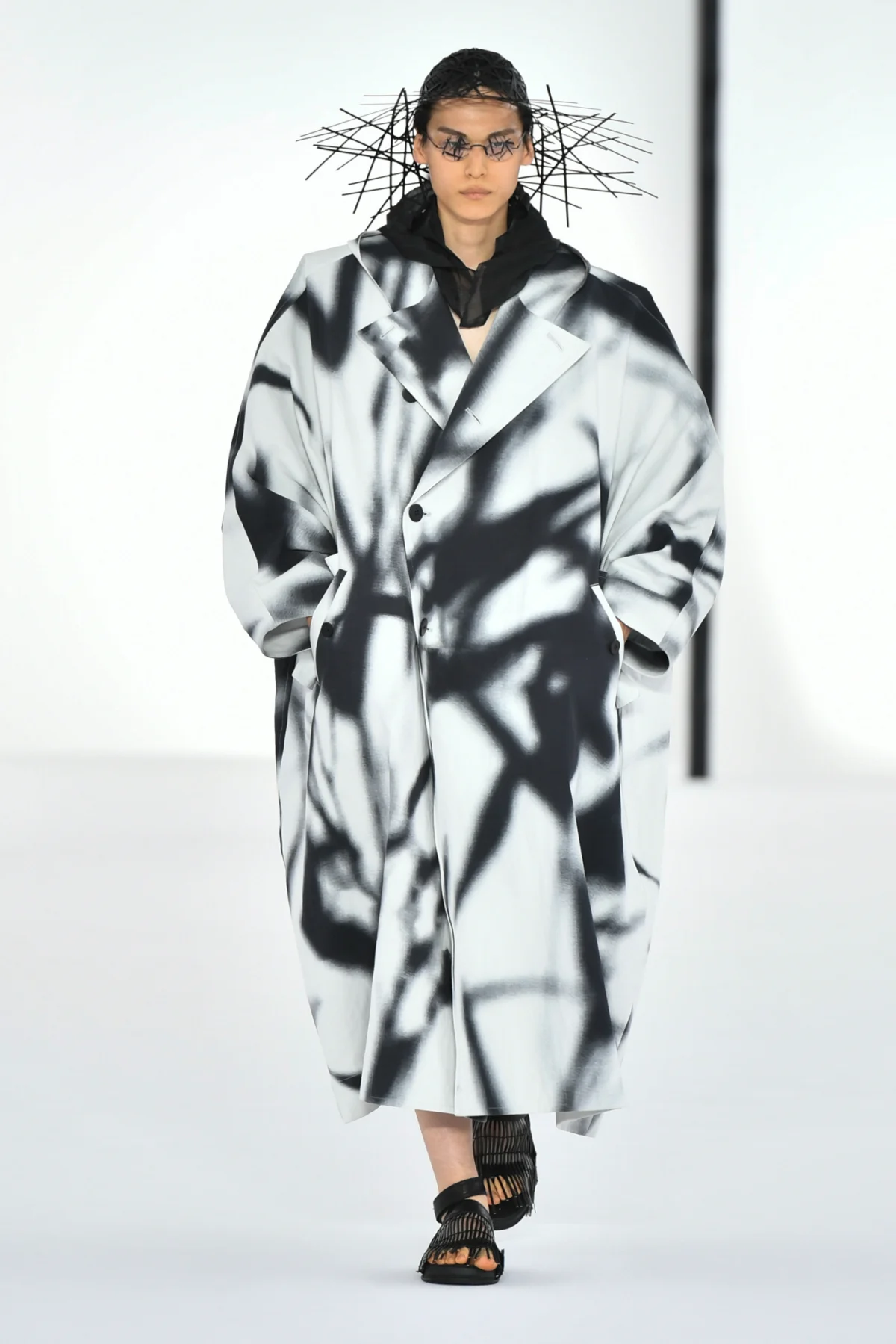
The recent runway presentation from IM Men was more than a mere showcase of seasonal trends; it was a profound meditation on light, shadow, and the intersection of traditional Japanese craftsmanship with contemporary textile technology. By distilling the essence of the bamboo—a plant as resilient as it is aesthetic—the design team at IM Men has curated a collection that feels simultaneously ancient and avant-garde.
The Genesis of an Idea: From Paris to the Atelier
The narrative of this season’s collection finds its origins not in the design studio, but in the hallowed halls of the Musée des Arts Décoratifs in Paris. During a visit to the institution last year, the IM Men design team encountered an exhibition dedicated to bamboo, which served as the intellectual anchor for their latest work.
Central to this inspiration was a katagami—a traditional Japanese stencil used for dyeing textiles—that depicted the intricate, repetitive patterns of bamboo. Sen Kawahara, one of the brand’s core designers, noted that the team was particularly captivated by the black-and-white ink studies of the plant. These works did not merely portray the bamboo itself, but rather the ethereal, dancing shadows cast by the stalks against a backdrop.
"It looks very elegant and at the same time mysterious," Kawahara explained, describing the team’s shift in perspective. "We wanted to translate those feelings and that specific quality of light into the structural integrity of our garments. The collection is an attempt to capture the intangible quality of a shadow."
Chronology: A Journey Through Texture and Tradition
The development of the collection followed a rigorous, multi-staged process, reflecting the brand’s commitment to technical precision.
Phase 1: Material Research and Development
The design team spent months experimenting with fiber composition. The primary breakthrough came with the "Bamboo Shadows" series, which utilized a bespoke blend of bamboo thread woven with organic cotton. This provided the necessary tensile strength to support the collection’s complex silhouettes while maintaining a soft, tactile hand-feel.
Phase 2: Graphic Application
Following the development of the fabric, the designers turned their attention to the visual language of the collection. The team employed hand-printing techniques to replicate the atmospheric, graphic images of bamboo shadows on outerwear. Nobutaka Kobayashi, a fellow IM Men designer, emphasized that these prints were intended to be more than decorative; they were designed to interact with the wearer’s movement, shifting and distorting just as shadows do in the wind.
Phase 3: The Mythological Pivot
Midway through the design process, the team drew inspiration from The Tale of the Bamboo Cutter (Taketori Monogatari). This shift introduced a vibrant color palette, specifically bright pinks and deep, verdant greens. These hues served as a deliberate contrast to the somber, monochrome nature of the "Bamboo Shadows" line. By referencing the ancient, layered kimonos worn by Princess Kaguya—the protagonist of the tale who famously ascends to the moon—the team infused the collection with a sense of otherworldly wonder.
Phase 4: Structural Refinement
The final phase involved the integration of complex pleating and dyeing techniques. Yuki Itakura, another lead designer, spearheaded the development of the "Bloom" nylon jacket. The piece features a dramatic, layered collar inspired by the junihitoe (the twelve-layered ceremonial kimono). The final runway presentation was the culmination of these disparate influences—ink-wash shadows, folklore, and high-fashion engineering.
Supporting Data: The Technicality of the Collection
To understand the complexity of the IM Men collection, one must look at the technical prowess applied to each textile. The brand’s mastery over material is evident in three distinct areas:
- Dye-Flow Technology: Used on the broad-shouldered light nylon garments, this technique allows for a gradient effect that mimics the organic irregularities of natural pigments. The result is a color depth that is rarely achieved in mass-produced synthetic fabrics.
- Jacquard Weaving: The team utilized a specialized jacquard weave to provide the garments with a dimensional, topographical texture. This weave, when combined with the bamboo-cotton blend, allows the clothes to maintain their shape regardless of the wearer’s posture.
- Pleating Architecture: Pleats are a cornerstone of the brand’s identity, but this season, they were used to create volume rather than simply form. The "Bloom" jacket’s collar demonstrates an architectural understanding of space, using pleating to frame the face while maintaining a lightweight, functional structure.
Official Responses and Creative Philosophy
The designers at IM Men are unified by a philosophy that prioritizes "Atmospheric Design." According to Nobutaka Kobayashi, the inspiration drawn from Princess Kaguya was driven by the story’s inherent mystery.
"It is a very imaginative story," Kobayashi noted during the post-show press briefing. "The mystery of the princess returning to the moon—with no explanation, no farewell—is something we wanted to capture. In fashion, as in that story, there is a beauty in the unexplained, the things that simply are."
Sen Kawahara echoed this sentiment, emphasizing that the collection was never intended to be a literal representation of bamboo. "If you try to copy nature, you fail," he said. "If you try to capture the feeling of nature, you succeed. The shadows are more interesting than the plant itself because they are transient."
Yuki Itakura highlighted the collaborative nature of the atelier, noting that the fusion of dyed denim, jacquard, and pleats was a result of cross-disciplinary dialogue. "We don’t work in silos," Itakura explained. "The person working on the dyeing process must understand the pleater’s limitations. The result is a fine-tuned lineup where every element—from the collar height to the density of the ink print—has been vetted for emotional resonance."
Implications: The Future of Atmospheric Fashion
The success of this collection carries significant implications for the direction of contemporary menswear. First, it signals a move away from the hyper-branded, logo-centric fashion of the previous decade toward a more intellectual, research-based aesthetic. Consumers are increasingly seeking garments that tell a story—pieces that function as cultural artifacts.
Second, the use of sustainable, natural fibers like bamboo thread suggests that high fashion is becoming more adept at reconciling luxury with environmental responsibility. The "Bamboo Shadows" line proves that organic materials can be manipulated with the same technical rigor as synthetics.
Finally, the collection re-establishes the importance of folklore and art history in the design process. By pulling from the Musée des Arts Décoratifs and the classical Japanese canon, IM Men has reminded the industry that the most modern ideas are often those that have been filtered through the lens of history.
As the industry looks toward the next season, the IM Men team has set a high bar for thematic coherence. They have demonstrated that a collection does not need to be loud to be impactful. By focusing on the "shadows"—the subtle, shifting nuances of their environment—they have created a body of work that is as enduring as the bamboo that inspired it.
In a fast-paced global market, IM Men remains a bastion of thoughtful design. Their ability to synthesize the ethereal beauty of a shadow with the rigid structure of a pleat is a testament to the fact that, in the right hands, clothing can be much more than a functional utility; it can be an atmospheric experience, a piece of storytelling that lives and breathes on the shoulders of the wearer. Whether the inspiration is a Parisian museum or a moon-bound princess, the brand’s commitment to the intersection of mystery and materiality remains its most compelling asset.
 Nana Muazin
  Nana
Nana  Ali Ikhwan