
 By Azzam Bilal Chamdy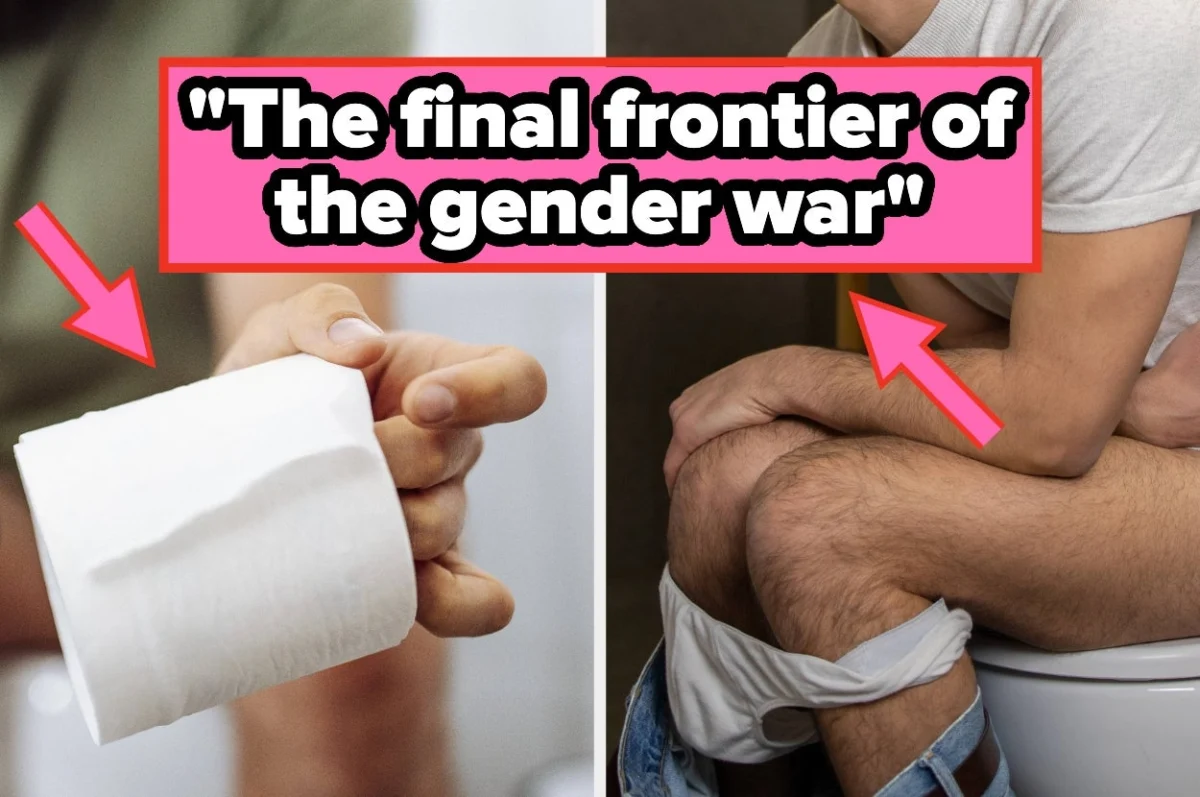
October 7, 2026 — Across households worldwide, a silent, locked-door phenomenon is sparking heated debates among tired parents, marriage counselors, and social media commentators alike. Dubbed “weaponized pooping” by weary mothers navigating the relentless tides of domestic labor, the practice refers to the suspiciously frequent and prolonged bathroom retreats taken by male partners. While the internet remains fiercely divided—with some viewing the behavior as a harmless coping mechanism for the stresses of modern adulthood and others condemning it as a calculated escape from parental duties—the conversation has opened a broader dialogue regarding the unequal distribution of invisible labor and the true meaning of a "private citizen" within a shared household.
Main Facts: Decoding the Phenomenon
The phrase “weaponized pooping” is a direct derivative of "weaponized incompetence," a well-documented psychological and sociological concept where an individual consciously or unconsciously performs a task poorly—or avoids it altogether—so that someone else will step in and assume the responsibility. In the context of domestic dynamics, the bathroom serves as a uniquely powerful sanctuary.
According to relationship experts and viral essays penned by exasperated parents, the primary weapon of the modern bathroom escapee is its "almost unlimited plausible deniability."
The baseline biological reality—that a human being genuinely needs to use the restroom—makes the act nearly impossible to challenge or question. However, the controversy does not lie in the biological necessity itself. Instead, critics point to the accessories and behaviors that accompany the visit: the smartphone, the locked door, the unannounced twenty-to-forty-minute extensions, and the implicit assumption that another member of the household will manage whatever chaos unfolds on the other side of the door.
For mothers, the dynamic looks vastly different. As essayist and podcast host Howell notes, even when a mother retreats to the restroom, she rarely achieves the status of a "private citizen." Responsibilities follow her across the threshold: children still require supervision, meals must be monitored on the stove, pets need to be let out, and ears must remain strained for the sound of crashing objects in the next room. For many women, a trip to the bathroom is frequently conducted with the door cracked open or punctuated by urgent knocks, a stark contrast to the absolute closure experienced by partners who can temporarily become "dead to the family."
Chronology: From Viral Essays to the "Gender War" on Social Media
The debate crystallized in late 2023 and evolved steadily over the following years, culminating in a fierce viral firestorm in September and October 2026.
- The 2019 Split and Early Seeds: The foundations of the modern critique were laid years prior, notably when figures like Howell navigated single parenting following separations, observing systemic inequalities in daily household execution.
- The Digital Awakening: As parenting content creators took to platforms like Instagram, TikTok, and X (formerly Twitter) to share the micro-frustrations of domestic life, the term "weaponized pooping" began circulating among maternal support groups. Harried mothers widely validated the sentiment, sharing anecdotes of husbands vanishing precisely when dinner cleanup or bedtime routines commenced.
- September 2026 — Social Media Backlash: The conversation reached a boiling point in late September 2026. An excerpt from Howell’s essay detailing the phenomenon was posted on X, instantly triggering a polarized reaction. Male users heavily critiqued the framing, with viral posts declaring it "the final frontier of the gender war" and complaining that "women don’t even want you to poop."
- Early October 2026 — Comprehensive Inquiry: Seeking to move beyond internet hyperbole, lifestyle and relationship journalists began directly surveying men, psychologists, and relationship coaches to uncover what is actually happening behind those closed bathroom doors, and whether the accusations hold statistical or psychological weight.
Supporting Data and Perspectives: What Are Men Doing in There?
To separate internet myth from domestic reality, reporters interviewed various men—ranging from single young adults to married fathers across different continents—to unpack the mechanics of the extended bathroom break.
1. The Escape from Cognitive Overload
Miguel, a married man living in Manila, Philippines, offers an unvarnished perspective. Utilizing an alias to protect his "poo privacy," Miguel admits that the bathroom is one of the exceptionally few domestic spaces where he can browse his smartphone completely undisturbed.
"I usually just catch up on social media or watch random videos, as I sometimes feel guilty doing this when around my wife, when I should be talking and giving her my full attention," Miguel shares. "It’s a convenient way to temporarily excuse myself from chores or from being bothered when I just want some alone time."
Miguel confesses that his longest sessions have stretched to 45 minutes—long enough for his legs to develop pins and needles, signaling it is finally time to stand up. While he understands the concept of weaponized pooping, he insists his extended breaks are not maliciously calculated, pointing out that he tackles a significant portion of household chores outside of those moments.
2. Multi-Tasking, Grooming, and Compulsive Scrolling
Hayden, a 25-year-old resident of Northern California, provides a comprehensive inventory of toilet-based activities. For Hayden, the bathroom is a multi-purpose zone that frequently transcends the biological necessity of defecation.
Sometimes, he notes, he is genuinely using the bathroom while losing track of time scrolling through Reddit or Discord, or playing mobile games. Other times, no bowel movement is occurring at all: he is meticulously grooming, picking at his skin, combing his hair, brushing his teeth while on a phone call, or masturbating.
Regarding the noise associated with media consumption, Hayden maintains discretion: "I don’t like watching YouTube because it’s either too quiet to hear or loud enough for other people to know what you’re doing. The same goes for porn, although sound is not mandatory."
Hayden believes the broader cultural narrative surrounding weaponized pooping is exaggerated. He argues that women likely utilize similar coping mechanisms to deal with the overwhelming stresses of adulthood and family life, characterizing the behavior simply as an instinctive stress-response mechanism.
3. The Purely Biological Defense
Not all men admit to strategic avoidance. Paul Gulley, a North Carolina-based content creator who runs the popular digital channel Griddle Dad Life, famously addressed the phenomenon in a humorous yet candid video exploring why men appear to get "stuck" in the restroom.
"It doesn’t all happen at once," Gulley explained regarding the pacing of his bathroom visits. "Over the course of the entire event, there are multiple smaller events."
Speaking on the motivations behind his habits, Gulley insists his visits are uneventful and that his domestic responsibilities are fully addressed once he exits. "I’ve never viewed the bathroom as a way to escape being a husband or dad," he states. "Why would I choose not to show up for the people I love most?" Furthermore, Gulley steps forward to defend individuals who may lack adequate fiber in their diets, asserting that a substantial percentage of the time, men really are simply struggling through prolonged, unglamorous digestive events without any underlying malicious intent.
Official Responses and Expert Analysis
Relationship coaches and mental health professionals note that while the term "weaponized pooping" is laced with internet humor, it points directly to serious underlying fractures in marital communication and workload distribution.
Antonio Breez, a Southern California-based relationship content creator behind Attached with Antonio, observes that many individuals cope with modern stress by physically isolating themselves in dressed-down environments—sometimes even sitting fully clothed with the shower or sink running just to achieve auditory and visual peace.
According to Breez, "weaponized pooping" is a humorous descriptor for a genuinely problematic relationship dynamic:
"Sometimes a person genuinely needs a few minutes alone, but when bathroom time is repeatedly being used to escape connection, parenting, household responsibilities, or quality time with a partner, then I do think it can become a form of avoidance."
Similarly, Paul Gulley emphasizes that the core debate should pivot away from strict time-keeping—whether a partner is inside for ten minutes or thirty—and move toward a deeper assessment of fairness: Do both partners feel seen? Is the overall workload of the household being shared equitably, or is one partner constantly left holding the bag?
Implications: The Quest for Domestic Equity
The viral debate surrounding "weaponized pooping" ultimately transcends bathroom humor, touching upon the modern psychological contract of marriage and family life.
The implications for households are clear:
- The Need for Explicit "Me Time": When partners feel compelled to disguise basic biological functions as an excuse to decompress, it signals a systemic failure in communicating the need for healthy, designated personal downtime.
- The Burden of Vigilance: True equality in a relationship requires more than split chore lists; it requires the equitable sharing of mental and emotional vigilance. If one partner can completely disengage from their environment while the other remains perpetually "on call," resentment will inevitably fester.
- Redefining Boundaries: As Howell succinctly concluded in her foundational commentary, the ultimate measure of equality inside a family may very well be whether both individuals are granted the psychological safety to close a door and trust that the world outside will keep turning without them—fairly, safely, and cooperatively.
 Lina Irawan
  rifanmuazin
  Reynand Wu