
 By Nana Wu
In an era defined by rapid technological evolution and shifting public opinion, the ability to accurately capture the pulse of the American public is a vital service. Pew Research Center’s American Trends Panel (ATP) remains a cornerstone of this effort, providing a window into the perspectives of citizens across a diverse range of socio-economic and demographic backgrounds. This report delves into the methodology behind Wave 187 of the ATP, conducted in February 2026, which offers a comprehensive look at how one of the nation’s most respected research institutions ensures scientific rigor in an increasingly complex polling environment.
Main Facts: The Anatomy of a Representative Sample
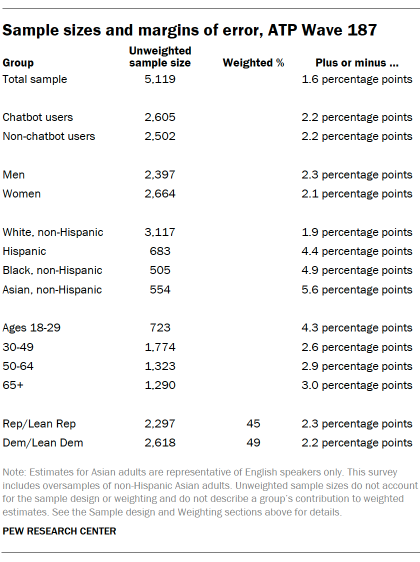
Wave 187 of the American Trends Panel was conducted from February 17 to February 23, 2026. Designed to capture a snapshot of non-institutionalized U.S. adults aged 18 and older, the survey engaged 5,119 respondents from a pool of 5,854 sampled panelists. This yields a robust survey-level response rate of 87%.
The margin of sampling error for this full sample is plus or minus 1.6 percentage points, a high degree of precision achieved through careful stratification. To ensure that the voices of smaller demographic subgroups—specifically non-Hispanic Asian adults—are captured with sufficient nuance, researchers utilized an oversampling technique. This process allows for precise estimates of these groups’ experiences, which are then weighted back to reflect their accurate proportions within the broader national population.
The logistical backbone of the project was managed by SSRS, which conducted interviews via a hybrid approach: the overwhelming majority (4,930) were completed online, while 189 were conducted via live telephone interviews to ensure accessibility for those less comfortable with digital interfaces.

Chronology: From Recruitment to Data Finalization
The integrity of the ATP data is not a product of a single week of polling; it is the culmination of years of recruitment and meticulous preparation.
The Recruitment Phase
Since 2018, the ATP has relied on Address-Based Sampling (ABS). By leveraging the U.S. Postal Service’s Computerized Delivery Sequence File—which covers an estimated 90% to 98% of the U.S. population—researchers mail physical invitations to randomly selected households. Within these households, the adult with the next upcoming birthday is selected to participate, a randomized selection method that minimizes self-selection bias. Prior to 2018, the panel relied on traditional landline and cellphone random-digit-dialing; the transition to ABS represents a strategic pivot toward a more stable and reachable population sample.
Preparation and Soft Launch
Before the main survey deployment, the questionnaire underwent rigorous testing. In consultation with SSRS, Pew researchers tested the web interface across various hardware, including PCs and mobile devices. To ensure the logic, randomization, and question-flow were error-free, the project team populated the system with test data, analyzed via SPSS, before the survey went live.
The Field Period
The data collection period was tightly compressed into one week, February 17–23, 2026.
- February 13: Pre-notification postcards were sent to telephone respondents.
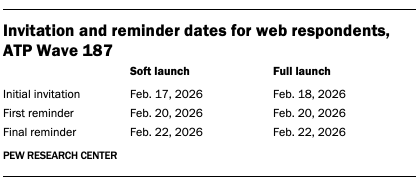
- February 17: A "soft launch" began with 60 online panelists and a small group of telephone interviews, allowing researchers to catch any unforeseen technical hitches.
- February 18: The full launch commenced, with invitations sent to all remaining panelists.
- Follow-up: Online panelists received up to two email and SMS reminders. Phone respondents could receive up to six calls from trained interviewers to ensure maximum participation from hard-to-reach demographics.
Supporting Data: Ensuring Quality and Equity
Data quality is the hallmark of professional polling. Once the survey window closed, Pew researchers conducted comprehensive checks to identify "satisficing"—a behavior where respondents provide low-effort answers, such as leaving questions blank or consistently choosing the first or last option in a list. As a result, seven respondents were removed from the dataset to maintain the integrity of the findings.
Incentive Structure
To combat low response propensities, the study utilized a post-paid incentive model. Participants were offered between $5 and $15 in the form of checks or digital gift codes (Amazon, Target, or Walmart). By calibrating the incentive based on the difficulty of reaching specific population segments, the researchers significantly reduced the likelihood of attrition among traditionally underrepresented groups.
Weighting and Calibration
The raw data requires significant statistical adjustment to represent the U.S. accurately. The process follows a multi-stage approach:
- Base Weighting: Assigning weights based on the probability of recruitment into the panel.
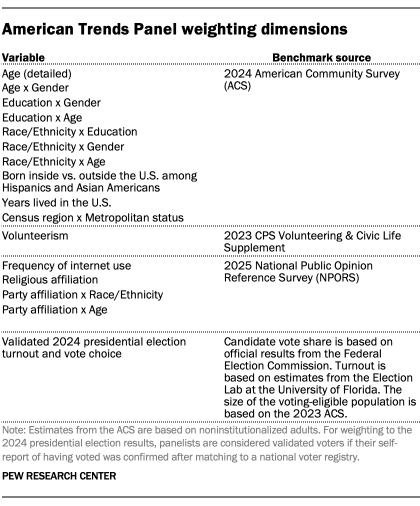
- Calibration: Aligning the data with population benchmarks—such as age, race, gender, and education—to correct for nonresponse and attrition.
- Trimming: The final weights are trimmed at the 1st and 99th percentiles. This prevents outliers from exerting undue influence on the results, thereby reducing variance while preserving accuracy.
Economic Adjustments
A critical component of this study is the calculation of family income tiers. Rather than using raw figures, Pew adjusts income data for household size and geographic cost-of-living differences. For example, a family earning $40,200 in a low-cost area like Pine Bluff, Arkansas, is mathematically adjusted to be comparable to a family earning $59,100 in a high-cost area like San Francisco. This ensures that economic sentiment is analyzed relative to the actual purchasing power of the respondent, not just their nominal income.
Official Responses and Methodology Transparency
Pew Research Center maintains a policy of extreme transparency. By providing public access to the methodology, including the specific weighting dimensions and the "About the American Trends Panel" documentation, the organization invites peer review and academic scrutiny.
When asked about the importance of such rigor, researchers note that in an age of "fake news" and algorithmic echo chambers, the methodology is the shield that protects public discourse. "The goal of the ATP is not just to count heads, but to understand the nuances of the American experience," a spokesperson noted. By acknowledging that factors like question wording and practical interviewing difficulties can introduce bias, the Center demonstrates a commitment to the scientific method rather than the pursuit of a specific narrative.
Implications: Why Methodology Matters
The implications of the Wave 187 methodology are profound. By consistently employing high standards for sampling and weighting, Pew provides a reliable baseline for policy-makers, journalists, and historians.
Bridging the Divide
The use of oversampling for Asian American populations is particularly significant. In national surveys, small minority groups are often swallowed by the "margin of error," rendering their specific needs and concerns invisible. By specifically oversampling these groups and then re-weighting them, the ATP ensures that the diversity of the American experience is not just acknowledged but quantified.
Future-Proofing Polls
As the world moves toward a more digital-first society, the hybrid approach of the ATP—combining mobile-friendly web surveys with traditional telephone follow-ups—serves as a blueprint for the future of survey research. The reliance on address-based sampling also acknowledges the decline of landline telephone usage, ensuring that the panel remains relevant even as communication habits evolve.
The Cost of Accuracy
The investment in post-paid incentives and rigorous data-cleansing reflects a broader truth about modern social science: accuracy is expensive. However, the cost of inaccurate data is higher. When researchers fail to account for nonresponse or neglect to adjust for geographic cost-of-living, they risk producing misleading data that can skew public policy and national perception.
In conclusion, the methodology of Wave 187 is more than just a list of technical procedures. It is a robust, well-funded, and deeply considered effort to map the complex, shifting landscape of the American mind. By adhering to these standards, Pew Research Center continues to offer the public a mirror that is as clear and undistorted as possible, ensuring that when we speak about the "American perspective," we are speaking from a foundation of empirical reality.
 Muslim
  Nana Muazin
  Siti Muinah