
 By Jia Lissa
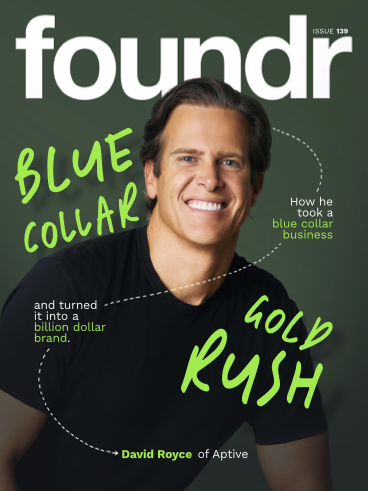
In the glitzy, high-stakes world of venture capital and tech startups, success is often synonymous with software-as-a-service (SaaS) platforms, disruptive AI, or consumer-facing apps. However, David Royce, the founder and chairman of Aptive Environmental, has quietly built a fortune that rivals the most celebrated names in Silicon Valley by focusing on an industry most finance graduates wouldn’t touch with a ten-foot pole: residential pest control.
Today, Aptive stands as the third-largest residential pest control service in North America. But Royce’s journey—spanning four companies, multiple nine-figure exits, and a half-billion-dollar annual revenue stream—is not a story about technology or venture capital. It is a masterclass in grit, the rejection of vanity, and the strategic mastery of "unsexy" blue-collar industries.
A Legacy of Grit: From Self-Doubt to Sales Prowess
David Royce’s trajectory did not begin in a boardroom or an Ivy League classroom. As a child, he struggled with undiagnosed ADHD, a condition that left him feeling academic inadequacy in a rigid school system. "I struggled in school because I couldn’t focus unless I cared deeply," Royce recalls. It wasn’t until the sixth grade, under the tutelage of a teacher named Mrs. Luft, that he began to believe in his own capabilities.
This early struggle served as a crucible. When he eventually discovered his entrepreneurial spirit, his ADHD became, in his words, a "superpower" in environments that demanded high-intensity focus.

Royce’s formal entry into business was entirely accidental. While in college, a friend mentioned making $25,000 in a single summer selling pest control services door-to-door. Seeking to replicate this, Royce headed to Sacramento. His first week was a disaster. He worked on a commission-only basis and failed to close a single sale, spending five days doing "free cardio" while his peers thrived.
Rather than quitting, Royce retreated to a bookstore, purchased half a dozen sales manuals, and committed to 90 minutes of daily study. By the end of the summer, he was the company’s top rookie. This early failure and subsequent triumph codified his core philosophy: "Persistence is genius in disguise."
Chronology of a Billion-Dollar Rise
The Foundation: The Door-to-Door Classroom
Royce spent four college summers knocking on over 60,000 doors. This experience provided him with a doctorate-level understanding of consumer pain points and psychological triggers. He learned that sales are not won by scripts, but by body language and the ability to resolve doubt.
The First Pivot: Choosing Opportunity Over Image
As a finance student on the cusp of an investment banking career, Royce was faced with a choice: pursue the "impressive" prestige of a suit-and-tie office job or follow his mentor’s advice to start his own pest control company. Despite his initial reservations that the industry didn’t sound "impressive," he chose the opportunity. He invested his $300,000 in savings—money meant for an MBA—into his first venture.
Scaling and Stumbling: The Cash Flow Crisis
In his first year in Los Angeles, Royce experienced the classic entrepreneur’s nightmare: "killing it and dying at the same time." His company grew so rapidly—landing 7,500 customers when he had planned for 5,000—that the commission-heavy payout structure created a fatal liquidity crunch. Royce had to negotiate with his team to delay commission payouts, offering interest as a gesture of goodwill. This near-collapse taught him the mantra that remains central to his operations: "Revenues are vanity. Profits are sanity. But cash flow is reality."
The Strategic Exit Framework
Unlike many founders who get trapped in their own creations, Royce developed a unique asset-deal structure. He would sell the recurring revenue streams—the customer base and the technicians—to strategic buyers, but retain his leadership team and sales force. He would then take the capital from these nine-figure exits to launch the next company with the same core team, avoiding equity dilution and building on a "bigger stage."
Supporting Data: Why "Boring" is Big Business
Royce’s success underscores a fundamental truth about the American economy: the "stealthy wealthy" are often hiding in plain sight. Data suggests that roughly 43% of the top 0.1% of income earners in the U.S. operate in traditional, blue-collar industries.
Key Performance Drivers
Aptive’s growth rate—seven to ten times faster than the industry average—was driven by three distinct pillars:

- The Sales Machine: By codifying his sales process, Royce enabled new reps to produce 70% more than they had at previous employers.
- Service Innovation: His field experience allowed him to add features that directly addressed the most common homeowner complaints.
- Digital Integration: Long before it was standard, Aptive implemented a proprietary sales app to gamify performance, which increased productivity on tournament days by 30%.
The Cultural Design: More Than Just Perks
While Aptive is famous for its eccentric culture—featuring an NCAA basketball court, golf simulators, and international retreats—Royce is quick to emphasize that these are "sugar, not protein."
The true backbone of his culture is ownership. Royce distributed 25% of his company to his employees, ensuring that when the business reached its $500 million revenue milestone, the rewards were shared. This strategy proved to be the ultimate retention tool, far more effective than traditional office perks. By allowing team members to pay off mortgages and support their families, Royce created a culture of deep loyalty.
Official Lessons: Leadership and Transition
One of the most difficult challenges for a founder is knowing when to stop being the "hero" and start being the "architect." For Royce, this meant replacing himself as CEO. He spent a decade grooming a protégé to take the reins, a process that revealed whether he had built a scalable business or a dependency.
However, the path was not without its pitfalls. Royce highlights a cautionary tale regarding the hiring of "big-company" executives. He once hired a CFO from a billion-dollar tech firm whose lack of experience in the nuances of Aptive’s specific business model led to missed forecasts during a high-stakes sale process. This taught Royce three critical lessons:
- Trust but verify: High-level credentials do not guarantee operational success.
- Never miss a forecast during a sale: It hands all leverage to the buyer.
- The 50% Rule: Many companies don’t sell on their first attempt; use the process as a diagnostic tool to improve for the next market entry.
Implications for the Future
As artificial intelligence begins to reshape the global workforce, the blue-collar sector is arguably becoming more insulated. While AI can automate legal documents or code, it cannot perform physical, site-specific services like pest control or plumbing.
For the next generation of entrepreneurs, Royce’s story offers a compelling alternative to the "unicorn" chasing of Silicon Valley. He argues that the summit of success is not a specific financial number, but the discipline, character, and expertise one develops during the climb.
"If you don’t enjoy the climb, the summit is going to disappoint you," Royce notes. Ultimately, his legacy is not just the valuation of his companies, but the number of leaders he has helped develop. His career stands as a testament to the fact that with enough persistence, even the most overlooked industries can become the foundation for a billion-dollar empire.
 Sagoh
Sagoh  Pevita Pearce
  Asep Darmawan