
 By Siti Muinah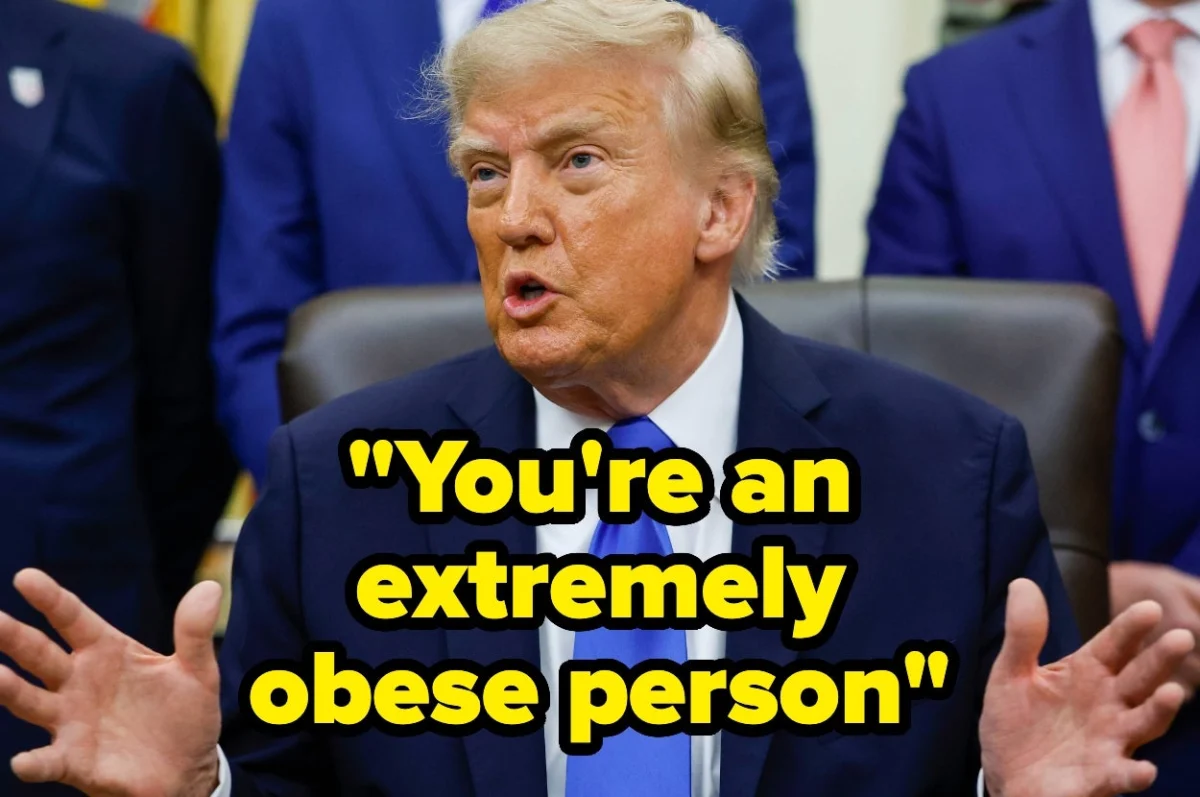
Main Facts
President Donald Trump has once again drawn fierce public backlash and international scrutiny following an unscripted, highly personal public rant delivered during a White House Rose Garden event. Speaking before a gathering of Republican lawmakers, Trump recounted an allegedly private conversation with an anonymous acquaintance, using blunt and derogatory language to criticize the individual’s physical appearance and weight.
According to the president, the encounter involved a friend who had complained about the high cost of popular weight-loss medications in the United States compared to Europe. Rather than offering sympathy or engaging in a substantive policy discussion regarding pharmaceutical pricing, Trump stated that he confronted the individual directly about their physical appearance.
"A friend of mine — very, very heavy, he’s a very obese person — I said, ‘You’re an extremely obese person,’" Trump told the audience. When the acquaintance admitted to taking weight-loss medications—colloquially referred to by the president as "fat drugs"—Trump recalled telling him: "It’s not working. You look like shit."
The remarks instantly reverberated across mainstream media platforms and social networks, drawing sharp rebukes from political commentators, public health advocates, and critics alike. The controversy highlights a recurring pattern in Trump’s public rhetoric, where personal insults frequently intersect with policy discussions. However, the comments also reignited intense public scrutiny surrounding the president’s own physical health, dietary habits, and history of navigating weight-related commentary.
Chronology of Events
The unfolding controversy began during the afternoon Rose Garden ceremony, initially intended to highlight legislative priorities alongside Republican members of Congress.
- The Rose Garden Remarks: During his address, Trump veered off-script to discuss international pharmaceutical pricing and the burgeoning market for anti-obesity medications. It was within this context that he introduced the anecdote about his unnamed friend, recounting how the individual had allegedly begged him to keep his identity secret to avoid reputational damage.
- Immediate Social Media Amplification: Video clips of the exchange captured by journalists and broadcast monitors—most notably shared by independent journalist accounts such as @Acyn—spread rapidly across social media platform X (formerly Twitter). Within hours, the clip accumulated millions of views, serving as the catalyst for a fresh wave of public debate.
- Online Reactions and Backlash: By Wednesday evening and into Thursday morning, public figures, journalists, and political analysts flooded social media with reactions. Critics pointed out the striking hypocrisy of the remarks, juxtaposing Trump’s harsh critique of his friend’s body against the president’s own well-documented struggles with weight management.
- Broader Political Fallout: Prominent commentators, including political analyst Chuck Todd and foreign policy expert Tom Nichols, weighed in on the diplomatic and domestic implications of the president’s public conduct, arguing that such unfiltered outbursts continuously undermine perceptions of American leadership on the global stage.
Supporting Data and Medical Context
The public discourse surrounding Trump’s remarks quickly pivoted from the rudeness of the anecdote to the broader, data-driven context of the president’s own health metrics and dietary profile.
Official disclosures released by the White House indicate that Trump’s Body Mass Index (BMI) stands at approximately 29.7. In the standard medical classification system maintained by the Centers for Disease Control and Prevention (CDC) and the World Health Organization (WHO), a BMI between 25 and 29.9 classifies an individual as "overweight," with a BMI of 30 or higher marking the threshold for clinical obesity. Trump’s recorded measurement places him at the absolute upper limit of the overweight category, resting just one tenth of a point shy of clinical obesity.
Furthermore, medical records made public by Navy Capt. Sean Barbabella, the president’s physician, revealed that healthcare professionals have found it necessary to provide Trump with formal "preventive counseling" focused specifically on diet, nutrition, and structured weight loss. These interventions come amid persistent, unverified rumors—denied by the White House—that Trump had previously sought or received "compassionate use" exemptions to access experimental weight-loss treatments, such as advanced GLP-1 receptor agonists or newer experimental peptides like retatrutide.
Contrasting these medical recommendations is Trump’s famously unapologetic and scrutinized diet. Health and Human Services (HHS) Secretary Robert F. Kennedy Jr., during a recent appearance on a podcast hosted by Katie Miller, candidly addressed the president’s nutritional habits.
"The interesting thing about the president is that he eats really bad food, which is McDonald’s, and, you know, candy and Diet Coke," Kennedy remarked. "I don’t know how he’s alive, but he is."
Kennedy noted that while culinary staff attempt to provide healthier options within the controlled environment of the White House, the president’s dietary indiscretions are harder to manage when he travels. These observations align with reporting from New York Times journalists Maggie Haberman and Jonathan Swan in their book Regime Change. According to the authors, White House staff frequently encountered an "array of empty potato chip bags, Starburst wrappers and ice cream cartons" left behind in trash cans or on the floor of executive quarters—further complicating the administration’s official narrative regarding the president’s wellness.
Official Responses
As of Thursday afternoon, the White House communications office has declined to issue a formal, detailed statement addressing the specific wording of the president’s Rose Garden remarks. Press representatives have sought to frame the speech primarily as a broad critique of global pharmaceutical pricing disparities and the comparative affordability of healthcare products in Europe versus the United States.
However, administration defenders have privately argued that the president’s anecdote was intended as a colorful, informal illustration of a failed consumer product rather than a targeted personal attack. They contend that the media has over-indexed on a conversational aside, lifting a casual remark out of the broader economic context of his speech.
Public health organizations, body-positivity advocates, and medical professionals have maintained a starkly different stance. While many have chosen not to engage directly with the personal nature of the insult, nutritionists and obesity researchers have expressed concern that public stigmatization from high-ranking political figures reinforces harmful stereotypes. They argue that framing weight struggles in terms of personal failure and aesthetic disgust ("You look like shit") actively discourages individuals from seeking legitimate, compassionate medical care for metabolic conditions.
Implications
The fallout from Trump’s latest unscripted rant extends across several distinct domains, touching upon domestic politics, presidential psychology, and international relations.
1. Domestic Political Discourse and the Normalization of Incivility
For nearly a decade, the normalization of inflammatory and personal rhetoric has been a defining hallmark of the Trump era. Yet, political observers note that attacks directed at private individuals—even via anonymous anecdotes—demonstrate an enduring disregard for traditional norms of presidential decorum. The swift pivot from a policy speech to an unsolicited critique of a friend’s physical appearance illustrates the persistent unpredictability of the administration’s public messaging.
2. Cognitive Dissonance and Public Perception
The immediate juxtaposition between Trump’s derogatory comments toward an obese individual and his own documented physical metrics provoked widespread accusations of cognitive dissonance. Critics on social media, such as activist Ola Ojewumi, questioned how a leader facing his own well-publicized weight and dietary challenges could publicly humiliate someone else for the exact same physical reality. This perceived disconnect has fueled ongoing debates among psychologists and political scientists regarding the president’s self-awareness and public persona.
3. International Image and National Security Optics
Beyond the domestic culture wars, foreign policy analysts have repeatedly emphasized the collateral damage such remarks inflict on America’s standing abroad. Writing on social media, prominent national security and foreign affairs commentator Tom Nichols underscored that while domestic audiences may become fatigued or indifferent to the daily cycle of controversies, international actors—including foreign adversaries and allied nations alike—pay close attention. According to critics, erratic public behavior and unfiltered rants provide fodder for foreign intelligence services and diplomatic corps seeking to evaluate the stability, cognitive health, and reliability of the American head of state.
Ultimately, the incident serves as yet another flashpoint in an already polarized political landscape. Whether the controversy will produce any lasting political consequences or simply dissolve into the relentless news cycle of the modern presidency remains to be seen. However, it stands as an unmistakable reminder of the volatile intersection between personal grievance, public performance, and the office of the presidency.
 Ali Ikhwan
  Sagoh
Sagoh  Laily UPN