
 By Asro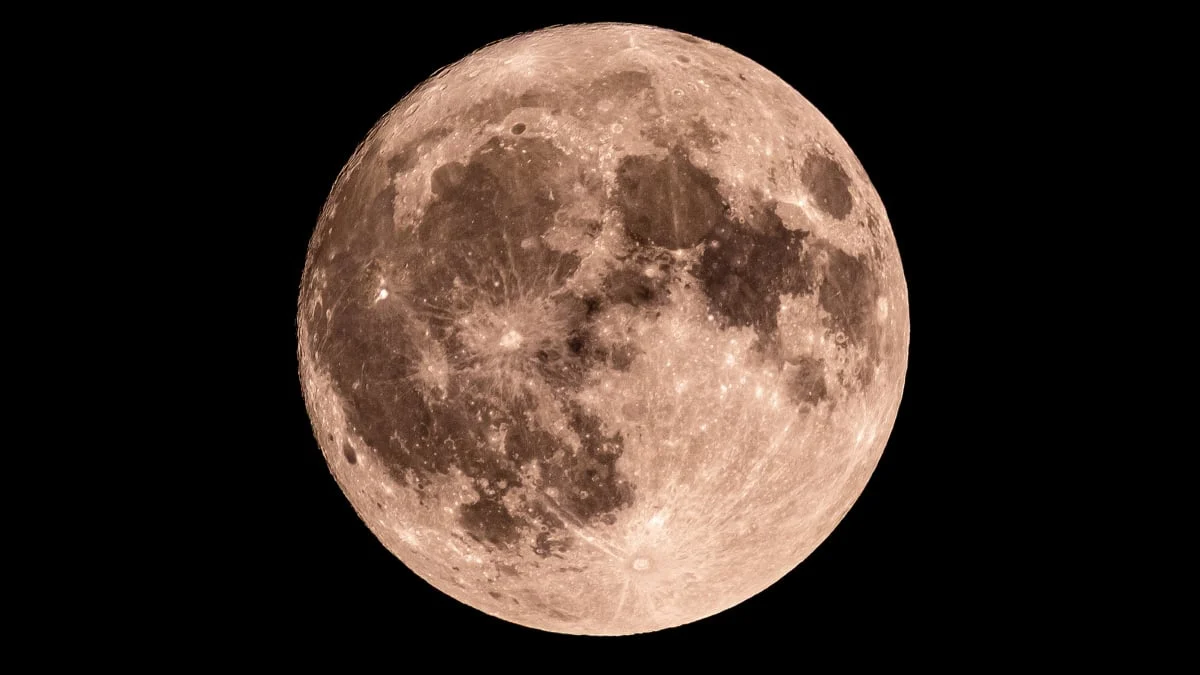
Main Facts: Tonight’s Lunar Spectacle and Viewing Guide
As the Earth spins through its orbital dance, our nearest celestial neighbor, the Moon, continues its nightly transformation. On the evening of Saturday, June 20, skywatchers are treated to a prominent Waxing Crescent phase. According to data compiled by NASA’s Daily Moon Guide, the Moon will exhibit approximately 44% illumination tonight. This particular stage of the lunar cycle offers an exceptional window for observation, as the "terminator"—the dividing line between the sunlit and dark portions of the Moon—casts long, dramatic shadows that accentuate the rugged lunar topography.
For observers equipped with nothing more than their naked eyes, tonight’s sky presents several prominent features. The vast, dark basaltic plains known as lunar maria (Latin for "seas") are clearly visible. Specifically, observers can spot Mare Fecunditatis (the Sea of Fecundity), Mare Serenitatis (the Sea of Serenity), and the distinct, isolated basin of Mare Crisium (the Sea of Crises) near the eastern limb of the Moon.
+------------------------------------------------------------------------+
|                     TONIGHT'S LUNAR VIEWING TARGETS                    |
+--------------------------+--------------------+------------------------+
| NAKED EYE                | BINOCULARS         | TELESCOPE              |
+--------------------------+--------------------+------------------------+
| • Mare Fecunditatis      | • Endymion Crater  | • Apollo 17 Site       |
| • Mare Serenitatis       | • Posidonius Crater| • Descartes Highlands  |
| • Mare Crisium           | • Mare Nectaris    | • Rupes Altai          |
+--------------------------+--------------------+------------------------+
With the aid of standard binoculars, the resolution of the lunar surface sharpens significantly. Binocular users can resolve the ancient Endymion Crater near the northeastern limb, the floor-fractured Posidonius Crater located on the edge of Mare Serenitatis, and the circular expanse of Mare Nectaris (the Sea of Nectar).
For those utilizing backyard telescopes, the 44% illumination provides the perfect contrast to view highly detailed features. Telescopic observers can pinpoint the historic Apollo 17 landing site in the Taurus-Littrow valley, navigate the rugged Descartes Highlands (the exploration site of Apollo 16), and trace the sweeping, cliff-like escarpment of Rupes Altai (the Altai Scarp), which stands out boldly under low-angle solar illumination.
Chronology: The Journey Through the 29.5-Day Lunar Cycle
The appearance of the Moon on June 20 is a temporary snapshot in a continuous, predictable celestial sequence. The Moon completes one synodic orbit around the Earth in approximately 29.5 days. During this synodic month, the relative positions of the Earth, Moon, and Sun shift constantly, changing the portion of the Moon’s near side that receives direct sunlight.
      [Sunlight] --->

          ( New Moon )             -- Day 0
         /
  (Waning Crescent)  (Waxing Crescent)     -- Tonight (June 20 - 44% Lit)
       |                |
 (Third Quarter)     (First Quarter)       -- ~50% Lit
                   /
  (Waning Gibbous)   (Waxing Gibbous)
                    /
          ( Full Moon )            -- June 29 (100% Lit)
The progression of this cycle is divided into eight distinct, internationally recognized phases:
1. New Moon
The cycle begins when the Moon is positioned directly between the Earth and the Sun. During this phase, the side of the Moon facing Earth is completely unlit, rendering it invisible against the daytime sky.
2. Waxing Crescent (Current Phase)
As the Moon moves eastward in its orbit, a sliver of sunlight begins to illuminate its right edge (as viewed from the Northern Hemisphere). This sliver grows daily. On June 20, the Moon has reached the late stage of this phase, standing at 44% illumination and approaching the transition to the next phase.
3. First Quarter
Occurring shortly after the 44% crescent phase, the First Quarter marks the point where exactly 50% of the Moon’s visible disk is illuminated on the right side. To the casual observer, it resembles a perfect half-Moon.
4. Waxing Gibbous
Following the First Quarter, the illuminated portion continues to expand. During this phase, more than half of the Moon’s face is lit, but it has not yet achieved a fully circular appearance.
5. Full Moon (Expected June 29)
When the Earth is positioned between the Sun and the Moon, the entire near side of the Moon is illuminated. The next Full Moon of this cycle is scheduled to peak on June 29, offering a brilliant, all-night display.
6. Waning Gibbous
After the peak of the Full Moon, the illuminated area begins to recede. The shadow starts creeping in from the right side, leaving the left side of the Moon illuminated (in the Northern Hemisphere).
7. Third Quarter (or Last Quarter)
The Moon reaches another half-lit state, but conversely to the First Quarter, it is now the left half of the disk that remains illuminated as the Moon continues its journey back toward the Sun.
8. Waning Crescent
The final phase of the cycle features a shrinking, delicate sliver of light on the far left edge of the Moon. This crescent thins daily until the Moon once again aligns between the Earth and Sun, resetting the cycle at the New Moon.
Supporting Data: Scientific Analysis of Tonight’s Visible Features
The features accessible to observers on June 20 represent billions of years of solar system history. Understanding the geological context of these structures enhances the stargazing experience.
The Maria (Basaltic Plains)
- Mare Crisium (Sea of Crises): Measuring approximately 556 kilometers (345 miles) in diameter, Mare Crisium is an ancient impact basin that later filled with dark, iron-rich basaltic lava. Because it is isolated from the larger oceanus and maria complexes, its circular ring is highly distinct, making it an ideal target for naked-eye and binocular viewers.
- Mare Serenitatis (Sea of Serenity): Located to the west of Crisium, this basin spans roughly 707 kilometers (439 miles). It is notable for its distinct color variations, which indicate different epochs of volcanic eruptions and varying concentrations of titanium in the basaltic soil.
- Mare Fecunditatis (Sea of Fecundity): Spanning 909 kilometers (565 miles), this basin features a relatively thin layer of basaltic lava, allowing the underlying structures of ancient, pre-existing impact craters to peek through its floor.
Craters and Escarpments
- Posidonius Crater: Situated on the northeastern edge of Mare Serenitatis, Posidonius is a class of crater known as a "floor-fractured crater." Measuring 95 kilometers in diameter, its interior flat floor was pushed upward and cracked by magma rising from beneath the lunar crust billions of years ago.
- Rupes Altai (Altai Scarp): This features a dramatic mountain range-like cliff face that represents a portion of the outer ring of the ancient Nectaris impact basin. It stretches over 480 kilometers (300 miles) and rises up to an altitude of nearly 1,000 meters in certain sections. On June 20, the low-angle sunlight casts long shadows westward from this scarp, highlighting its sheer vertical drop-off.
+------------------------------------------------------------------------+
|                    GEOLOGICAL SPECIFICATIONS OF TARGETS                |
+----------------------+--------------------+----------------------------+
| FEATURE              | TYPE               | APPROXIMATE SIZE           |
+----------------------+--------------------+----------------------------+
| Mare Crisium         | Impact Basin       | 556 km diameter            |
| Mare Serenitatis     | Basaltic Plain     | 707 km diameter            |
| Posidonius Crater    | Floor-Fractured    | 95 km diameter             |
| Rupes Altai          | Fault Escarpment   | 480 km length              |
+----------------------+--------------------+----------------------------+
Official Responses and Expert Observation Guidance
Astronomers and planetary scientists at NASA emphasize that the Waxing Crescent phase offers some of the best viewing opportunities of the entire month. In official statements accompanying NASA’s Daily Moon Guide, scientists point out that while the Full Moon is often the most popular target for the public, it is actually the most difficult phase for observing geological detail. During a Full Moon, the Sun shines directly onto the lunar surface from our perspective, eliminating shadows and washing out the topography.
Dr. Noah Petro, a leading lunar scientist at NASA’s Goddard Space Flight Center, frequently encourages amateur astronomers to utilize the "terminator advantage."
"The line separating day and night on the Moon is where the real magic happens," Petro notes in NASA educational outreach materials. "Along this line, even small ridges and crater rims cast shadows that are hundreds of miles long, revealing the true three-dimensional texture of the lunar landscape."
Expert Tips for Tonight’s Observation:
- Timing: The Waxing Crescent is best viewed during the twilight hours and early evening. Because it follows the Sun, it will set in the western sky a few hours after sunset. Observers should plan to step outside just as dusk falls to catch the Moon at its highest point in the sky.
- Reducing Glare: At 44% illumination, the Moon can still be surprisingly bright through binoculars or a telescope. Experts recommend using a neutral-density "Moon filter" threaded onto the eyepiece of a telescope to cut down on glare, which helps preserve the observer’s night vision and reveals subtle color contrasts.
- Stability: For binocular users, mounting the binoculars on a tripod or resting one’s elbows on a steady surface (like a fence or car hood) will drastically reduce image shake, making it possible to resolve fine features like the Posidonius Crater.
Implications: From Backyard Astronomy to the Frontiers of Space Exploration
The features visible on the night of June 20 are not merely relics of ancient history; they are central to the future of human space flight and scientific exploration.
The Legacy of Apollo
By focusing telescopes on the Taurus-Littrow valley (the landing site of Apollo 17) and the Descartes Highlands (Apollo 16), observers are looking at the exact landscapes walked upon by astronauts. Apollo 17, which took place in December 1972, marked the final mission of the Apollo program. The samples returned from Taurus-Littrow—including the famous "orange soil" discovered by geologist-astronaut Harrison Schmitt—provided invaluable data regarding the volcanic history of the lunar maria.
                       [ Lunar South Pole ]
                                |
               +----------------+----------------+
               |                                 |
     [ Artemis III Landing ]            [ Permanent Shadow ]
               |                                 |
    - Water ice in craters             - Cold traps at -250°C
    - Deep space launching point       - High-albedo highlands
The Artemis Era
Tonight’s observation serves as a direct bridge to NASA’s current Artemis program. Unlike the equatorial landing sites of the Apollo missions, the Artemis program is targeting the lunar South Pole. The lessons learned from studying the highlands and basins visible tonight—such as the Descartes Highlands—are directly informing the landing strategies for Artemis III, which aims to return humans to the lunar surface. The high-albedo (highly reflective) highland regions contain ancient crustal rocks that hold secrets to the early formation of the Earth-Moon system.
Furthermore, observing the Moon fosters a broader global appreciation for dark-sky preservation. As light pollution continues to increase worldwide, the Moon remains one of the few celestial objects that can be successfully observed from heavily lit urban environments. By encouraging citizens to look up and engage with the lunar cycle, scientific organizations hope to inspire the next generation of aerospace engineers, planetary geologists, and astronomers who will lead humanity’s permanent return to the lunar surface.
 Nila Kartika Wati
  Siti Muinah