
 By Ammar Sabilarrohman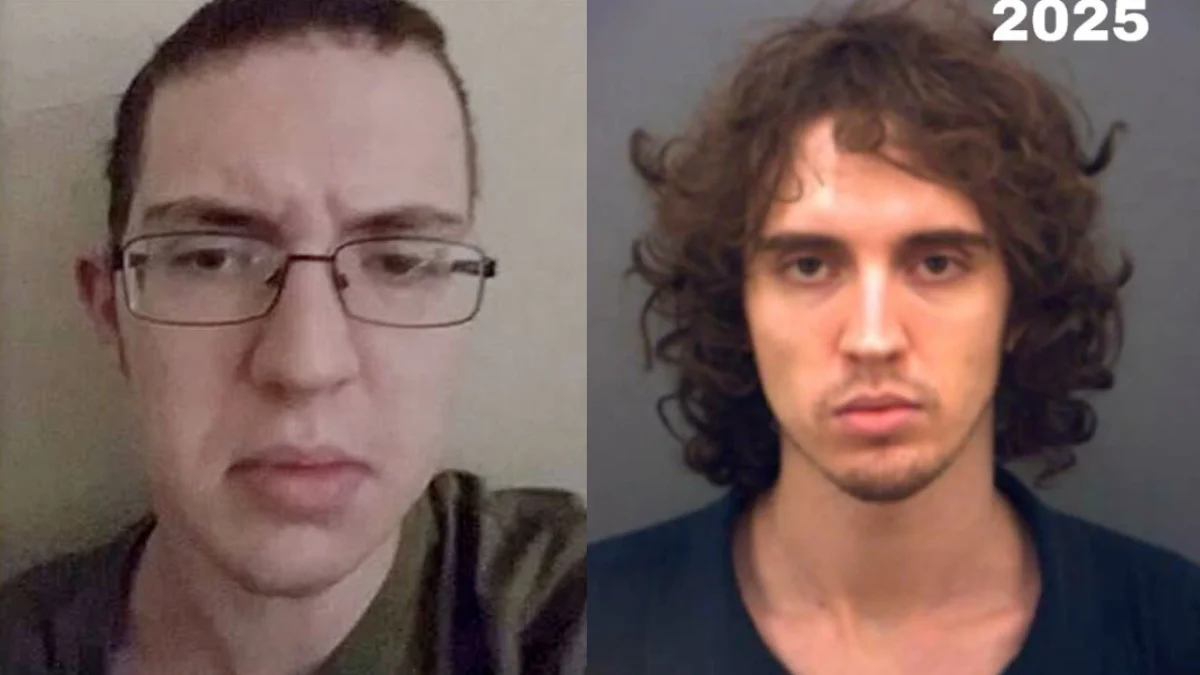
The Intersection of Online Culture and Real-World Tragedy
Recent days have seen a disturbing phenomenon unfold across social media platforms, particularly X (formerly Twitter) and Reddit, as "new" images purportedly showing Patrick Crusius, the perpetrator of the horrific 2019 El Paso Walmart shooting, began to circulate. These images, depicting Crusius with a markedly different appearance than his original mugshot, quickly became fodder for internet memes. Alarmingly, some users engaged in "glow-up" jokes, suggesting the convicted mass murderer had undergone a physical transformation for the better. This trend has ignited a fierce debate about the ethics of online humor, the trivialization of horrific violence, and the enduring challenge of content moderation in the digital age, especially when a figure responsible for one of the deadliest hate crimes in recent American history becomes the subject of casual internet jest.
Patrick Crusius, the individual at the center of this online storm, is not merely a figure of internet lore. He is a convicted domestic terrorist who, driven by white supremacist ideology, opened fire at a Walmart in El Paso, Texas, on August 3, 2019, murdering 23 people and injuring dozens more. His actions sent shockwaves across the nation, exposing the brutal reality of racially motivated violence and the dangers of online radicalization. Currently serving a lifetime sentence in federal prison, Crusius’s name is inextricably linked to immense suffering and loss. Yet, for a segment of the online community, his identity has been largely reduced to "Chudjak," a crude, caricatured meme that emerged from the darkest corners of the internet.
The viral images and subsequent reactions underscore a profound disconnect: the chasm between the grim reality of a mass casualty event and the often-flippant, decontextualized nature of internet culture. While the initial impulse behind some of these jokes may be rooted in dark humor or a desire to provoke, their widespread dissemination risks normalizing, or even inadvertently humanizing, a perpetrator of extreme violence, causing immense distress to victims’ families and undermining the gravity of his crimes.
The Resurfacing Image and Its Viral Spread
The genesis of the recent online frenzy can be traced back to a Reddit post on April 25, 2025. A user operating under the handle /u/uncanealguinzaglio shared what they claimed to be a new federal mugshot of Patrick Crusius in the subreddit /r/masskillers. The Redditor asserted that the image had been obtained through a Freedom of Information Act (FOIA) request, a process that allows public access to unreleased information and records possessed by the U.S. government.
The image presented Crusius in a starkly different light than his widely recognized initial booking photo. Gone were the glasses and the somewhat disheveled appearance. Instead, the photo depicted a more solemn-looking individual with longer, curly hair and noticeable facial scruff. This altered appearance quickly caught the attention of the niche community within /r/masskillers. However, the post’s tenure on Reddit was short-lived. It was swiftly deleted, likely flagged and removed for violating the platform’s Terms of Service, which prohibit content that glorifies violence, promotes hate, or harasses individuals. Despite the rapid moderation, the image had already escaped the confines of the subreddit and begun its journey across other digital spaces.
Two days later, on Sunday, the image exploded onto mainstream social media via X. User @TruueDiscipline posted the photo with the caption, "This is what chudjak looks like now… feel old yet?" This seemingly innocuous, if darkly ironic, question served as a catalyst for the image’s exponential spread. The post quickly went viral, accumulating over 1.2 million views and 17,000 likes in just 48 hours. The phrasing "feel old yet?" is a common internet meme trope, typically used to highlight the passage of time by showcasing updated appearances of familiar figures, often celebrities or characters from childhood. Applying this meme format to a mass murderer, however, immediately sparked a wave of both shock and morbid fascination.
The rapid virality of the post demonstrated the potent, often unpredictable, dynamics of social media. An image, once confined to a niche corner of Reddit, was propelled into the public consciousness, reaching millions and sparking a cascade of reactions that ranged from genuine outrage to deeply unsettling humor.
Online Reactions and the "Glow-Up" Phenomenon
The online response to Crusius’s updated image was, as anticipated, multifaceted and often deeply troubling. A significant portion of the discourse revolved around the concept of a "glow-up," an internet slang term referring to a positive physical transformation. The application of this term to a convicted mass murderer sparked a perverse form of dark humor, with some users making light of his appearance.
For instance, X user @Halsted_19 shared a meme depicting women ostensibly fawning over the "Chud" serving prison time, playing into the controversial "prison bae" phenomenon where individuals develop romantic or sexual fascinations with incarcerated criminals. This particular strain of humor, while not new to the internet, takes on an especially disturbing dimension when applied to a perpetrator of such heinous acts, further blurring the lines between irony and genuine disregard for the victims.
Another user, @hayasaka_aryan, pushed the narrative further by posting a side-by-side comparison of Crusius’s original mugshot and the newer viral image, with the caption, "From chud to indie rock singer." This comparison aimed to highlight the perceived aesthetic improvement, drawing a parallel to a popular cultural archetype often associated with a certain artistic or rebellious appeal. The juxtaposition underscored the internet’s capacity to reframe figures and events through a lens of superficial aesthetic judgment, often at the expense of profound ethical considerations.
Even more illustrative of the shock and disbelief among some users was the post by X user @Marcus_cel. This user deployed the "Cereal Guy" meme, a classic internet comic depicting a character spitting out his breakfast in an exaggerated display of shock. The meme was used to convey utter astonishment at Crusius’s new look, highlighting how unexpected and jarring this transformation was for many who only knew the "Chudjak" caricature or his initial booking photo.
However, amidst the flurry of jokes and ironic commentary, a crucial clarification emerged. Shortly after their initial viral post, X user @TruueDiscipline acknowledged that the "new" viral image was not as recent as many had assumed. According to information shared by the original Redditor and subsequently verified, the photo purportedly dated back to July 2023, specifically around the time Crusius pleaded guilty to federal charges. The image, while taken by El Paso authorities, was associated with his federal case.
To provide a more accurate, and more recent, depiction, @TruueDiscipline then shared a photograph from April 21, 2025. This image showed Crusius during a court hearing where he formally pleaded guilty to capital murder. In this truly current photo, Crusius appeared with glasses and a beard, presenting a different image than the "glow-up" picture that had captured widespread attention. This clarification underscored the often-unreliable and rapidly evolving nature of information disseminated through viral online channels, where context and accuracy can be easily lost in the pursuit of engagement and shock value.
The Genesis of "Chudjak" and "Billions Must Die"
To fully comprehend the recent online reactions, it is essential to delve into the origins and significance of the "Chudjak" meme. The meme itself is a product of the darkest corners of the internet, specifically emerging from 4chan’s infamous /pol/ (Politically Incorrect) board in late 2019. This board is notorious for being a breeding ground for extremist ideologies, hate speech, and the creation and dissemination of offensive content.
Chudjak is a variation of the popular "Wojak" meme, a crude, black-and-white line drawing of a bald man’s head, typically used to express a range of emotions or represent a generic "everyman" character. However, Chudjak is distinct. He is depicted with glasses, exaggeratedly deep nasolabial folds, and a perpetually frowning or scowling expression, often conveying a sense of grievance, paranoia, or malevolent judgment. The term "Chud" itself is a pejorative, often used online to denote individuals perceived as hateful, bigoted, or part of a far-right extremist subculture.
Crucially, Chudjak is frequently paired with cartoonishly evil or apocalyptic mantras of doom. The most prominent and chilling of these is the phrase, "The West has fallen. Billions must die." This slogan directly references the extremist, anti-immigrant manifesto allegedly written by Patrick Crusius before the El Paso shooting. In his screed, Crusius railed against what he perceived as an "invasion" of immigrants and expressed a desire to protect his perceived "cultural and ethnic replacement" of white people, echoing themes of the "Great Replacement" conspiracy theory popular among white supremacists. The "Billions Must Die" portion of the meme is a chilling shorthand for the genocidal aspirations often harbored by such extremist ideologies, expressing a desire for widespread societal collapse and purification.

Over time, the "Billions Must Die" meme, in particular, transcended its immediate connection to Crusius and became a broader shorthand for online extremist hysteria, nihilism, and the promotion of radical, often violent, narratives. It serves as a stark reminder of how internet culture can inadvertently, or deliberately, amplify and disseminate harmful ideologies, transforming real-world atrocities into abstract, ironic symbols that resonate within specific online subcultures. The meme’s existence and its continued use reflect a disturbing trend where the perpetrators of violence are not only discussed but are also, through memetic representation, inadvertently granted a form of cultural notoriety within certain online echo chambers.
The Gravity of the El Paso Massacre
The El Paso Walmart shooting was not merely an event that spawned a meme; it was a devastating act of domestic terrorism fueled by virulent racism and xenophobia. On that tragic Saturday in August 2019, Patrick Crusius drove over 600 miles from his hometown near Dallas to El Paso, specifically targeting a Walmart Supercenter frequented by a large Hispanic population. His motive, articulated in his hateful manifesto, was to deter what he called the "Hispanic invasion of Texas" and to kill as many Mexicans as possible.
The massacre resulted in the deaths of 23 innocent people, ranging in age from 15 to 90, and left dozens more physically wounded and emotionally scarred. The victims included mothers, fathers, grandparents, and children, many of whom were simply shopping for school supplies or groceries. The attack plunged the community of El Paso, a vibrant border city known for its strong Mexican-American heritage, into profound grief and fear. It highlighted the very real and deadly consequences of hate speech and extremist ideologies propagated online and then acted upon in the physical world.
In July 2023, Crusius pleaded guilty in federal court to 23 counts of hate crimes resulting in death, 23 counts of firearm use in a crime of violence causing death, and 23 counts of hate crimes involving an attempt to kill. While the death penalty was initially sought by federal prosecutors, a plea agreement ensured that Crusius would serve 90 consecutive life sentences, avoiding capital punishment. This federal conviction followed an earlier plea of guilty to state capital murder charges in April 2025, where he also received a life sentence. The legal proceedings have consistently underscored the premeditated, hate-filled nature of his crimes, affirming the perpetrator’s responsibility for the immense suffering he inflicted.
The El Paso shooting stands as a chilling reminder of the growing threat of white supremacist violence and domestic terrorism in the United States. It forced a national reckoning with the pervasive nature of online radicalization and the critical need to address the root causes of such hatred, while also confronting the platforms that often inadvertently facilitate its spread.
Ethical and Societal Implications
The viral spread of Patrick Crusius’s "new" mugshot and the subsequent "glow-up" jokes carry significant ethical and societal implications, extending far beyond mere internet humor. At its core, this phenomenon represents a profound trivialization of violence and extremism. When a mass murderer becomes the subject of casual aesthetic commentary or ironic memes, it risks desensitizing the public to the horror of his crimes and, more broadly, to acts of domestic terrorism.
One of the most concerning aspects is the normalization of a mass murderer’s image. By engaging in "glow-up" discourse, however ironically, online users inadvertently contribute to a process that can strip the perpetrator of his monstrous deeds and reframe him through a superficial lens. This not only disrespects the memory of the victims but also minimizes the severity of his actions. For the families of the 23 people Crusius murdered, seeing their loved one’s killer become a meme, or the subject of physical appraisal, can only deepen their pain and trauma. It underscores a fundamental disconnect between online irony and real-world suffering, where the pursuit of digital engagement often overshadows basic human empathy and respect.
This incident also highlights the broader phenomenon of "thirsting" over criminals, particularly those who gain notoriety. While not universally applicable to all reactions to Crusius’s photo, the "prison bae" meme and the "indie rock singer" comparison echo a disturbing trend where individuals find themselves drawn to the perceived allure or mystique of incarcerated figures, often romanticizing their situations without fully acknowledging their crimes or the victims’ experiences.
Moreover, the incident raises critical questions about the role and responsibility of social media platforms like Reddit and X. While Reddit’s swift deletion of the original post demonstrates an attempt at moderation, the image’s subsequent viral spread on X, where it accumulated millions of views without apparent immediate intervention, exposes the persistent challenges platforms face. They grapple with the delicate balance between upholding principles of free expression and preventing the dissemination of content that glorifies violence, promotes hate, or causes harm. The algorithms designed to maximize engagement often inadvertently amplify controversial or provocative content, regardless of its ethical implications, creating a fertile ground for such phenomena to thrive.
The trivialization of Crusius’s image also carries a more insidious danger: the potential to inadvertently contribute to the radicalization pipeline. While most users engaging with the memes are likely not extremists, the casual treatment of figures associated with extremist violence can, for vulnerable individuals, normalize or even glamorize such figures. In online spaces where extremist ideologies are already prevalent, such content can be twisted and repurposed to serve narratives that further radicalize individuals, making it harder to counter the spread of hate and violence.
Platform Responses and the Broader Challenge
In the immediate aftermath of the initial Reddit post, the platform acted decisively. The subreddit /r/masskillers, while a space for discussing such tragic events, operates under Reddit’s sitewide Terms of Service, which explicitly forbid content that promotes, glorifies, or incites violence, or harasses individuals. The swift deletion of the post featuring Crusius’s alleged new mugshot suggests that Reddit’s moderation tools, whether automated or human-driven, identified the content as a violation, likely due to its potential to glorify or inappropriately contextualize a mass murderer. This action, while effective in stemming the immediate spread on that particular subreddit, proved insufficient to contain the image’s broader dissemination.
The situation on X (formerly Twitter) presented a more complex challenge. Despite the viral nature of @TruueDiscipline’s post, which garnered over a million views, there was no immediate, apparent platform-wide intervention to remove the image or the associated commentary. This highlights the ongoing debate surrounding X’s content moderation policies, particularly under its current ownership. Critics often point to a perceived loosening of moderation standards, leading to an environment where controversial and potentially harmful content can circulate more freely than on other platforms. While X’s policies do prohibit glorifying violence, their enforcement often faces scrutiny, especially when applied to nuanced cases involving irony, dark humor, or the recontextualization of public figures.
The lack of consistent, robust intervention across all platforms underscores a fundamental tension in the digital age: how to reconcile the desire for open discourse with the imperative to protect communities from harmful content and prevent the trivialization of profound human tragedies. Social media companies are constantly under pressure from various stakeholders, including governments, victim advocacy groups, and their own user bases, to find this balance. However, the sheer volume of content, coupled with the rapid evolution of online culture and meme dynamics, makes comprehensive and universally satisfying moderation an incredibly difficult, if not impossible, task.
Conclusion
The viral circulation of Patrick Crusius’s "new" mugshot and the subsequent "glow-up" memes serve as a stark and troubling illustration of the complex interplay between online culture, real-world tragedy, and the ethical responsibilities of individuals and platforms alike. While the internet’s capacity for rapid information exchange and communal expression is undeniable, it also possesses a dark underbelly where the gravest acts of violence can be reduced to casual jokes or aesthetic commentary.
This incident is not merely about a photograph or a fleeting meme; it is a symptom of a deeper societal challenge. It reflects a growing desensitization to violence in certain online spheres, a dangerous disconnect between digital irony and human suffering, and the persistent struggle to hold individuals accountable for their actions, even within the seemingly boundless and often anonymous realm of the internet.
As platforms continue to evolve, so too must our collective understanding and approach to online content. The El Paso massacre was a heinous act of hate, and its perpetrator should forever be remembered for the lives he stole and the pain he inflicted, not for a fleeting "glow-up" or a crude caricature. The responsibility to uphold this truth, to remember the victims, and to resist the trivialization of such profound tragedies ultimately rests with every user and every platform that shapes our digital landscape.
 rifanmuazin
  Nana
Nana  Iffa Jayyana