
 By Asro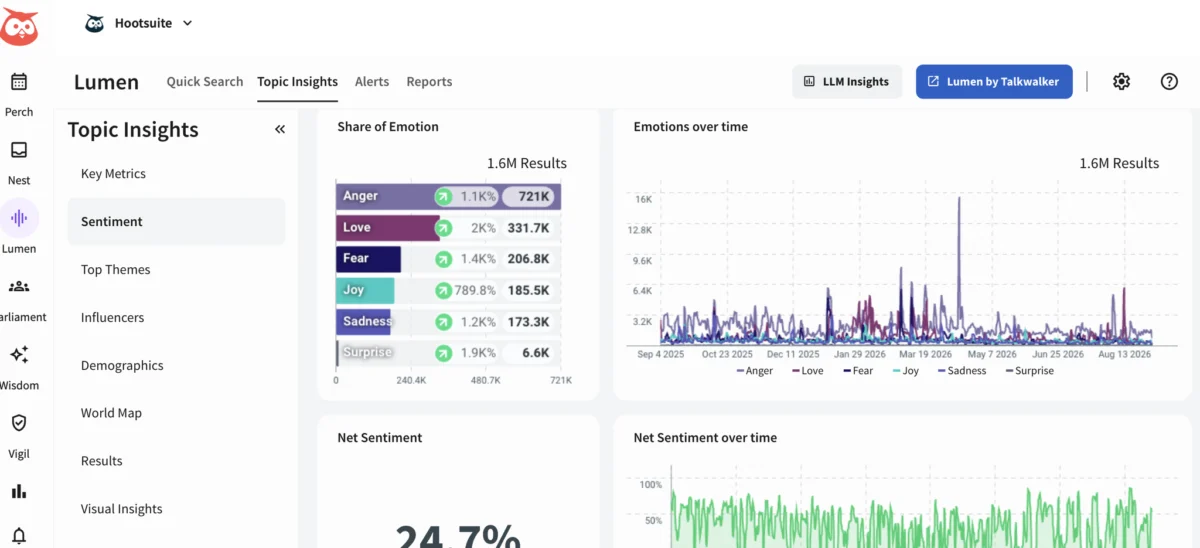
September 28, 2026
By Sam Lauron

As the digital landscape grows increasingly fragmented, modern marketing teams face a mounting challenge: keeping pace with dozens of distinct platforms, rapidly evolving audience expectations, and the exponential rise of artificial intelligence. In response, the ecosystem of software built to support social media managers has undergone a radical transformation.

No longer limited to basic scheduling calendars and rudimentary metrics dashboards, today’s social media tools operate as sophisticated operating systems. They connect multi-channel publishing, deep consumer sentiment analysis, customer care, influencer coordination, and native AI agents into cohesive environments. According to recent industry data, marketing leaders expect AI-driven automation of marketing tasks to more than double, scaling from 16% to 36% by 2028. This shift marks a permanent evolution in how brands plan, execute, and measure their digital strategies.
Main Facts: The Evolution of the 2026 Social Media Tech Stack
At its core, a social media tool is any software designed to help marketers plan, create, publish, monitor, or analyze digital content and performance. While native platform features offer basic utility, they fall short when organizations need to connect multiple channels, automate repetitive tasks, and surface high-level insights that would otherwise take hours of manual labor to aggregate.
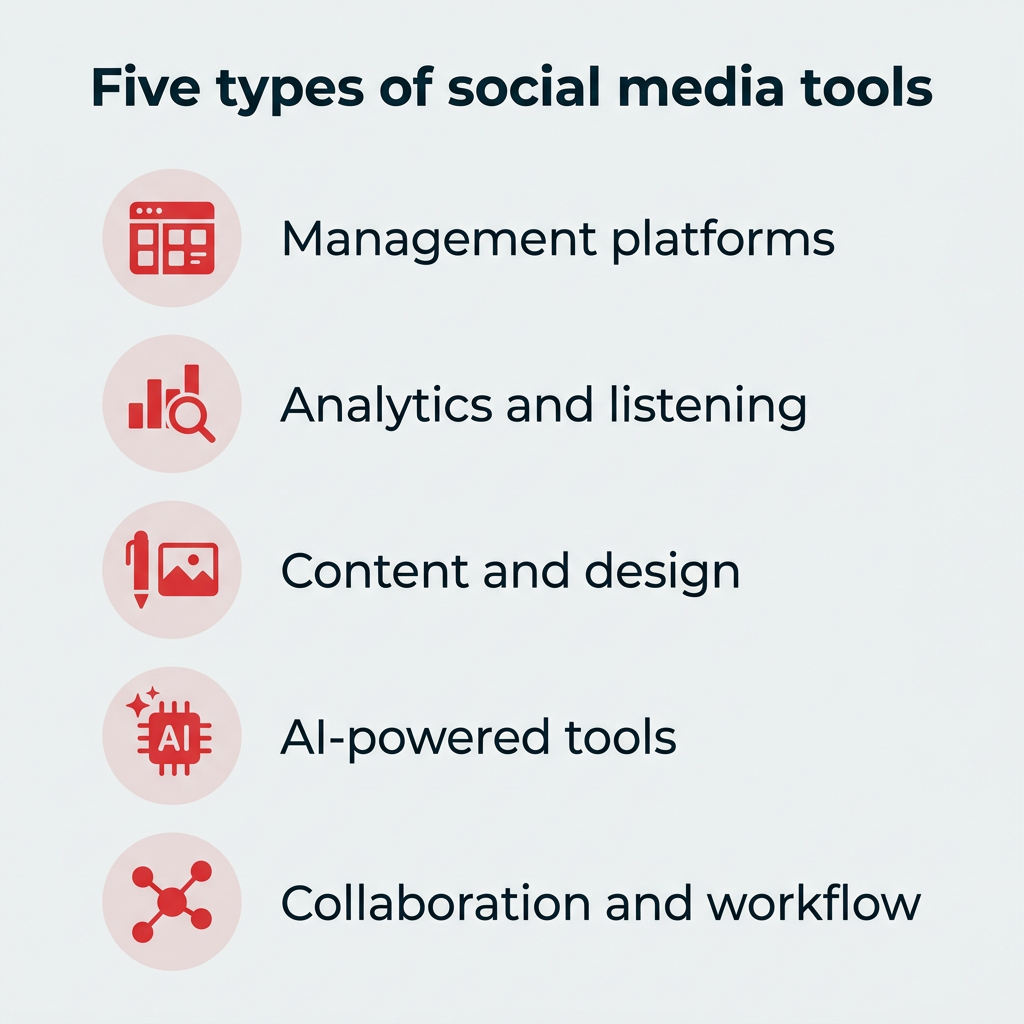
Today’s tech stack spans several distinct categories, each tailored to specific operational needs:
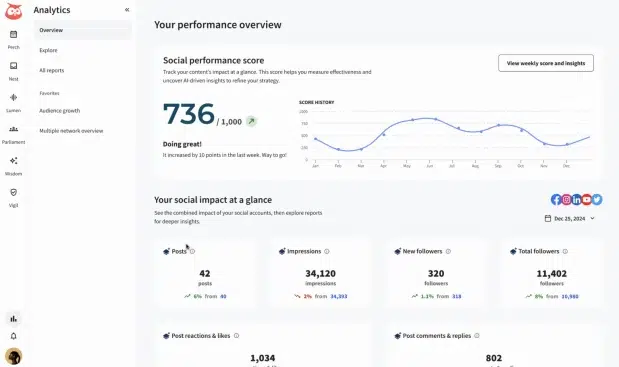
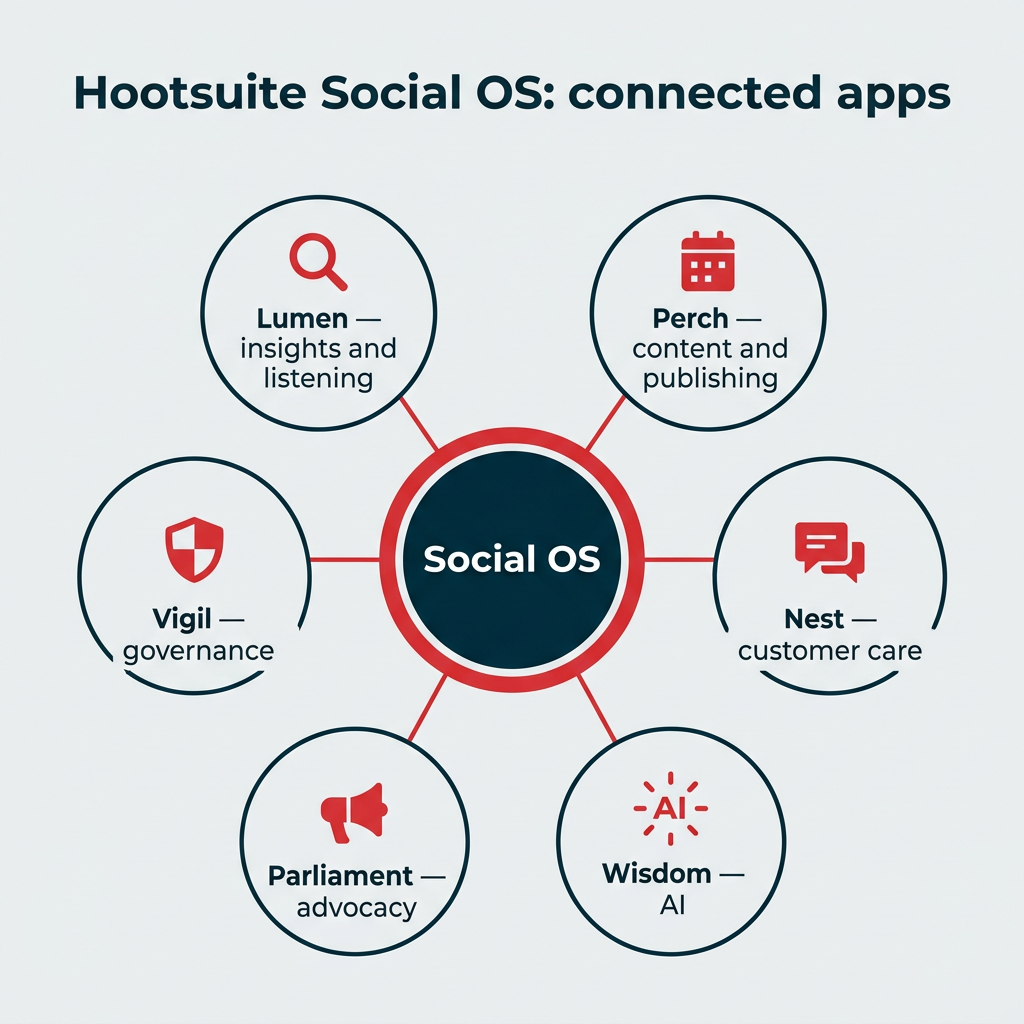
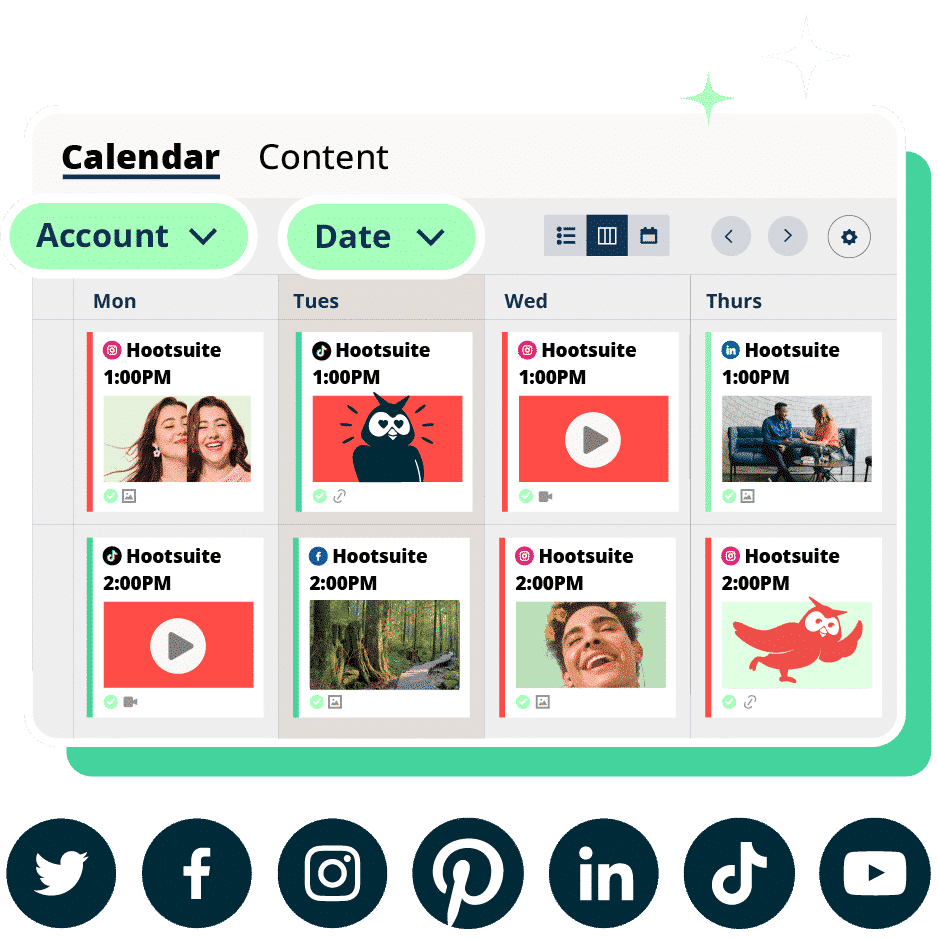
- All-in-One Management Platforms: Comprehensive systems like Hootsuite Social OS and HubSpot that unify scheduling, publishing, engagement, and CRM mapping into a single dashboard.
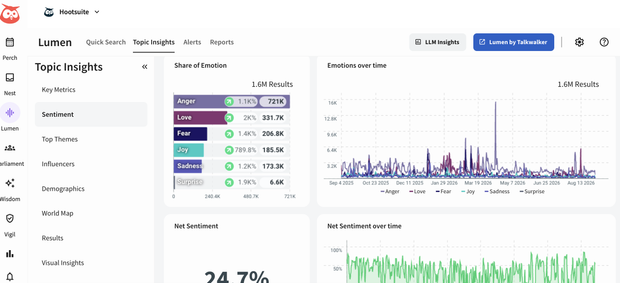
- Analytics and Listening Tools: Advanced monitoring platforms (such as NetBase Quid and Hootsuite’s Lumen) that scan millions of online sources to track brand sentiment, consumer trends, and early crisis signals.
- Content Creation and Design Tools: Visual asset generators like Canva and Adobe Stock that integrate directly into publishing workflows.
- AI-Powered Tools: Embedded machine learning layers (such as Wisdom and Lately AI) designed to draft copy, repurpose long-form assets, and query live performance data using natural language.
- Collaboration and Workflow Platforms: Project management utilities like Monday.com, Airtable, and Notion that maintain content calendars and cross-functional brand guidelines.
Chronology: From Siloed Point Solutions to Connected Ecosystems
The journey toward modern social media management has been defined by a constant tension between specialization and consolidation.
- The Early Era (Late 2000s–Mid 2010s): Social media management began as a basic scheduling necessity. Tools emerged simply to push a single text post across Twitter and Facebook simultaneously, saving marketers from logging into multiple native apps.
- The Era of Specialization (Late 2010s–Early 2020s): As platforms multiplied—incorporating Instagram, LinkedIn, TikTok, and Pinterest—the market fragmented. Teams accumulated isolated point solutions: one tool for listening, another for scheduling, a third for design, and separate software for influencer tracking. This "tool sprawl" often created more administrative overhead than it saved.
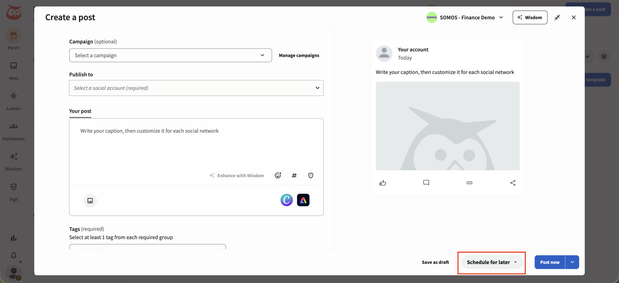
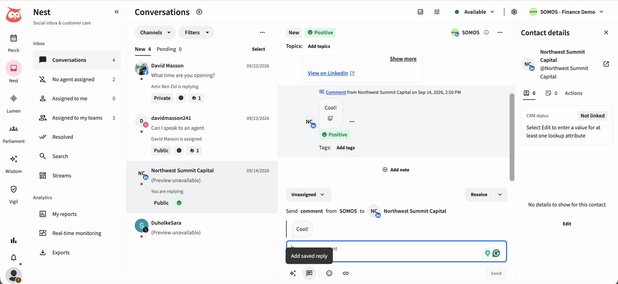
- The Current Paradigm (2026 and Beyond): The industry has pivoted sharply toward integration and consolidation. Rather than forcing teams to bounce between disparate tabs, modern enterprise software relies on connected app ecosystems. AI agents are no longer bolted-on side features; they are embedded directly into the foundational data layer, providing cited answers and real-time operational support from within the primary workspace.
Supporting Data: Comparing the Leading Tools of 2026
To help organizations navigate this complex market, industry analysts and marketing leaders evaluate tools based on core capabilities, starting price points, and intended use cases.
| Tool | Category | Best for | Standout Feature | Starting Price | Free Plan |
|---|---|---|---|---|---|
| Hootsuite Social OS | All-in-one management | Teams managing multiple brands and channels | Connected apps for publishing, listening, care, and AI in one system | $99/user/month | No |
| HubSpot | All-in-one management + CRM | Teams that need social tied to CRM data | Social interactions mapped to contact records | $7/month/seat (billed annually) | Yes |
| NetBase Quid | Analytics and listening | Consumer and market intelligence | Consumer sentiment and brand health analysis | Custom pricing | No |
| Google Business Profile | Analytics and reputation | Local businesses managing reviews | Free review management and business updates | Free | Yes |
| Canva | Content creation and design | Teams without a dedicated designer | Template library plus AI image generation and editing | $10–$15/month (billed annually) | Yes |
| Adobe Stock | Content creation and design | Teams in the Adobe ecosystem | Licensed stock assets inside Creative Cloud workflows | $29.99/month | No (30-day trial) |
| Wisdom by Hootsuite | AI tools | Teams that want AI grounded in their own social data | Cited answers from live social data in plain language | Included with plans | No |
| Lately AI | AI tools | Repurposing long-form content into social posts | Auto-generated captions from blogs, podcasts, and webinars | $99/month (billed annually) | No |
| ChatGPT | AI tools | General-purpose ideation and drafting | Connectors that bring social data into the chat window | $20/month | Yes |
| Upfluence | Influencer management | Discovering and managing creator partnerships | Creator search across six networks | Contact for pricing | Free Chrome extension |
| Insense | Influencer management | UGC and creator campaigns for ecommerce | End-to-end UGC briefs and creator matching | $300/month (billed annually) | No |
| Monday.com | Collaboration and workflow | Campaign planning and content calendars | Customizable boards with workflow automations | $9/user/month | Yes |
| Airtable | Collaboration and workflow | Cross-team workflow management | Database flexibility with calendar and kanban views | $20/user/month | Yes |
| Notion | Collaboration and workflow | Documentation and content ideation | Central knowledge base for briefs and brand guidelines | $10/user/month | Yes |
Official Industry Responses: Prioritizing AI, Governance, and ROI
As marketing budgets face closer scrutiny from executive leadership, software buyers are altering how they vet new technology. According to recent surveys from research giants like Gartner, approximately 81% of marketing technology leaders have already implemented or are actively piloting AI agents within their operations.
Industry experts emphasize that the value of AI in 2026 relies entirely on governance and data grounding. Standalone generative tools that lack context often produce generic copy or inaccurate claims. By contrast, natively integrated intelligence layers—such as Wisdom within Hootsuite Social OS or specialized MCP (Model Context Protocol) connectors—query live enterprise performance data and provide traceable citations. This ensures that brand safety, compliance rules, and audit trails remain intact across heavily regulated sectors like finance and healthcare.
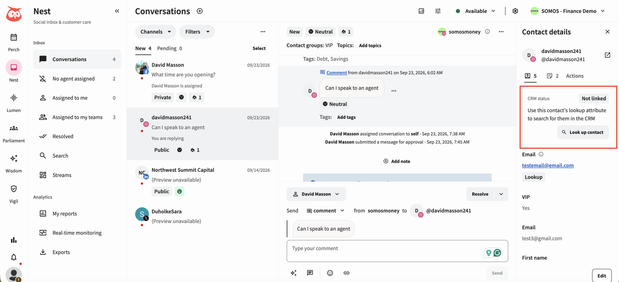
Furthermore, proving return on investment (ROI) has shifted from a secondary preference to a mandatory requirement. Enterprise teams no longer evaluate tools solely on how easy it is to schedule a post; they assess whether platforms can map social engagement directly to sales pipelines, CRM records, and bottom-line revenue.
Implications: How to Build Your Tech Stack
Choosing the right social media toolkit requires a strategic audit of your organization’s unique structure, team size, and business goals. Freelancers managing a handful of local clients have vastly different requirements than multinational enterprises overseeing regional governance structures.
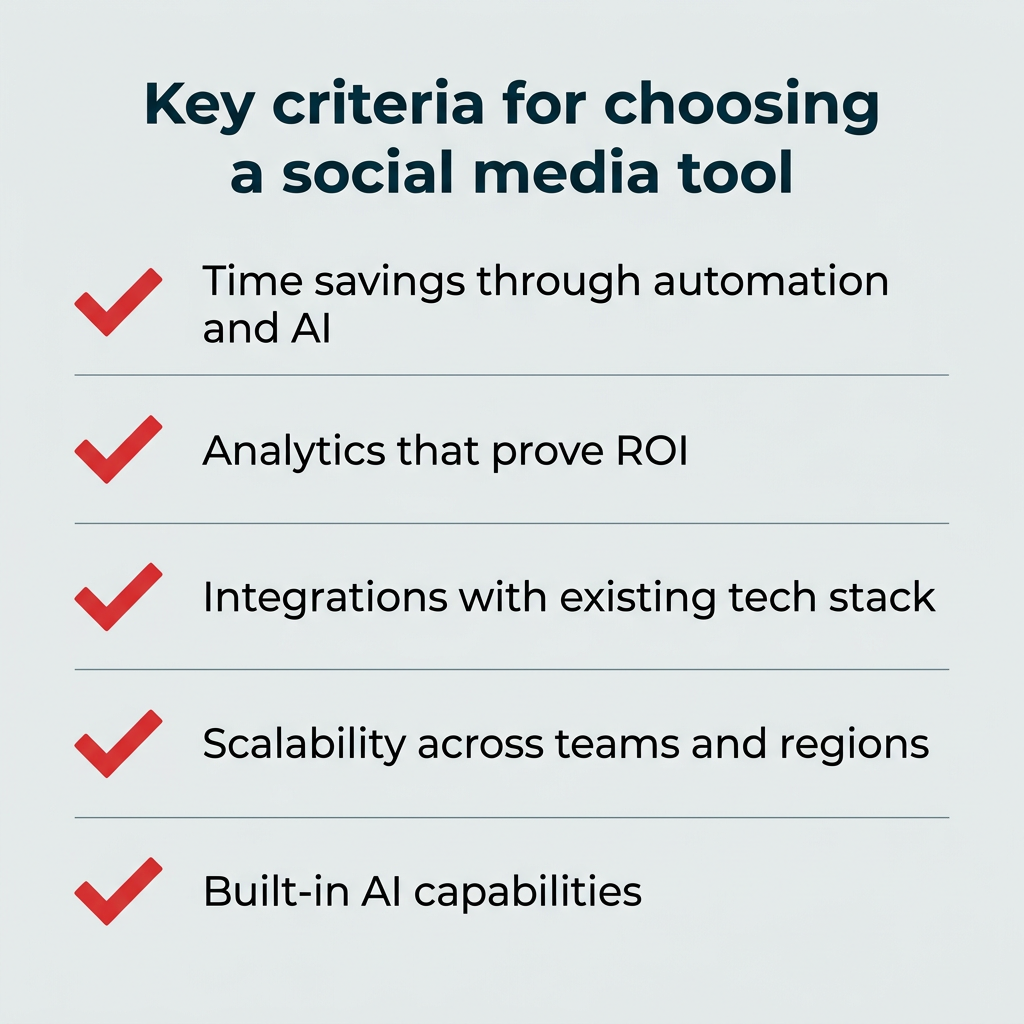
When evaluating potential additions to your workflow, consider six foundational criteria:

- Time Savings: Does the platform eliminate repetitive administrative tasks through bulk scheduling, unified messaging inboxes, and automated workflows?
- ROI Measurement: Can the tool generate custom executive reporting and attribute social activity directly to revenue outcomes?
- Tech Stack Integration: Does the software integrate smoothly with existing enterprise software, such as Salesforce, HubSpot, Adobe Creative Cloud, or Slack?
- Scalability and Governance: For large organizations, does the tool offer role-based permissions, multi-brand dashboards, and strict compliance controls?
- Built-In AI Capabilities: Are AI features natively embedded to assist with trend detection and content optimization without requiring external tabs?
- Reputation Protection: Does the system include advanced social listening features to monitor brand sentiment and flag potential PR issues before they escalate?
Finding the Balance: Free vs. Paid Solutions
While free tiers offered by tools like Canva, Google Business Profile, and Notion are invaluable for solo creators and small local businesses, they invariably hit a wall as organizations grow. Free tools lack essential multi-user capabilities, such as advanced approval workflows, role-based access controls, and deep cross-channel analytics. When a team spends more time stitching together fragmented free apps than executing creative strategy, it serves as a clear signal to consolidate into a unified paid platform.

Ultimately, the most effective social media tech stack is not the one with the highest number of subscriptions, but the one that harmonizes creation, engagement, and analysis into a singular, streamlined operation.
 Azzam Bilal Chamdy