
 By Azzam Bilal Chamdy
By Karolina Mikolajczyk
Team Lead & Digital Strategy Expert
Main Facts
In an era where the average global user spends roughly 141 minutes every single day scrolling, posting, and interacting on social networks, the sheer volume of public discourse has become a goldmine for modern enterprises. Enter social listening: the sophisticated practice of tracking, aggregating, and analyzing digital conversations across social media platforms, dedicated web forums, review sites, and podcasts to decode what audiences are saying about brands, competitors, and entire industries.

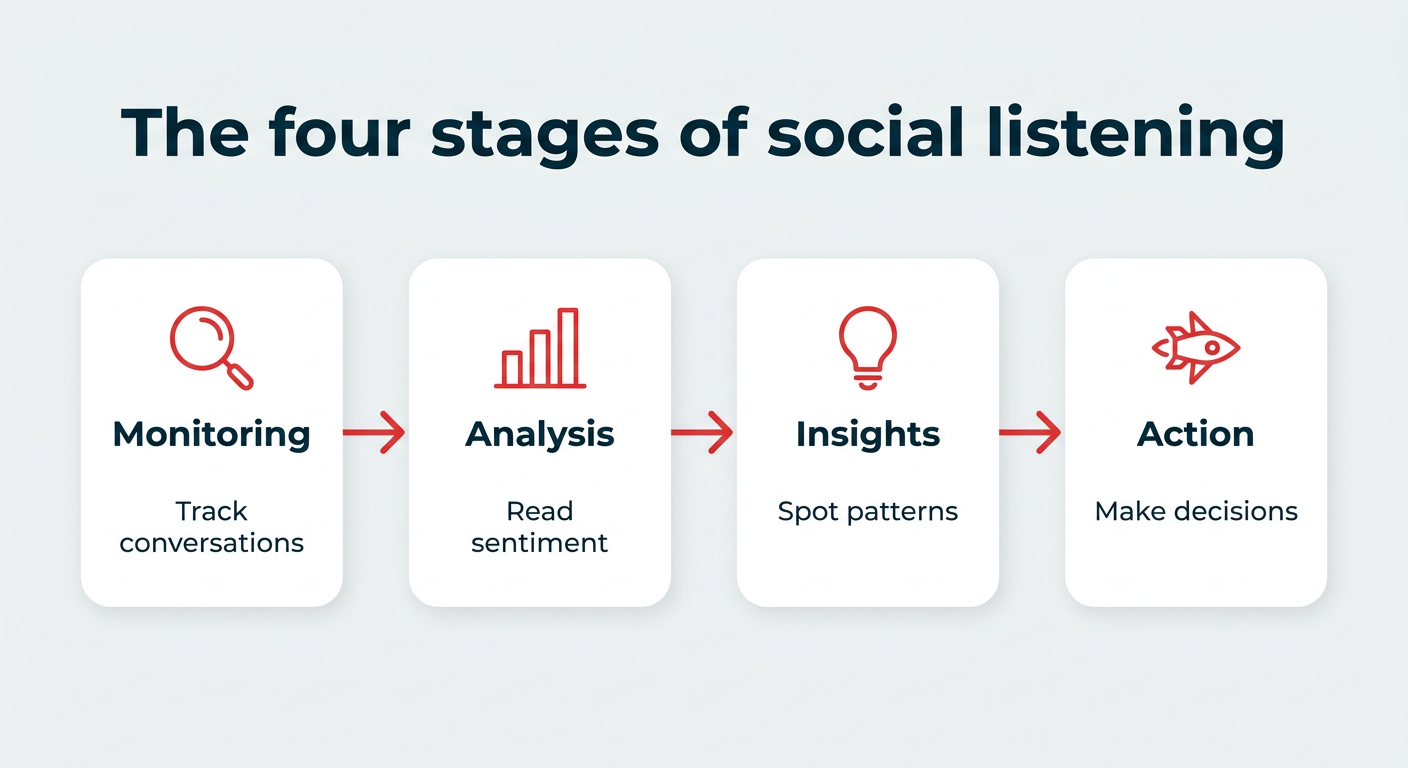
Unlike traditional market research—which often relies on lagging indicators like surveys and focus groups—social listening operates in real-time. It moves businesses through a continuous four-stage framework: monitoring, analysis, insights, and action.
As digital touchpoints fragment across thousands of online channels, enterprise organizations can no longer rely on manual observation or rudimentary tracking. Driven by advancements in artificial intelligence (AI), today’s social listening architecture automatically categorizes consumer sentiment, spots macro-trends before they peak, tracks competitor positioning, and surfaces vital operational feedback. From tech companies preemptively resolving software bugs to global brands neutralizing PR crises overnight, social listening has evolved from a tactical marketing metric into a foundational pillar of corporate intelligence.

Chronology and Evolution: From Reactive Monitoring to Predictive Intelligence
To understand how social listening reached its current enterprise stature, it helps to examine its chronological trajectory:
- The Early 2010s (The Era of Social Monitoring): Brands initially treated social media as a digital customer service helpdesk. Tools were largely reactive, designed to alert a community manager when a brand handle was tagged so they could reply to a complaint or retweet a compliment. The focus was strictly on what was being said on surface-level platforms like Twitter and Facebook.
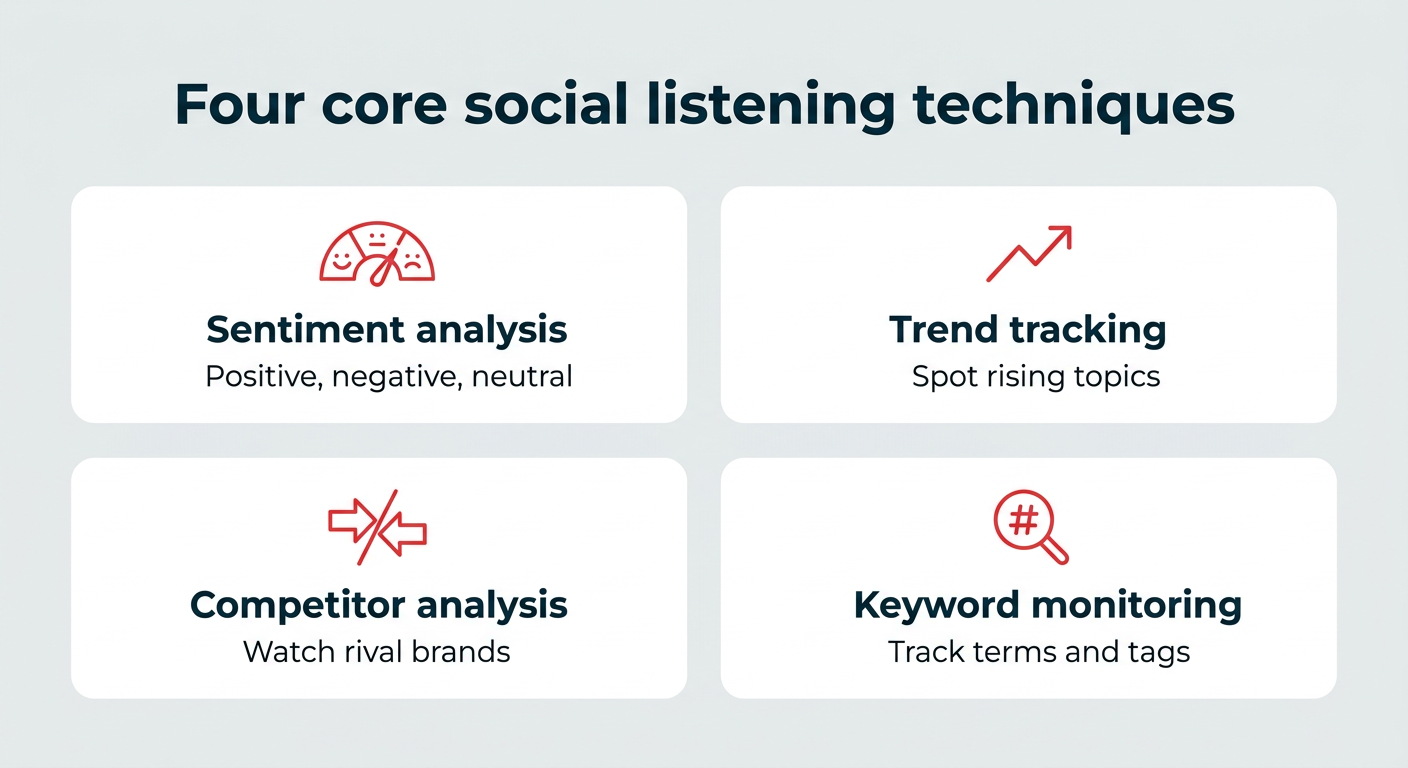
- The Mid-to-Late 2010s (The Shift to Context): As digital channels multiplied, companies realized that tracking individual mentions was insufficient. Organizations began adopting Boolean search strings and keyword parameters to understand broader audience attitudes. This era marked the birth of automated sentiment analysis, allowing brands to gauge whether public perception skewed positive, negative, or neutral.
- The 2020s (The Rise of Cross-Channel Intelligence): Conversations fragmented across review hubs, niche forums, subreddits, and podcasts. Social listening tools expanded their technical capabilities to ingest unstructured data across these diverse ecosystems. Listening transitioned from a purely marketing-centric exercise to a cross-departmental utility feeding data directly into product, legal, and customer support pipelines.
- 2025 and Beyond (The AI and Multimodal Era): Powered by generative AI, modern social listening has become predictive rather than merely reactive. Tools now feature multimodal processing—analyzing not just text, but visual logos in TikTok videos, unspoken brand appearances in Instagram Reels, and audio-first media like podcasts.
Supporting Data and Analytics: The Scale of Modern Conversations
The necessity of social listening is underscored by hard numbers and behavioral shifts across the digital landscape:
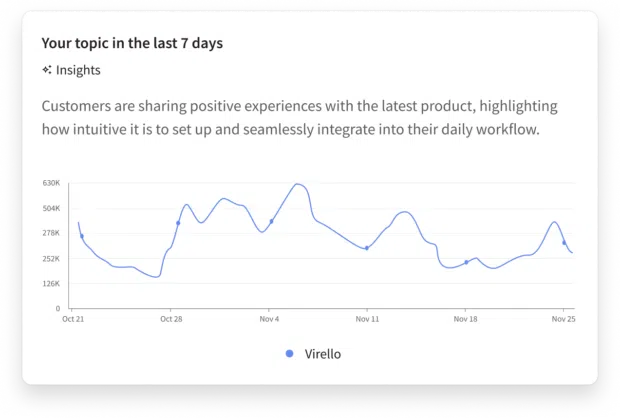
- 141 Minutes: The average daily time spent by global consumers on social media platforms, generating an astronomical volume of unstructured opinion data daily.
- 83% of Marketers: According to recent industry metrics cited by Statista, the vast majority of marketing leaders point to "increased exposure" as social media’s primary benefit—an objective that is measurably optimized through precise listening tools.
- A $16.19 Billion Market: Industry forecasts by ResearchAndMarkets project the global social media listening market to hit $16.19 billion by 2029, reflecting aggressive corporate investment in real-time business intelligence.
- The GenAI Efficiency Dividend: Recent data from Gartner indicates that 49% of Chief Marketing Officers (CMOs) cite time efficiency as generative AI’s primary Return on Investment (ROI) driver, validating the integration of AI-powered sentiment scoring and automated trend extraction into core enterprise workflows.
Monitoring vs. Listening: A Critical Distinction
| Feature | Social Monitoring | Social Listening |
|---|---|---|
| Primary Focus | What people are saying | Why people are saying it |
| Core Objective | Tracking online chatter and responding quickly | Learning from conversations to optimize products, support, and strategy |
| Data Types | Direct mentions, comments, direct messages | Unstructured conversations, overall sentiment, recurring behavioral patterns |
| Granularity | Surface-level | Deep, contextual understanding |
| Timeframe | Reactive and real-time | Ongoing, strategic, and predictive |
| Practical Example | Answering a single customer complaint about delayed shipping | Discovering that shipping complaints spike every Friday, signaling a systemic logistics bottleneck |
Official Perspectives and Industry Insights
Enterprise leaders across heavily regulated and consumer-facing sectors increasingly rely on social intelligence to navigate market volatility.
Brian Wright, Social Media Listening and Intelligence Leader at Wells Fargo, emphasized in discussions with industry analysts that social listening provides essential real-time insights for strategic decision-making—particularly during periods of institutional or macroeconomic change. Rather than relying on guesswork, enterprise leadership uses listening infrastructure as an early-warning system.
Similarly, corporate case studies highlight how listening data alters fundamental business trajectories:
- Aviation Efficiency: Hong Kong Airlines successfully utilized advanced monitoring to catch and rectify a major pricing error before it spiraled into a viral public relations crisis.
- Consumer Engagement: Meal-kit provider HelloFresh established real-time alerts for high-profile influencer mentions, allowing them to capitalize on viral organic endorsements and tailor recipes directly to shifting consumer palates.
- Crisis Management: Global telecommunications giant Deutsche Telekom engineered dedicated crisis-response hubs fed entirely by continuous listening data streams, allowing them to manage network outages with unprecedented transparency.
- Patient-Centric Health: A leading pharmaceutical firm systematically monitored online support groups and public forums where multiple sclerosis patients discussed daily challenges. The insights gathered directly drove the redesign of their patient support initiatives and educational materials.
Implications for Business Strategy
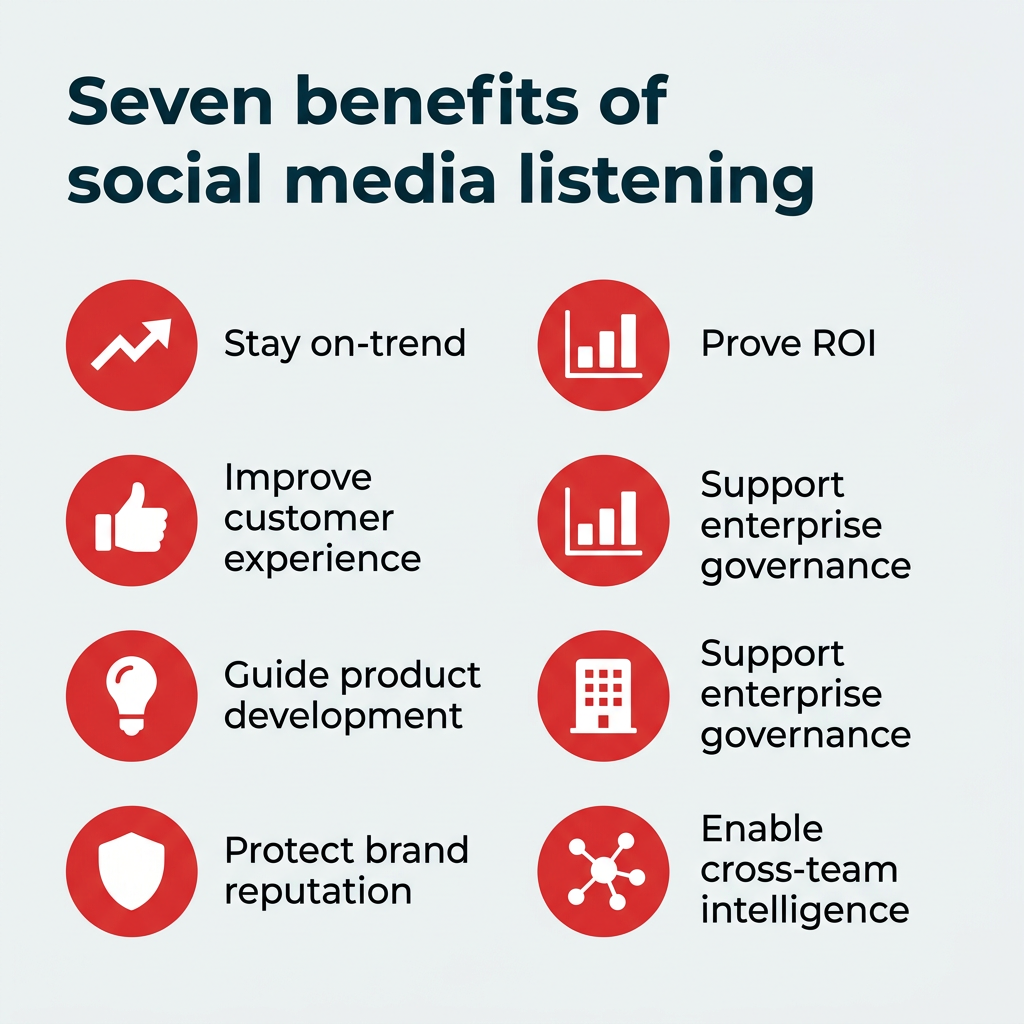
The implementation of robust social listening frameworks carries profound implications across the modern corporate ecosystem:
1. Revolutionizing the Customer Experience (CX)
By analyzing aggregated sentiment patterns rather than isolated support tickets, companies can identify systemic flaws before they overwhelm customer service queues. When a software provider notices an uptick in phrases like "slow loading times" following a deployment, routing that trend directly to engineering shifts customer service from a reactive cost center into an engine of proactive product development.
2. Strengthening Marketing and Brand Positioning
Instinct-driven marketing is rapidly being replaced by empirical evidence. Social listening reveals which messaging hooks resonate, how competitors are stumbling, and what cultural moments are gaining actual momentum. By monitoring share of voice and comparative competitor sentiment, marketing teams can adjust campaign creative mid-flight to maximize resonance.
3. Democratizing Enterprise Data
Social listening data is most potent when it breaks out of marketing silos. Piping real-time social alerts into enterprise collaboration tools like Slack or Microsoft Teams, and integrating sentiment metrics directly into Customer Relationship Management (CRM) platforms (such as Salesforce), ensures that product, legal, and executive teams operate from a single, unified source of audience truth.
4. Navigating Limitations and Privacy Realities
Despite its power, social listening is not without limitations. Algorithmic bias, data privacy regulations (such as GDPR and CCPA), and the inability to capture "dark social" (private messaging apps and closed groups) mean brands must maintain realistic expectations. Listening provides directional intelligence and macro-trends, but it must be paired with human oversight, qualitative research, and strict compliance frameworks to ensure ethical data utilization.
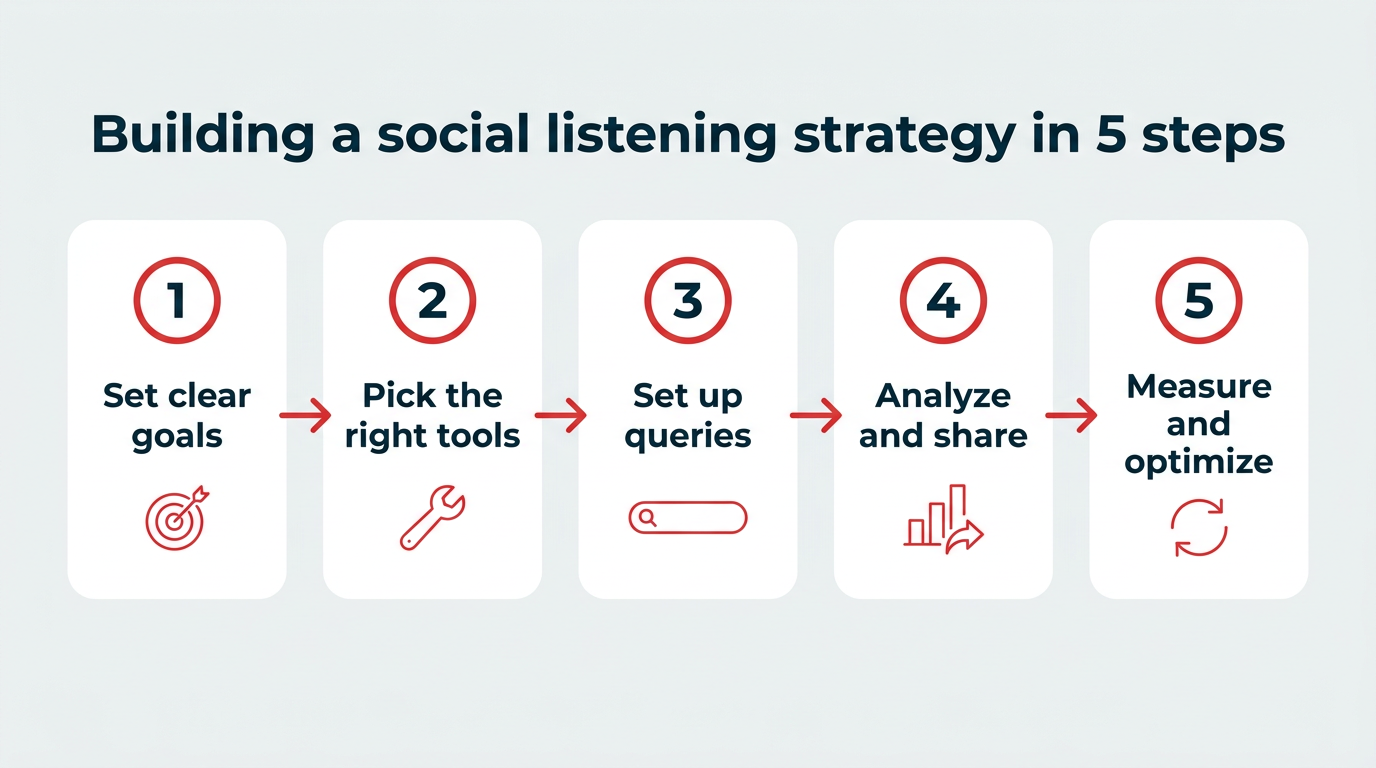
Summary and Next Steps
As digital ecosystems evolve toward multimodal platforms—incorporating advanced video, audio, and generative AI content—the competitive advantage will firmly belong to organizations that listen effectively. General-purpose chatbots like ChatGPT offer ad-hoc text summaries, but they cannot replace dedicated, continuous enterprise listening infrastructure equipped with historical tracking, Boolean logic, and real-time anomaly alerts.
For businesses looking to transition from gut-feel decision-making to data-backed market leadership, investing in a comprehensive social listening strategy is no longer optional. Tools like Hootsuite’s Lumen Lite—which embeds real-time sentiment analysis, trending hashtag tracking, and influencer identification directly into standard workflows—make it easier than ever for teams of all sizes to turn digital noise into measurable business value.

Create. Schedule. Publish. Engage. Measure. Win.
 Basiran
  Jia Lissa
  Nana Muazin