
 By Dwi Wanna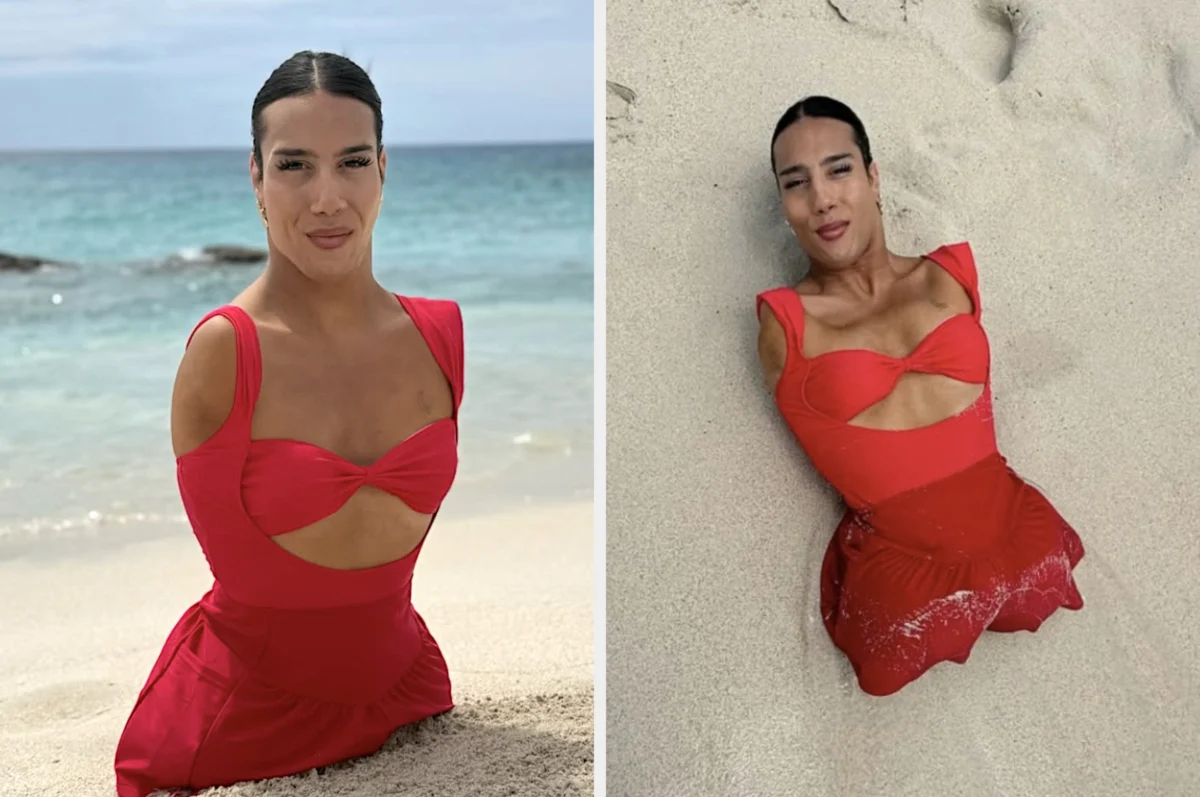
In an era where the boundaries of public performance, digital privacy, and online accountability constantly collide, stand-up comedy has found itself under an increasingly intense microscope. A recent controversy involving acclaimed comedian Nikki Glaser and prominent transgender content creator Briel Adams-Wheatley has reignited a fierce online debate regarding the ethics of incorporating private citizens—particularly marginalized individuals—into stand-up routines without their prior consent.
The incident has sparked widespread division across social media platforms, forcing a broader cultural conversation about where the line is drawn between comedic license, personal autonomy, and the responsibility of public figures in the digital age.
Main Facts
The controversy centers on material featured in Nikki Glaser’s current stand-up tour, which unexpectedly drew the attention of Briel Adams-Wheatley, a 27-year-old lifestyle and beauty creator with millions of followers across TikTok, Instagram, and YouTube. Adams-Wheatley, who was born without arms or legs, publicly came out as a transgender woman in 2023 and has since used her platform to document her transition and daily life.
According to audience reports, Glaser’s routine included references to Adams-Wheatley, specifically touching upon her disability and her transition, including jokes regarding her anatomy. The material came to light after an audience member who attended Glaser’s show in Ridgefield, Washington, reached out to Adams-Wheatley via direct message to inform her that she was the subject of several jokes.
Upon learning about the set, Adams-Wheatley publicly confronted Glaser on social media, questioning why the comedian was making remarks concerning her physical body. The public callout led to a private exchange between the two women, in which Glaser apologized, contested the accuracy of the fan’s retelling, and ultimately agreed to scrap the material from her ongoing tour. However, the private apology did little to quell the wider public discourse, which quickly polarized internet users into distinct camps defending artistic freedom, demanding greater accountability, and debating the ethics of targeting specific, non-celebrity private figures in comedy.
Chronology of Events
To understand how a single stand-up set in Washington State escalated into a viral online controversy, it is necessary to trace the sequence of events as they unfolded across social media:
- The Performance in Ridgefield, Washington: Nikki Glaser takes the stage for one of her tour stops, delivering a set that includes material referencing Briel Adams-Wheatley, highlighting her online presence, her transition, and her physical form.
- The Fan’s Direct Message: An attendee of the Ridgefield show messages Adams-Wheatley on social media. The fan warns her that she is a topic in Glaser’s set, describing the jokes as uncomfortable and detailing that they touched on both her disability and her transition, despite Glaser purportedly offering some compliments about Adams-Wheatley’s confidence and beauty.
- The Public Confrontation: Armed with the fan’s screenshots and account of the performance, Adams-Wheatley takes her grievance public. She tags Glaser directly on social media, writing, "Why are you making comments about what is or is not in my pants?" She also reveals that she had previously purchased tickets to see Glaser perform live in November, but notes that she is actively rethinking her plans to attend.
- Glaser’s Private Apology: Within hours of the public callout, Glaser reaches out to Adams-Wheatley via direct message. Glaser expresses regret that the news reached her in such a manner, states that she should have contacted her directly, and clarifies that she never intended to cause emotional distress.
- Dispute and Concession: In her message, Glaser disputes the fan’s exact portrayal of the joke, asserting that the retelling was inaccurate and that the crowd was encouraged to follow Adams-Wheatley online. Nevertheless, Glaser acknowledges the sensitivity of the topic—emphasizing her aversion to anti-trans rhetoric—and promises to immediately drop the bit from her set.
- The Online Aftermath: Screenshots of the interaction circulate widely across platforms like X (formerly Twitter), TikTok, and Reddit, prompting a fractured response from internet users, comedy enthusiasts, and advocacy groups.
Supporting Data and Context
To fully grasp the dynamics at play in this controversy, it is essential to examine the professional trajectory of Nikki Glaser and the digital footprint of Briel Adams-Wheatley.
Nikki Glaser’s Rise to Prominence
Nikki Glaser, 42, is a veteran stand-up comedian who has spent decades honing her craft in comedy clubs and late-night television. However, her career experienced a massive upward trajectory following her breakout performance at Netflix’s The Roast of Tom Brady in 2024, where her sharp, fearless joke-writing earned widespread critical acclaim. Building on that momentum, Glaser achieved historic milestones by becoming the first woman to solo host the Golden Globes in 2025. Her success continued as she returned to host the ceremony in 2026, with organizers already confirming her return for a third consecutive year in 2027. This elevated status means that Glaser’s material is subject to a much larger, more intense spotlight than at any previous point in her career.
Briel Adams-Wheatley’s Platform and Advocacy
Briel Adams-Wheatley has built a substantial digital presence by sharing candid, resilient, and upbeat content regarding her daily life. Born without arms or legs, she has long challenged societal perceptions of disability. Following her public transition in 2023, she expanded her content to include beauty tutorials, fashion advice, and updates on her gender-affirming journey. Because she shares so much of her life online, she maintains a unique relationship with her millions of followers, who view her as an accessible, relatable figure rather than an untouchable Hollywood celebrity. This accessibility forms a crucial part of why her followers felt compelled to notify her when she became the target of a major touring comedian’s set.
Official Responses and Private Communications
The transparency with which both women handled the initial phase of the conflict provided a rare window into behind-the-scenes conflict resolution in the influencer and comedy spheres.
When Adams-Wheatley publicized the fan’s warning, she did not immediately demand a public apology; rather, she expressed personal hurt and confusion over why her body and transition were being discussed on a public stage for the entertainment of strangers.
Glaser’s subsequent private message, which Adams-Wheatley later shared in part, revealed a careful balancing act between accountability and self-defense:
- Ownership of the Impact: Glaser began by apologizing for the indirect way the news reached Adams-Wheatley, admitting, "I should have reached out to you. I never meant to hurt your feelings at all."
- Contextualizing the Material: Glaser pushed back slightly on the severity of the fan’s description, calling it "not an accurate portrayal of the joke" and noting that her set included praise for Adams-Wheatley’s talent, beauty, and confidence, while urging the audience to follow her online channels.
- Ideological Stance: Glaser made a firm declaration regarding her stance on transgender issues, writing that she hates "anti-trans jokes of all kinds and to think I may have added to that rhetoric is disgusting to me."
- Actionable Resolution: Concluding her message, Glaser promised to scrap the bit entirely, calling it "a dumb joke and I will lose it immediately."
Despite these direct measures, the public release of the conversation fueled an extensive debate rather than bringing the matter to a quiet close.
Implications for Comedy, Consent, and Public Figures
The Glaser-Adams-Wheatley controversy touches upon several deeper, systemic questions facing modern entertainment and digital culture:
1. The Ethics of Targeting Private Citizens and Influencers
In traditional stand-up comedy, public figures, politicians, and celebrities are fair game for satirical or provocative commentary because of their status and access to public platforms. However, the rise of social media creators blurs these traditional lines. While creators like Adams-Wheatley have large followings, they are not traditional celebrities protected by public relations teams or accustomed to being written into the touring material of arena-level comedians. The debate raises questions about whether content creators—especially those belonging to marginalized groups—consent to becoming punchlines simply by virtue of sharing their lives online.
2. The Mechanics of Crowd Reporting in the Digital Age
In the past, jokes told inside a dimly lit comedy club stayed within those four walls unless captured by an official recording. Today, the ubiquity of smartphones, combined with attentive fanbases, means that a comedian’s touring set is effectively subjected to real-time fact-checking and audience surveillance. Fans acting as self-appointed watchdogs can instantly relay material to the subjects of jokes, creating a high-stakes environment where comedians must navigate the fluid boundary between testing experimental material and managing immediate public backlash.
3. The Divide Over Free Expression vs. Marginalized Protection
The public response to the incident exposed a deep ideological rift:
- Critics of the Jokes argued that making light of a transgender woman’s anatomy—particularly someone with a severe physical disability—punches down rather than up. They emphasized that trans individuals face disproportionate levels of harassment and violence, making bodily-focused jokes potentially harmful regardless of the comedian’s underlying intent.
- Defenders of the Comedian maintained that stand-up comedy inherently relies on exploring taboo subjects, awkward truths, and cultural observations. They argued that demanding pre-approval or restricting comedians from mentioning real people stifles artistic freedom and turns stand-up into a sanitized art form. Furthermore, many pointed to Glaser’s swift willingness to listen, apologize, and drop the material as a model for how artists should handle conflicts when their work inadvertently causes harm.
As stand-up comedy continues to adapt to an increasingly interconnected and vocal cultural landscape, the dialogue sparked by Nikki Glaser and Briel Adams-Wheatley highlights the delicate negotiation required between comedic exploration, digital accountability, and human empathy.
 Asep Darmawan
  Iffa Jayyana
  Azzam Bilal Chamdy