
 By Azzam Bilal Chamdy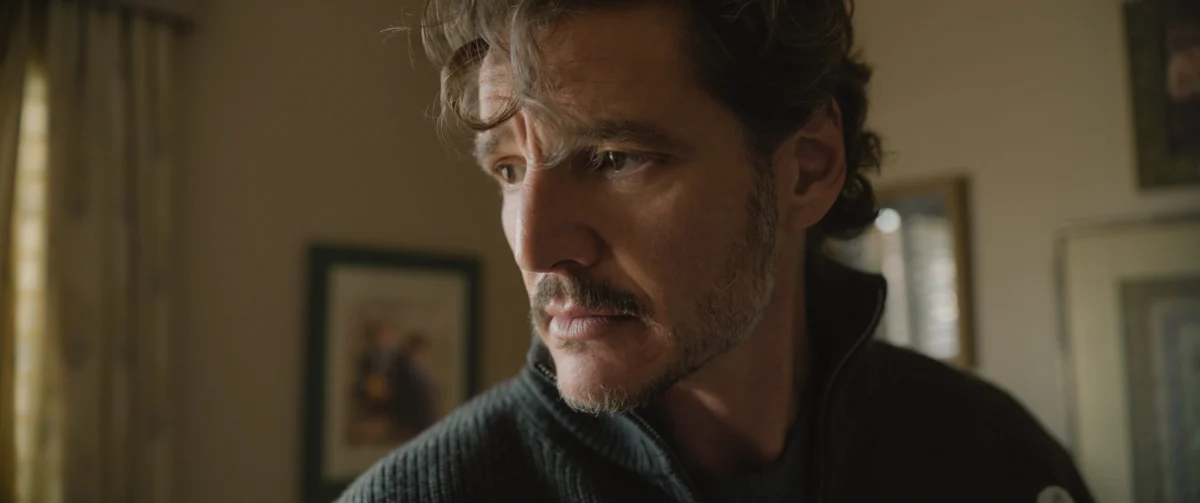
For anyone who spent their formative years tethered to a metronome, the depiction of classical music in cinema is a minefield. Most directors treat the orchestra pit as a romanticized void, a backdrop for melodrama rather than a workspace defined by technical rigor. Having grown up in that world, I have long held a higher bar for authenticity; it is a rare film that captures the specific, crushing weight of a bow against a string or the unspoken hierarchy of a symphony.
While Todd Field’s Tár remains the reigning masterpiece of the genre—a film that inhabits the rarefied air of a world-class conductor with unnerving precision—it is far from the only entry in the canon. From the high-school ensemble heart of Mr. Holland’s Opus to the biopic stylings of Bradley Cooper’s Maestro, the genre has seen a resurgence. Now, Tony Gilroy, the architect behind the gritty tension of Michael Clayton and the political claustrophobia of Andor, steps into the recording studio with Behemoth!, a film that finds a startling, perky mystery in the life of a professional cellist.
The Reality of the "Gig Economy" Virtuoso
At the center of Behemoth! is Alex Serian, played with a disarming, effortless charisma by Pedro Pascal. Serian is a musician of pedigree, a former member of the Chicago Symphony Orchestra whose career has been redirected by the harsh economic realities of the modern musical landscape.
The film eschews the traditional "prodigy-to-stardom" arc in favor of something far more relatable: the "side-gig" grind. In an era where prestigious orchestras are foundering and salary pools are shrinking, even the most formidable virtuosos must diversify. For Serian, this means entering the high-stakes, high-maintenance world of film score recording.
Gilroy portrays this sector of the industry not as a lowly alternative to the concert hall, but as a corporate beast. The conductors in the film—most notably a terrifyingly perfectionist prima donna portrayed by Thomas Kretschmann, who exudes the volatile energy of a young Klaus Kinski—treat the recording studio as a battlefield. The film’s opening sequence is a masterclass in immersion, throwing the audience directly into the intersection of old-school European musical instruction and the blunt, utilitarian jargon of Hollywood post-production. It is a world where "pianissimo" and "new ink" carry equal, life-or-death weight.
Chronology: A Life Measured in Measures
The narrative structure of Behemoth! is, by design, as complex and elliptical as a modern composition. Gilroy opts for a non-linear approach that mimics the disjointed nature of a musician’s life on the road.
- The Chicago Years: We are introduced to Serian at the height of his orchestral career, entangled in a volatile affair with Carol (Olivia Wilde), the wife of a wealthy symphony patron. This section serves as the film’s moral and professional anchor, establishing Serian’s reputation and his propensity for drifting through life with a detached, frictionless ease.
- The Dallas Disruption: A fragmented, atmospheric sequence in Dallas introduces Nadia (Eva Victor), a star violinist. Their relationship serves as a catalyst for the tragedy that eventually forces Serian’s retreat to Los Angeles.
- The Los Angeles Return: Back in his hometown, Serian finds himself drawn into the orbit of Viviana (Alexa Swinton), a 15-year-old avant-pop prodigy. The film’s tension mounts as it becomes clear that Serian’s interest in the girl is not merely artistic, but deeply personal—a connection tied to the fallout in Dallas.
The film’s primary flaw, however, lies in this very chronology. Because the characters remain visually static throughout the timeline, the transition between events is often disorienting. A viewer might find themselves questioning whether a pivotal tragedy occurred months or years after a romantic encounter. While this reflects the "dream-state" quality of a professional who lives entirely within the music, it often sacrifices narrative clarity at the altar of artistic mood.
Supporting Data: The Authenticity of the Bow
My most persistent grievance with music-based cinema is the "mime" factor. Nothing breaks the spell of a film faster than seeing an actor clumsily drag a bow across a cello, their fingers nowhere near the correct positions.
Tony Gilroy has circumvented this entirely by demanding an extraordinary level of commitment from his lead actor. Pedro Pascal did not merely study the cello; he lived it. Every vibrato, every subtle shift in posture, and every movement of the head is authentic. This physical devotion transforms Serian into a believable artist. When we see the archival footage of a six-year-old Serian playing Bach on The Tonight Show, the transition to the adult Pascal feels seamless. The audience is not watching an actor pretend to play; they are watching a character for whom music is as fundamental as breath.
The Meta-Score: A Playful Structural Gamble
Behemoth! is not a symphony; it is a scherzo. It is playful, impish, and deeply enthusiastic about the mechanics of filmmaking. Gilroy, returning to the director’s chair for the first time since The Bourne Legacy, employs a meta-device that blurs the line between diegetic sound and the film’s own score.
We frequently see the orchestra recording a track for a film-within-a-film, only to have that music seamlessly bleed into the soundtrack of Behemoth! itself. To achieve this, Gilroy assembled the "Behemoth! Collective"—nine acclaimed composers, including industry giants James Newton Howard and Alan Silvestri. While this "meta-gambit" is clever and highlights Gilroy’s love for the collaborative nature of cinema, one could argue it is an excess. The film’s personality is strong enough that it could have thrived with a singular, unified voice.
Implications: The Midlife Crisis of the Artist
Beneath the technical brilliance and the musical theater, Behemoth! is fundamentally a study of a man in the throes of a midlife crisis. Alex Serian is an enigma. With his perfectly gelled hair and elegant mustache—a look that recalls a refined, weary Burt Reynolds—he navigates his world with a calm that borders on the pathological.
He is the eye of the storm. While the women in his life, particularly the stalker-esque Carol, and his scruffy, podcast-hosting brother (a standout, lived-in performance by Will Arnett) spiral around him, Serian remains a passenger in his own existence. He is an artist who has spent his life running from consequence, moving from city to city, woman to woman, and gig to gig.
The film’s climax—a high-stakes suspense sequence where Serian infiltrates a mansion to uncover the truth about his past—serves as the necessary "crescendo" to his otherwise flat-lined life. It is in these final moments that the film finally addresses the "Behemoth" of the the weight of the past that one can no longer outrun.
A Verdict on Vision
Despite its arguably disastrous title—a name that is hard to remember, difficult to pronounce, and confusingly punctuated—Behemoth! is a significant achievement. It is a film about the isolation of talent and the strange, artificial reality of the studio system.
Nineteen years after Michael Clayton, Tony Gilroy is still searching for the perfect alchemy between character study and thriller. Behemoth! does not quite reach the heights of his 2007 debut, nor does it capture the haunting, singular vision of Tár. However, it succeeds in doing what few films manage: it treats the musical profession with a reverence that never veers into hagiography.
In the end, Behemoth! is a portrait of a man who has lived his life through the music of others, only to realize, in his final movement, that he must finally learn to play his own. It is a flawed, occasionally frustrating, but ultimately resonant piece of work that reminds us that even when the music stops, the performance continues.
 Suro Senen
  Nana
Nana 