
 By Siti Muinah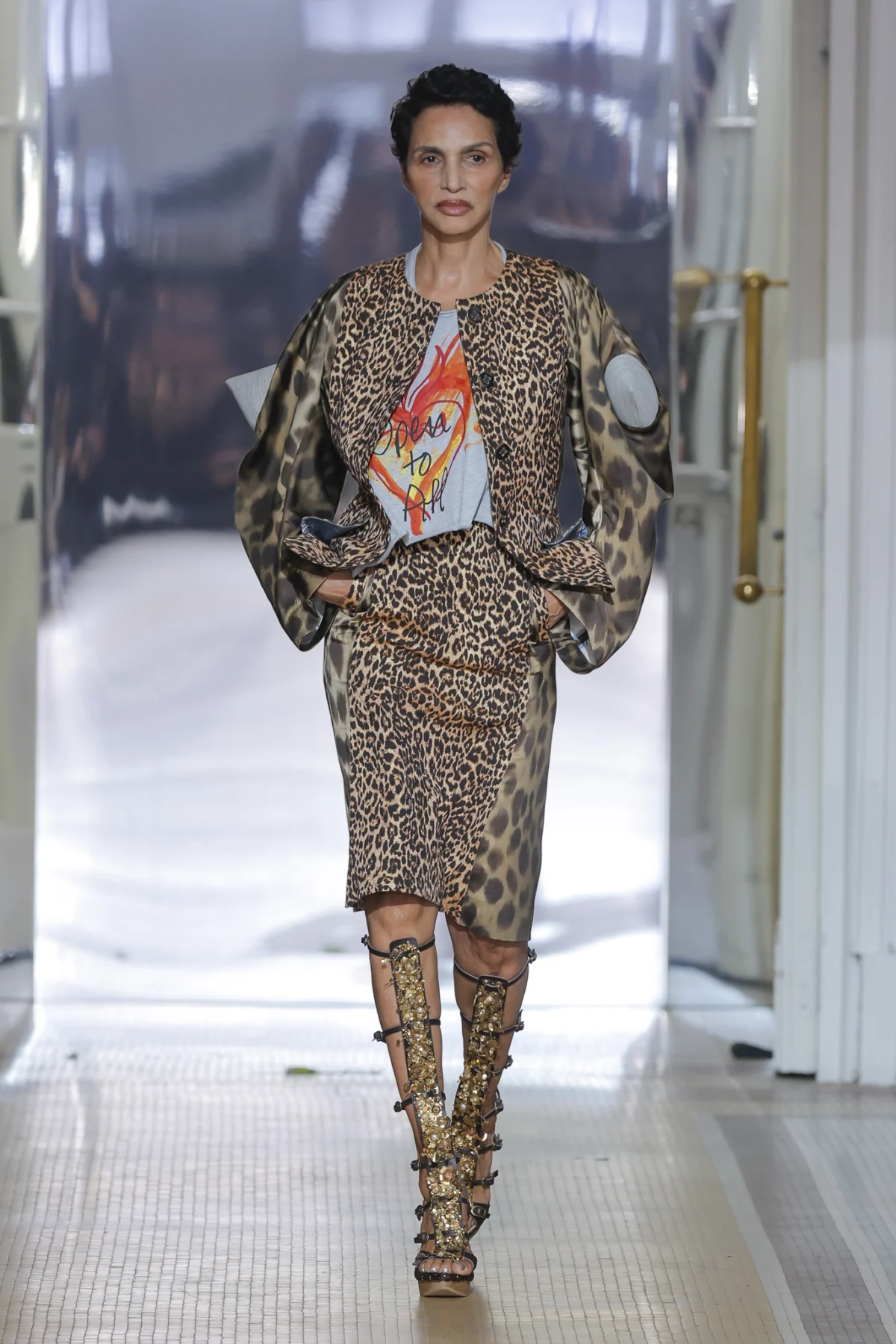
Main Facts: The Palais de la Femme Spectacle
The streets of Paris were gridlocked, paralyzed by the vibrant, surging energy of the annual Pride march. Yet, inside the historic walls of the Palais de la Femme, a different kind of protest—and celebration—was taking place. Vivienne Westwood’s Spring 2027 runway show proved once again that the fashion house remains a bastion of defiant creativity, indifferent to the logistical chaos of the outside world.
The guest list was a testament to the brand’s enduring cross-generational appeal. Jaden Smith, ever the style provocateur, took his place in the front row alongside supermodel Heidi Klum and her 16-year-old daughter, Lou Sulola Samuel. As the lights dimmed, the audience—a mix of fashion industry stalwarts, celebrities, and creative polymaths—witnessed a collection that masterfully bridged the gap between historical costume and modern, punk-infused liberation.
The show opened with the commanding presence of Farida Khelfa, setting a tone of seasoned elegance. The atmosphere shifted from poised to playful when actress Natasha Lyonne made an unexpected runway cameo. Donning a vibrant, open leopard-print jacket, Lyonne strutted with a rhythmic shoulder shake that captured the essence of the show: a collection that refused to take itself too seriously while maintaining the highest level of craftsmanship.
Chronology of the Collection’s Genesis
The narrative of the Spring 2027 collection did not begin in a pristine design studio, but rather in the bustling, multicultural labyrinth of Barbès, a neighborhood in northern Paris known for its sensory overload and vibrant street markets.
Andreas Kronthaler, the creative force behind the house, spent his pre-season period scouring local fabric shops. He found himself drawn to the vivid, intricate patterns of Bazin cottons. According to Kronthaler, the design process was intentionally spontaneous. "I chose different lengths of fabric very randomly and started from there," he explained. This "randomness" served as the foundational DNA of the collection, allowing the textiles themselves to dictate the structure of the garments.
The secondary, and perhaps more scholarly, inspiration came from a piece of fashion history: a late-17th-century "Cheat Jacket" discovered through Kronthaler’s association with a London costume institute. The original garment was a study in pragmatism and artifice—the front was constructed of opulent, expensive fabric, while the back was pieced together from scraps and leftovers.
Kronthaler seized upon this "humble reverse" as the central philosophy for the Spring 2027 collection. By treating the back of the garment with as much importance as the front, he transformed an archaic hack into a modern design manifesto. "The back is just as important as the front," Kronthaler noted. "The collection is all about movement."
Supporting Data: The Anatomy of a Westwood Silhouette
The technical execution of the collection was a riot of contrast. The runway featured a juxtaposition of "flowers piled on flowers" against the sharp, industrial edge of punk-era tailoring. This was a collection that demanded the viewer look twice.
Key technical highlights included:
- The Cheat Jacket Reimagined: By applying the 17th-century construction method to contemporary silhouettes, the collection featured garments that shifted in texture and color as models turned, emphasizing the kinetic nature of the clothing.
- Material Fusion: The mix of traditional court-inspired tailoring with modern, lightweight beachwear created a hybrid aesthetic that felt both historical and futuristic.
- The Bazin Palette: The vibrant, saturated colors sourced from the markets of Barbès provided a stark, optimistic contrast to the darker, more muted punk codes often associated with the Vivienne Westwood name.
The focus on "movement" was not merely a design note; it was a physical requirement for the garments. Silhouettes were engineered to flow, drape, and swing, ensuring that each piece felt alive. From the structured jackets that hinted at 18th-century grandeur to the loose, airy beachwear, the collection functioned as a series of kinetic sculptures.
Official Responses and Creative Philosophy
Backstage, following the roar of the final applause, Andreas Kronthaler was candid about the evolution of the brand’s perspective on masculinity. While honoring the legacy of Dame Vivienne Westwood, Kronthaler is increasingly infusing his own desires into the work, particularly regarding the presentation of the male form.
"A man should be as sexy as women. I don’t see that difference," Kronthaler stated when asked about the prominence of menswear in the show. His approach to men’s fashion for the season was characterized by a "mischievous case for male seduction." The runway featured men in slouchy, oversized nightshirts and high-fashion swimwear—garments that leaned into comfort, vulnerability, and sensuality.
The genesis of these nightshirts was refreshingly mundane. Kronthaler revealed that during a particularly brutal, heat-wave-blighted Parisian summer, he opted for a simple nightshirt as his primary day-wear, cycling through the city and running errands.
"There’s nothing underneath, really," he remarked with a characteristic twinkle in his eye. "People loved it. Everywhere I went, they were just smiling or greeting me nicely." This personal experiment underscored his belief that fashion should be a source of joy and ease, even in the face of environmental or social strain. By dressing men in garments that prioritize a sense of carefree exposure, he is challenging the traditional, often rigid, structures of masculine dress codes.
Implications: A New Era for the House
The Spring 2027 show was more than just a presentation of clothes; it was a positioning statement for the future of the house of Vivienne Westwood. By blending the historical archives with the lived experiences of the designer, the collection bridged the past and the present with a fluidity that few other luxury houses can achieve.
The Sustainability of "The Cheat"
The use of leftovers and repurposed fabrics—inspired by the 17th-century Cheat Jacket—aligns perfectly with the growing industry-wide push for sustainability. By making the "reverse" of a garment a design feature, the house is signaling that the era of hidden waste in fashion must come to an end. It is a philosophy that turns limitations into aesthetic triumphs.
Masculinity in Transition
Kronthaler’s push for a more "sexy," fluid, and comfortable menswear suggests a departure from the hyper-masculine tailoring that has dominated men’s high fashion for decades. By normalizing the "nightshirt-as-streetwear" aesthetic, he is advocating for a more tactile, human-centric approach to style.
The Resilience of Punk
Despite the departure from the original punk aesthetics of the 1970s, the "Westwood spirit" remains firmly rooted in the philosophy of protest. Whether it is protesting the environmental heat wave through design, or protesting the rigidity of gender norms through the lens of a nightshirt, the house continues to use fashion as a tool for social commentary.
As the attendees exited the Palais de la Femme and stepped back into the remnants of the Pride march, the connection between the runway and the streets was palpable. The collection, with its vibrant Bazin prints and unapologetic embrace of movement and comfort, felt like a direct reflection of the city outside: chaotic, colorful, historical, and perpetually evolving.
In the final assessment, the Spring 2027 collection serves as a reminder that Vivienne Westwood, under the guidance of Andreas Kronthaler, remains a brand that does not merely follow trends—it invites the world to participate in its own, highly specific, and beautifully messy vision of what it means to be alive, dressed, and daring in the 21st century. The show was not just a performance of clothing; it was a performance of identity, proving that the most radical act one can commit in a world of traffic and noise is to wear a nightshirt, keep the back as beautiful as the front, and walk with a sense of purposeful joy.
 Nila Kartika Wati
  Reynand Wu
  Ali Ikhwan