
 By Reynand Wu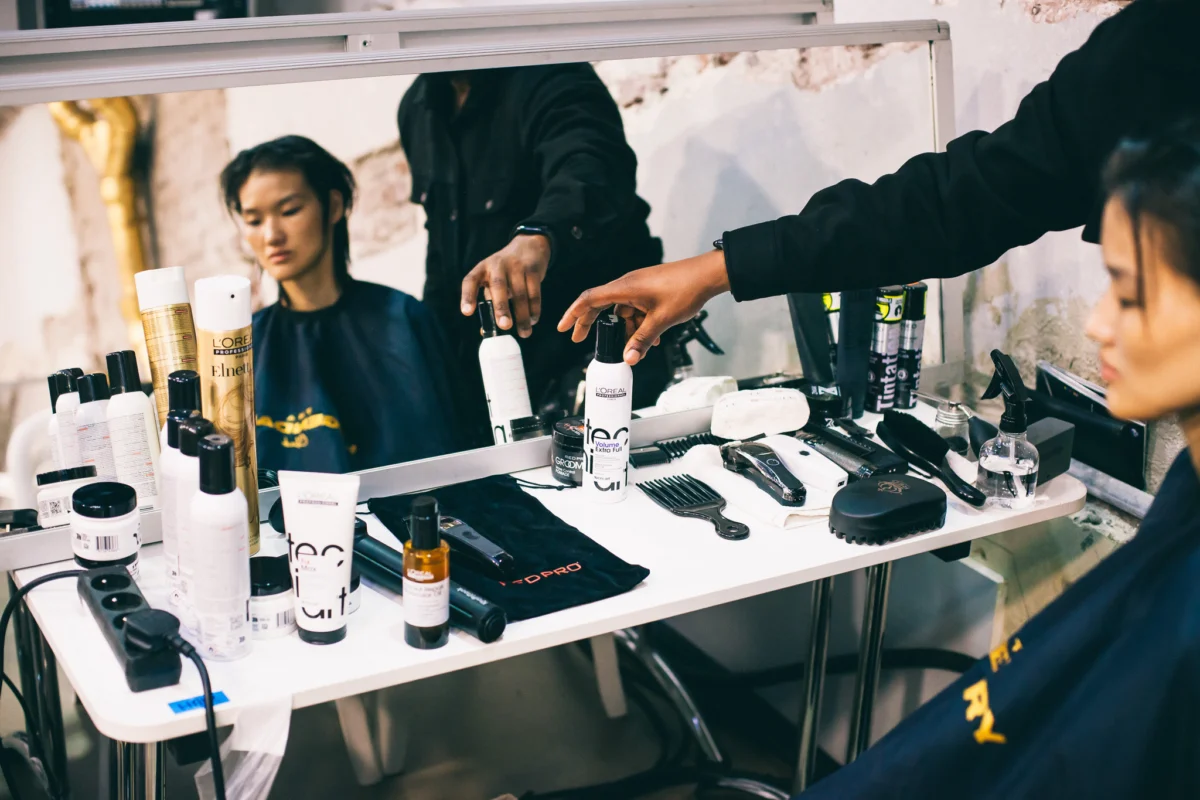
PARIS — As the spring 2027 fashion season descends upon the French capital, L’Oréal Professionnel is doing more than just styling hair; the beauty giant is fundamentally recalibrating its relationship with the global fashion industry. By embedding itself deeper into the high-stakes environment of Paris Fashion Week (PFW), the brand is transforming the traditional "backstage" experience into a proprietary platform for innovation, professional education, and consumer engagement.
For Claire Le Bleis, the global brand president of L’Oréal Professionnel, this move is a deliberate evolution of the brand’s identity. "The brand has had a longstanding partnership with fashion," she notes. "So, this time, we wanted to be here for the Paris Fashion Week, but be here on our own terms."
The Architecture of Transformation
The centerpiece of this season’s strategy is the "Transformation Backstage" hub, a freestanding creative sanctuary located in the heart of Paris’ 11th arrondissement. Unlike traditional backstage setups, which are often cramped, utilitarian spaces tucked behind the runway, this facility is designed to serve as a content-creation engine. Here, celebrities, influencers, and industry tastemakers are provided with high-end hair services that bridge the gap between runway aesthetics and everyday wearability.
This physical space acts as the physical manifestation of Le Bleis’ philosophy: "Hair is as important as clothes, and hair is fashion. Behind all of these creative hairstyles lies the creativity and the technicality of the best professionals, as well as the right professional products."
The brand is currently providing the artistic lead for four high-profile shows this season: Courrèges, Mugler, Weinsanto, and Pressiat. By partnering with designers who are known for disrupting traditional fashion codes, L’Oréal Professionnel is ensuring that its stylists are not merely executing a brief, but co-developing the visual language of the collection.
Chronology: From 1909 to the Digital Frontier
To understand the current strategy, one must look at the brand’s origins. Founded in 1909 with the invention of the world’s first "inoffensive" hair dye, the company was born from the very concept of chemical transformation. Throughout the 20th century, the brand cemented its status as a B2B premium powerhouse, serving the needs of salon professionals exclusively.
However, the last five years have marked a radical pivot. The company has shifted from a strictly professional-facing entity to a hybrid model that balances B2B excellence with a robust B2C digital presence.
Key milestones in the recent transformation strategy include:

- April 2026: Launch of the "L’Oréal Access" training platform, which ballooned to 1.5 million users by mid-2026.
- April 26, 2027: The inaugural "Transformation Day" at the Palais de Tokyo, an event that brought together 100 global influencers and 127 million viewers via social media.
- April 27, 2027: The subsequent livestreamed "Tech Talk" masterclass, which reached 24,000 professionals across 65 countries.
- Spring 2027: The rollout of the "Transformation Backstage" hub during Paris Fashion Week, focusing on product "torture-testing" and social media content creation.
Supporting Data: A Billion-Euro Momentum
L’Oréal Professionnel’s aggressive strategy is backed by significant financial performance. Having surpassed the 1-billion-euro annual sales threshold, the brand has become a critical engine within the L’Oréal Group’s Professional Products division.
Market data reveals a compelling story regarding the brand’s global footprint. While France remains the spiritual and commercial home base, the brand is witnessing explosive growth in emerging markets. Currently, emerging nations account for approximately 30 percent of the brand’s total turnover, with India and Brazil serving as the primary growth drivers.
The "premiumization" of the hair care market is a key indicator for future revenue. In mature markets like Europe and the U.S., the ratio of professional-to-mass-market product usage is 1:4. In contrast, in regions like India and Latin America, the ratio sits at 1:8. For Le Bleis, this represents an enormous untapped opportunity for "trading up" consumers—a strategy she views as a long-term structural trend rather than a fleeting market fad.
Furthermore, the brand’s hair care business has nearly doubled in the last four years, second only to its sister brand, Kérastase. Success stories like "Metal Detox"—a professional mask developed specifically to address chemical breakage—have become top-selling products in Europe and China, proving that professional-grade technology has a massive appeal among the general public.
Official Perspectives: The Philosophy of the "Market-Maker"
In discussions regarding the brand’s trajectory, Le Bleis emphasizes that L’Oréal Professionnel occupies a unique position as the only hair brand in the world to manage the entire spectrum of hair care: color, treatment, daily styling, and professional tools.
"We are the only hair brand in the world to carry all of the hair categories," she says. "We are able to carry an end-to-end transformation."
When asked about the role of technology, Le Bleis frames it as a tool for liberation rather than just efficiency. The "Tech Talk" masterclasses, which now utilize AI-powered real-time translation, are designed to democratize expertise. "We are here to break the barriers of knowledge and expertise-sharing," she explains. By providing free, expert-led training to stylists worldwide, the brand is positioning itself as an essential partner to the global hairdressing community, rather than just a supplier of inventory.
Regarding the move into hybrid product categories—such as styling products that offer the reparative benefits of traditional hair care—Le Bleis views this as the logical conclusion of the brand’s R&I (Research and Innovation) efforts. "Transformation with our technological innovations is not a trend for us; it is in our DNA."

Implications for the Future of Hair Care
The implications of L’Oréal Professionnel’s current strategy are three-fold:
1. The "Social" Salon: By using Fashion Week as a laboratory for content, the brand is effectively teaching consumers to value professional services. By broadcasting the "how-to" behind the runway look, the brand encourages viewers to seek out salon services to achieve similar, high-end transformations. This serves the dual purpose of keeping the professional salon relevant in a DIY-obsessed social media landscape.
2. The Rise of "Hybrid" Consumerism: The shift toward hybrid products—those that perform both cosmetic and therapeutic functions—is likely to set a new standard for the industry. As the line between "styling" and "treatment" blurs, consumers are becoming accustomed to products that serve multiple purposes, effectively increasing the brand’s "wallet share" per customer.
3. The Democratization of Professional Expertise: Through initiatives like the AI-augmented "Tech Talks" and "L’Oréal Access," the brand is creating a global standard for what a professional hairdresser looks like. This global standardization of quality and technique ensures that whether a consumer is in New Delhi, São Paulo, or Paris, the expectation of a "professional" result remains consistent.
As L’Oréal Professionnel looks toward the second half of 2027 and beyond, the focus remains on expansion. With the "Transformation" narrative firmly established as their guiding principle, the brand is not merely reacting to changes in the beauty landscape—it is actively engineering them. By marrying high-fashion relevance with deep technical expertise and aggressive digital accessibility, the company is ensuring that it remains the architect of the professional beauty industry for the next century, just as it was for the last.
"We are here to tell people that there are many opportunities offered to them," Le Bleis concludes. "You can have different looks, different lives, and we do that in a very expert and safe way."
 Nila Kartika Wati
  Ali Ikhwan
  Evan Lee Salim