
 By Nila Kartika Wati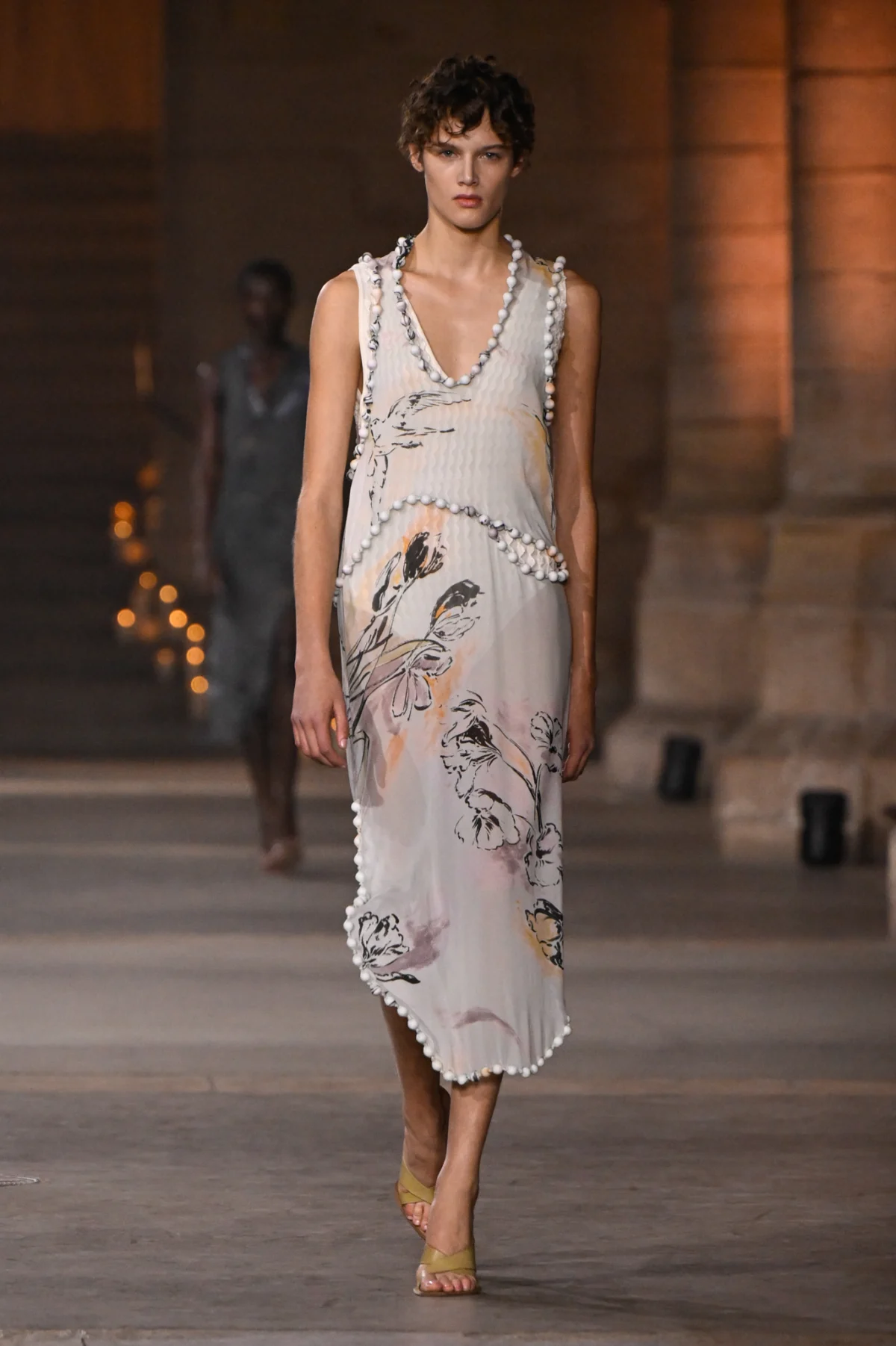
In the high-stakes world of luxury fashion, where established heritage houses often struggle to navigate shifting consumer appetites, Victoria Beckham has achieved a feat that once seemed improbable to industry skeptics: she has built a brand that is not only culturally relevant but fiscally sound. Following a landmark year that saw the business achieve its first-ever operating profit, the designer’s latest Spring collection acts as both a victory lap and a blueprint for a brand finally hitting its stride.
Main Facts: A Brand in Full Bloom
The recent runway presentation in Paris was more than just a seasonal offering; it was a physical manifestation of a business strategy that has finally clicked. Against the backdrop of a broader luxury market that has faced significant headwinds, Victoria Beckham’s business reported a 15 percent revenue growth in 2023.
This growth, driven by a symbiotic success between her core apparel line and her high-performing beauty division, marks a turning point. The brand has successfully bucked the industry-wide slowdown, proving that a refined, disciplined approach to design—combined with a deep understanding of the modern consumer’s desire for "polished ease"—can yield tangible financial rewards.
Chronology: The Road to the "First Profit"
To understand the weight of the latest collection, one must look at the arduous road taken to reach this point. For years, the Victoria Beckham label was defined by its high-concept ambition and the steady evolution of its aesthetic. However, the business side was long plagued by the heavy overheads typical of scaling a luxury house.
- The Foundational Years: Starting as a boutique fashion label in 2008, Beckham focused on structured, architectural dresses that mirrored her own public image.
- The Pivot to Beauty: The launch of Victoria Beckham Beauty was the catalyst for true diversification. By leveraging her personal expertise and audience, she created a high-margin vertical that provided the cash flow necessary to stabilize the fashion business.
- The Strategic Tightening: Throughout 2022 and 2023, the brand underwent a rigorous internal restructuring. This included a more disciplined approach to SKU management and a laser-focus on core bestsellers—leather goods, elevated staples, and signature dresses—that consumers were actually buying.
- The Milestone: By the close of 2023, the combination of these efforts culminated in the brand’s first-ever operating profit, a milestone that effectively silenced critics who questioned the long-term viability of the label.
Supporting Data: The Metrics of Success
The 15 percent growth rate reported last year is particularly significant when contrasted with the broader luxury sector. While many high-end conglomerates are currently grappling with "aspiration fatigue" and weakening demand, Victoria Beckham’s model is proving resilient.
The key to this resilience lies in the brand’s balanced portfolio. Revenue is no longer tethered solely to the seasonal runway show. Instead, it is underpinned by:
- Beauty Innovation: The upcoming launch of her "nourishing" matte velvet lipsticks represents two years of R&D, positioning the brand as a serious player in the cosmetics space rather than just a celebrity licensing venture.
- Accessory Expansion: Accessories often serve as the "gateway" to a luxury brand. By introducing high-margin items like the "floating" wedge sandal and the reimagined Fontana belt buckle, Beckham is capturing a broader demographic.
- The "Harper Effect": By creating pieces that appeal to a younger, Gen-Z audience—such as the plissé pleating and playful statement bows—the brand is successfully bridging the gap between its established, sophisticated customer and the next generation of luxury shoppers.
Official Responses and Creative Vision
"Ease" was the operative word for the Spring collection. In an interview following the show, Beckham emphasized the necessity of a "polished, unfussy wardrobe" that transcends the artificial divide between daywear and evening wear.
"I want the clothes to look like they are suspended and dancing around the body," Beckham remarked regarding the collection’s lighter, more ethereal silhouettes. This philosophy extended to the editing process; the runway was intentionally limited to 44 looks. This paring-down served two purposes: it ensured a cohesive narrative and allowed for a clearer focus on the technical details of the tailoring.
The design team’s focus on "soft edges" was evident in the contrast between the tailored suits—some featuring innovative, sliced-off lapels—and the whimsical, taffeta raincoats that appeared almost weightless. By blending hard tailoring with soft, diaphanous fabrics, Beckham is catering to a customer who demands utility without sacrificing femininity.
Implications: A New Era for the Business
The implications of this successful season go beyond the clothes themselves. Victoria Beckham has effectively transitioned from a "celebrity designer" to a "fashion executive." The business is now operating with the maturity of a house that understands its place in the market.
The Power of the "Flat" Strategy
The introduction of flat handbags, inspired by the sleek, minimalist aesthetics of the 1920s, signals a shift in consumer demand toward "quiet" luxury that is functional. These bags, designed specifically to carry only the essentials—a phone and a lipstick—are a direct response to the "less is more" ethos currently dominating the market.
The Beauty-Fashion Ecosystem
The upcoming launch of the matte velvet lipsticks is perhaps the most telling signal of the company’s future. By integrating beauty launches into the fashion cycle, Beckham is creating a holistic lifestyle brand. This ecosystem ensures that a customer who might not be ready to invest in a designer suit can still engage with the brand through a lipstick or an accessory, creating a robust, multi-tiered revenue stream.
Scaling the "Polished" Aesthetic
The success of the "Fontana" belt buckle—which deconstructs the brand’s own logo—suggests that Beckham is no longer afraid to play with her brand identity. This level of confidence is usually reserved for heritage houses with decades of history. For a relatively young brand, it suggests a maturity that will serve the company well as it continues to expand its retail footprint.
Conclusion: The Path Forward
As the Victoria Beckham brand looks toward the future, the primary challenge will be maintaining this delicate balance between high-end fashion and mass-market accessibility. The 2023 results indicate that the foundation is secure, but the "fashion" side of the business must continue to innovate to keep pace with the rapidly evolving luxury landscape.
By focusing on "suspended, dancing" silhouettes, a disciplined approach to garment production, and a commitment to beauty innovation, Beckham has carved out a unique space for herself. She is no longer just "Victoria Beckham the celebrity." She is the leader of a burgeoning fashion house that has learned the hardest lesson in the industry: that the most beautiful collection in the world is only as strong as the business that supports it.
With the runway now cleared and the new product lines ready for global distribution, the brand is arguably in its most exciting phase yet. The "wedges"—both in her footwear designs and as a metaphor for the lift the business has received—have set the stage for what looks to be a long-term, sustainable reign in the global luxury market.
 Reynand Wu
  Ali Ikhwan
  Evan Lee Salim