
 By Lina Irawan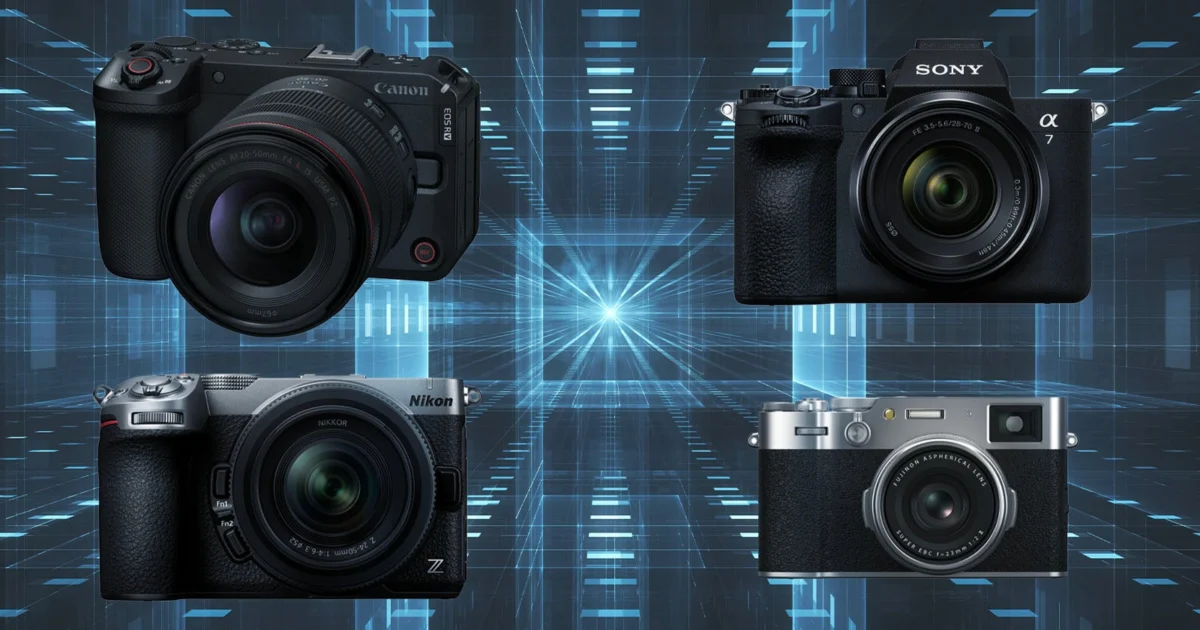
By Technology & Culture Desk
Published: October 2026
Main Facts
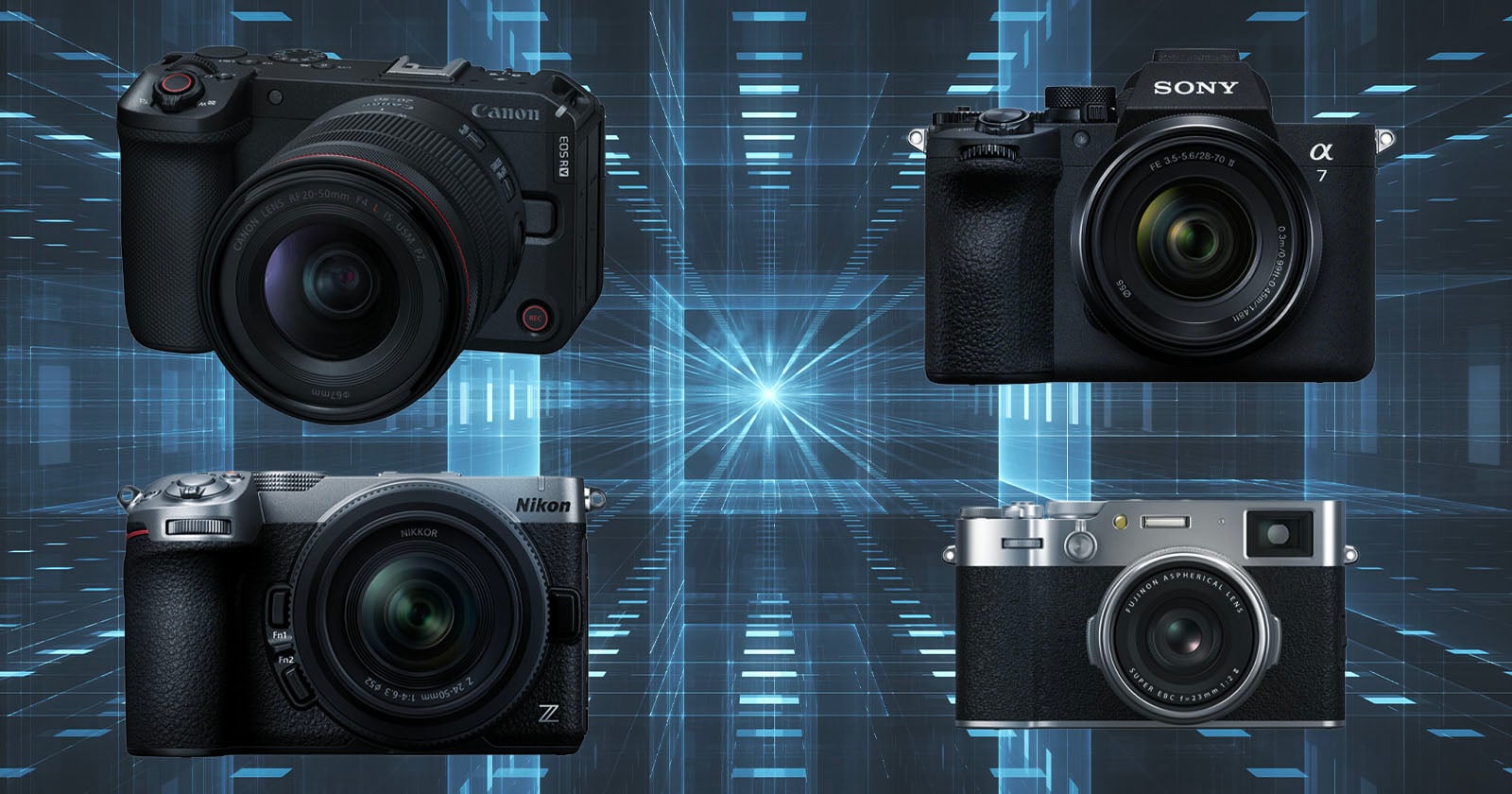
In an extraordinary convergence of industry insight, Japanese economic publication Nikkei recently published a comprehensive feature detailing the long-term visions of the four undisputed titans of the digital camera industry: Canon, Nikon, Sony, and Fujifilm. As initially flagged by industry analysts Photo Rumors, the interviews feature heavy-hitting executives—Go Tokura of Canon, Hiroyuki Ikegami of Nikon, Kenji Tanaka of Sony, and Koji Matsumoto of Fujifilm—offering a rare, unified look into how legacy manufacturers intend to navigate a landscape radically transformed by generative artificial intelligence (AI), ubiquitous smartphone photography, and a surging, youth-driven renaissance in dedicated standalone cameras.
Despite facing the existential threat of increasingly sophisticated mobile computational photography, the camera industry is experiencing a surprising market resurgence. However, the four market leaders are interpreting this revival through remarkably divergent lenses.
- Canon is betting heavily on the experiential aspect of compact digital cameras while expanding its hybrid video-first ecosystem.
- Nikon is carefully balancing the heavy R&D investments required to trickle down flagship tech from its Z9 line while targeting the "smartphone-plus-one" demographic.
- Sony is looking far beyond traditional photography, positioning its Alpha mirrorless lineup as a foundational hardware tool for "Spatial AI" and digital-twin content creation.
- Fujifilm is doubling down on tactile analog nostalgia, championing the emotional, physical joy of shooting to combat a sea of algorithmic, AI-generated synthetic imagery.
Chronology: The Evolution of the Modern Camera Market
To understand the strategic pivots these four companies are making today, it is essential to trace how the digital imaging market arrived at this precise crossroads over the past decade and a half.
- 2010–2015 (The Smartphone Disruption): The rapid integration of multi-lens arrays and advanced computational software into smartphones decimated the low-end point-and-shoot camera market. Manufacturers saw unit sales plummet by over 80% as casual consumers abandoned dedicated compact cameras entirely.
- 2016–2019 (The Mirrorless Pivot): Recognizing that DSLR architecture had reached its physical peak, industry leaders began aggressively shifting research and development funds away from optical viewfinders and swinging mirrors toward full-frame mirrorless mounts (Canon’s RF, Nikon’s Z, and Sony’s E-mount).
- 2020–2023 (The Content Creation Boom): The pandemic catalyzed an explosive global demand for high-end video streaming, vlogging, and remote content creation. Camera makers survived and stabilized by marketing hybrid photo-video workhorses to a new generation of digital creators.
- 2024–2025 (The Gen Z Analog Renaissance): Unexpectedly, younger demographics began fueling a massive secondary and primary market boom for compact, retro-styled digital cameras and film cameras. Driven by a fatigue with hyper-processed social media algorithms, Gen Z embraced the tactile friction, physical imperfections, and intentionality of dedicated shooting.
- Late 2026 (The Strategic Divergence): As captured by Nikkei, Canon, Nikon, Sony, and Fujifilm officially codify their post-smartphone strategies, proving that while they all build boxes with lenses and sensors, they view the ultimate destination of imaging through entirely different futures.
Supporting Data & Market Dynamics
The strategic choices outlined by these executives do not exist in a vacuum; they are direct reactions to sweeping macroeconomic and cultural shifts in how humanity consumes and creates visual media.
For years, industry analysts worried that camera manufacturing was a sunset industry destined to be entirely absorbed by mobile handsets. However, recent shipments data from organizations like the Camera & Imaging Products Association (CIPA) indicate a stabilizing market where average selling prices (ASPs) have risen dramatically. Consumers who buy dedicated cameras today are no longer looking for mere utility; they are looking for specialized performance, tactile craft, or emotional engagement.
Furthermore, the rise of generative AI has fundamentally altered the baseline value of a photograph. When anyone can type a text prompt and generate a hyper-realistic image in seconds, the authentic capture of physical reality carries a newfound cultural weight. The data collected by Nikkei highlights how each company is using its historical manufacturing strengths to address this paradigm shift, balancing silicon sensor innovation with psychological and sociological consumer trends.
Official Responses: Inside the Executive Suites
The core of the Nikkei feature rests on the direct words of the men steering the future of global imaging. Their statements reveal starkly contrasting philosophies regarding hardware, software, and the human element of photography.
Canon: Championing the Joy of Inconvenience and Hybrid Video
Go Tokura of Canon addressed the fascinating paradox of modern consumer behavior: young people are driving a massive surge in compact digital camera sales, yet they are not necessarily chasing clinical sharpness or lab-test metrics.
"Young people are driving the current growth of compact digital cameras. They certainly aren’t buying them just because of high performance or image quality; they enjoy the shooting experience itself, even if it comes with some minor inconveniences," Tokura noted.
Tokura explained that Canon is pivoting away from a strictly price-and-performance matrix. The company is actively weaving elements of style, physical feel, and unique self-expression into its design philosophy. On the hardware front, Canon is doubling down on its dedicated video-oriented products.
"We want to expand the video-oriented ‘V Series’ lineup based on customer demand. We also need to enrich our video-oriented lens selection further. It’s crucial that lenses can capture both video and stills, ensuring that lenses made for video can shoot stills without any issues," he added.
Nikon: Trickling Down Flagship Tech and Capturing the "Smartphone + 1" User
Hiroyuki Ikegami of Nikon offered a pragmatic, engineering-focused perspective. Nikon has spent recent years reaping the rewards of its powerhouse flagship, the Z9, but acknowledges the complex financial tightrope required to bring that technology down to accessible price points.
"It is taking a bit of time to cascade the features of our flagship Z9 down to lower-end models. Completing a lineup from high-end to low-end drops the average selling price. Currently, we are concentrating investments on next-generation image processing engines, sensors, and video cameras. We are right in the middle of laying those foundations," Ikegami explained.
Nikon is not trying to beat the smartphone at its own game; instead, it views the dedicated camera as a complementary "smartphone-plus-one" device that preserves phone battery life while offering superior optical depth.
"As smartphones become increasingly sophisticated, there is a demand for dedicated cameras as a ‘smartphone + 1’ device that preserves smartphone battery life. We are developing products that younger demographics will want to pick up."
Sony: Redefining Alpha as a Gateway to "Spatial AI" and Digital Twins
While Canon, Nikon, and Fujifilm continue to view cameras largely through the traditional lens of photography and videography, Sony’s Kenji Tanaka mapped out a radically expansive, sci-fi-adjacent future. For Sony, the Alpha camera series is not just a standalone imaging tool, but an active node in a massive entertainment and spatial computing network.
Tanaka introduced the concept of "Spatial AI" as the guiding light for Sony’s future roadmap.
"[Spatial AI] involves capturing the physical world using image sensors to create a digital twin, wherein we can make reality more attractive or simulate different ways of presenting it. That simulation is then turned into content for people to experience back in the physical world," Tanaka detailed.
Crucially, Sony views AI not merely as a tool for automated labor savings or noise reduction, but as an expansion of interactive entertainment. By utilizing advanced spatial recognition and subject tracking, Sony aims to generate individualized, tailored content experiences.
"Ultimately, we want to reach a point where we can generate content tailored optimally for each individual… At first glance, ‘Alpha’ appears to be a standalone camera business, but its essence lies in creating value for creators and content consumers."
Expanding on this, Sony’s definition of a "creator" transcends traditional shutterbugs and cinematographers.
"Anyone who creates something and inspires emotion is a creator. This includes not only photographers and film directors, but also dancers, musicians, and athletes. We want to utilize Spatial AI to enhance and expand their creativity."
Fujifilm: Preserving Tactile Analog Joy in an AI-Generated World
Fujifilm maintained the philosophical stance it has championed over the last several years: photography must remain fundamentally fun and emotionally grounded. Koji Matsumoto pointed out that social media has paradoxically made the general public hyper-literate in visual culture.
"The spread of smartphones democratized photography. Through social media, people developed a more discerning eye for photos. The demand for cameras among people who care deeply about self-expression has grown, leading to our strong performance," Matsumoto said.
To capitalize on this, Fujifilm relies heavily on experiential, hands-on retail marketing rather than purely digital spec-sheet selling, letting consumers physically experience the joy that algorithms cannot replicate. This strategy relies on decades of accumulated optical and chemical-color science expertise.
"Finding affection in the tactile, analog feel of turning dials or enjoying the distinct color tones of film photography is only possible thanks to our accumulated camera technology… AI can generate images, but only humans possess the subjective sense of feeling, ‘This is real.’"
Implications for the Future of Imaging
The revelations from the Nikkei executive roundtables paint a fascinating picture of an industry that has matured past the panic of the smartphone disruption. Rather than engaging in a monolithic race for higher megapixels and faster burst rates, the four major camera makers are carving out distinct, philosophical territories that will define the next decade of visual culture.
- The Convergence of Hybrid Creation: Canon’s focus on unified video-and-still glass ensures that the traditional hybrid shooter will continue to find streamlined, ergonomic tools that bridge the gap between cinema sets and street photography.
- The Democratization of Pro-Tech: Nikon’s methodical pipeline promises that everyday consumers will eventually inherit the bulletproof reliability and autofocus wizardry born in professional sports arenas and wildlife preserves, bolstering the "smartphone + 1" market ecosystem.
- The Expansion of Reality: Sony’s aggressive push into Spatial AI signals that the camera sensor of the future will serve as a bridge between physical reality and immersive digital environments—fundamentally redefining what a camera actually is in an era of spatial computing and digital twins.
- The Preservation of Human Authenticity: Fujifilm’s dedication to analog dials, color science, and tactile friction establishes the camera as an emotional anchor. In a world saturated by synthetic, AI-generated pixels, the physical act of choosing a frame, clicking a shutter, and turning a mechanical dial will be treated as an act of artistic preservation.
Ultimately, photography’s future is not singular. Whether a photographer is looking to capture a nostalgic street snapshot on a tactile compact, shoot a documentary video on a hybrid workhorse, or map physical reality into a digital twin using Spatial AI, the Big Four camera manufacturers have made one thing abundantly clear: the golden age of imaging is far from over—it is simply splitting into brilliant, unexpected new dimensions.
 Jia Lissa
  Asro
Asro  Azzam Bilal Chamdy