
 By Asro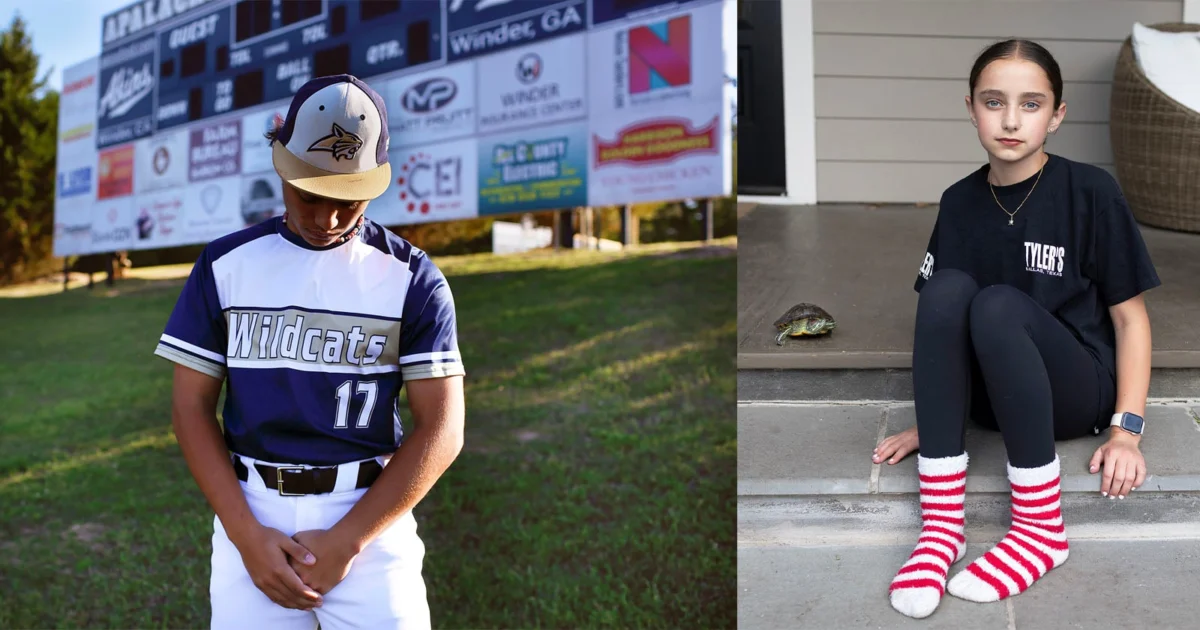
For more than a decade, photographer Kathy Shorr has traversed the United States with a camera, a portable studio setup, and a deeply sobering mission: to document the human toll of gun violence. Having spent thirteen years investigating this national crisis, Shorr has recently completed the third installment of her monumental project, titled SHOT: We the School Community.
The resulting collection of portraits and testimonies is not merely a gallery of grief; it is a profound sociological archive. By focusing directly on students, parents, teachers, and community members whose lives have been permanently fractured by school shootings, Shorr’s work bypasses the abstract political debates that typically dominate the airwaves. Instead, it forces viewers to look into the eyes of those who have survived the unthinkable—from the historic halls of higher education to the quiet elementary schools of rural towns.
Main Facts: The Anatomy of SHOT: We the School Community
At its core, SHOT: We the School Community is built upon a foundation of survivor autonomy. Rather than dictating the parameters of the shoots, Shorr grants every participant the absolute freedom to choose the location of their portrait. These selected sites generally fall into one of two psychological categories: spaces of active confrontation, where survivors return to the literal grounds of the tragedy to stare down their trauma, or environments rooted entirely in healing, safety, comfort, and personal sanctuary.
Spanning primary schools, secondary institutions, and universities, the project paints a devastatingly broad portrait of an American reality where educational spaces are no longer guaranteed safe havens.
- Autonomy in Healing: Participants select locations that hold profound, life-altering significance in connection to their trauma.
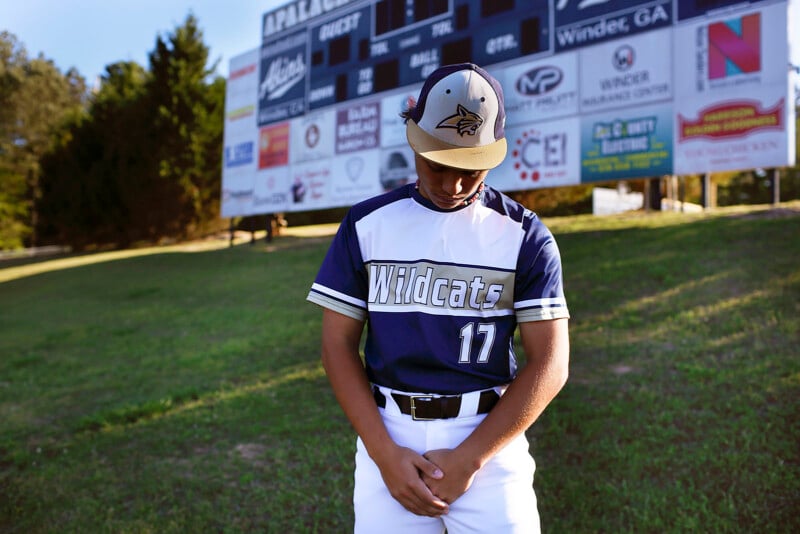
- Geographic Scope: The project includes institutions across the United States, including Oxford High School (Michigan), Robb Elementary School (Uvalde, Texas), Michigan State University (Lansing, Michigan), Apalachee High School (Winder, Georgia), The Covenant School (Nashville, Tennessee), Florida State University (Tallahassee, Florida), Brown University, Annunciation School (Minneapolis, Minnesota), and Evergreen High School (Colorado).
- Demographic Range: The subjects encompass children, grieving parents, university students, and veteran educators, illustrating that the ripple effects of gun violence do not discriminate by age or profession.
"I gave the survivors the autonomy to choose a place of profound significance to them," Shorr explains. "It reveals a simple but devastating truth: no one is safe from gun violence in our schools, or anywhere in America."
Chronology: A Decade-Long Pursuit of Truth
Kathy Shorr’s documentary journey did not begin overnight. It is the culmination of a 13-year artistic trilogy that tracks the escalation and normalization of firearm-related trauma in American society.
- 2013–2025: Shorr launches her documentary inquiry with SHOT: 101 Survivors of Gun Violence in America, a foundational project capturing individuals physically and emotionally scarred by gun violence across the country.
- 2021–2023: Recognizing the specific, compounding horror of maternal grief within urban centers, she produces SHOT: The Mothers Philadelphia and Miami.
- The Modern Era (SHOT: We the School Community): Moving into the present day, Shorr focuses heavily on the modern wave of institutional mass shootings, cataloging a staggering timeline of recent American history:
- November 2021: Oxford High School, Michigan (4 killed, 7 wounded by a 15-year-old shooter).
- May 2022: Robb Elementary School, Uvalde, Texas (19 children and 2 teachers killed by an 18-year-old former student).
- March 2023: The Covenant School, Nashville, Tennessee (3 nine-year-olds and 3 adults killed).
- February 2023: Michigan State University, Lansing, Michigan (3 students killed, 5 injured in Berkey Hall).
- September 2024: Apalachee High School, Winder, Georgia (2 students and 2 teachers killed by a 14-year-old student).
- August 2025: Annunciation School, Minneapolis, Minnesota (2 students killed, 28 injured when an AR-15-style rifle and shotgun were fired into a church holding 300 students at opening-day Mass).
- September 2025: Evergreen High School, Evergreen Colorado (A 16-year-old opens fire in the cafeteria, injuring 2 students over nine minutes).
- April 2025: Florida State University, Tallahassee, Florida (A 20-year-old opens fire near the Student Union, killing 2 employees and wounding 6 students).
Across this timeline, Shorr has interviewed and photographed approximately 300 unique survivors, creating a continuous historical thread of institutional vulnerability.
Supporting Data and Personal Narratives
Behind every statistical metric of a mass shooting lies a web of intricate, heartbreaking human experiences. Shorr’s portraits capture these realities with stark intimacy, pairing visual testimony with the lived histories of the survivors.
The Personal Toll and Relics of Loss
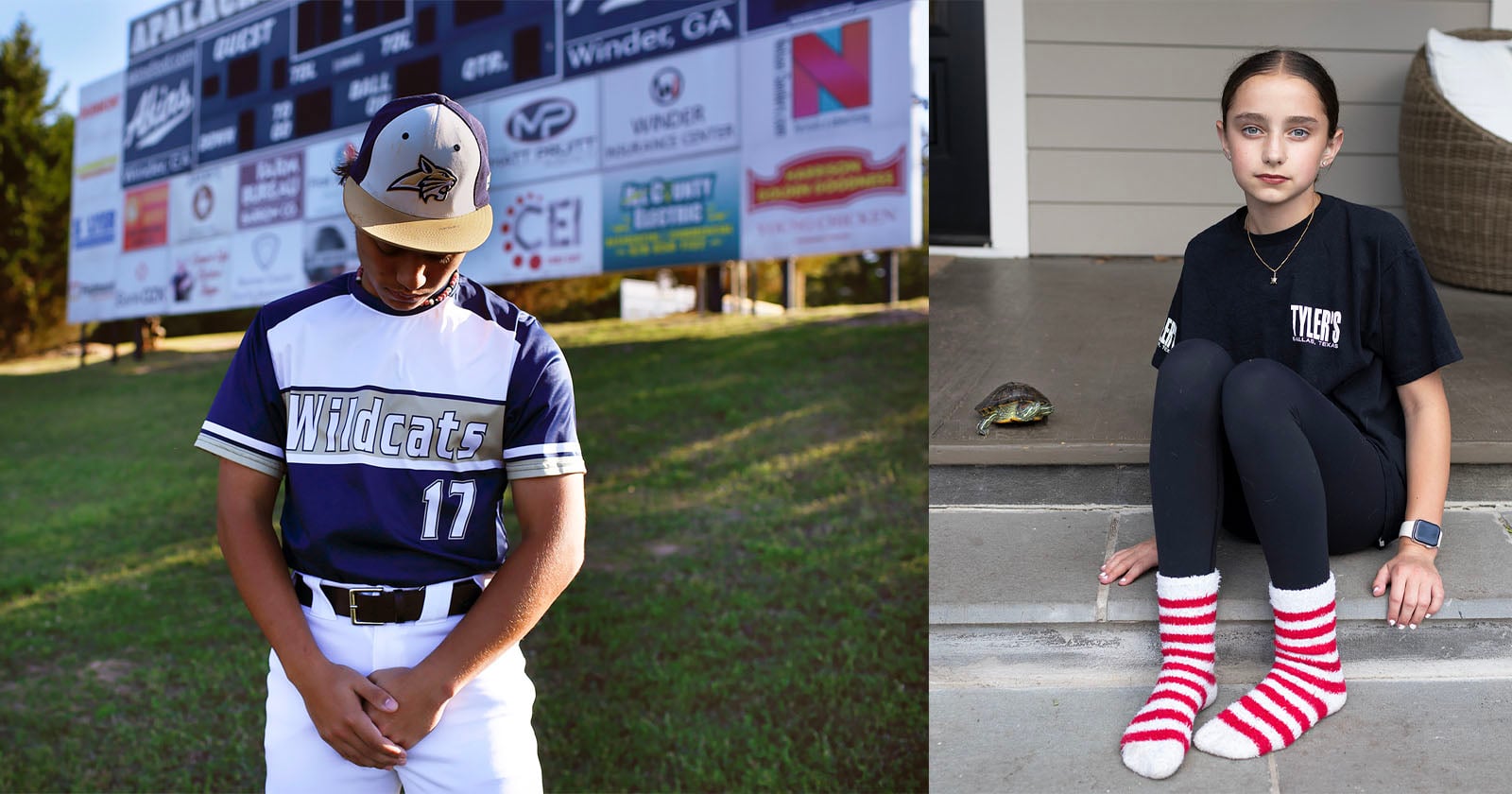
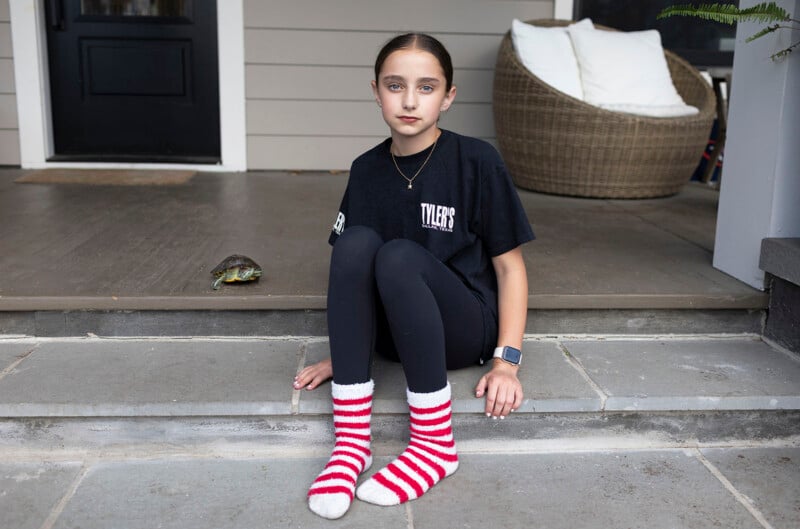
- Orla (Annunciation School, Minneapolis): Photographed sitting on stone steps with a small turtle named Bubbles—an animal gifted to her by the parents of her best friend, Harper, who was killed in the shooting. Around her neck, Orla wears a necklace containing a portion of Harper’s ashes.
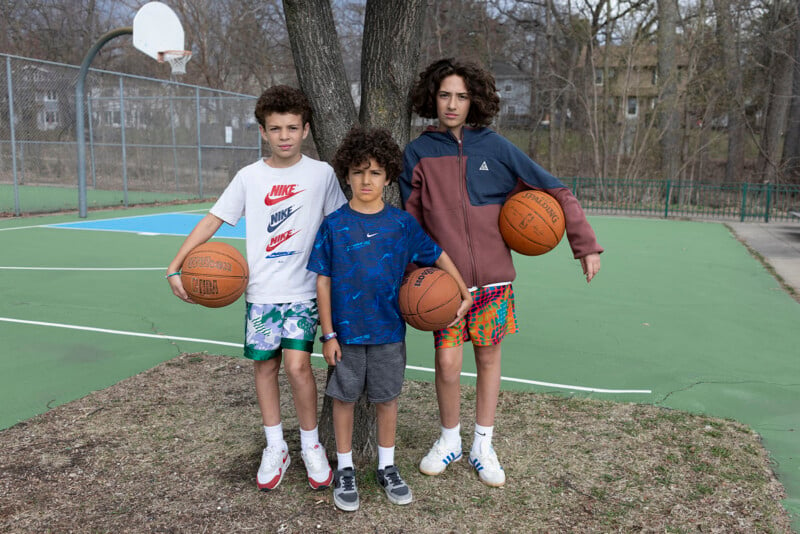
- The Three Brothers—Arlo, Julian, and Dario (Annunciation School): All three brothers were present in the church during the August 2025 attack when a former student fired 120 rounds through stained-glass windows. Arlo was struck in the head and back by shrapnel. Today, all three brothers remain in trauma therapy and refuse to step foot inside a church.
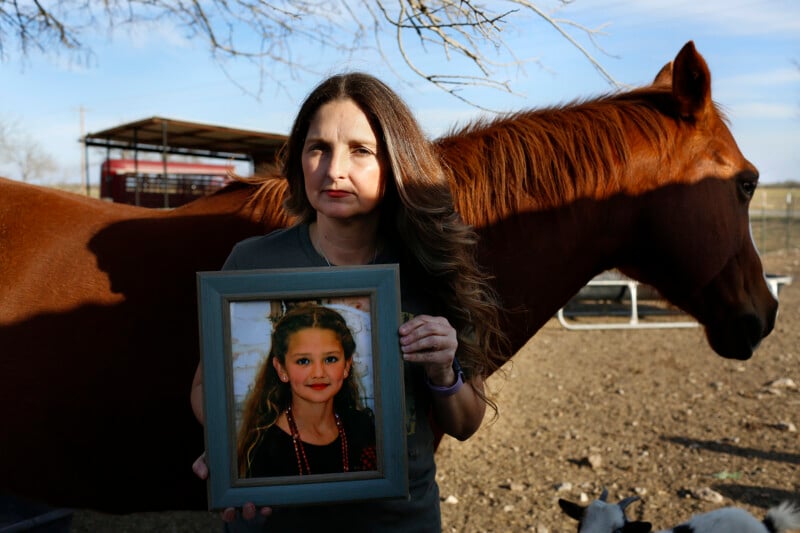
- April Elrod (Robb Elementary School, Uvalde): Standing on her family farm with "Little Red," a horse belonging to her daughter, Makenna, who was killed on May 24, 2022. April and her family regularly travel to agricultural fairs with their animals to provide children with joyful, interactive experiences in memory of Makenna.
- Abby (Robb Elementary School, Uvalde): A 12-year-old survivor and best friend of Tess, who perished in the massacre. Abby has transformed her bedroom into a permanent shrine dedicated to Tess and now receives her education through homeschooling.
- Zoe Touray (Oxford High School): A senior at the time of the 2021 Oxford tragedy and the older sister of freshman survivor Abu Touray. Zoe established a grassroots non-profit organization specifically designed to support other survivors of school shootings.
- Alessandra Borges (Florida State University): A political science major who survived the April 2025 shooting near the FSU Student Union. Tragically, this was the second time gun violence intersected with her life; she had previously lost a close friend in the 8th grade during the Marjory Stoneman Douglas High School shooting in Parkland, Florida. In her portrait, she holds a dried flower saved from her friend’s memorial service.
Educators on the Front Lines
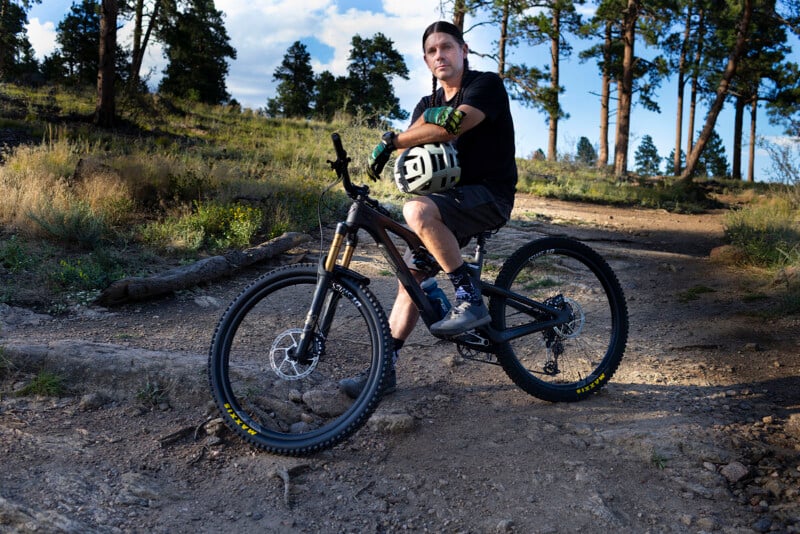
- Andrew Speers (Evergreen High School): A graphic arts, photography, and mountain bike coach who was sitting in the cafeteria with fellow teachers when a student opened fire at lunchtime. The faculty table was the shooter’s primary target. Speers now battles memory gaps regarding the chaotic nine-minute ordeal.
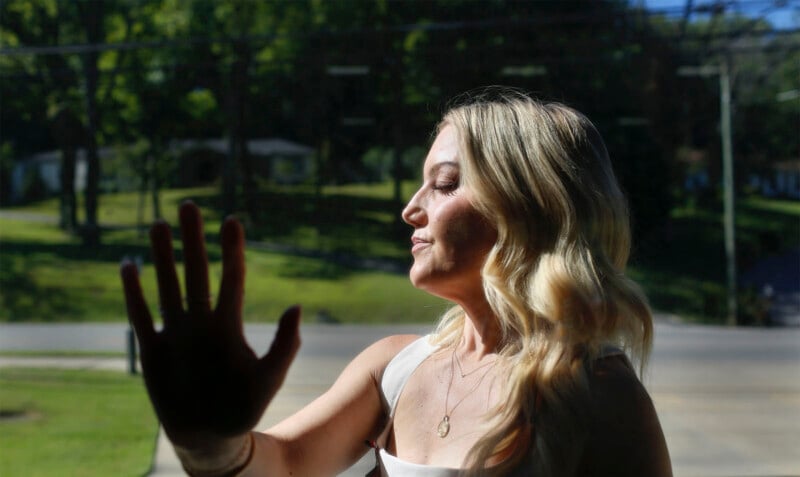
- Nancy and Ted Verner (Michigan State University): Parents of Alex Verner, an athlete and student who was executed in her classroom at Berkey Hall when a gunman entered through a broken-locked back door. At the parents’ explicit request, Shorr photographed them standing inside Berkey Hall, looking out through the glass while the photographer stood outside—a visual metaphor for looking into the past. The Verners now run a non-profit foundation funding student scholarships in Alex’s honor.
Official Responses and Legal Precedents
As the frequency of mass casualty events has risen over the past decade, the legal and institutional landscape surrounding school shootings has begun to shift, particularly concerning parental liability.
For decades, the legal accountability for mass shootings rested almost exclusively on the individual wielding the weapon. However, Shorr’s project highlights a monumental turning point in American jurisprudence: the prosecution and conviction of parents who supply unsecured firearms to children exhibiting severe mental health crises.
- The Oxford Precedent: Following the November 2021 massacre at Oxford High School, the parents of the 15-year-old shooter were tried and sentenced to 10 to 15 years in prison for involuntary manslaughter after purchasing the firearm despite clear warning signs regarding their son’s mental health.
- The Apalachee Precedent: In the wake of the September 2024 shooting at Apalachee High School, the father of the 14-year-old shooter was convicted and faces a sentence exceeding 100 years in prison. This landmark ruling marked only the second time in United States history that a parent was held criminally responsible for a mass shooting committed by their child.
Despite these legal shifts, institutional responses remain intensely polarized at the legislative level, a reality that Kathy Shorr believes defies basic logic.
Implications: The Urgent Call for Common Sense
Reflecting on thirteen years of documenting human devastation, Shorr remains fiercely critical of the political gridlock that prevents meaningful safety reform in the United States. She argues that the ongoing polarization surrounding the Second Amendment is a false dichotomy that obstructs basic, rational protections for children.
"The Second Amendment in America is not going to go away. We must move past the division and work on the common ground that most rational people can agree on," Shorr asserts. "For instance, if you are a parent or have children in your home, including teenagers, you want those children to be safe and to live long, healthy lives. Why, then, would anyone leave a firearm unlocked where a child could see it, find it, play with it, or take it to school? All guns should be secured with gun locks or stored in gun safes in homes with children or mentally impaired individuals."
Shorr draws historical parallels to other major American industries that once resisted public safety regulations before collective action and consumer safety laws became standard practice. She notes that both the automotive industry—with the introduction of seatbelts and crash-testing standards—and the tobacco industry faced intense political resistance before society came together to protect public health.
"This same collective action must happen in the gun industry as well," Shorr urges. "It should not be a political battleground; it is a human rights violation not to protect our children."
Through SHOT: We the School Community, Shorr has successfully transformed private, agonizing heartbreaks into a public mandate for introspection. Her subjects—courageous, generous, and resilient—do not participate in these projects out of despair, but out of a fierce, protective desire to ensure that no other family has to stand where they are standing.
 Azzam Bilal Chamdy
  Iffa Jayyana
  Basiran