
 By Laily UPN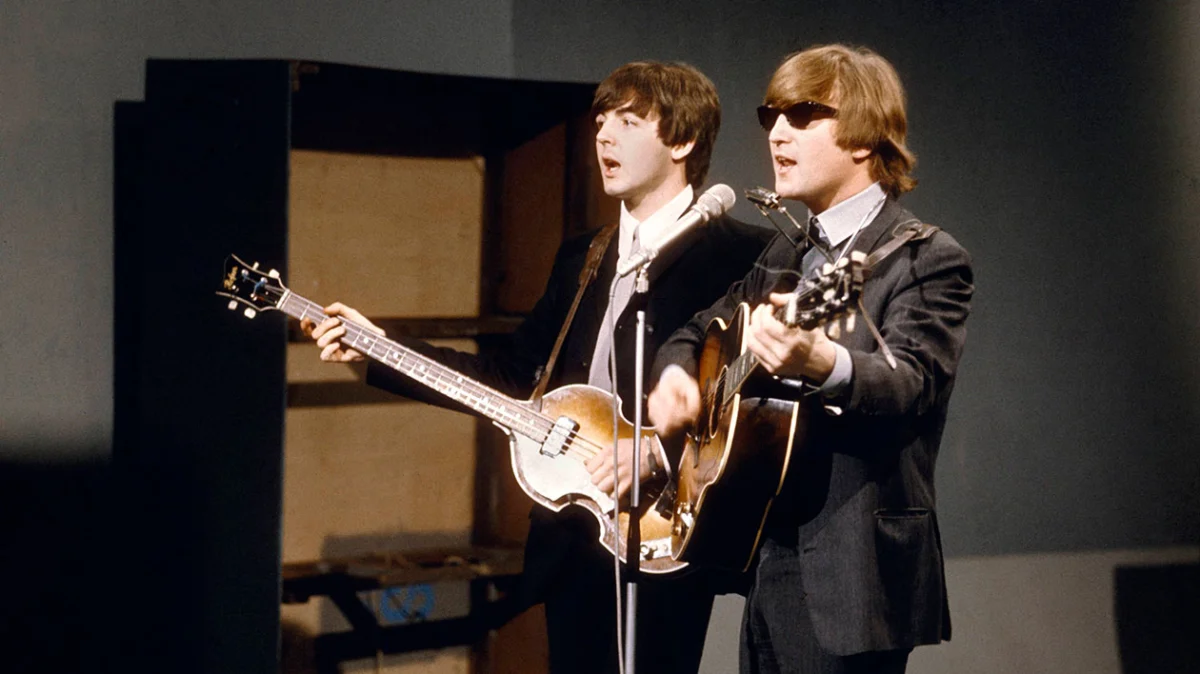
The architecture of pop music is often attributed to the voices that front the hits, but the true foundation of the industry lies in the hands of the writers and producers who shape the sonic landscape. As of the chart dated October 10, 2026, a definitive look at the history of the Billboard Hot 100 reveals that while recording artists garner the spotlight, it is a select group of prolific behind-the-scenes architects who have consistently defined the sound of the last seven decades.
The Titans of the Charts: Paul McCartney, John Lennon, and Max Martin
When analyzing the most successful songwriters in the history of the Billboard Hot 100, the influence of The Beatles remains unparalleled. Paul McCartney currently holds the title for the most No. 1 singles as a songwriter, with a staggering 32 chart-toppers to his name. His songwriting partner, John Lennon, follows in third place with 26. These figures encompass their collective output with the Fab Four as well as their significant solo careers.
Between these two icons sits a modern titan: Max Martin. With 31 No. 1 hits, the Swedish mastermind has become the primary bridge between the era of classic songwriting and the modern streaming age. Martin’s ascent is marked by an extraordinary run of consistency, beginning with Britney Spears’ 1999 breakout hit, "…Baby One More Time," and extending through to the most recent chart-topper, Taylor Swift’s "Patient Zero." Martin’s ability to evolve while maintaining a signature, hook-heavy polish has allowed him to challenge the historical dominance of the Lennon-McCartney catalog.
The Evolution of Production: From George Martin to Modern Mastery
If the songwriter provides the blueprint, the producer builds the house. For decades, George Martin—the legendary producer behind The Beatles—held the gold standard for production success. Martin produced 19 of the 20 No. 1 singles achieved by The Beatles. Interestingly, the only chart-topper by the band that he did not produce was their final No. 1, 1970’s "The Long and Winding Road," which was overseen by Phil Spector.
However, the baton of dominance has officially passed. Max Martin has now surpassed George Martin to claim the title for the most Hot 100 No. 1s by a producer, with a total of 29. Martin’s production timeline mirrors his songwriting success, stretching from the late 90s to his recent work on "Hate That I Made You Love Me."
While George Martin’s legacy is tied to the cultural revolution of the 1960s, his other production milestones remain vital to music history, including America’s "Sister Golden Hair" (1975), McCartney and Stevie Wonder’s "Ebony and Ivory" (1982), the McCartney/Michael Jackson duet "Say, Say, Say" (1983-84), and Elton John’s "Candle in the Wind 1997" (1997-98).
Chronology of Influence: Key Shifts in Musical Output
To understand how these numbers accumulated, one must look at the historical shifts in the industry. The 1960s were defined by the emergence of the "auteur" songwriter—the performer who also wrote their own material. The Beatles set this precedent, shifting the industry away from the Brill Building model where songwriters and performers were often distinct entities.
The 1980s and 1990s introduced a new paradigm of high-gloss, collaborative production. The rise of production duos like James "Jimmy Jam" Harris III and Terry Lewis fundamentally changed the trajectory of R&B and pop. Together, they have garnered 16 total No. 1s as producers and 15 as writers. Their influence is inextricably linked to Janet Jackson, for whom they crafted nine of her No. 1s. Their versatility allowed them to pivot between Janet’s rhythmic R&B, George Michael’s pop sophistication in "Monkey," and the vocal-heavy R&B of Usher’s "U Remind Me."
Simultaneously, the Motown era remains a cornerstone of these statistics. Brian Holland and Lamont Dozier, alongside Eddie Holland, were the primary architects of the Motown sound. Their influence is highlighted by the fact that they wrote the first 10 of The Supremes’ 12 total No. 1 singles in the 1960s, creating a template for the girl-group sound that remains influential to this day.

The Soloist-Creator: Mariah Carey’s Rare Dual Success
Few artists have managed to be as successful in writing and producing their own hits as they are in performing them. Mariah Carey stands as a singular case study in this regard. With 19 No. 1 hits as an artist, she is the clear leader among soloists. Her writing and production credits are equally impressive, having climbed to 18 No. 1s as a writer and 15 as a producer.
Carey’s chart success is bolstered by the remarkable longevity of "All I Want for Christmas Is You," which finally hit No. 1 in 2019, 25 years after its release. It is a testament to her creative control that nearly every one of her No. 1 hits was self-authored. The only notable exception is her 1992 cover of the Jackson 5’s "I’ll Be There," which serves as a rare instance of her relying on an outside classic rather than her own pen.
Implications for the Future of Music
The data provided by Billboard’s research department—compiled with the assistance of music historian Fred Bronson—reveals several crucial implications for the music industry:
- The Consolidation of Power: The shift toward fewer, more frequent collaborators like Max Martin suggests that the "hit machine" model is more efficient than ever. By centralizing the writing and production process, labels can ensure a consistent sound that appeals to global audiences across streaming platforms.
- The Persistence of Legacy: The presence of McCartney, Lennon, and the Motown legends on these lists 50 to 60 years later speaks to the "evergreen" nature of classic pop. Songs that were written in the 1960s are still generating data for the charts, ensuring that these legends maintain their ranking alongside contemporary producers.
- The "Genre-Blind" Producer: Modern producers are increasingly genre-fluid. Max Martin’s ability to work with artists ranging from country-pop stars to hard-rock influenced vocalists shows that in the current era, the "sound" is often dictated by the producer’s toolkit rather than the artist’s regional or genre roots.
Supporting Data and Honorable Mentions
While the top-tier rankings are dominated by names like McCartney, Martin, and Carey, the history of the Hot 100 is populated by other critical figures who shaped the industry.
Barry Gibb’s contribution is a significant part of this landscape. His totals include the Bee Gees’ nine No. 1 hits, a run characterized by the collaborative efforts of producers Albhy Galuten and Karl Richardson. Their work on the Saturday Night Fever soundtrack alone redefined the commercial viability of disco and pop-fusion in the late 1970s.
Furthermore, we must recognize the contributions of Steve Sholes. While he may not appear in the top rankings of the modern Hot 100 era (which began in 1958), his role in the career of Elvis Presley is non-negotiable. Sholes produced 10 No. 1 hits by Presley on the charts that preceded the Hot 100 and followed the inception of the current survey with six more. His work remains the benchmark for the "King" of rock and roll’s commercial success.
Conclusion
The history of the Billboard Hot 100 is not merely a list of the most popular songs; it is a ledger of the creative forces that have navigated the ever-changing tides of public taste. From the melodic brilliance of the Lennon-McCartney partnership to the technical precision of Max Martin and the soulful craftsmanship of the Motown era, these songwriters and producers have built the soundtrack to the modern world.
As streaming data continues to rewrite the rules of what constitutes a "hit," the names on these lists will undoubtedly continue to shift. Yet, the foundational work of those who defined the charts in the 20th century ensures that the DNA of modern music will always be linked to the pioneers who first mastered the art of the perfect, chart-topping song.
 Neng Nana
  Ali Ikhwan