
 By Neng Nana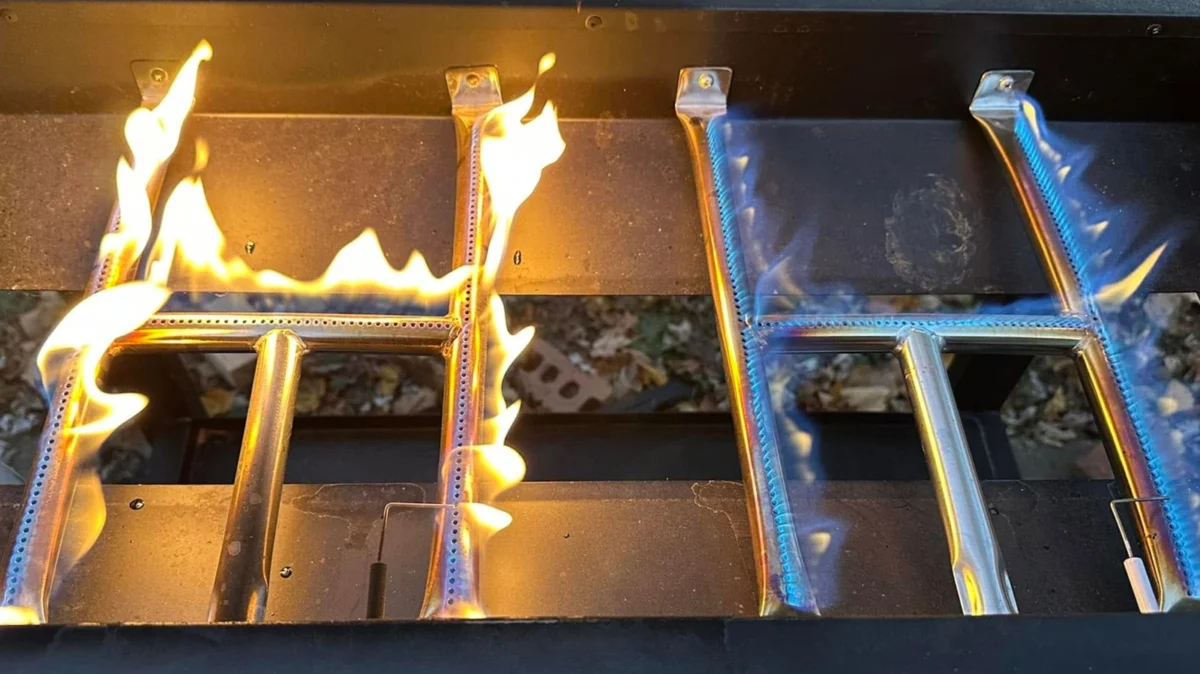
Introduction: The Rise of the Flat-Top Phenomenon
In recent years, the backyard culinary landscape has undergone a dramatic transformation. Traditional backyard barbecues dominated by traditional grates are increasingly sharing space—or being entirely replaced—by versatile outdoor flat-top grills. Among the brands driving this culinary revolution, Blackstone has emerged as an undisputed market leader. Renowned for their adaptability, user-friendly operation, and accessible price points, Blackstone griddles have captured the hearts of backyard chefs, tailgaters, and breakfast enthusiasts alike.
The brand’s widespread appeal is backed by industry recognition. Notably, select models have earned top-tier ratings from consumer advocacy organizations, including capturing the highest Consumer Reports rating for a flat-top grill priced under $250. This blend of commercial success and high consumer satisfaction is built on a foundation of reliability and performance.
However, like any precision cooking appliance, a Blackstone griddle requires proper understanding and maintenance to operate at its absolute peak. Because the vast majority of Blackstone’s popular models are powered by liquid propane (LP), understanding the mechanics of gas combustion is essential. Just as you would monitor the burner of an indoor gas range, operating an outdoor griddle requires a keen eye for detail—specifically, paying close attention to the color of the flame licking the bottom of your steel cooktop.
While a healthy, efficient Blackstone griddle features a crisp, steady blue flame, a shifting color palette—specifically the appearance of yellow or orange tongues—signals an underlying issue. Recognizing what these color shifts mean, knowing when they require intervention, and understanding how to safely correct them will not only protect the longevity of your investment but also ensure the safety of everyone gathered around your patio.
Main Facts: The Science of Combustion and Flame Coloration
To properly maintain a propane-powered flat-top grill, an operator must first understand the fundamental chemistry of gas combustion. Propane ($C_3H_8$) is a hydrocarbon fuel. When it is released from the tank, regulated through the control valves, and mixed with atmospheric oxygen, it ignites to create thermal energy.
The Ideal State: Complete Combustion
For a propane burner to operate at maximum efficiency, it must achieve complete combustion. This chemical reaction occurs when the propane gas mixes with the precise, optimal ratio of oxygen before reaching the burner ports.
When complete combustion is achieved, the chemical reaction yields carbon dioxide ($CO_2$) and water vapor ($H_2O$), releasing maximum thermal energy in the process. Visually, this chemical sweet spot is indicated by a steady blue flame. A proper Blackstone burner flame should burn predominantly blue, though minor, barely noticeable yellow tips are occasionally acceptable due to microscopic impurities in the air or fuel. A robust blue flame ensures that:
- The burners are reaching their maximum potential temperature.
- Fuel is being utilized efficiently, preventing wasted propane.
- The cooktop heats evenly across its surface.
The Problematic State: Incomplete Combustion
Conversely, when the ratio of propane to oxygen is disrupted—specifically when there is a deficiency of oxygen mixed into the gas stream—incomplete combustion takes place.
During incomplete combustion, the fuel does not burn cleanly. Instead of producing only carbon dioxide and water vapor, the reaction generates carbon monoxide ($CO$), unburned fuel particles, and soot (carbon). Visually, this is unmistakably signaled by yellow or orange flames.
A yellow flame indicates several operational shortcomings:
- Reduced Heat Output: Because the chemical reaction is inefficient, the flame does not reach its maximum temperature potential.
- Energy Waste: You are burning more fuel to achieve less heat.
- Soot Accumulation: Incomplete combustion leaves a black, powdery carbon residue on the underside of your griddle plate and around the burner tubes.
- Safety Hazards: Most critically, incomplete combustion generates carbon monoxide—an odorless, colorless, and potentially lethal gas.
Chronology: Understanding the Lifespan and Maintenance Timeline
A Blackstone griddle is engineered to last for years, provided it receives appropriate care and routine maintenance. However, outdoor cooking appliances face harsh environmental elements, heavy usage, and exposure to grease, food particles, and debris. Understanding the chronological evolution of a griddle’s operating life helps owners anticipate when flame irregularities are likely to occur.
Phase 1: Initial Break-In and Optimal Performance (Months 0–6)
Upon unboxing and assembling a new Blackstone griddle, the unit operates at peak factory efficiency. The burner tubes are clear, the air gates are factory-calibrated, and the propane regulator delivers a steady, unhindered stream of fuel. During this initial phase, users should intentionally observe the burner flames during every cook. Establishing a baseline visual reference—knowing what your specific unit looks like when operating perfectly—makes spotting future anomalies much easier.
Phase 2: The Accumulation Period (Months 6–18)
As the griddle is used repeatedly for weekend breakfasts, smash burgers, and stir-fries, various byproducts of outdoor cooking begin to accumulate. While the primary ritual of cleaning a Blackstone involves scraping away stuck-on food debris with water while the cooktop is on medium heat, food particles can transcend the cooking surface.
Over time, wind, grease migration, and the general environment can cause microscopic food particles, insect nests (such as those spun by mud dauber wasps), and dust to infiltrate the internal housing. The burner tubes—the hollow channels that deliver gas and draw in ambient air—gradually experience partial blockages.
Phase 3: The Warning Signs (Months 18+)
By the second year of ownership (or sooner, depending on storage conditions and frequency of use), neglected maintenance manifests physically. The owner may notice one or more of the following warning signs:
- Uneven Heating: One side of the griddle is blazing hot while the other struggles to sear.
- Failure to Reach High Heat: Turning the control knobs to "High" yields lukewarm results.
- Flame Discoloration: The distinct blue flame is overtaken by lazy, flickering yellow tongues.
At this chronological juncture, minor user intervention—such as brushing out burner tubes or adjusting air shutters—is required to restore the appliance to its original factory condition.
Supporting Data and Diagnostic Scenarios
Diagnosing a burner issue on a Blackstone griddle does not require an engineering degree, but it does require careful observation. When evaluating your grill, two specific diagnostic scenarios demand immediate attention and maintenance.
Scenario A: The Griddle Fails to Achieve High Heat
If you turn your control knobs to their maximum setting and notice that water droplets take an exceptionally long time to evaporate, or searing meats becomes impossible, your burner efficiency is compromised. This is almost universally tied to a restriction in the gas-oxygen mixing chamber. When burner tubes become blocked, the system cannot draw in enough air to support complete combustion, resulting in the characteristic yellow, low-heat flame.
Scenario B: Mixed Burner Behavior (Blue vs. Yellow)
On multi-burner Blackstone models (such as the popular 28-inch or 36-inch four-burner variants), you may encounter a split personality: one burner burns a healthy blue, while an adjacent burner burns primarily yellow.
This is a vital diagnostic clue. If the propane tank, regulator, and external supply line were at fault, all burners would typically exhibit the same flame characteristics. The fact that only one burner is yellow strongly indicates a localized issue. The culprit is almost always a localized blockage—such as a spider web or food debris—inside that specific burner tube, or an improperly adjusted air shutter on that specific burner assembly.
The Elevation Factor: When Yellow Flames Are Normal
It is important to note one notable exception to the rule. If you reside at a high altitude (typically above 2,000 to 3,000 feet), the ambient air is naturally thinner, meaning it contains less oxygen per cubic foot. In high-elevation environments, even a perfectly clean burner may display slight yellow tips on its flames because the available atmospheric oxygen is reduced. However, if the flame is overwhelmingly orange or yellow, or if heating performance drops noticeably, maintenance is still required regardless of altitude.
Step-by-Step Maintenance Guide: How to Fix a Yellow Flame
Fortunately, resolving a yellow flame issue on a Blackstone griddle is a straightforward DIY task that requires basic tools and about 30 to 45 minutes of your time.
Step 1: Safety First
Before attempting any maintenance, ensure that the propane tank valve is completely closed and turned off. Disconnect the regulator hose from the propane tank entirely. Allow the griddle to cool down completely if it has been recently used. Never attempt to clean or adjust burner tubes on a hot or pressurized gas appliance.
Step 2: Remove the Cooktop
Lift the heavy steel griddle top off the frame. Depending on the size of your model, you may want a second person to assist you, as these tops are heavy and unwieldy. Set the cooktop aside on a stable, flat surface.
Step 3: Access and Clean the Burner Tubes
With the cooktop removed, the burner assemblies are fully exposed.
- Locate the screws holding the burners in place to the frame and carefully unscrew them.
- Slide the burners out from the gas valves.
- Inspect the interior of the burner tubes. This is where spiders, insects, and food debris love to nest.
- Use a flexible bottle brush, a venturi brush, or compressed air to thoroughly clear out any blockages from the inside of the tubes. Push the brush all the way through to dislodge stubborn nests or soot.
Step 4: Inspect and Adjust Air Gates (Shutters)
If your specific Blackstone model is equipped with adjustable air gates (or air shutters) located where the burner meets the gas valve, these might need recalibration.
- Look behind the front control panel from underneath the griddle housing.
- Locate the screws securing the air shutters.
- Loosen these screws slightly and adjust the opening of the air gate. Opening the gate allows more oxygen to mix with the incoming propane stream.
- Once adjusted, securely re-tighten the screws.
Step 5: Reassemble and Test
Reattach the burners to the gas valves, secure them to the frame with their screws, and place the griddle top back into position. Reconnect your propane tank. Turn on the gas supply, ignite the burners, and observe the flames. They should immediately return to a crisp, steady blue with minimal-to-no yellow tips, signaling that complete combustion has been successfully restored.
Implications: Safety, Efficiency, and Equipment Longevity
Ignoring a persistent yellow flame on your Blackstone griddle carries significant implications that extend far beyond simply taking a few extra minutes to cook your morning pancakes.
1. Carbon Monoxide Risks
The most serious implication of incomplete propane combustion is the production of carbon monoxide (CO). While outdoor cooking generally provides ample ventilation, cumulative exposure can become dangerous if the griddle is operated in partially enclosed or poorly ventilated environments.
Many outdoor cooks set up their flat-top grills under patio awnings, inside screened-in porches, or dangerously close to open house windows and doors. If a malfunctioning, poorly combusting burner is churning out carbon monoxide in a semi-enclosed space, it creates a silent, invisible hazard for family members, guests, and pets. Ensuring clean blue flames is a vital safety protocol, not merely a performance preference.
2. Economic Efficiency and Fuel Waste
Propane isn’t free, and swapping out tanks frequently can become an expensive habit. When propane burns inefficiently via incomplete combustion, you are extracting less thermal energy per cubic foot of gas consumed. By maintaining clean burner tubes and proper oxygen-to-gas ratios, you maximize your fuel efficiency, meaning fewer trips to the hardware store for tank refills and lower overall operating costs.
3. Protecting Your Equipment Investment
Soot and carbon buildup from yellow flames don’t just disappear—they deposit themselves across the hardware of your grill. Over time, heavy soot accumulation can corrode metal components, foul ignition systems, and degrade the structural integrity of the burner tubes themselves, forcing premature replacement of parts or the entire unit.
Conclusion
The Blackstone griddle has earned its stellar reputation through unmatched versatility, convenience, and performance, becoming a cornerstone of modern outdoor hospitality. However, owning such an appliance comes with the responsibility of routine upkeep.
By understanding the vital distinction between complete combustion (signaled by a healthy blue flame) and incomplete combustion (signaled by a lazy yellow flame), owners can take proactive control of their cooking experience. Routine maintenance—cleaning out burner tubes, clearing stubborn debris, and adjusting air gates—takes minimal effort but yields massive dividends.
Ultimately, keeping your Blackstone burning blue protects your culinary results, extends the lifespan of your equipment, and, most importantly, ensures a safe environment for everyone gathered around the patio table.
 rifanmuazin
  Lina Hope
  Asep Darmawan