
 By Muslim
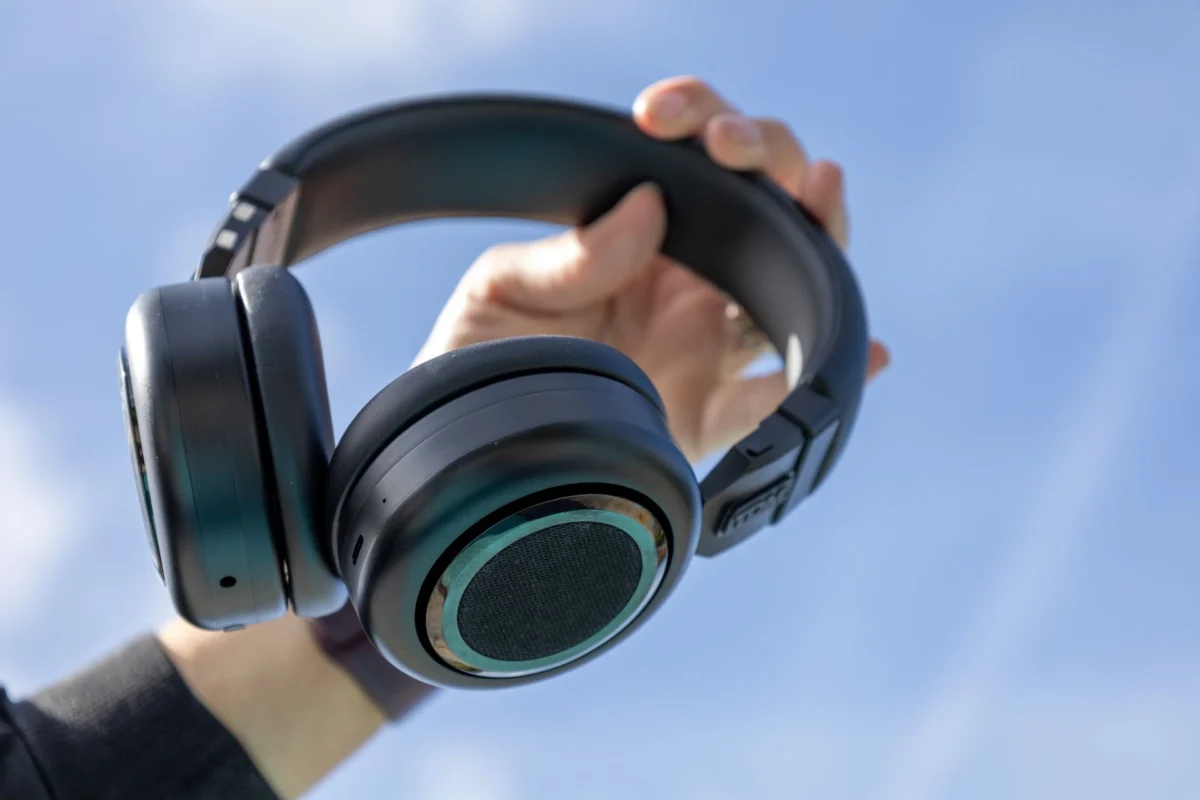
The perennial dilemma for the modern commuter and frequent traveler has long been a trade-off between personal immersion and shared social audio. Do you pack a pair of high-fidelity, noise-canceling headphones for your transit, or do you sacrifice space and weight to carry a portable Bluetooth speaker for your destination? For years, the industry has treated these as two distinct product categories, but the emerging audio brand TDM has introduced a solution that aims to merge these worlds.
The TDM Neo, unveiled to significant fanfare at IFA 2026, represents a bold leap in consumer audio hardware. With a simple, tactile twist, these wireless headphones physically reconfigure into a portable speaker. While the concept of a hybrid device may sound like a gimmick to the cynical audiophile, the underlying engineering—comprised of a specialized four-driver architecture—suggests that TDM is serious about delivering a high-quality experience in both form factors.
The Core Innovation: A Dual-Driver Architecture
The "headline" feature of the TDM Neo is its proprietary twist mechanism, but the true engineering prowess lies in what happens under the hood. To solve the problem of audio dispersion, TDM has integrated a groundbreaking system featuring four distinct 40mm drivers.
In "Headphone Mode," the device utilizes two inward-facing drivers, tuned to provide the focused, detailed, and expansive soundstage expected from premium on-ear monitors. When the user performs the signature twist, the internal circuitry routes power to two outward-facing drivers, which are optimized for energetic, room-filling projection.
TDM’s design team emphasized that this is not merely a case of routing audio to different speakers; it is a sophisticated acoustic management system. The transition is seamless, aided by the device’s ability to automatically adjust its equalization (EQ) profiles based on the physical configuration. According to preliminary reports from the IFA floor, the Neo manages to retain a clean, detailed sound signature even in speaker mode—a significant challenge given the physical limitations of a device small enough to fit in the palm of a hand.
Chronology of Development: From Concept to IFA 2026
The path to the TDM Neo began roughly three years ago, when the TDM engineering team identified a growing trend in "versatile portability." Market research conducted by the company revealed that a significant segment of Gen Z and Millennial users frequently shared music in spontaneous social settings but felt burdened by the need to carry secondary hardware.

- Early 2024: Initial prototyping of the "twist" hinge. Engineers focused on ensuring that the mechanical durability of the hinge would not compromise the structural integrity of the acoustic chambers.
- Late 2024: Integration of the dual-driver system. The primary challenge during this phase was weight distribution; adding two extra drivers threatened to make the headphones too heavy for long-term comfort.
- Q2 2025: Finalization of the vegan leather comfort system and internal battery architecture to support the high power demands of the speaker drivers.
- September 2026: The official unveiling at IFA 2026, where the device received widespread attention for its unique "two-in-one" value proposition.
Technical Specifications and Performance Data
The TDM Neo is not just a clever design exercise; it is a powerhouse of modern connectivity and battery efficiency. Built around the latest Bluetooth 6.0 standard, the headphones offer low-latency connectivity, which is essential for high-fidelity audio streaming and video synchronization.
Battery Longevity
Perhaps the most impressive metric released by TDM is the battery life. Despite the dual-mode functionality, the device boasts:
- Headphone Mode: Over 200 hours of continuous playback on a single charge.
- Speaker Mode: 16 hours of continuous, high-volume playback.
- Fast-Charging: Utilizing USB-C, the Neo offers a full recharge in three hours. For those in a hurry, a five-minute charge provides eight hours of headphone playback.
Control Interface
The device moves away from the trend of touch-sensitive panels, opting instead for a tactile approach. Four physical buttons handle power, volume, and mode switching. Furthermore, the "twist" mechanism itself acts as a control interface. Users can customize the gesture to perform specific actions, such as pausing music when the device is twisted into the headphone configuration or powering down entirely when rotated to a "closed" state.
Ergonomics
Comfort remains a priority for a device designed for long-haul travel. The Neo features dual-layer memory foam ear cushions, wrapped in a soft, high-grade vegan leather. The adjustable headband is designed to distribute the weight of the four-driver system evenly, ensuring that the device does not become cumbersome during extended listening sessions.
Official Responses and Industry Outlook
"We didn’t just want to build a gadget; we wanted to redefine the utility of personal audio," a TDM spokesperson stated during the IFA 2026 press conference. "The Neo is for the traveler who refuses to compromise. Whether you are on a quiet train or at a weekend getaway with friends, the audio experience should remain premium. We have removed the friction of choosing between hardware."
Industry analysts have been cautiously optimistic. While the "jack of all trades, master of none" critique is often applied to hybrid devices, the TDM Neo’s specialized driver configuration suggests a level of acoustic dedication that could silence skeptics. The success of the product will likely hinge on the "twist" mechanism’s longevity. Moving parts are always a point of failure in consumer electronics; if the hinge maintains its tension and connectivity over thousands of cycles, TDM may have a genuine market leader on its hands.

Implications for the Audio Market
The launch of the TDM Neo carries several implications for the broader audio industry:
- The Death of the "Single-Use" Device: As consumers become more environmentally and economically conscious, the demand for multifunctional devices is likely to rise. The Neo sets a precedent for manufacturers to rethink the form factor of audio equipment.
- Pressure on Premium Competitors: High-end brands like Sony, Bose, and Sennheiser have long dominated the headphone space with iteration rather than innovation. TDM’s entry with a "disruptive" design forces these incumbents to consider whether they can afford to ignore hybrid possibilities.
- The Evolution of Bluetooth 6.0: The Neo is an early adopter of the newest Bluetooth standard, which promises better bandwidth and power efficiency. This will likely serve as a benchmark for how upcoming wireless devices handle multiple output modes simultaneously.
Final Thoughts: A New Category?
As we await the chance to put the TDM Neo through our own rigorous testing protocols—evaluating everything from frequency response to hinge durability—the device stands as one of the most intriguing developments in recent memory. It challenges the status quo by merging the intimate, private world of headphone listening with the communal, social nature of speakers.
If the sound quality matches the ambition of its engineering, the TDM Neo will not just be a niche product for travelers; it will be a blueprint for the future of mobile audio. For now, it represents a refreshing shift toward innovation in a market that has occasionally felt stagnant. Whether it earns a permanent spot in our "Best Wireless Headphones" guide remains to be seen, but TDM has certainly ensured that their name will be part of the conversation for the foreseeable future.
For those interested in the technical specifications or looking to pre-order, further information is available through the official TDM website. The tech world will be watching closely to see if the Neo can successfully bridge the gap between two worlds, or if it will be remembered as an ambitious experiment in hardware design. Regardless of the outcome, the TDM Neo has already achieved one thing: it has made us rethink what a pair of headphones can—and should—be.
 Raul Delapena Setiawan
 Ammar Sabilarrohman
 Laily UPN
