
 By Dwi Wanna
In an era dominated by high-resolution digital sensors and computational photography, the enduring appeal of analog film remains a testament to the tactile, imperfect, and deeply creative nature of the medium. Lomography, the standard-bearer for experimental analog photography, has once again leaned into this ethos by introducing two new "Fusion" colorways for its iconic Sprocket Rocket 35mm panoramic camera.
The release presents a classic design dichotomy—a "Dr. Jekyll and Mr. Hyde" aesthetic pairing that challenges users to pick a side. While the technical specifications of the camera remain unchanged from its reliable predecessors, these new shells represent the brand’s commitment to keeping the "colorful cocktail of creativity" alive for a new generation of film enthusiasts.

The Main Facts: Aesthetic Contrasts and Technical Continuity
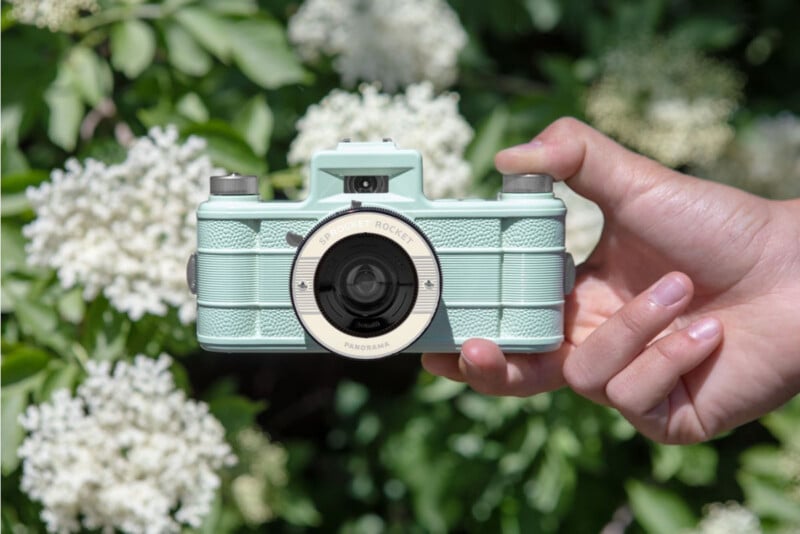
Lomography’s latest iteration of the Sprocket Rocket comes in two distinct duotone finishes: the "Mint Fusion" and the "Strawberry Fusion." Both cameras utilize a color-coordinated design language, where the faceplate, back panel, and the ring surrounding the 30mm wide-angle lens are matched to create a cohesive, albeit striking, visual identity.
The Mint Fusion features a soft, pastel green front contrasted with a calming beige rear panel. It evokes a vintage, mid-century aesthetic that feels at home in a sun-drenched garden or a minimalist studio. Conversely, the Strawberry Fusion is a bold, high-contrast departure. Combining a medicinal, bright pink front with a vibrant, eye-popping yellow rear, the design is unapologetically loud. As Jaron Schneider, editor-in-chief of PetaPixel, aptly noted, the color scheme bears a striking, nostalgic resemblance to the long-discontinued "Strawberry Banana" flavor of Sobe beverages—a design choice that is sure to polarize the community.

Despite these vibrant exteriors, the internal machinery remains the same as the classic black and "coconut" white editions. The camera is a fixed-lens, manual-exposure device that takes standard 35mm film. Its standout feature, the 3:1 panoramic aspect ratio, is achieved by exposing the full width of the film, including the sprocket holes, which provides an "unmistakably analog" aesthetic that has become the trademark of the Lomography brand.
A Chronology of the Sprocket Rocket
To understand the significance of this release, one must look back at the origins of the Sprocket Rocket.

- 2011: The Debut: The Sprocket Rocket first hit the market in 2011, filling a void for photographers who wanted to capture wide-angle, panoramic vistas on affordable 35mm film without the cost of medium-format panoramic equipment. It quickly became a cult classic.
- 2011–2020: Cult Status: Throughout the 2010s, the camera cemented itself as a staple of the "Lomo" lifestyle. Its ability to create multiple exposures and its unique "reverse gear" allowed for creative experimentation that digital cameras simply couldn’t replicate with the same spontaneity.
- 2021–2025: Continued Relevance: Despite the rapid evolution of mirrorless technology, the Sprocket Rocket remained in production. Lomography’s strategy of releasing periodic, limited-edition colorways kept the hardware relevant, tapping into the "aesthetic" photography trends on platforms like Instagram and TikTok.
- June 2026: The "Fusion" Era: The introduction of the Mint and Strawberry Fusion models marks the latest chapter in this 15-year history. By focusing on color theory and playfulness, Lomography aims to remind the market that, at its heart, film photography is about fun, not just technical perfection.
Supporting Data: Specifications and Capabilities
For those considering the Sprocket Rocket as an addition to their gear bag, it is essential to understand that this is not a camera built for precision—it is built for character.
Technical Specifications
- Lens: 30mm f/10.8 prime lens.
- Aperture Settings: Fixed at f/10.8, with an option to stop down to f/16.
- Shutter Speed: Fixed at 1/100s, with a "Bulb" (B) mode for long exposures.
- Film Format: Standard 35mm film (captures 18 panoramic frames per 36-shot roll).
- Power: Completely battery-free (fully mechanical).
- Additional Features: Tripod mount, sprocket-hole exposure, and multiple-exposure reverse gear.
The fixed 1/100s shutter speed means that the camera is best suited for daylight photography or well-lit environments. However, the inclusion of a "Bulb" mode allows for night-time creative work, provided the user has a steady hand or a tripod, as the camera lacks a dedicated cable release port. The simplicity of the device is its greatest strength; there are no light meters to fail, no autofocus motors to break, and no menus to navigate.
Official Responses and Industry Context
Lomography has positioned these new models as a "colorful cocktail of creativity." The brand’s messaging emphasizes the tactile experience of loading film, the anticipation of the development process, and the joy of seeing the sprocket holes on the final print.
Industry analysts have praised the company’s ability to maintain a price point of $69 for these editions. In a market where vintage film cameras (like the Canon AE-1 or Nikon FM2) have seen their prices skyrocket on the secondary market due to "film hype," a $69 entry-level panoramic camera remains an accessible gateway for newcomers.

"The Sprocket Rocket isn’t about clinical sharpness," says one industry observer. "It’s about the soul of the image. By exposing the sprockets, you are framing your shot in the very DNA of the film strip itself. That is something digital can only simulate, never replicate."
Implications: The Future of Analog Photography
The release of the Fusion series has broader implications for the photography market. It confirms that the "analog renaissance" is not merely a passing fad driven by Gen Z nostalgia, but a sustainable ecosystem.

The "Ugly" Factor
The conversation surrounding the "ugliness" of the Strawberry Fusion model is indicative of a broader cultural shift. In the age of polished, algorithmically-corrected digital photos, there is a growing appetite for the "grotesque," the "weird," and the "imperfect." Lomography understands that their core audience values self-expression over conventional beauty. Whether one finds the Strawberry Fusion garish or iconic is irrelevant—the fact that it elicits a strong reaction is exactly what makes it a successful product in the niche analog market.
Sustainability and Longevity
By continuing to support the Sprocket Rocket with new colorways, Lomography is incentivizing the continued production of 35mm film. As long as these cameras are sold, film manufacturers have a reason to keep production lines running. The camera serves as a physical bridge between the past and the future, ensuring that the labor-intensive, intentional process of film photography remains a viable creative outlet.

Final Thoughts
Whether you opt for the subdued, pastel charm of the Mint Fusion or the loud, nostalgic, and arguably "grotesque" energy of the Strawberry Fusion, the choice of camera is ultimately secondary to the experience. The Sprocket Rocket is a tool that forces the photographer to slow down, compose within a wide-angle frame, and embrace the quirks of the medium.
In a world where images are discarded as quickly as they are taken, the Sprocket Rocket invites us to capture the world a little differently—one panoramic, sprocket-holed frame at a time. The new Fusion models are available now, proving that even after 15 years, the Rocket still has plenty of fuel left.
 Laily UPN
  Reynand Wu
  Lina Hope