
 By Basiran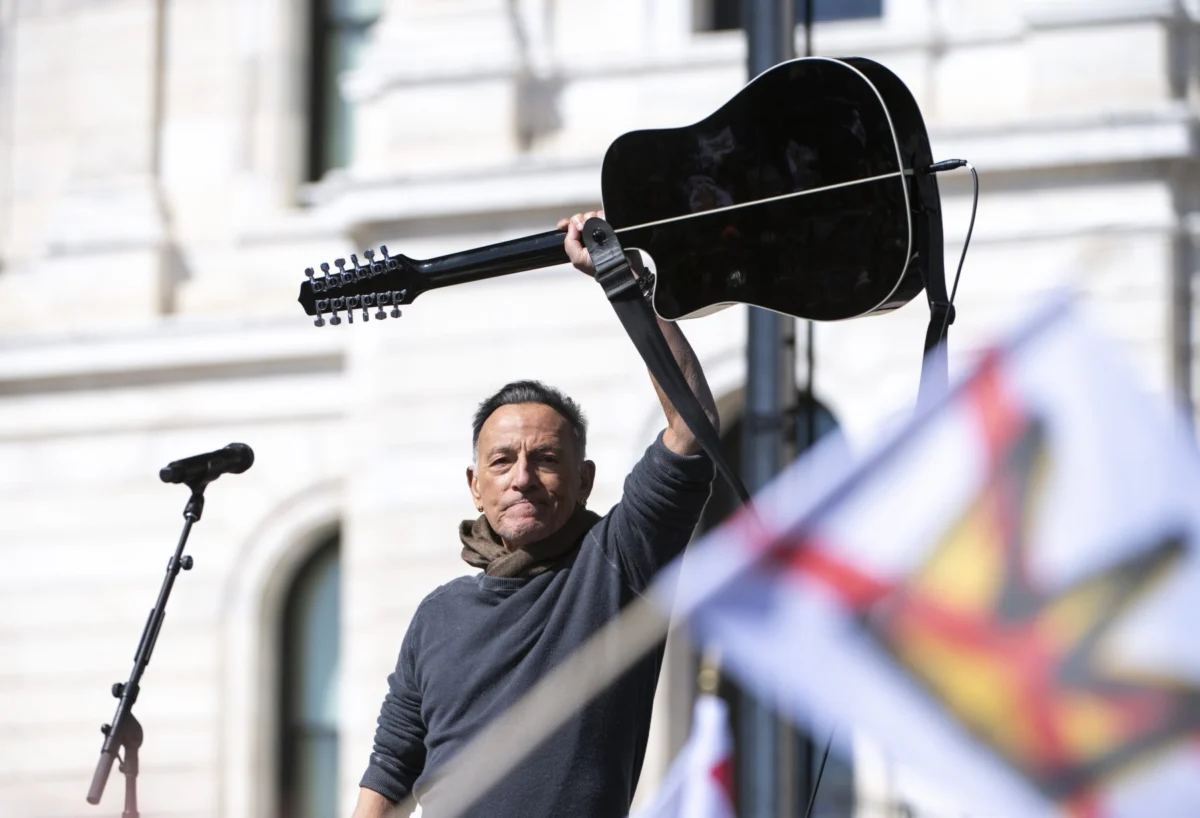
On the final day of the 2026 Tribeca Festival, the air in lower Manhattan was charged with a mix of cinematic nostalgia and urgent political discourse. As the curtains drew to a close on the annual event, the spotlight turned away from the silver screen and toward one of America’s most enduring cultural icons. Bruce Springsteen, the legendary singer-songwriter whose career has been inextricably linked to the American experience, was presented with the Harry Belafonte Voices for Social Justice Award.
The ceremony, which featured an intimate, wide-ranging conversation between Springsteen and U2 frontman Bono, served as a poignant capstone to a festival that has increasingly positioned itself as a platform for activism. With co-founders Robert De Niro and Jane Rosenthal presiding, the event transcended the typical celebrity tribute, becoming a masterclass in the intersection of art, citizenship, and the heavy burden of public conscience.
The Weight of the Honor
The Harry Belafonte Voices for Social Justice Award is not merely a recognition of artistic achievement; it is a nod to those who leverage their immense platforms to champion the disenfranchised. In choosing Springsteen, the Tribeca committee highlighted a career that has evolved from the blue-collar poetry of the New Jersey shoreline to the pointed, systemic critiques found in his recent works.
"I’m a little embarrassed to get this award," Springsteen admitted, his trademark humility surfacing as he took the stage at the BMCC Tribeca Performing Arts Center. "I’m just a concerned citizen."
Despite his modest deflection, the gravity of the occasion was underscored by his specific dedication of the honor. Springsteen dedicated the award to the residents of Minneapolis, Portland, and Los Angeles, praising their resilience in the face of what he described as "the federal invasion of their cities this year." It was a bold, unscripted moment that set the tone for the entire afternoon—a dialogue not about chart-topping hits, but about the fraying fabric of American democracy.
A Chronology of Resistance
The event’s structure was intentionally informal, designed to mirror the "Storytellers" series that has become a staple of the Tribeca Festival. However, the conversation between Bono and Springsteen felt more like a geopolitical summit than a typical Q&A.
The Opening Salvos
Robert De Niro, never one to mince words, opened the proceedings with a scathing indictment of the current political climate. "This is a man who knows how to use his voice," De Niro stated, referring to Springsteen. "He uses it to give voice to the powerless and he uses it to lead the resistance. He is fearless and direct. He knows what the problem is and he names it: Donald Trump. Donald J. Trump and his feckless enablers."
De Niro’s remarks framed the afternoon’s central theme: the transition of the artist from an entertainer to a frontline participant in the "sacred argument" of American governance.
The Dialogue with Bono
Bono, acting as both interviewer and peer, navigated the conversation with the skill of a seasoned diplomat. The two legends discussed the challenge of maintaining a connection with a working-class base while navigating the complex realities of global stardom.
"I fear sometimes we on the left lost a little bit of it and that the accusations of elitism that are out there for people like me are not inaccurate," Bono confessed. He then pivoted to a question that hung in the air with palpable weight: "Has it cost you? Do you feel torn at all thinking there’s people in this town that used to come see my shows who don’t now? Or have you made peace with that?"
Springsteen’s response was characteristically measured. He spoke of the necessity of choosing sides—a nod to the classic folk anthem "Which Side Are You On?"—and argued that an artist’s primary duty is to be "explicable and understandable" to their fellow citizens, even when those citizens disagree.
The Intersection of Art and Activism
Throughout the event, the discussion touched on the delicate balance of brand and belief. One of the most revealing moments occurred when Bono recalled a past request for Springsteen to lend a song to the (PRODUCT) RED campaign. Springsteen had declined, a decision he now views with regret.
"That was a big mistake, too," Springsteen interjected, surprising the audience and his interviewer. "I should have f—king done it. I have to apologize." This admission of imperfection served to humanize a figure often elevated to the status of a secular saint, illustrating that even for the most politically engaged, the path of activism is rarely linear.
A Musical Call to Action
The atmosphere shifted from the intellectual to the visceral when Patti Smith joined the pair on stage. Accompanied by Tony Shanahan on keys, Smith delivered a haunting performance of "Peaceable Kingdom," a song inspired by the tragic death of Rachel Corrie.
The highlight of the musical portion, however, was the collective performance of Smith’s "People Have the Power." With Springsteen on acoustic guitar and Bono joining in for backup vocals, the performance transformed the auditorium into a space of collective resolve. For those in attendance, it was a reminder of the power of music to serve as a catalyst for social movement.
As the program concluded, Springsteen offered an impromptu solo performance of "Land of Hope and Dreams." It was a raw, stripped-back rendition that resonated deeply with an audience already moved by the preceding hours of discourse. Before departing to a thunderous standing ovation, the New Jersey native offered a final, lighthearted nod to his hosts: "Go Knicks."
Implications for the Cultural Landscape
The event at Tribeca signals a broader shift in how celebrity activism is viewed and executed in 2026. As political polarization reaches new heights, the "middle ground" for artists is shrinking. Springsteen’s willingness to alienate portions of his fanbase in favor of a clear, unapologetic political stance represents a significant pivot from the "don’t rock the boat" industry standards of the previous decade.
Data and Context
- The "No Kings" Movement: The protest in St. Paul, where Springsteen was captured on camera, is part of a larger, decentralized movement opposing federal intervention in state-level governance.
- The Land of Hope and Dreams Tour: Described by critics as one of the most politically charged tours in modern rock history, the tour served as a precursor to the themes discussed at Tribeca.
- Public Perception: While some critics argue that such vocal activism can alienate portions of an artist’s demographic, the turnout and engagement at the Tribeca Festival suggest that for artists of Springsteen’s stature, political authenticity is becoming a core component of their brand identity.
Conclusion: The Sacred Argument
The Tribeca Festival’s honoring of Bruce Springsteen was more than a lifetime achievement celebration. It was an acknowledgment that in a time of institutional instability, the "poet of the working class" remains a vital, if occasionally flawed, voice for the democratic process.
As Springsteen noted, America is a "sacred argument and a compromise." By choosing to participate in that argument—even at the cost of commercial safety or personal comfort—Springsteen has solidified his legacy not just as a musician, but as a defining voice of his generation. For those who attended the event, the message was clear: in an era of division, the act of speaking out is not just a right, but a responsibility that requires both courage and the willingness to learn from one’s own mistakes.
As the curtain falls on the 2026 Tribeca Festival, the conversation regarding the role of the artist in the public sphere is far from over. If anything, the events of this final day suggest that the debate is only just beginning.
 Raul Delapena Setiawan
  Muslim
  rifanmuazin