
 By Layla Zulfa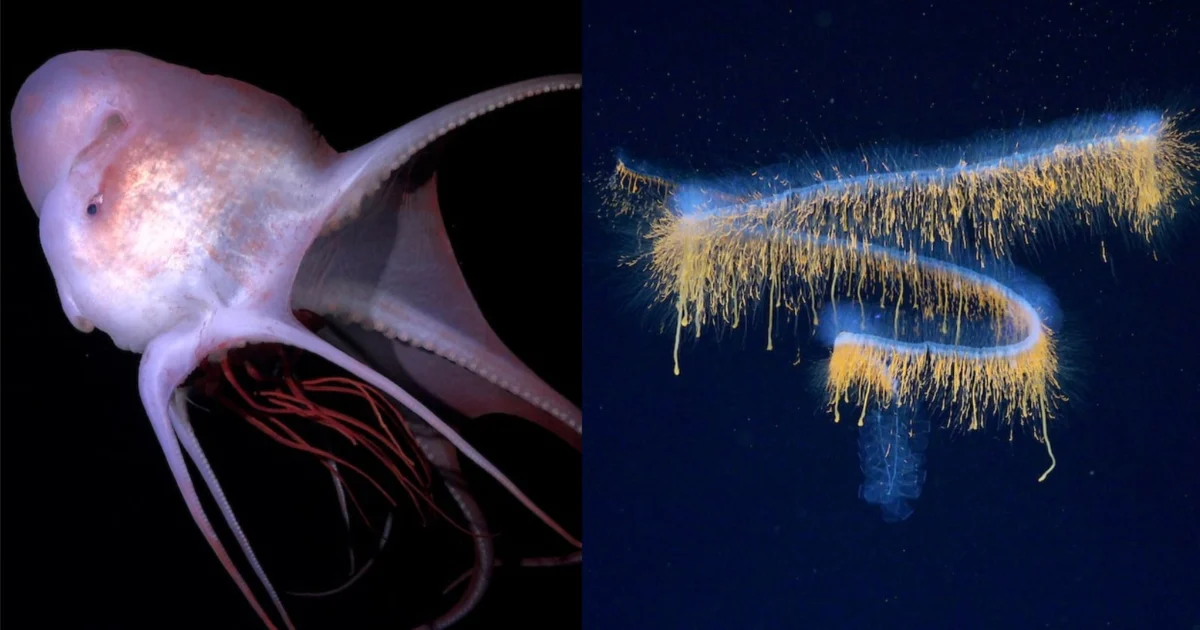
In a groundbreaking expedition that has fundamentally altered our understanding of marine biology, an international team of researchers aboard the Schmidt Ocean Institute’s research vessel Falkor has identified 31 previously unknown deep-sea species. Conducted in the tropical South Atlantic off the coast of Brazil, this two-week mission represents a triumph of non-invasive imaging technology, allowing scientists to document life forms that were, until now, virtually impossible to study in their natural state.
The expedition focused on the "midwater" zone—the vast, dark expanse of water between the sunlit surface and the seafloor. Often referred to as the ocean’s twilight zone, this region is Earth’s largest and least-explored habitat. Because the creatures inhabiting this realm are often gelatinous, gossamer-thin, or incredibly fragile, traditional sampling methods like trawl nets have historically destroyed them before they could be properly analyzed. By utilizing state-of-the-art camera systems, the research team has finally pulled back the veil on this mysterious ecosystem.
Main Facts: A Catalog of the Bizarre
The diversity of life identified during the expedition is staggering, spanning a wide array of taxonomic groups. The list of newly discovered species includes:
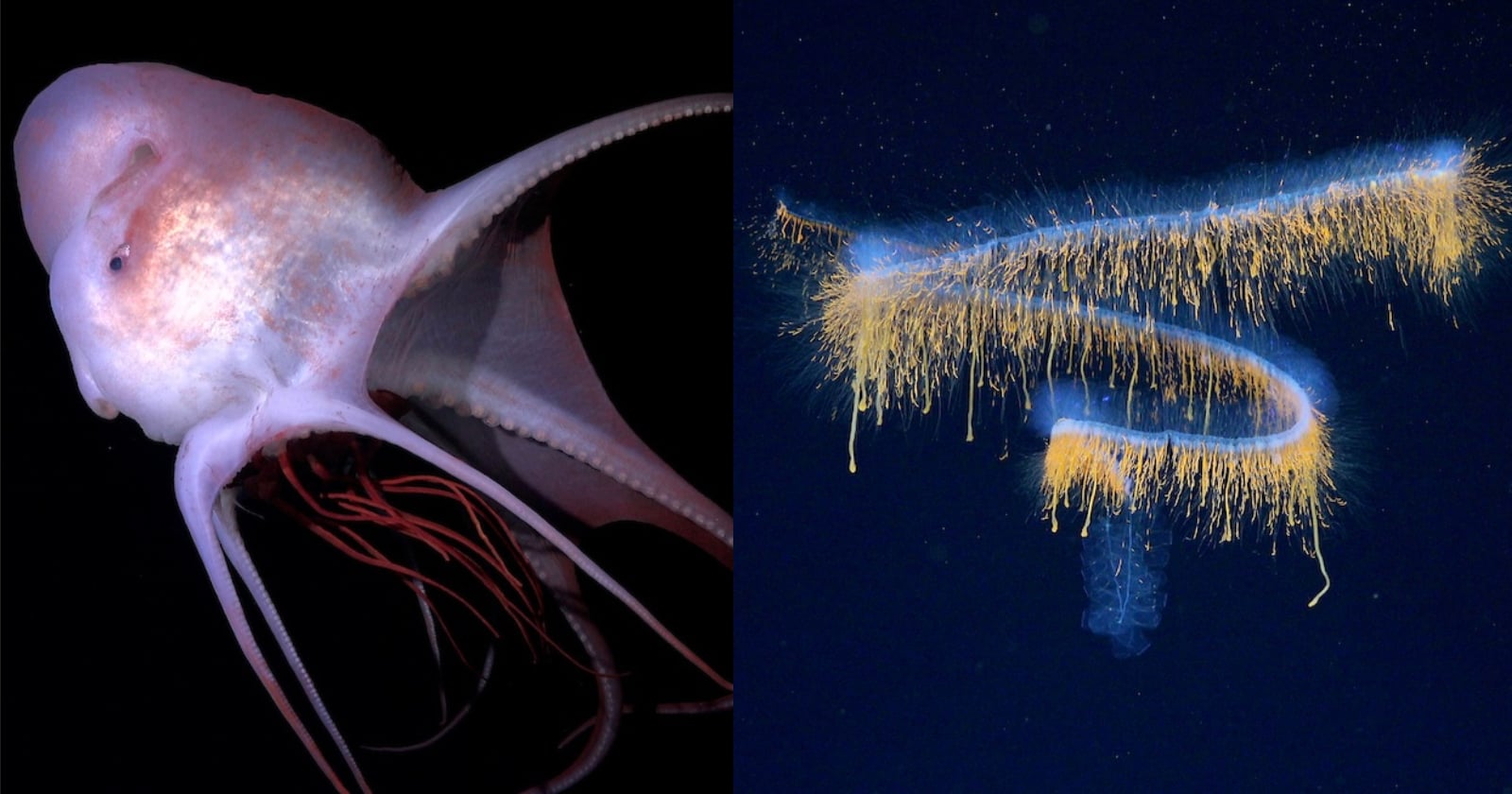
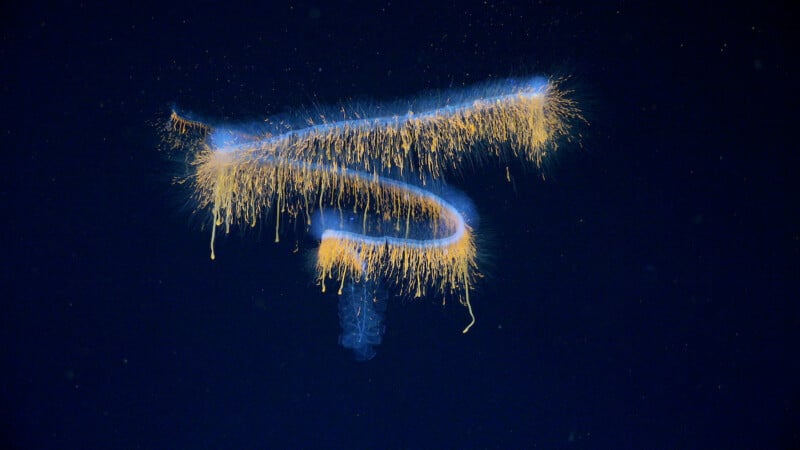
- Cnidarians: Nine species of jellyfish and seven siphonophores—colonial organisms that function as a single unit, often appearing as long, flowing ribbons of bioluminescence.
- Ctenophores: Seven species of comb jellies, characterized by their iridescent, shimmering cilia that ripple with light as they navigate the water column.
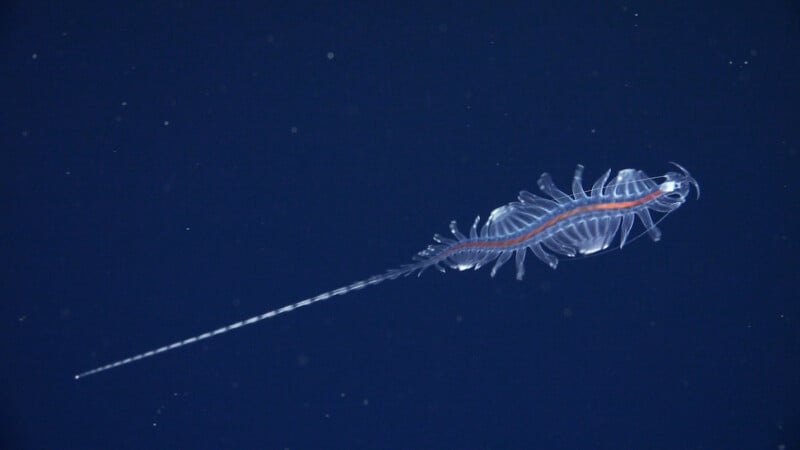
- Worms and Crustaceans: A new species of gossamer worm—a creature noted for its unexpected agility—and a new amphipod, a crustacean relative to the familiar crab and lobster.
- Chordates: Four species of larvaceans, fascinating tadpole-like creatures that secrete intricate mucus "houses" to filter feed. Evolutionarily, these are of particular interest due to their closer genetic link to humans than to most invertebrates.
- Single-celled Giants: Two species of giant rhizarians, single-celled organisms that have evolved to a scale visible to the naked eye, challenging our perceptions of microbial life.
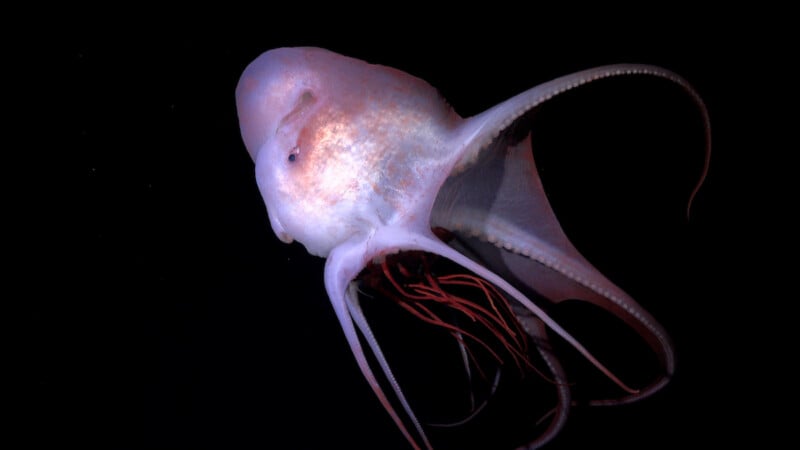
Beyond the formal count of new species, the team observed an unexpected abundance of life, including rare sightings of glass squid and a Haliphron atlanticus—a large, translucent octopus—spotted in the act of consuming a bright red jellyfish at a depth of 2,624 meters.
Chronology: A High-Speed Discovery Pipeline
The success of this expedition is rooted in the unprecedented speed at which data was processed. Traditionally, the identification and formal description of new marine species is a painstaking process that can span decades, involving the collection of physical specimens, preservation, and exhaustive laboratory analysis.
During this two-week voyage, however, the paradigm shifted. By utilizing non-invasive in-situ imaging, the team moved from observation to confirmation in a matter of days.
- Days 1-3: Initial deployment of the Remotely Operated Vehicle (ROV) SuBastian. Calibration of the imaging array and baseline mapping of the midwater column off the Brazilian coast.
- Days 4-10: The "Golden Window." As the ROV descended into the bathypelagic zone, the team began capturing high-definition video of organisms that had never been documented alive. The real-time processing of 3D data allowed scientists to distinguish between known species and potential new discoveries on the fly.
- Days 11-14: Data synthesis. The team compared the high-contrast silhouettes and laser-scanned 3D models against existing biological databases, confirming the 31 new entries.
Supporting Data: Technological Marvels of the Deep
The core challenge of deep-sea exploration is the physical environment itself. The pressure at these depths is immense, and the organisms are evolved to be "invisible" to predators, often making them translucent or gelatinous. To overcome this, the Falkor team utilized a trifecta of advanced imaging technologies, primarily developed by the Monterey Bay Aquarium Research Institute (MBARI) and the Japan Agency for Marine-Earth Science and Technology (JAMSTEC).
1. DeepPIV (Particle Image Velocimetry)
DeepPIV uses laser scanning to create detailed 3D models of an organism. By emitting a sheet of light, it captures the volume and structure of creatures without the need for physical contact. This technology is vital for understanding how these fragile animals move and interact with the water around them.
2. EyeRIS (Remote Imaging System)
Working in tandem with DeepPIV, EyeRIS provides high-resolution, non-invasive imaging. It allows researchers to capture the fine details of an organism’s anatomy—such as the delicate tentacles of a siphonophore or the cilia of a comb jelly—in high definition.
3. The Shadowgraph Camera
Developed by JAMSTEC, this system excels where light-based systems might struggle. By capturing high-contrast silhouettes, the shadowgraph reveals the subtle structural density of transparent animals. This is particularly useful for identifying internal organs and complex appendages that might otherwise disappear against the black backdrop of the deep sea.
Official Responses: The Scientist’s Perspective
Dr. Karen Osborn, the expedition’s chief scientist from the Smithsonian National Museum of Natural History, underscored the significance of the findings in a formal statement.
"The largest habitat on Earth, the midwater, is filled with incredible animals we are only just starting to understand," Dr. Osborn noted. She emphasized that the primary takeaway is not just the discovery of new life, but the realization of how little we know about the survival strategies employed in the deep ocean. "I continue to be fascinated by the fantastic variety of solutions they have evolved to survive in this formidable environment, and that drives me to keep asking questions about our ocean."
The sentiment among the researchers is one of humble realization. By moving away from "destructive sampling"—the act of catching and killing specimens—to "observational biology," the team has opened a door to a new era of oceanography where the subject remains undisturbed in its natural habitat.
Implications: Why the Midwater Matters
The discovery of these 31 species is more than a taxonomic exercise; it has profound implications for our understanding of global ecology.
The Midwater as a Climate Regulator
The midwater acts as a massive carbon sink. The animals living there participate in the "diel vertical migration," the largest migration on Earth, where billions of organisms move to the surface at night to feed and return to the depths during the day. This process plays a critical role in sequestering carbon, effectively moving CO2 from the atmosphere to the deep ocean. Understanding the diversity of this region is essential for climate modeling.
Rethinking Evolutionary Biology
Many of the species found, such as the larvaceans, provide vital clues into the evolutionary history of complex life. By observing these creatures in their "houses" of mucus, scientists are gaining insight into how ancient organisms developed the precursors to complex biological systems, including those found in vertebrates.
A New Standard for Exploration
The success of this mission sets a new benchmark for deep-sea expeditions. As anthropogenic pressures—such as deep-sea mining, microplastic pollution, and climate change—begin to encroach upon the deep, the ability to document and study these species without causing harm has become a moral and scientific imperative.
The voyage of the Falkor has proven that we no longer need to "capture" the ocean to know it. Instead, we can observe it, admire its complexity, and ultimately, protect it. As the team returns from the South Atlantic, they leave behind a world slightly less mysterious, but infinitely more fascinating than it was just a few weeks ago. The deep sea, once thought to be a barren void, has revealed itself to be a bustling, glowing, and hyper-diverse frontier that demands our continued attention and stewardship.
 Lina Irawan
  Reynand Wu
  Basiran