
 By Asep Darmawan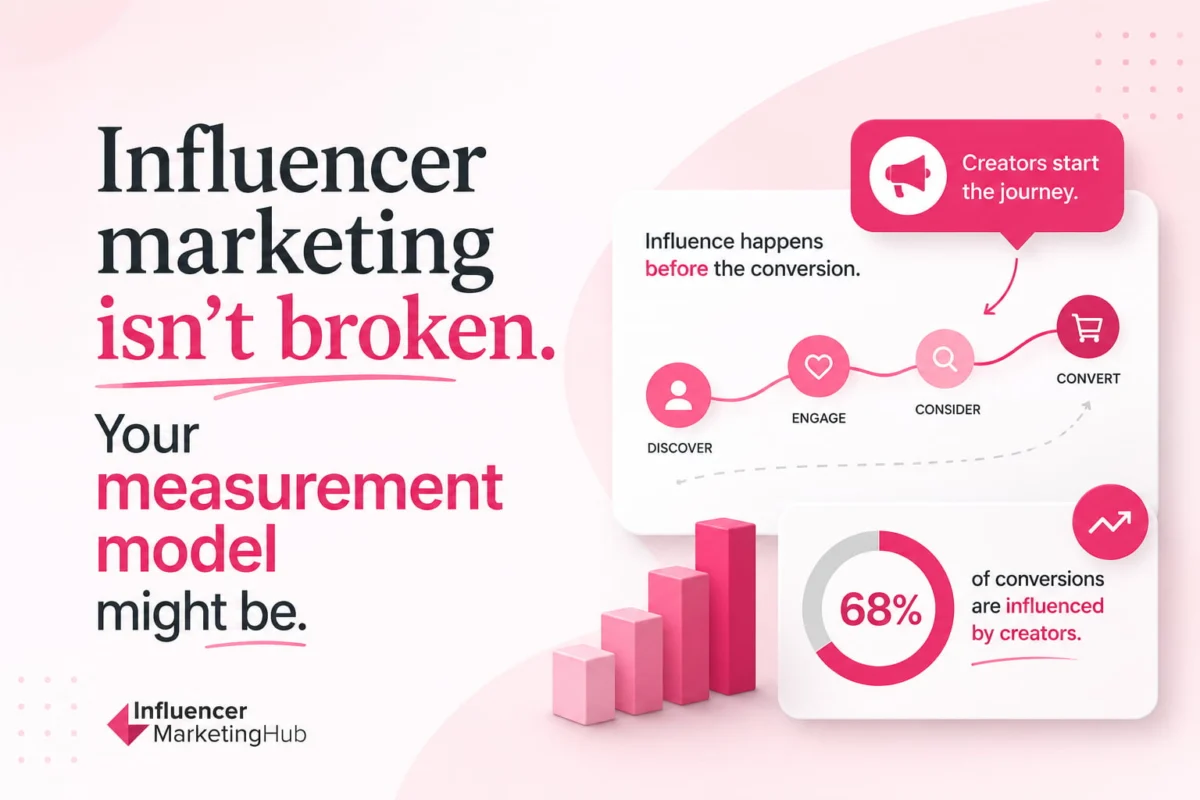
Ask any marketing director how they evaluate the success of an influencer campaign, and you will almost certainly hear the same refrain: "Is it driving ROI?" It is an understandable, even reflexive, standard for budget-conscious stakeholders. However, relying on immediate return on investment as the primary gauge for influencer success is not just a tactical error; it is a fundamental misunderstanding of how modern consumer behavior works.
Today, the real challenge confronting brands is not whether influencer marketing works as a channel, but whether they are measuring it in a way that reflects the complex, non-linear reality of the modern purchase journey. When programs are launched with high expectations but measured by rigid, outdated metrics, the gap between the two becomes the graveyard where most influencer strategies quietly collapse.
The Chronology of a Failed Campaign
To understand why influencer marketing often earns a poor reputation in the boardroom, one must look at the typical lifecycle of a failing program.
- The "Ease of Launch" Illusion: With the proliferation of creator discovery tools, affiliate platforms, and automated content workflows, launching a program has never been simpler. Brands can stand up a full-scale campaign in days. This operational efficiency creates a dangerous "false sense of readiness."
- The Expectation Gap: Because the launch is fast, leadership often sets aggressive, short-term performance targets. When these early-stage programs—which lack historical data and audience trust—fail to deliver immediate revenue, the program is deemed a failure.
- The Cycle of Instability: Instead of optimizing, brands panic. They fire creators, pivot the strategy, and shift budgets. Institutional knowledge is lost with every partnership cut, and the program enters a perpetual state of "reset," never reaching the maturity required to pay dividends.
This cycle is far more common than most brands admit. The tragedy is that these programs are often abandoned right before they would have hit an inflection point of compounding returns.
The Last-Click Fallacy
The core of the measurement problem is "last-click attribution." In this model, the credit for a sale goes entirely to the final touchpoint—the affiliate link or the retargeted ad that secured the checkout.
However, the modern consumer journey is rarely a straight line. A user might discover a product through a creator’s Instagram Story, research it on TikTok, read reviews on Reddit, and finally convert weeks later via a branded Google search. In a last-click world, the creator—the entity that initiated the journey and sparked the desire—receives zero credit.
Judging a campaign purely on immediate conversion is akin to watching a two-hour film and trying to review it based on the final frame. You see the outcome, but you miss the entire story. Research consistently shows that consumers interact with six to eight touchpoints before committing to a purchase. In sectors like beauty, high-end fashion, and consumer tech, that number is often higher. The creator is rarely the last stop, but they are frequently the first. Without that initial spark, the retargeted ad has no one to retarget, and the branded search never happens.
The Shift: From ROI to Influence Metrics
To fix this, brands must pivot from asking "Did this creator drive sales?" to "What role did this content play in the customer journey?"
By reframing the question, marketers can build a measurement dashboard that tracks value at every stage of the funnel:
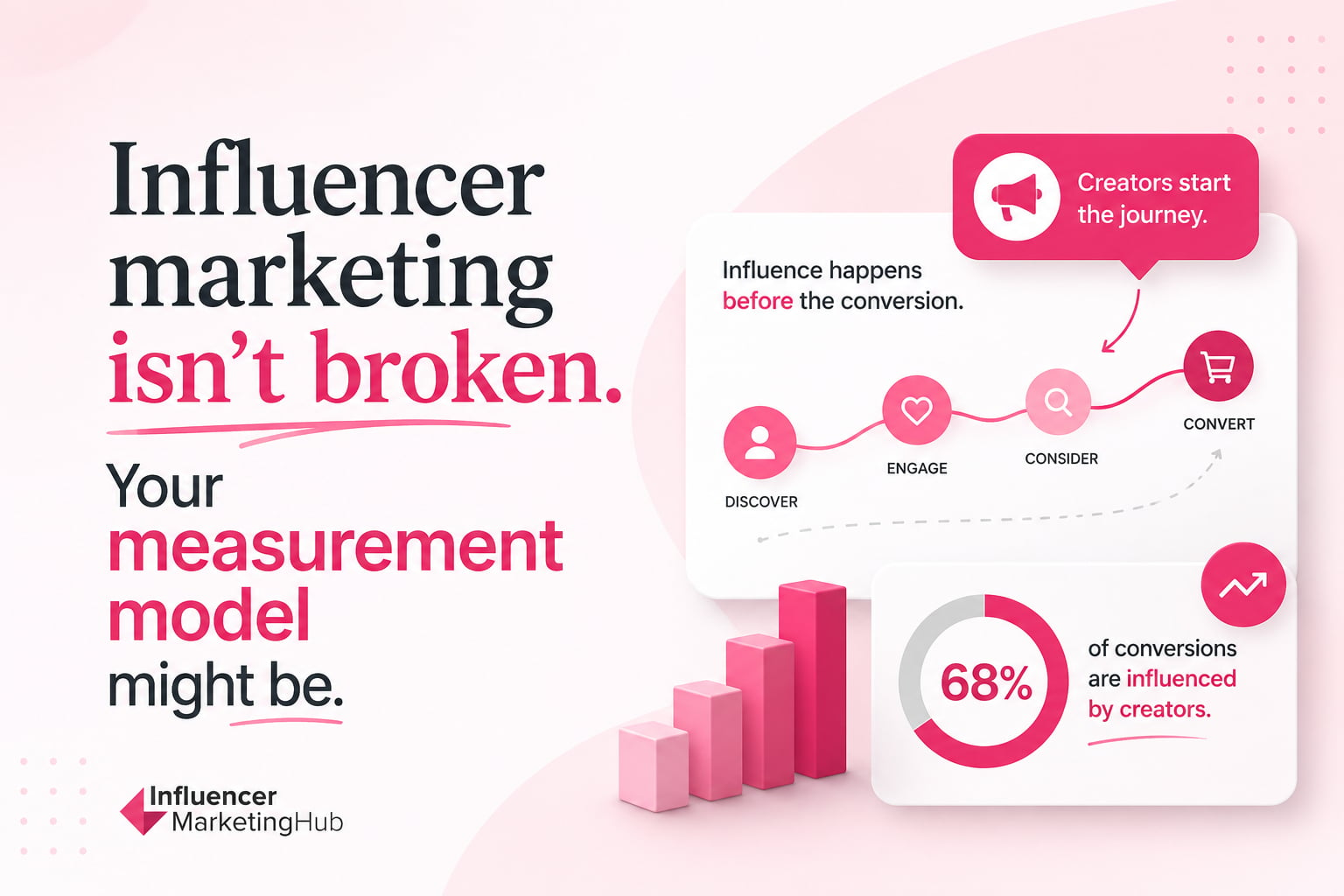
- Upper-Funnel: Track share of voice, audience growth rate, and organic brand mentions in the weeks following a campaign. These indicate increased market penetration.
- Mid-Funnel: Focus on engagement rates, click-through behavior, and return visit rates. These signals prove that the content is resonating and shifting consumer intent.
- Lower-Funnel: This is where revenue metrics finally come into play, but they should be viewed alongside attribution models that account for the full, long-term journey.
Supporting Data: Why Ecosystem Signals Matter
When a creator campaign runs, smart marketers should look for ripples in their broader marketing ecosystem. These "signals" are often the most accurate evidence of a program’s success:
- Branded Search Spikes: A sudden increase in organic searches for your brand name immediately following a campaign is rarely a coincidence. It is the clearest sign that creators have successfully introduced your product to a new audience.
- Improved Paid Media Efficiency: If your retargeting ads suddenly show a higher conversion rate, it is often because creator content has "warmed up" the audience. Your ad spend is performing better because the barrier to entry has been lowered by the influencer.
- Affiliate Sustainability: If affiliate links are seeing delayed but consistent conversions, it confirms that your creators are successfully moving customers through the consideration phase.
Official Perspectives: Aligning Function with Evaluation
Industry experts suggest that the most effective influencer programs assign specific roles to creators based on their strengths, rather than forcing every partner to be a direct-response engine.
1. Awareness Creators: Tasked with reach and sentiment. Evaluation should be based on CPM, impressions, and audience sentiment analysis.
2. Consideration Creators: Tasked with education. Evaluation should be based on engagement rate, site traffic, and video completion rates.
3. Conversion Creators: Tasked with sales. Evaluation should be based on ROAS, CPA, and affiliate conversion rates.
When measurement aligns with these specific functions, the ROI of the entire program becomes less volatile. Top-of-funnel creators are no longer unfairly penalized for failing to drive immediate checkout, and the marketing team stops "flying blind."
Strategic Implications: How to Identify True Underperformance
It is crucial for brands to distinguish between a bad strategy and a bad partnership. Before cutting a creator loose, managers should apply a diagnostic framework separating Output from Outcome:
- Output Metrics (Creator’s Control): Content quality, post frequency, and audience alignment. If these are strong, the creator is doing their job.
- Outcome Metrics (Brand’s Control): Conversion rate, pricing, landing page performance, and offer competitiveness.
If a creator has high engagement (strong output) but low sales (weak outcome), the issue is likely your website or offer, not the creator. If both are weak, you have a brand-audience fit problem. Before pulling the plug, talk to the creator. Often, they have qualitative insights into audience sentiment—such as "the price point is too high" or "the checkout process is confusing"—that no dashboard can capture.
The Takeaway: Influence as a Compounding Asset
Influencer marketing is not a static advertising channel; it is a compounding, dynamic asset. The brands that struggle most are those attempting to treat it as a direct-response mechanism.
When you measure influencer marketing only at the point of conversion, you are ignoring the "thread" that runs through the entire purchase journey. When programs are given the time, structural support, and appropriate measurement frameworks, they stop being unpredictable and start becoming a predictable, scalable engine for growth.
The evidence is clear: The channel itself is not broken. The way we measure it, however, is long overdue for an overhaul. To see the true value of influencer marketing, brands must stop looking for the "last click" and start looking for the impact that lives in everything that happens before it.
 Iffa Jayyana
  Siti Muinah
  Asro
Asro 