
 By Raul Delapena Setiawan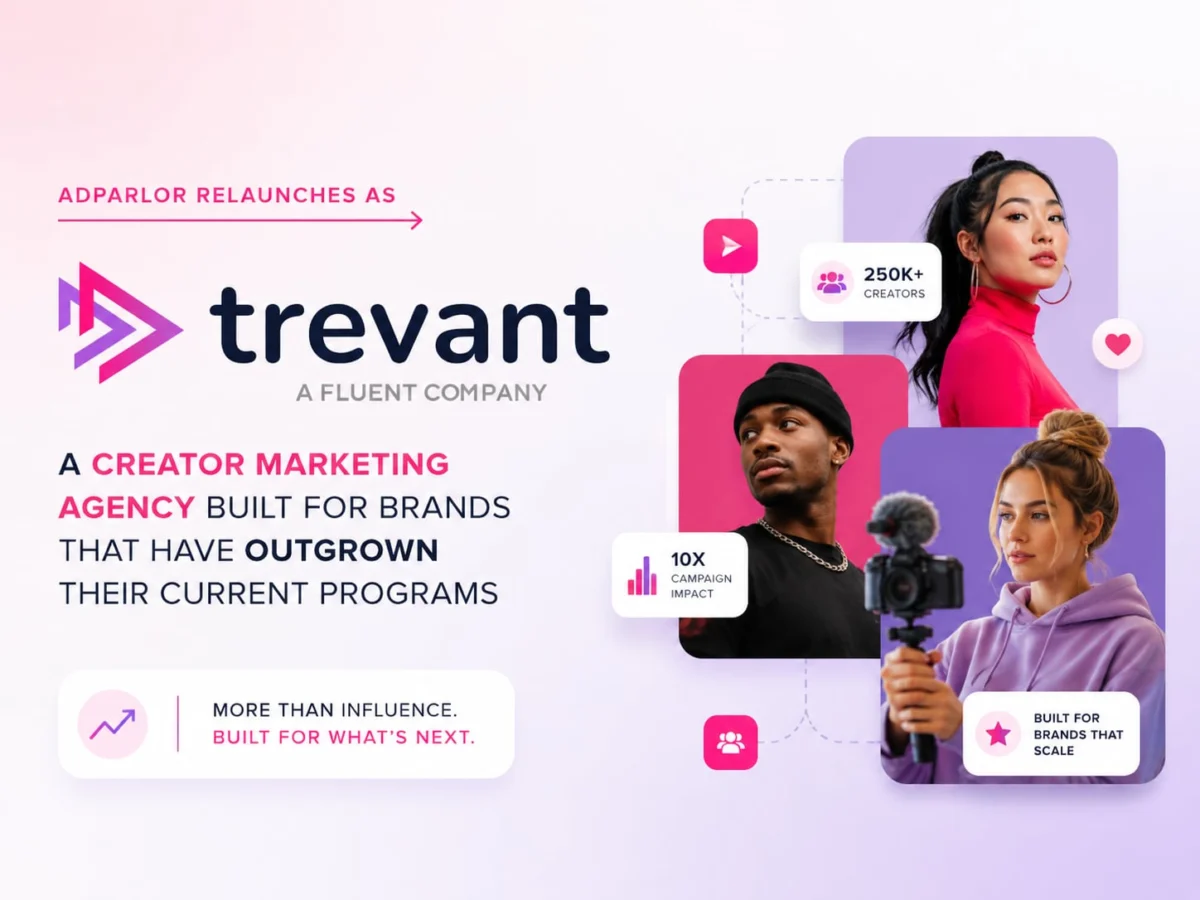
The creator economy has reached a critical inflection point. For years, brands viewed influencer marketing as a creative experiment—a top-of-funnel activity designed to boost brand awareness through "authenticity." However, as budgets have tightened and the demand for fiscal accountability has soared, the industry is undergoing a professionalization phase.
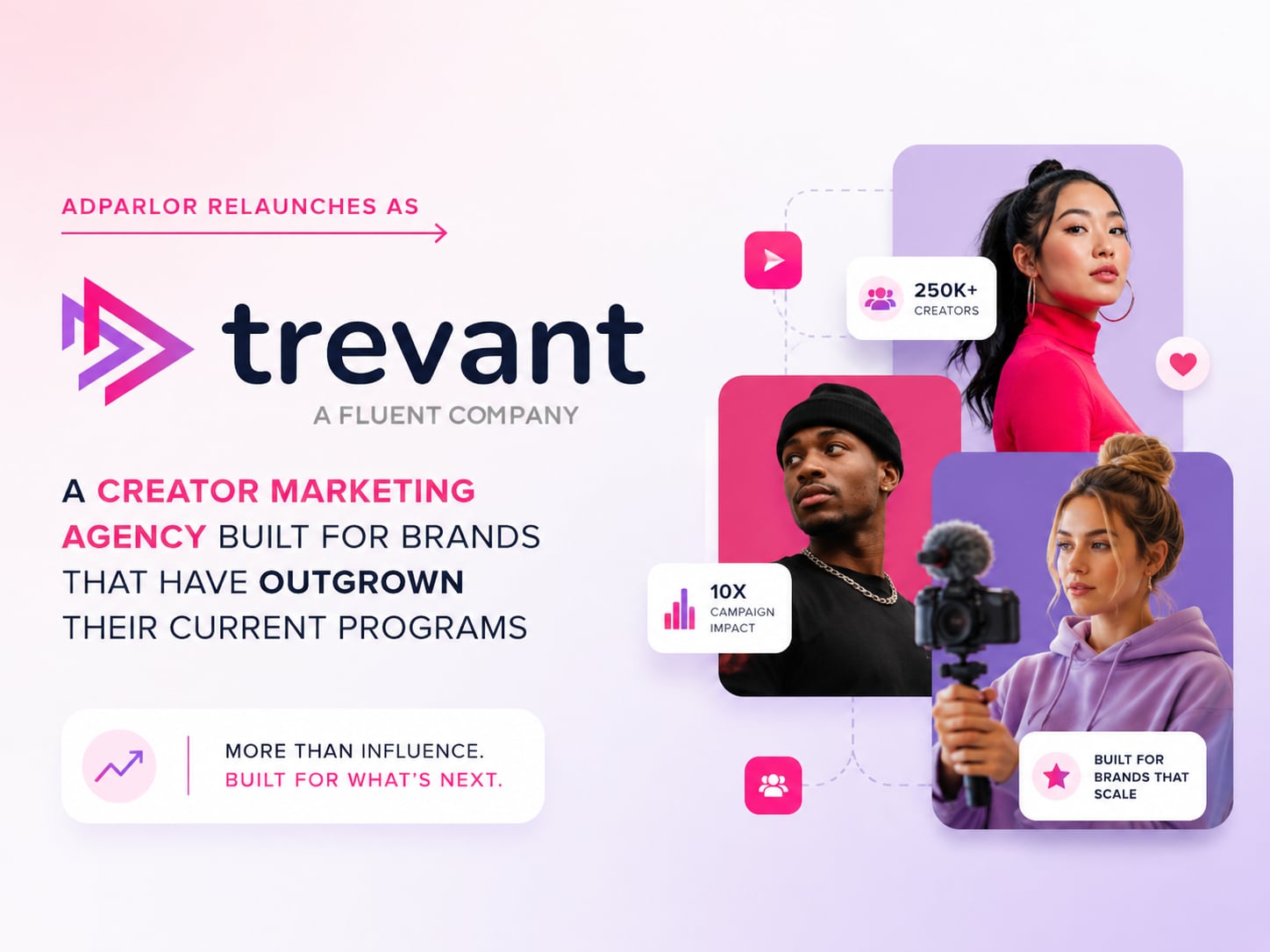
Enter Trevant, a newly launched agency that marks the formal evolution of AdParlor, one of Meta’s earliest Business Partners. By bridging the gap between high-volume creative production and enterprise-grade performance measurement, Trevant is positioning itself as the infrastructure layer for brands that have moved beyond the "pilot program" phase of influencer marketing and are now looking to scale sustainable, revenue-driving engines.
The Evolution of an Industry Giant
To understand the mission of Trevant, one must look at the legacy of its predecessor. AdParlor built its reputation as a powerhouse in the paid social landscape, managing over $1 billion in media spend for enterprise-level clients. During its tenure, the agency became synonymous with operational rigor—applying the strict metrics of performance marketing to the often-nebulous world of influencer content.
As the creator economy matured, the team behind AdParlor observed a growing disconnect. Brands were spending heavily, but they were often managing their influencer programs in silos, disconnected from the broader omnichannel strategy. There was a lack of attribution, inconsistent brand safety protocols, and a reliance on fragmented data.
The launch of Trevant this month is not merely a rebrand; it is a strategic pivot. It represents the application of AdParlor’s deep-rooted expertise in paid media infrastructure—attribution modeling, efficiency at scale, and rigorous data analytics—to the modern creator economy. Trevant is essentially an agency built for the "post-experimentation" era of influencer marketing.
Who Trevant is Built For: The Inflection Point
Trevant is not targeting the small-to-mid-sized business looking to hire their first influencer. Instead, the agency has set its sights on mid-market to enterprise brands that have already proven the viability of creator marketing but are now struggling with the "scaling paradox."
When a brand successfully validates creator marketing, they often hit a wall. Suddenly, the ad-hoc process of manually sourcing creators, managing contracts, and chasing content assets breaks down. The infrastructure required to manage 10 creators is vastly different from the infrastructure needed to manage 500.
According to Trevant’s leadership, the agency is designed to solve three specific, converging problems:
- The Full-Funnel Performance Gap: Moving beyond "clicks" and "adds-to-cart" to drive actual bottom-line revenue that holds up under scrutiny.
- Operational Complexity: Scaling the workflow from manual spreadsheets to automated, enterprise-grade systems.
- Measurement Fragmentation: Consolidating disparate data sources into a unified, actionable view of performance.
Official Response: Building for the CFO
The challenge of proving the efficacy of creator marketing to a CFO is a hurdle many marketing directors currently face alone. Kristina Coughlin, General Manager of Trevant, highlights this as the agency’s primary value proposition.
"Most agencies will get you to an add-to-cart or a click and call that performance," Coughlin notes. "We’re building programs that can defend omnichannel ROAS to a CFO. That’s a different infrastructure problem entirely—and it’s the one most brands are trying to solve on their own right now."
Coughlin’s perspective underscores a shift in industry expectations. Brands are no longer satisfied with "vanity metrics" like reach or engagement rate. They are looking for deterministic data that links a specific piece of creator content to a long-term increase in Customer Lifetime Value (CLV) and Return on Ad Spend (ROAS).
Data-Driven Foundations and Performance Metrics
Trevant enters the market with a robust track record. Their client roster includes major household names such as Hill’s Pet Nutrition, Norwegian Cruise Line, QVC and HSN, Jos. A. Bank, TP-Link, and Rocky Mountain Chocolate Factory. These clients are not looking for one-off viral campaigns; they are looking for long-term, predictable growth.
The agency’s performance data suggests that this systematic approach is working. Trevant reports an average ROAS of 4.36x across recent programs. Perhaps more impressively, the agency boasts an average enterprise client retention rate of seven years, a figure that stands in stark contrast to the often-churn-heavy agency world. Furthermore, a five-year average staff tenure suggests that the agency’s internal processes are as stable as the results they provide for their clients.
Infrastructure at Scale
Trevant’s ability to execute quickly is underpinned by a massive, vetted infrastructure. The agency maintains a network of 5,500+ pre-vetted creators and has access to a broader pool of 10 million creators across all major social platforms.
For an enterprise brand, speed is often the enemy of quality. Trevant addresses this by boasting an average time of just 14 days from a signed agreement to the first piece of live content. This velocity is achieved through pre-existing contractual frameworks, established relationships, and a highly streamlined project management system that removes the friction typically associated with large-scale influencer activation.
The Implications: A Professionalized Future
The launch of Trevant serves as a bellwether for the broader marketing industry. It signals that influencer marketing has officially graduated from a "side-hustle" marketing tactic to a cornerstone of the enterprise marketing mix.
1. The Death of the "Campaign-by-Campaign" Model
For years, agencies operated on a project-by-project basis, making it difficult for brands to build long-term momentum. Trevant’s focus on long-term program management suggests a shift toward an "always-on" creator strategy. Brands are moving away from the cyclical nature of seasonal influencer campaigns and toward persistent, high-frequency creator activations that mirror the behavior of their paid media counterparts.
2. The Integration of Paid and Organic
Perhaps the most significant implication is the blurring of lines between paid media and influencer content. By bringing the "AdParlor DNA" of paid social into the influencer space, Trevant is signaling that the most successful brands will be those that treat influencer content as a top-tier creative asset for their paid media funnels. This "paid-first" mentality allows for better testing, iteration, and attribution.
3. Increased Demand for Data Transparency
As brands demand more accountability, the "black box" of influencer marketing is closing. Trevant’s model forces transparency. When an agency promises to "defend ROAS to a CFO," they are committing to a level of reporting that requires full integration into a brand’s tech stack. This will likely push other agencies to upgrade their data capabilities or risk obsolescence.
Looking Ahead: The Challenges of Scale
While Trevant’s launch is met with optimism, the path to scaling enterprise creator programs is fraught with challenges. As the creator economy continues to evolve, the primary hurdles will remain:
- Platform Volatility: Rapid changes in social media algorithms can disrupt even the most sophisticated programs.
- Creator Fatigue: As brands move toward high-volume, performance-based content, there is a risk of burning out creators or diluting the "authentic" appeal that made influencer marketing successful in the first place.
- Measurement Complexity: While attribution is improving, the path to purchase remains non-linear, especially in omnichannel environments.
Trevant’s leadership seems aware of these pitfalls. By positioning themselves as an extension of the brand’s internal team rather than a vendor, they are attempting to navigate these challenges through deep integration and long-term partnership.
Conclusion
Trevant’s arrival represents a maturation of the creator economy. By evolving from a legacy paid-social powerhouse into a specialized agency for the creator era, the firm is addressing the specific needs of brands that have outgrown the "influencer-as-an-experiment" phase.
For CMOs and CFOs alike, the shift represents a welcome change. The demand for accountability, infrastructure, and predictable ROI is no longer a request; it is a requirement. As Trevant steps into this space, backed by its parent company, Fluent, Inc., it is clear that the future of influencer marketing belongs to those who treat it not just as a creative medium, but as a rigorous, data-driven, and scalable performance channel.
As the market continues to consolidate and professionalize, Trevant’s focus on long-term retention and systematic operational discipline may well become the gold standard for how enterprise brands navigate the complex, ever-evolving landscape of the creator economy.
 Neng Nana
  Muslim
  Lina Irawan