
 By Sagoh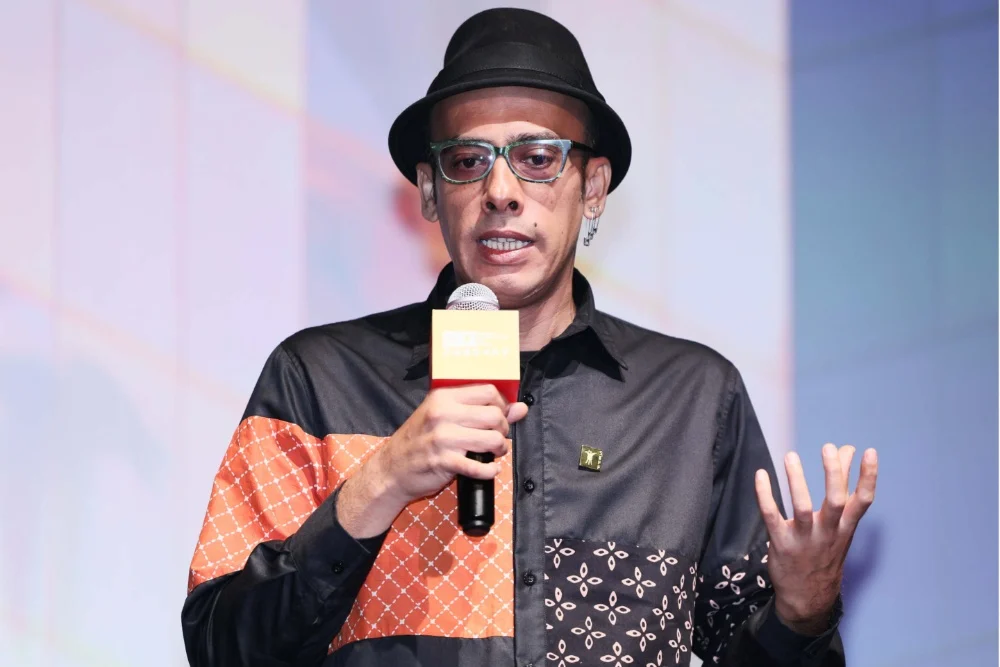
SHANGHAI — Amidst the prestigious backdrop of the Shanghai International Film Festival (SIFF), where the global cinematic community converges to celebrate the art of storytelling, acclaimed Indonesian director Ismail Basbeth has unveiled his next ambitious project. Titled Love Letters of Our Life, the upcoming feature promises to be a poignant exploration of memory, heritage, and the enduring power of connection in an era before the digital revolution fundamentally altered the human experience.
The announcement coincides with the world premiere of Basbeth’s latest work, My Own Last Supper, which is currently vying for top honors in the festival’s highly competitive main selection. As the director pivots from the tension and thematic weight of his current release, Love Letters of Our Life represents a shift toward a more intimate, period-specific narrative that seeks to capture the intangible essence of romance in the mid-1990s.
The Premise: A Portrait of Analog Romance
Set in 1995, Love Letters of Our Life is a narrative centered on the rekindling of a long-lost romance. According to Cecile Suciadi, Chief Operating Officer of the film’s production house, Kami Sinema, the story follows two protagonists who find their paths crossing again after a 35-year separation.
The choice of 1995 as a temporal anchor is far from arbitrary. In an increasingly hyper-connected world, the production team is leaning heavily into the romanticism of the pre-internet age. "It’s set in 1995, so it’s not so old, but not new either," Suciadi explains. "Without the internet back then, communication required patience, intentionality, and a physical presence. There is a specific, tactile quality to love letters and long-distance longing that we want to emphasize. We are aiming to evoke a profound sense of nostalgic romance that feels both grounded in history and universally relatable."
The film draws significant creative inspiration from the iconic Indonesian ballad "Cintaku Tak Terbatas Waktu" (Unlimited Love), famously popularized by singer Anie Carera. Released in the same year the film is set, the song serves as a thematic blueprint for the film’s exploration of love that defies the erosion of time and the distance of decades.
A Chronology of Artistic Evolution
Ismail Basbeth has long been regarded as one of Indonesia’s most distinctive voices in contemporary cinema. His trajectory, from indie roots to international festival acclaim, has been characterized by a willingness to interrogate complex social structures.
The development of Love Letters of Our Life follows a period of intense creative output for the director. Following the production of My Own Last Supper, Basbeth has assembled a "reunion" team to bring his latest vision to life. This continuity is a deliberate choice, intended to foster a shorthand in creative vision that often yields more cohesive storytelling.
The production schedule is tight and deliberate, with filming slated to commence this coming August and conclude in September. The team has penciled in an 18-day shoot—an aggressive but focused timeline that speaks to the clarity of Basbeth’s vision.
The creative team includes:
- Charlie Meliala: The veteran music producer, who has composed the scores for four of Basbeth’s previous films, will return to craft the sonic landscape of the new feature.
- Olivia Irawan Chen: Having previously performed as the main character’s daughter in My Own Last Supper, Chen is transitioning into a multifaceted role here, contributing significantly to the scripting and creative production processes.
Exploring the Chinese Diaspora in Southeast Asia
Beyond the central love story, Love Letters of Our Life is set to continue Basbeth’s investigation into the complexities of the Chinese diaspora in Indonesia. This thematic focus is shared with My Own Last Supper, signaling a deepening interest in the historical and cultural realities of ethnic Chinese communities in Southeast Asia.
The subject matter is remarkably timely. Recent months have seen a surge in global audience interest regarding the stories of the Chinese diaspora. A prime example is the runaway success of Dear You, which captivated the Chinese box office by chronicling the trials of individuals who emigrated to Thailand following the Second World War. The film’s ability to weave the personal struggles of these migrants with the broader historical context of families left behind in China provided a template for the resonance of such narratives.
By positioning his work within this discourse, Basbeth is not merely telling a love story; he is contributing to a broader cinematic conversation about identity, displacement, and the multi-generational impact of migration within Southeast Asia. This layer of social commentary provides the "nostalgic romance" of the film with a necessary historical gravity, ensuring that the characters’ personal journeys are tethered to the shifting tides of the region’s socio-political history.
Official Perspectives and Industry Implications
The reception of the announcement at the Shanghai International Film Festival has been largely positive, reflecting the high regard in which Basbeth is held by international curators and distributors.
"We hope next year, we can still come here again," Suciadi remarked during the announcement, underscoring the importance of international platforms for Indonesian cinema. For a production house like Kami Sinema, the goal is to bridge the gap between local cultural specificity and international market appeal.
Industry analysts suggest that the strategy of focusing on "niche" historical narratives—such as the diaspora experience in the 90s—is a calculated move. As streaming platforms and global festivals seek content that feels authentic and culturally rooted, stories that move away from generic tropes in favor of specific, evocative time periods have a higher likelihood of crossing borders.
Furthermore, the involvement of talent like Olivia Irawan Chen in both acting and creative production suggests a trend toward "total filmmaking," where the boundaries between department heads are becoming increasingly fluid. This collaborative approach often results in a more integrated final product, where the script, music, and performance are developed in tandem rather than in silos.
Implications for the Future of Indonesian Cinema
The announcement of Love Letters of Our Life is more than just a production update; it is an indicator of the maturity of the Indonesian film industry. Basbeth’s ability to command a presence at SIFF while simultaneously developing a new feature rooted in the nuances of his home country suggests a sustainable model for auteur-driven cinema.
If the film succeeds in its objective to capture the "nostalgic romance" of 1995, it will likely serve as a benchmark for how local stories can utilize universal themes—like lost love and cultural heritage—to engage global audiences. The film’s success will also likely depend on its ability to balance the technical constraints of an 18-day shoot with the high-production values that modern audiences expect of historical dramas.
As the industry looks toward the next cycle of festival submissions and international distribution, all eyes will be on Basbeth and his team. By looking back to 1995, they are effectively asking the audience to reconsider what has been gained and lost in the transition to our current era. It is a bold, introspective step that positions Love Letters of Our Life as one of the most anticipated projects in the upcoming Indonesian production slate.
For now, the focus remains on the current competition in Shanghai. But the seeds for the next chapter have been sown, and as the industry continues to evolve, the story of Love Letters of Our Life—a story about a love found after 35 years—may well prove to be a mirror for the industry itself: a return to the essential, a celebration of the analog, and a profound respect for the stories that define us.
 Asep Darmawan
  Azzam Bilal Chamdy