
 By Pevita Pearce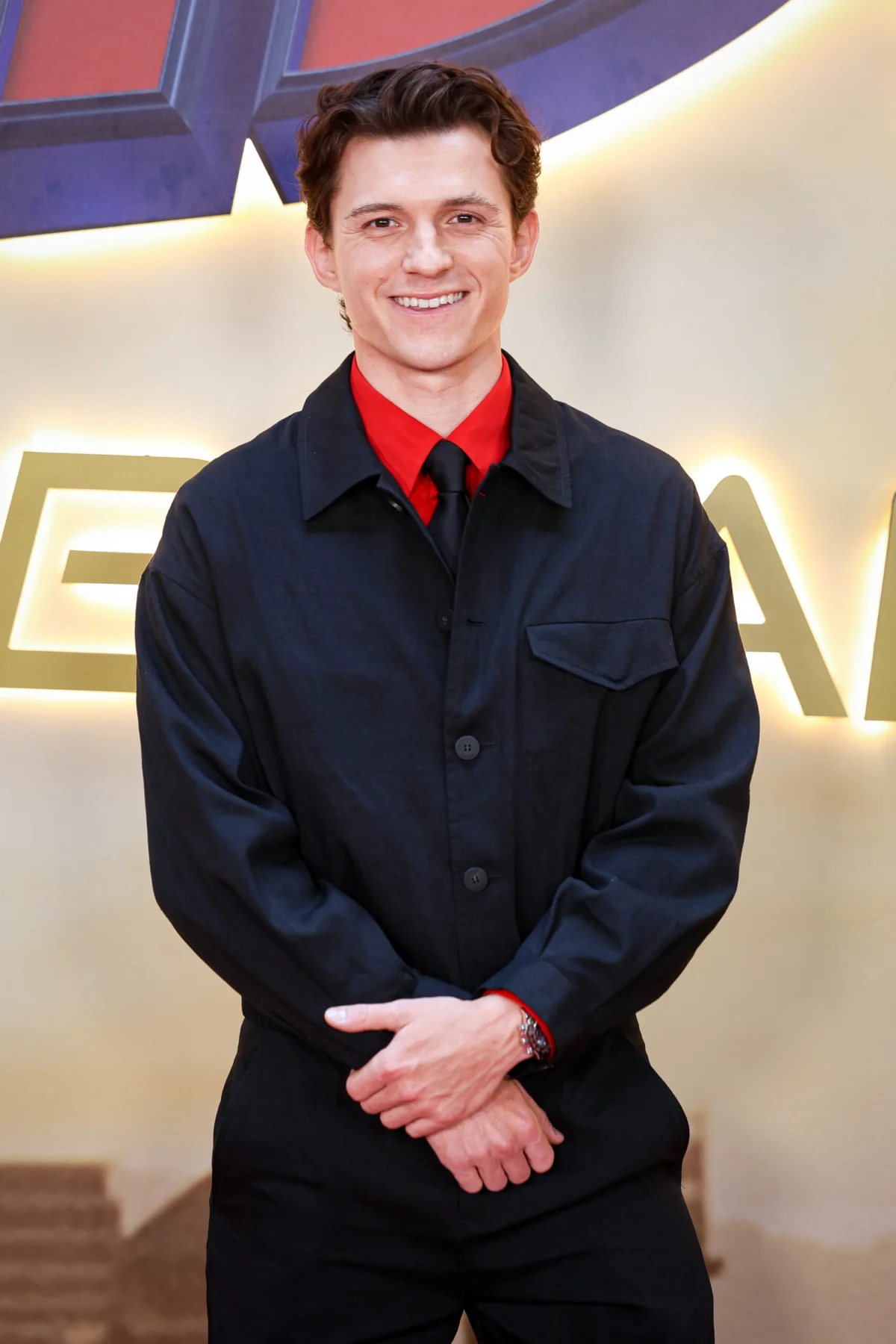
In an era defined by rapid technological disruption, the boundary between human artistry and machine-generated content has become the central fault line in the entertainment industry. Tom Holland, the star of the Marvel Cinematic Universe and a prominent figure in modern Hollywood, has added his voice to this growing discourse, offering a staunch defense of the "human experience" as the ultimate firewall against the encroachment of Artificial Intelligence.
During a recent appearance on the popular Spanish talk show El Hormiguero, Holland, accompanied by co-star Zendaya, addressed the hot-button topic with a blend of conviction and optimism. While the industry grapples with the existential implications of generative AI, Holland remains steadfast in his belief that creativity—by its very nature—is an exclusively human domain.
The Human Essence: Why Holland Believes Art Remains Safe
For Holland, the debate over AI is not merely technical; it is philosophical. When asked about the potential for AI to render creative professions obsolete, the actor was dismissive of the notion that algorithms could ever truly replicate the spark of inspiration.
"Creativity is safe from AI because creativity has to do with the human experience," Holland asserted. "It’s about emotions; it’s about understanding one another."
Holland’s argument centers on the distinction between data processing and genuine empathy. While AI models can parse vast datasets to mimic patterns, brushstrokes, or narrative structures, they lack the lived reality that gives art its resonance. "AI can sift through data, but it can’t understand people’s emotions. It doesn’t understand the difference between being happy and being sad," he explained.
He likened the process of artistic creation to the act of painting, emphasizing that art is not a process of mimicry, but of expression. "The way artists paint, it’s not about what they’re copying, it’s about expressing themselves. So, I feel protected."
Chronology of the AI Uprising in Hollywood
The conversation surrounding AI in entertainment has moved from speculative science fiction to a pressing industrial reality over the past two years.
- Early 2025: The industry begins to grapple with the emergence of high-fidelity generative video tools, prompting initial concerns from guilds regarding intellectual property and likeness rights.
- Late 2025: High-profile discussions between the Alliance of Motion Picture and Television Producers (AMPTP) and major creative guilds center on "digital replicas" and the ethical use of AI in post-production.
- Early 2026: Leading filmmakers, including Guillermo del Toro and Martin Scorsese, publicly diverge on the utility of AI. While some view it as a tool for efficiency, others warn of a cultural crisis.
- Mid-2026: Tom Holland and Zendaya headline a high-profile press circuit for The Odyssey and Spider-Man: Brand New Day, bringing the AI debate to a mainstream audience during their international media tour.
A Busy Summer: The Backdrop of the Debate
Holland’s remarks come at a pivotal moment in his career as he prepares for a summer defined by massive cinematic ambition. He is set to star as Telemachus in Christopher Nolan’s highly anticipated adaptation of The Odyssey, arriving in theaters on July 24. Shortly thereafter, on July 31, he will return to his most iconic role in Spider-Man: Brand New Day.
The fact that Holland is anchoring two of the year’s most significant blockbusters—both featuring Zendaya—underscores his position as a leader in the industry. By articulating his views on AI at this juncture, he highlights the tension between the technological polish of modern blockbusters and the human-centric performances that audiences crave.
Conflicting Perspectives: The Industry Divided
Holland is by no means the only major player weighing in. The Hollywood community is currently fractured, with voices ranging from alarmist to pragmatic.
The Voices of Caution
Guillermo del Toro, a master of visionary cinema, has been among the most vocal critics of the AI trend. During a recent event at the BFI, the Frankenstein director offered a dire warning regarding the erosion of artistic literacy. "We are on the verge of image illiteracy," del Toro cautioned. "We are on the verge of cinema illiteracy." His concerns echo those of many writers and directors who fear that the saturation of algorithmically generated imagery will lead to a homogenization of culture, where the unique "hand" of the filmmaker is lost.
The Voices of Pragmatism
Conversely, other industry veterans see AI as a necessary evolution. Reese Witherspoon and Sandra Bullock have both advocated for a more nuanced approach, suggesting that creators should strive to understand the technology to better control its application in their work. For them, AI represents a set of tools that, if harnessed correctly, could empower female creators and independent storytellers by lowering barriers to entry.
Perhaps most notably, legendary director Martin Scorsese has taken a proactive stance, entering into a partnership with an AI-driven company. Scorsese has indicated his intention to utilize this technology specifically for the storyboarding process—a labor-intensive phase of production where AI could potentially save time and resources without compromising the director’s creative vision.
Implications for the Future of Labor and Art
The implications of this debate extend far beyond the philosophical. At the heart of the matter are labor protections and the value of human labor.
- Job Security: The primary concern for actors, writers, and visual effects artists is that AI will be used to devalue human work, allowing studios to bypass traditional creative roles in favor of cheaper, automated alternatives.
- Intellectual Property: Legal battles are currently brewing regarding the training data used to build AI models. Many artists argue that their work is being harvested without consent to build tools that eventually compete with them.
- The "Humanity" Premium: If Holland’s hypothesis holds true—that audiences will always gravitate toward the "soul" of a human performance—then the industry may see a bifurcated market. There may be a high-end tier of prestige cinema that markets itself on being "human-made," while lower-tier content becomes increasingly automated.
Conclusion: The Unanswerable Question
Tom Holland’s stance is a reminder that while the tools of filmmaking evolve, the core requirement of cinema remains constant: the communication of human emotion from one person to another. Whether AI will eventually be able to "simulate" this emotion to a degree that becomes indistinguishable from the real thing remains the great unanswered question of our time.
As Holland continues his promotional tour for The Odyssey and Spider-Man, he stands as a symbol of the actor’s dilemma in the 21st century. He is a performer who relies on the massive, state-of-the-art technological infrastructure of the studio system, yet he remains deeply protective of the intangible, human qualities that made him a star in the first place.
Whether the future of Hollywood is defined by the synergy of machine and artist, or by a rigid protection of the human spirit, remains to be seen. For now, Tom Holland has drawn a line in the sand: technology can sift through data, but only a human can feel the weight of the story.
 Lina Irawan
  Asep Darmawan