
 By Ali Ikhwan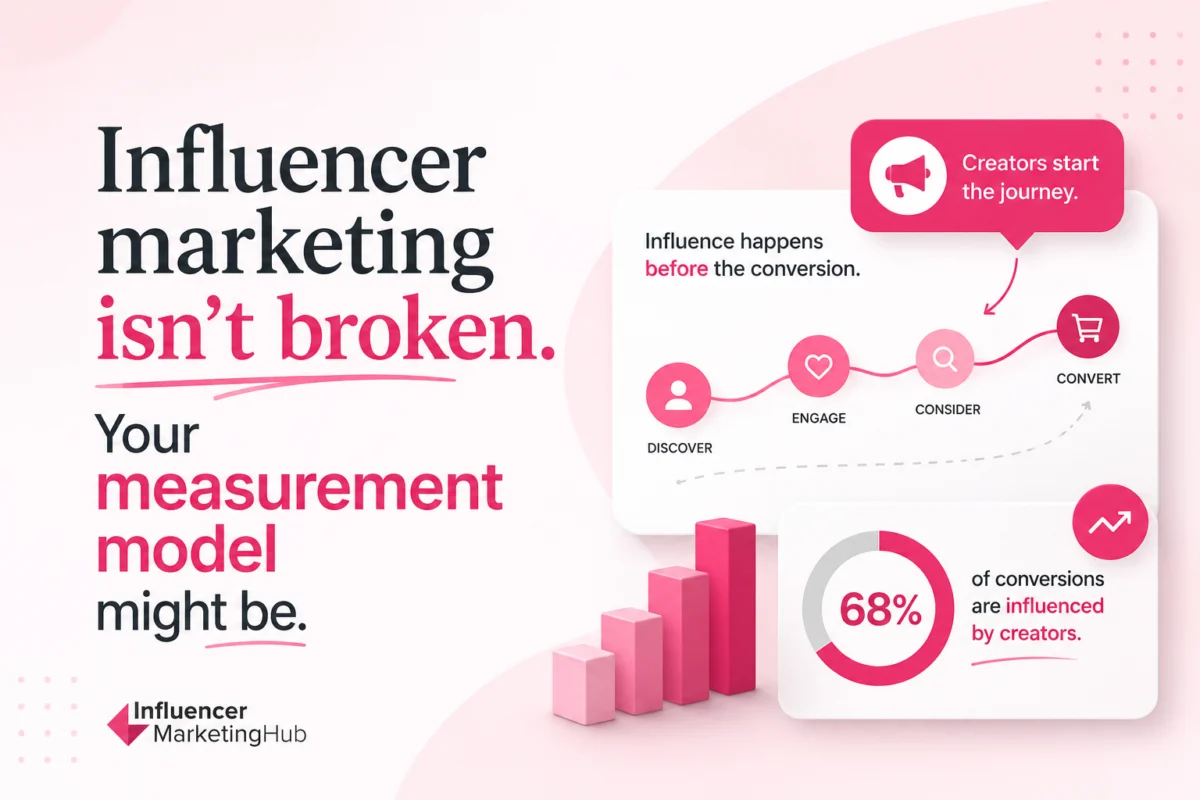
Ask any marketing director how they evaluate an influencer campaign, and you will almost certainly hear the same refrain: "Is it driving ROI?" It is an understandable, reflexive demand. In an era of tightening budgets and high-performance marketing, the need to justify spend is non-negotiable. Yet, according to industry experts, this is the wrong place to start.
The primary challenge confronting influencer programs today is not whether the channel works, but whether brands are measuring it in a way that reflects the modern consumer journey. Influencer marketing has evolved into a sophisticated, multi-faceted ecosystem, but the frameworks used to evaluate it remain stubbornly rooted in outdated, last-click attribution models. As a result, brands are prematurely killing off programs that are—by every logical metric—actually succeeding.
The Mirage of Instant Success: Why Programs Collapse
Launching an influencer program has never been easier. With an abundance of creator discovery tools, campaign management platforms, and streamlined affiliate infrastructure, brands can identify partners and deploy content at scale in a matter of days. However, this operational ease creates a dangerous "false sense of readiness."
While the logistical side of influencer marketing has matured, measurement has languished. Programs are stood up rapidly, expectations are set at an unattainable pace, and the gap between those two realities is where most initiatives quietly collapse. When these programs fail to deliver immediate, bottom-line results, the channel itself is often blamed. In reality, the breakdown occurs at the intersection of misaligned expectations, premature timing, and faulty evaluation.
Stakeholders frequently expect early-stage influencer programs to deliver results that only mature, long-term initiatives can provide. When these results fail to materialize, the instinct is to perform a radical overhaul: KPIs are redefined, budgets are slashed, and the creator roster is gutted. Instead of betting on what works, the brand enters a cycle of "acceleration and reset." Institutional knowledge vanishes as partnerships are cut short, and the brand is left wondering why influencer marketing "doesn’t work" for them.
The Last-Click Fallacy
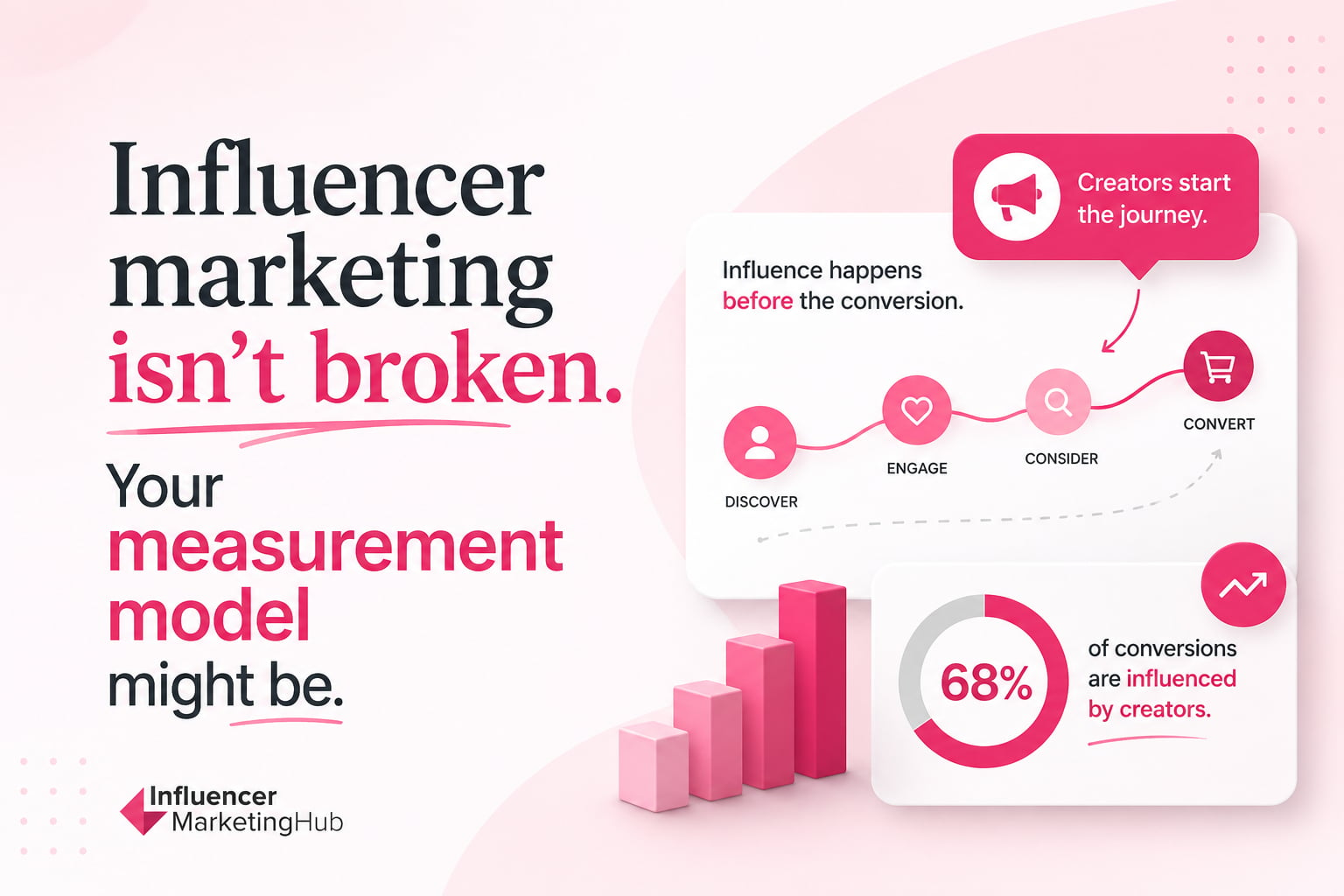
The root of this systemic failure is the "last-click" problem. Modern consumer purchase journeys are rarely linear. A customer might discover a product through an influencer’s Instagram post, research it on a blog, view a retargeted ad, read a third-party review, and finally convert weeks later through a branded search.
In a traditional last-click attribution model, the influencer receives zero credit. In reality, that influencer was the catalyst—the initial spark that initiated the journey. Judging a campaign purely on immediate conversion is like judging a novel by its final page; you are ignoring the narrative arc that made the conclusion possible.
Research consistently shows that consumers interact with six to eight touchpoints before committing to a purchase. In high-stakes categories like luxury fashion, skincare, or consumer electronics, that number is often even higher. The creator is rarely the final stop, but they are frequently the first. Without that initial contact, the retargeted ad has no one to retarget, the branded search never happens, and the affiliate link remains unclicked. By removing the influencer from the equation, brands aren’t just losing a partner; they are breaking the journey itself.
Reframing the Strategy: From "Did it Sell?" to "What Role Did it Play?"
To salvage influencer marketing, brands must pivot from the narrow question of "Did this creator drive sales?" to the more sophisticated inquiry: "What role did this content play in the customer journey?"
This requires a fundamental shift in how dashboards are built. If a creator’s content generates meaningful reach, strong engagement, or a noticeable spike in branded search volume, the campaign has succeeded. Consumers have taken notice, and a portion of that audience is now measurably closer to a purchase than they were before.
Strategic Funnel Alignment
Effective programs assign each creator a specific role based on their position in the funnel:
- Top-of-Funnel (Awareness): Evaluated on reach, share of voice, and audience sentiment. These creators serve to introduce the brand to new demographics.
- Mid-Funnel (Consideration): Evaluated on engagement rates, click-through behavior, and return visit rates. These creators provide the social proof and emotional context needed to bridge the gap between interest and intent.
- Bottom-of-Funnel (Conversion): Evaluated on CPA, ROAS, and affiliate-driven sales. These creators are the "closers" who drive the final purchase.
When measurement aligns with these specific functions, optimization becomes cleaner and ROI less volatile. Top-of-funnel creators are no longer unfairly penalized for failing to drive direct sales, and brands stop flying blind.
The Creator Performance Lifecycle
Understanding that influencer partnerships are not static is crucial. A program typically undergoes three distinct phases, and applying phase-three standards to a phase-one program is a recipe for failure.
- Discovery (Phase One): The focus is on testing creator partners, refining the creative brief, and identifying which voices resonate with the brand’s core audience. This is an investment phase, not a harvest phase.
- Calibration (Phase Two): With data in hand, brands begin to scale the successful partnerships and eliminate those that fail to generate interest. The focus shifts to optimizing the content-to-conversion pipeline.
- Compounding (Phase Three): The program is now a self-sustaining engine. Consistent activation has built a library of social proof, improved SEO, and warmed-up retargeting pools. This is where the true, long-term ROI is realized.
Beyond the Dashboard: Identifying Invisible Signals
Influencer impact often lives outside the neat rows of a standard creator report. To get a true sense of success, brands must look at their broader marketing ecosystem for three key indicators:
- Branded Search Volume: A surge in branded search following a campaign is a high-intent signal that the creator’s message resonated deeply enough to drive independent research.
- Paid Media Efficiency: Improved metrics in retargeting or display ads often point to the fact that influencer content has successfully "primed" the audience, lowering the cost of customer acquisition elsewhere.
- Affiliate Sustainability: When affiliate tracking is integrated deeply, it allows brands to see the "long-tail" effect—where a user interacts with an influencer, leaves, and eventually returns to purchase.
Leveraging Affiliate Infrastructure as a Measurement Layer
Affiliate infrastructure is frequently dismissed as a purely transactional tool. However, when thoughtfully integrated, it becomes the connective tissue that links creator activity to downstream intent.
Unlike standard social media metrics, which often stop at the click, sophisticated affiliate tracking can monitor the entire path to purchase. It captures the "arc" of the consumer journey, showing how a user might bounce from a site, return days later, and finally purchase. By replacing last-click defaults with a multi-touch attribution model, the influencer’s contribution is finally given the credit it deserves.
Distinguishing Underperformance from Failure
Before a brand decides to cut a creator, they must distinguish between "output" and "outcome" metrics. Output metrics—content quality, post frequency, and audience growth—are within the creator’s control. Outcome metrics—conversion rate and revenue—are often dependent on the brand’s landing page, offer, and pricing.
If a creator’s output is excellent but the outcomes are weak, the problem is likely internal. Before scrapping the partnership, brands should conduct a diagnostic: Is the offer compelling? Is the landing page optimized for mobile? Is the product price-competitive? Often, a five-minute conversation with the creator can surface insights that no data dashboard could ever provide.
Conclusion: A Shift in Perspective
Influencer marketing effectiveness is not a static snapshot; it is a trajectory. The brands that struggle most with influencer ROI are those treating a complex, compounding system as a simple direct-response channel.
Influencer marketing interacts with every other part of the marketing stack. It builds brand affinity, it fuels search volume, and it warms audiences for paid media. When brands provide the necessary time, structural support, and holistic measurement frameworks, the channel ceases to be a volatile experiment and becomes a powerful, compounding asset.
The industry is beginning to realize that influencer marketing was never the problem. The persistent reliance on outdated, narrow-minded measurement—that is the real crisis. It is time to look at the entire film, rather than judging the quality of the production based on a single, isolated frame.
 Siti Muinah
  Dwi Wanna
  Lina Irawan