
 By Layla Zulfa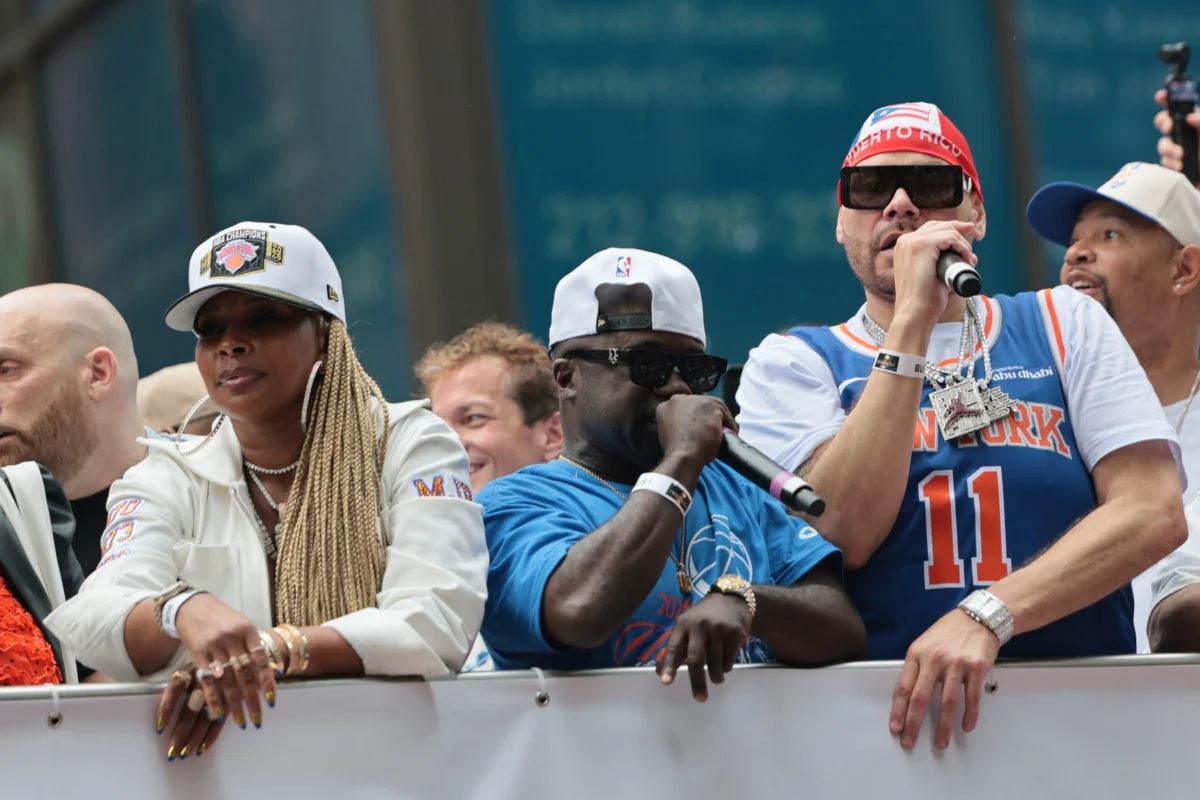
For over half a century, the streets of Lower Manhattan—the storied "Canyon of Heroes"—have served as the ultimate stage for New York’s triumphs. But on June 18, 2026, the ticker tape fell for a reason that had become, for many, a fading memory. The New York Knicks, having secured their first NBA championship in 53 years, transformed the concrete jungle into a pulsating, euphoric celebration of grit, culture, and long-awaited redemption.
More than a million spectators flooded the downtown corridor, turning the financial district into a sea of blue and orange. The atmosphere was one of defiant joy, marked by fans who had spent hours—some even climbing atop sanitation trucks or leaping over barricades—just to catch a glimpse of the team that finally ended the drought.
The Main Event: A Dynasty Restored
The parade was not merely a victory lap for a sports team; it was a cultural coronation. Led by stars Jalen Brunson, OG Anunoby, Karl-Anthony Towns, and Josh Hart, the team made their way through the city on floats that blurred the lines between professional basketball and New York’s hip-hop heritage.
Accompanying the players were city officials, including Mayor Zohran Mamdani, and an A-list cheering section that included cultural icons Chris Rock, Spike Lee, and Timothée Chalamet. However, the heartbeat of the procession was arguably the float curated by Bronx legend Fat Joe. In a move that felt quintessentially New York, Joe turned his vehicle into a rolling concert stage, bringing together the pillars of East Coast rap for a 90-minute masterclass in performance.
A Chronology of the Celebration
The day began in the early morning hours, with thousands of fans staking out positions along Broadway. By the time the parade officially kicked off, the density of the crowd was historic, with fans defying NYPD perimeter barriers to secure a vantage point.
- 10:00 AM: The procession begins at the Battery, moving north toward City Hall.
- 11:30 AM: Fat Joe’s hip-hop float gains momentum. DJ Ted Smooth, acting as the maestro for the set, initiates a "round-robin" style performance, ensuring that the hits never stopped.
- 12:15 PM: Yung Miami opens the musical festivities with "Spend Dat," setting the tone for a rapid-fire succession of classics. Mary J. Blige delivers a powerful rendition of "Real Love," followed by The Lox’s "Mighty D-Block."
- 1:00 PM: The Wu-Tang Clan takes the stage, sending the crowd into a frenzy with "Triumph" and "C.R.E.A.M." The synergy between the music and the moment reached its zenith when Joe and Remy Ma performed "Lean Back" and "All The Way Up."
- 2:00 PM: The parade culminates in a ceremony at City Hall, where Alicia Keys took the stage to lead the city in a rendition of "Empire State of Mind," cementing the day’s status as a quintessential New York moment.
Supporting Data and the Soundtrack of Success
The sheer scale of the event underscored the Knicks’ enduring importance to the city’s identity. According to city reports, the attendance figures exceeded one million, a testament to the pent-up demand for a championship.
The soundtrack of the 2026 playoff run was as diverse as the city itself. Beyond the parade performances, the championship was fueled by a steady stream of musical anthems. From the "Big Bronx Remix" by French Montana, Max B, and Remy Ma, to the midnight release of Busta Rhymes’ "The Championship Anthem," the team’s journey was documented in real-time by the city’s finest lyricists.
DJ Ted Smooth described the experience as a "dope ass live mixtape." He noted, "We had three hours’ worth of songs prepared. We played their records, two verses each, then switched. It was constant energy. We were ready for everything."
Official Responses and Reflections
For many of the celebrities in attendance, this was more than a performance; it was a homecoming of sorts. Fat Joe, whose connection to the franchise runs deep, reflected on the decades he spent hoping for this specific outcome.
"It meant everything to me to watch the Knicks win the championship," Joe told Variety. "I’ve been going to games since I was a kid sitting in the nosebleeds, so it still feels like a dream to have been part of this ride. There was a time that I wasn’t sure if I’d ever see the Knicks win a title during my lifetime. As long as I’m alive, I will always stand with the Knicks."
Method Man, representing the Wu-Tang Clan, echoed this sentiment while highlighting the symbiotic relationship between basketball and hip-hop culture. "Basketball has been synonymous with hip-hop for a long time. Even if you aren’t a New York Knicks fan, you became one during their run because it was so magnificent to see."
The official ceremony featured a rousing speech from Mayor Mamdani, who praised the team’s resilience. Alicia Keys, the evening’s musical headliner, captured the collective mood of the crowd: "This is our time! We are the champions! We on fire today!"
Implications: A Unified City
The cultural significance of the Knicks’ victory cannot be overstated. In a city often characterized by its neighborhoods and distinct cultural enclaves, the 2026 championship served as a rare unifying force.
Nems, the rapper behind the 2021 anthem "Bing Bong," observed the social shift on the ground. "New York is a place where you can have a Black neighbor, a Puerto Rican neighbor, next door over is Arabs, and then Greeks and Asians. Sometimes groups of people stay to themselves. But not when the Knicks are on! The energy is out of this world."
Maiya the Don, another prominent voice in the New York hip-hop scene, added, "Everyone is so unified, it’s really beautiful to see. New York culture is hip-hop culture by default, and every true New Yorker is a Knickerbocker."
The Legacy of the 2026 Run
As the ticker tape was swept from the streets and the floats were parked, the implications of this championship began to settle in. For a franchise that had endured decades of frustration, the 2026 title represents a total restoration of status.
The integration of hip-hop into the fabric of the victory parade was a deliberate nod to the city’s identity. By turning the parade into a massive, mobile music festival, the organizers ensured that the celebration felt authentic to the streets of New York. The footage captured during the day—specifically of Fat Joe and his ensemble—will likely become part of the city’s visual archive, a reminder of the day New York reclaimed its throne.
Looking forward, the success of the Knicks in 2026 will undoubtedly influence the city’s sports culture for years to come. The "Knicks Anthem" has moved from the arenas to the streets, and the bond between the team and its supporters has been forged anew. For the over one million people who stood in the Canyon of Heroes, the three-hour wait was a small price to pay for a lifetime of memories. The Knicks are back, and for the first time in 53 years, the city of New York can breathe a sigh of absolute, undisputed victory.
 Asep Darmawan
  Azzam Bilal Chamdy