
 By Muslim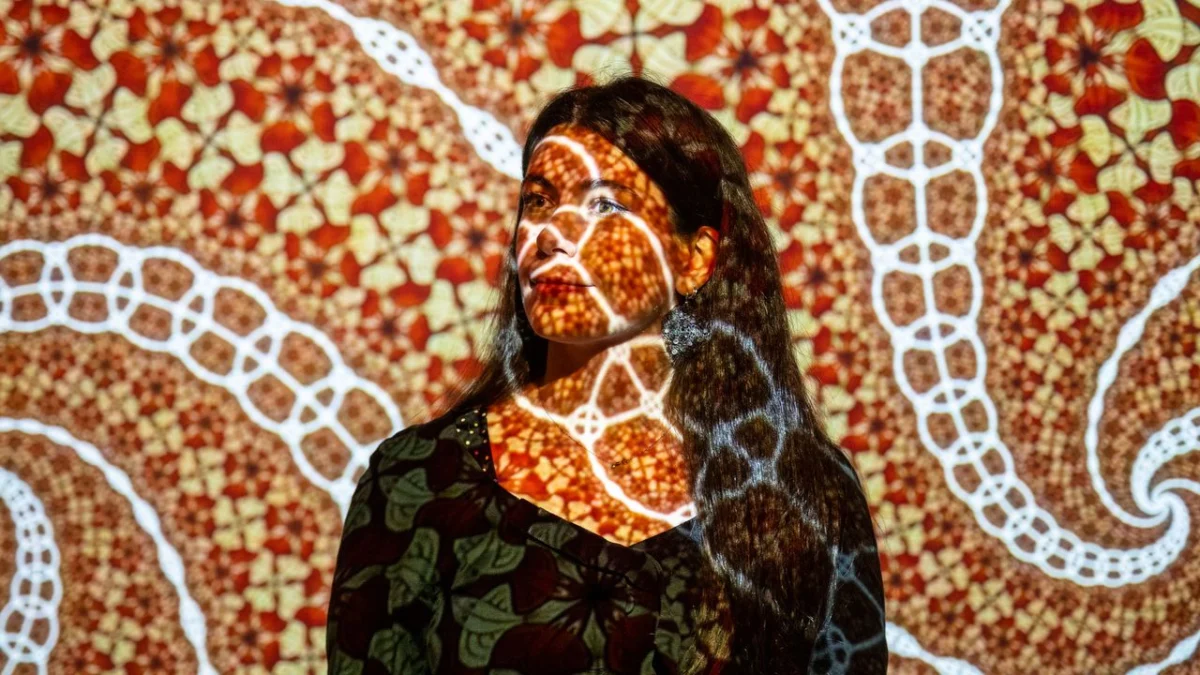
There is a distinct, visceral sensation that accompanies the act of viewing an M.C. Escher print. It begins as a flicker of recognition—a staircase, a hand, a bird—followed immediately by a cognitive glitch. Your brain, conditioned to process the world through the reliable lenses of Euclidean geometry and Newtonian physics, attempts to map the image. Then, as the logic fails to resolve, a quiet, intellectual vertigo sets in.
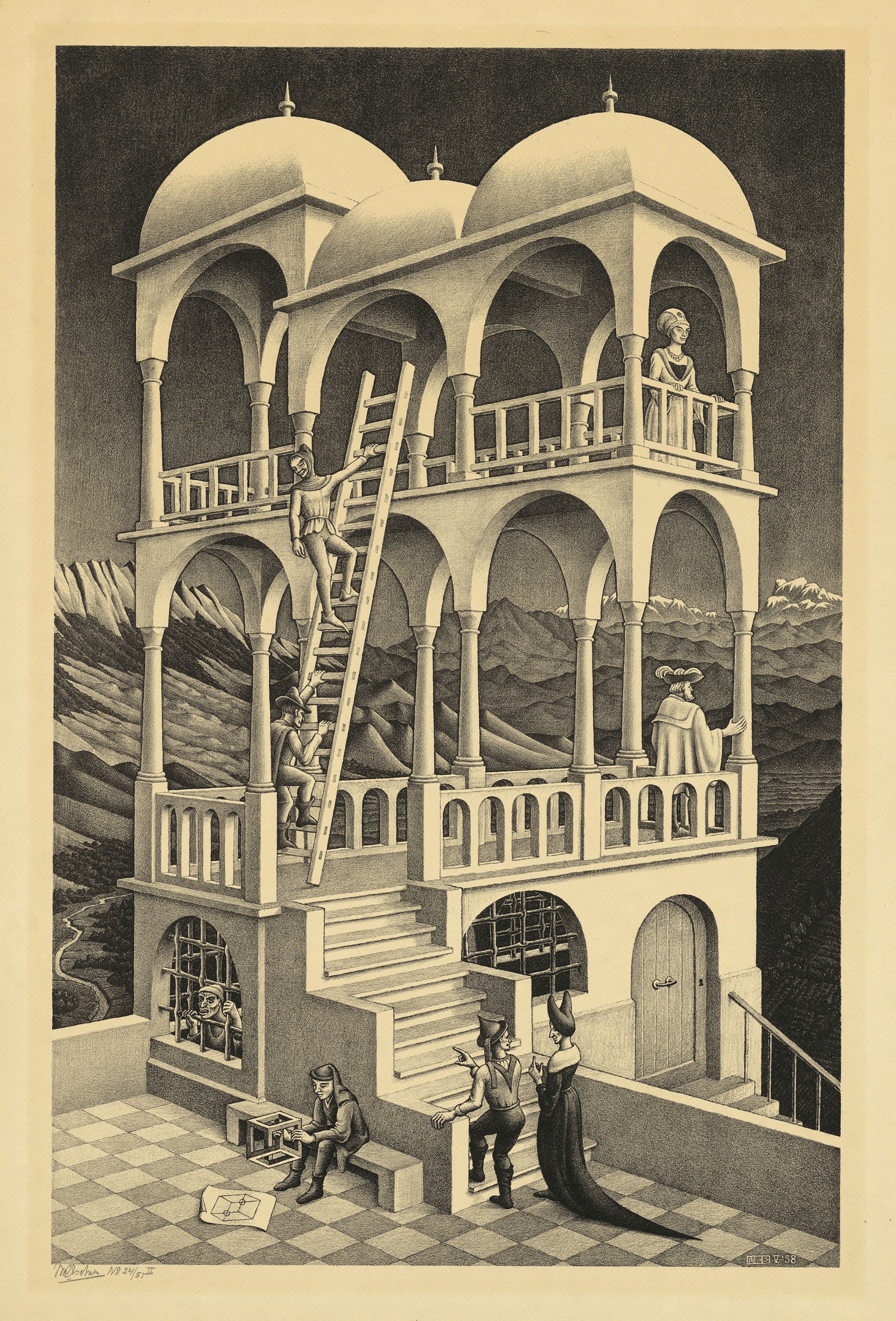
Staircases that ascend into eternity, hands that draw themselves into existence from a blank page, and tessellations where birds dissolve into fish—these are not mere optical illusions. They are architectural paradoxes that suggest the fundamental rules governing our reality have been suspended. Now, with the launch of M.C. Escher: The Exhibition at London’s Somerset House, the UK is playing host to its largest-ever retrospective of the Dutch master’s work, offering a profound, immersive confrontation with a mind that refused to accept the boundaries of the visible world.
The Architect of the Impossible: A Chronology of Genius
Maurits Cornelis Escher (1898–1972) was never a mathematician by training. He was a graphic artist who possessed an intuitive, almost supernatural grasp of spatial relationships. Born in Leeuwarden, Netherlands, Escher’s early life did not immediately point toward the mind-bending puzzles that would define his legacy.
The Italian Years (1923–1935)
Before the tessellations and the impossible stairways, there were the landscapes. During his long residency in Italy, Escher developed a rigorous technical foundation in woodcuts and lithography. This period is essential for understanding his trajectory; his sketches of Rome and the Italian countryside exhibit a proto-obsession with compressed perspectives and vertiginous viewpoints. Even in these early, more "grounded" works, one can detect the seeds of his later career—a restlessness in the way he frames a view, as if the physical world were merely a canvas upon which he could experiment with the architecture of space.
The Alhambra Epiphany (1936)
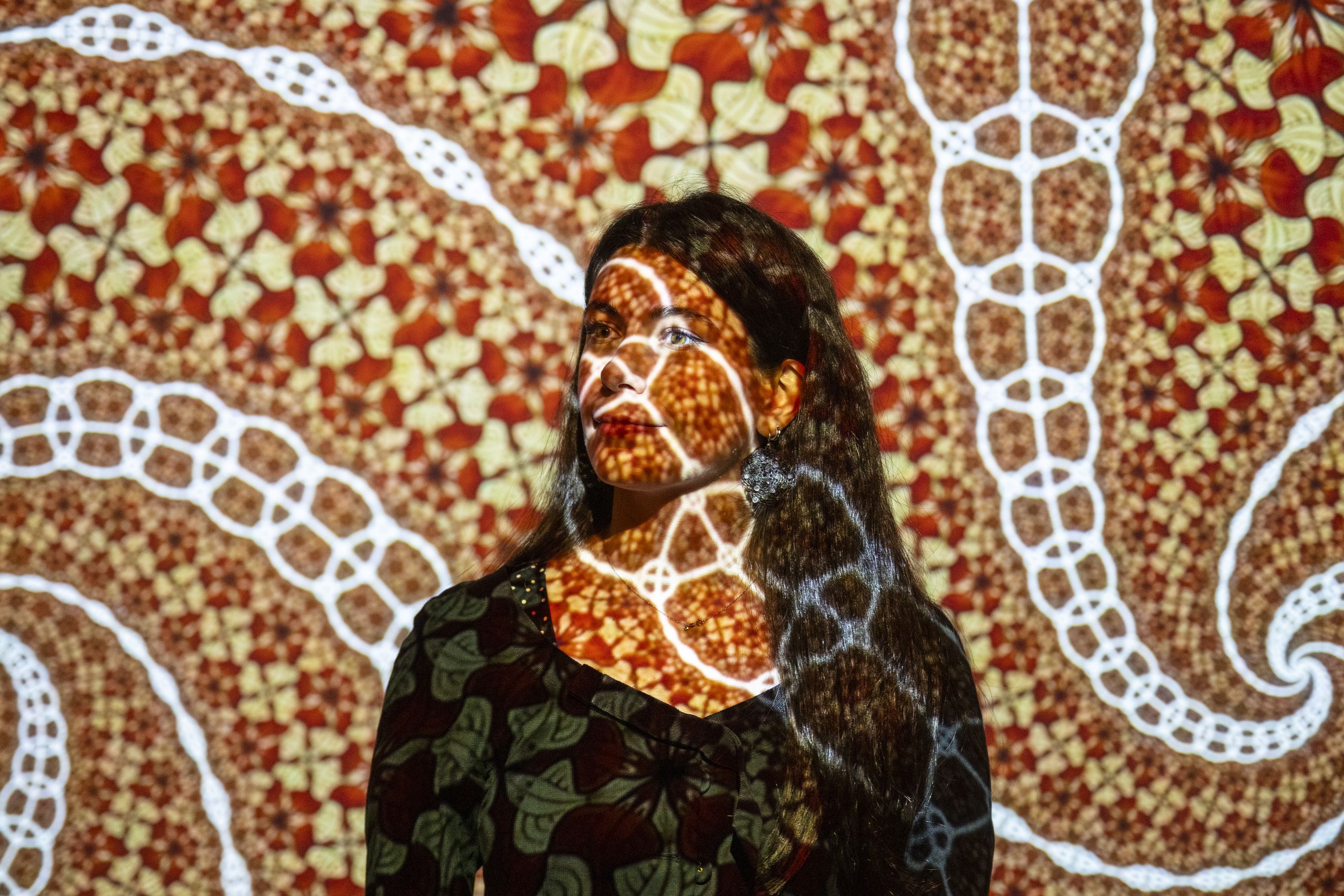
The definitive turning point in Escher’s career occurred during a visit to the Alhambra in Granada, Spain. The intricate Moorish tile patterns he encountered there ignited a lifelong fascination with periodic tiling—the seamless, mathematical interlocking of shapes. Escher did not merely copy these patterns; he deconstructed them. He went on to create 137 watercolors cataloging the possibilities of tessellation. It was here that he began his journey toward the "metamorphosis" prints, where day dissolves into night and geometric shapes transform into living creatures.
The Mathematical Synthesis (1950s–1970s)
By the 1950s, Escher had moved beyond observation and into a dialogue with the scientific community. His geometric paradoxes, such as Relativity (1953) and Ascending and Descending (1960), were not just flights of fancy; they were deliberate explorations of non-Euclidean geometry and the limits of human perception. During this era, his work became a nexus point where art, mathematics, and philosophy converged.
The Cultural Weight of Paradox: Why Escher Matters in 2026
In an era defined by the industrial-scale production of images—where AI-generated visuals flood our feeds with a bland, algorithmically smoothed consistency—Escher’s work serves as a necessary, jagged piece of grit in the machine. His art is a reminder that the most compelling visual thinking does not optimize for consumption or efficiency; it optimizes for obsession.
Escher’s work has been a cultural touchstone for decades. From the blacklight posters of the 1960s counterculture to the structural inspiration for the labyrinthine sets in Jim Henson’s 1986 film Labyrinth, his influence is pervasive. Physicists cite his work to explain complex concepts of symmetry; graphic designers study his use of negative space; and musicians, most famously Pink Floyd, have utilized his imagery to mirror the expansive, psychedelic nature of their soundscapes.
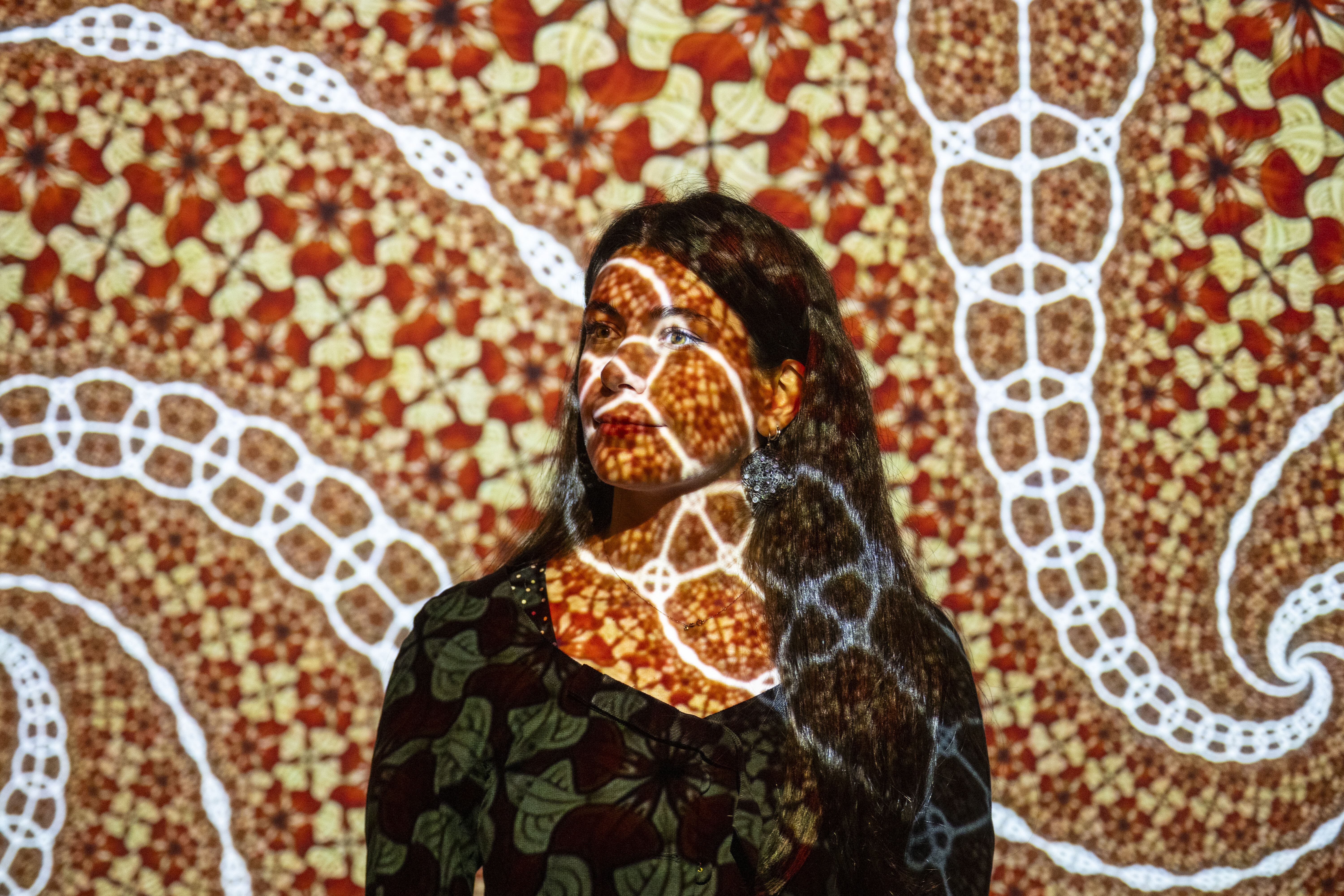
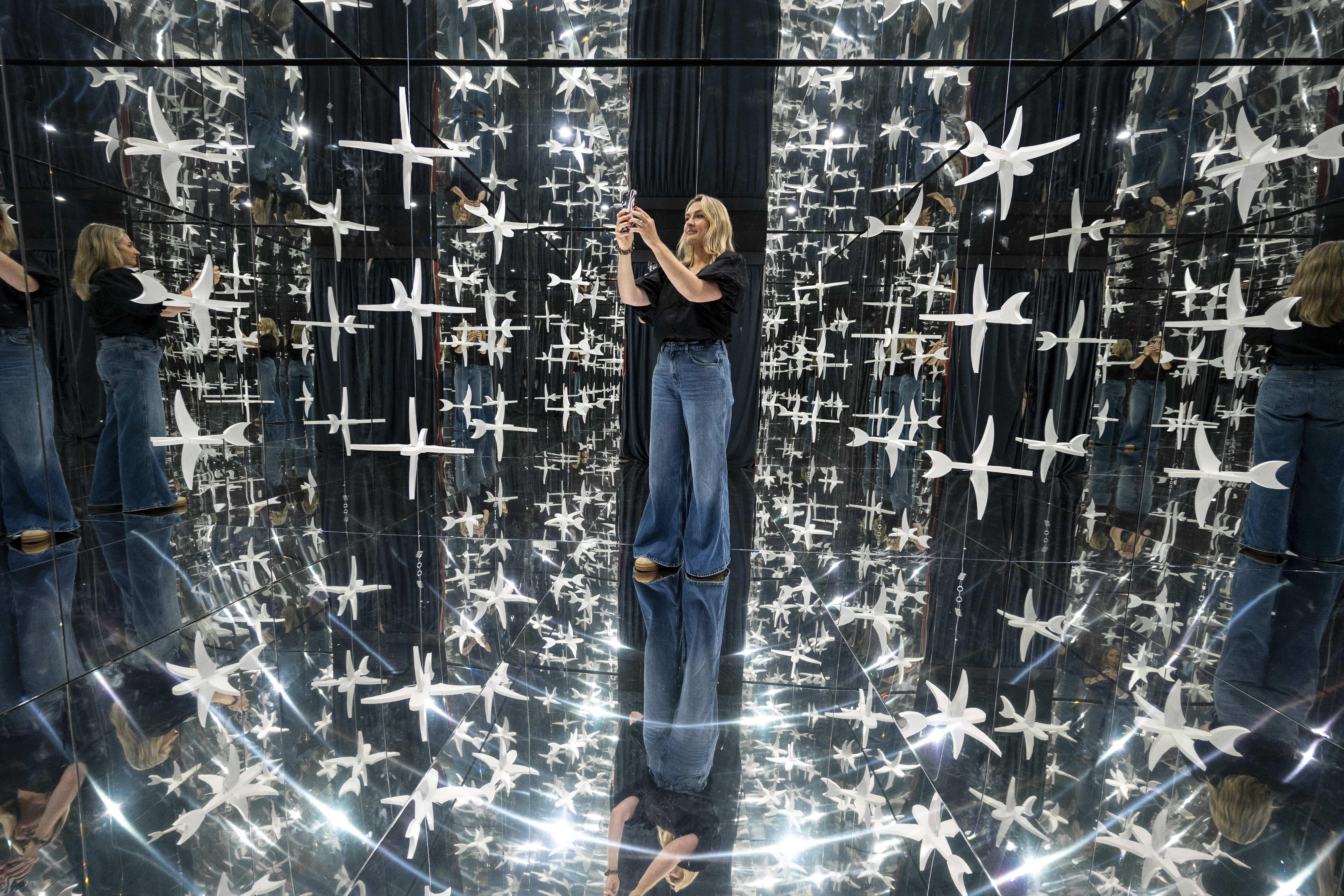
The Somerset House exhibition, featuring over 150 original works, is not a dry academic retrospective. It is an act of translation. By placing these prints alongside interactive, immersive installations, the curators have bridged the gap between Escher’s flat woodcuts and the three-dimensional spaces they imply.
Immersive Reality: Standing Inside the Impossible
One of the most striking features of the current exhibition is the use of "The Relativity Room," an installation that forces visitors to contend with scale and gravity in a way that feels like stepping inside one of Escher’s lithographs. Another highlight is the interactive Print Gallery, which allows visitors to explore the 1956 masterwork that famously remained "unfinished" for half a century until a team of mathematicians solved the central void.
Standing before these works, one realizes that Escher’s "serious game" was never just about tricking the eye. It was about exposing the fragility of our assumptions. When we look at a print by Escher, we aren’t just looking at a clever drawing; we are looking at a map of a mind trying to calculate the infinite.
Supporting Data and Technical Mastery
Escher’s technical precision is often overlooked in favor of the conceptual "wow" factor, but his mastery of the woodcut and mezzotint was total. The exhibition highlights:
- 150+ Original Works: Spanning his earliest Italian landscapes to his late-career geometric investigations.
- 137 Cataloged Tessellations: A testament to his rigorous, scientific approach to pattern-making.
- The "Unfinished" Legacy: The inclusion of his Print Gallery (1956), which became a subject of intense mathematical scrutiny for decades, eventually resulting in the "Droste effect" being fully mapped by researchers using computer-aided geometry.
Implications for the Creative Future
The rise of AI has led to a "blandscape" of visual content—images that are technically perfect but lack the intent of a human observer. Escher’s refusal to be categorized—part artist, part mathematician, part philosopher—is a blueprint for the modern creative.
He followed his obsessions to their logical conclusion, even when those conclusions led to the "impossible." In an age of algorithmic generation, the human capacity for paradox is perhaps our most valuable asset. Escher’s work teaches us that the gap between what we see and what exists is where true creativity lives. By embracing that gap, rather than trying to bridge it with software, creators can produce work that, like Escher’s, remains relevant for a century or more.
Final Reflections
M.C. Escher: The Exhibition is a profound reminder that we are all, in some sense, prisoners of our own perspective. We see the world as we are taught to see it—up is up, down is down, and a staircase leads to a destination. Escher gently, but firmly, reminds us that this is a choice, not a law of nature.
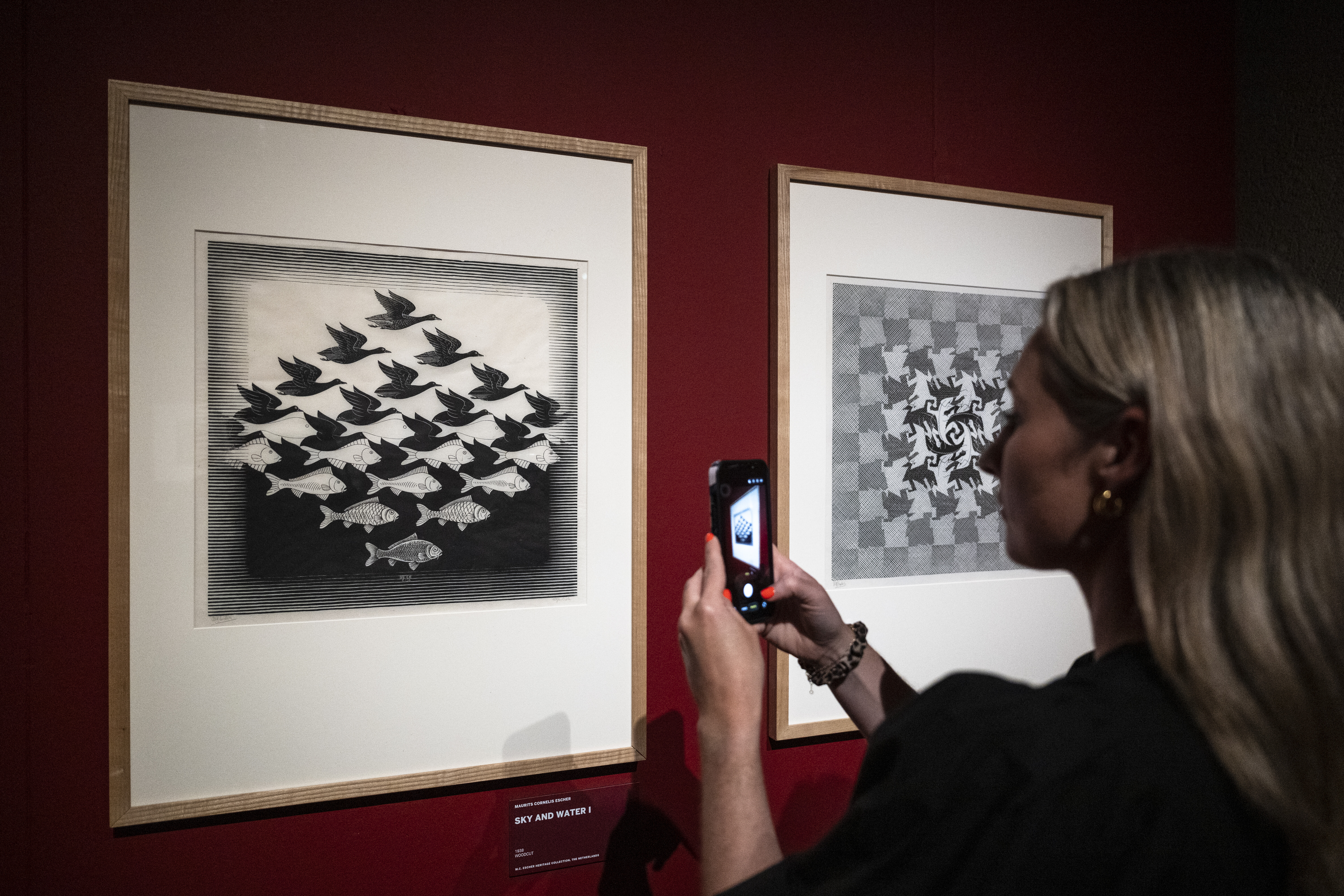
The exhibition at the Embankment Galleries, Somerset House, runs until September 6, 2026. For those looking to experience the work of a man who spent his life mapping the edges of human vision, it is an essential pilgrimage. Whether you are a student of mathematics, a graphic designer, or simply someone who enjoys the sensation of a mind being pushed beyond its limits, the exhibition offers a rare opportunity to step out of the mundane and into the infinite.
Exhibition Details:
- Venue: Embankment Galleries, Somerset House, London.
- Duration: Until 6 September 2026.
- Tickets: Starting from £12, available at london-mc.escher-expo.com.
- Special Note: In honor of the artist’s 128th birthday on 17 June, visitors can take advantage of a 15% discount on entry for that day, provided by the exhibition organizers.
 Lina Hope
  Reynand Wu
  Pevita Pearce