
 By Raul Delapena Setiawan
In an era of tightening corporate budgets and increased scrutiny on ROI, social media is shedding its image as a "vanity" department to become a measurable driver of global business growth.
Main Facts: The Shift Toward Quantifiable Social Impact
For over a decade, social media marketing was often relegated to the "creative" or "fun" corner of the corporate structure. Success was measured in "likes," "shares," and "retweets"—metrics that provided a sense of community engagement but offered little clarity on the bottom line. However, a fundamental shift is occurring. According to recent industry data, social media is transitioning into a performance-driven channel where every post is expected to tie back to measurable revenue.

Performance marketing, defined as a results-driven approach where advertisers pay only when specific actions—such as a click, lead, or sale—are completed, is now the gold standard for social strategy. This shift is driven by a harsh economic reality: when corporate profits fall short of expectations, marketing budgets are among the first to be slashed. Data from the most recent CMO Survey indicates that marketing expenses are cut 45% of the time when financial targets are missed, a rate higher than any other business category.
To survive and thrive, social media managers are adopting the tactics of performance marketers. This involves moving beyond brand awareness and focusing on high-ROI outcomes, such as lowering customer acquisition costs (CAC) and increasing conversion rates. By utilizing refined tracking, attribution reporting, and advanced analysis, social media is being reimagined not as a cost center, but as a high-velocity profit center.

Chronology: The Evolution of Social Media Strategy
The journey from the "Wild West" of early social media to the precision of modern performance marketing can be viewed in three distinct phases:
1. The Era of Banter and Virality (2005–2014)
In the early days of Facebook and Twitter, brands focused on "being human." The goal was brand awareness and community building. Metrics were rudimentary, often limited to follower counts and total reach. Success was often accidental—a witty reply or a meme that went viral—but there was no reliable way to link a viral tweet to a specific product sale.
2. The Era of Engagement and Vanity Metrics (2015–2021)
As platforms matured and introduced sophisticated advertising tools, brands began to focus on engagement rates. "Likes" and "comments" became the primary KPIs. While these metrics showed that an audience was paying attention, they remained "vanity metrics" because a single "like" does not have a fixed dollar value. During this period, marketing budgets grew steadily, often reaching double digits as a percentage of total company spend.
3. The Performance Era (2022–Present)
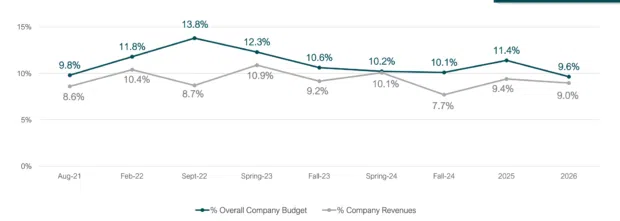
The current phase is defined by accountability. With marketing budgets declining to approximately 9.6% of overall company budgets in 2024—the lowest level since 2021—social media professionals are under pressure to prove their worth. The focus has shifted from "How many people saw this?" to "How many people bought something because of this?" This era is characterized by the use of AI, sophisticated attribution models, and a direct link between social content and the company’s profit and loss (P&L) statement.

Supporting Data: The Economic Pressure on Marketing
The move toward performance marketing is not merely a strategic choice; it is a defensive necessity. The following data points highlight the precarious position of modern marketing departments:
- Budget Contraction: Marketing budgets as a percentage of total company revenue have seen a downward trend, bottoming out at 9.6% in 2024.
- The "First to Cut" Syndrome: 45% of organizations prioritize marketing cuts during revenue shortfalls, compared to lower percentages for R&D or operations.
- The Attribution Gap: A significant portion of non-marketing leaders remain skeptical of marketing’s impact. According to Gartner, more than 50% of non-marketing executives believe that marketing departments have an "inflated view" of their importance in cross-functional initiatives.
- The ROI Mandate: Brands that successfully transition to a performance-based model report higher "Return on Ad Spend" (ROAS) by focusing on the 20% of content that drives 80% of conversions.
Strategic Implementation: Seven Pillars of Social Performance
To transform social media into a performance-driven channel, industry experts recommend a seven-step framework designed to align social activities with the broader business engine.

1. Alignment with Business Objectives
The first step is moving away from social-specific goals and toward organizational goals. If a company’s primary objective is "profitable growth," the social team’s goal cannot simply be "more followers." It must be "customer acquisition at a specific cost." This requires social teams to unpack the organization’s Key Performance Indicators (KPIs) and Objectives and Key Results (OKRs).
2. Technical Infrastructure and Smart Tracking
Performance marketing lives and dies by data. This requires the implementation of:

- Attribution Models: Moving beyond "last-click" attribution to understand how a social post three weeks ago contributed to a purchase today.
- Audience Demographics: Using real-time data to build hyper-accurate customer personas.
- Social Listening: Monitoring industry trends and sentiment to prevent crises and identify untapped market needs.
3. Rigorous Analysis and Benchmarking
Data is useless without context. Performance marketers check their dashboards with varying cadences. Daily checks are reserved for post-level metrics like click-through rates (CTR), while weekly or monthly reviews focus on conversion trends and revenue generation. Benchmarking against competitors is also vital to determine if a brand’s performance is truly "good" or merely "average" for the industry.
4. Direct Reporting on ROI
The most critical component of the performance model is the ROI report. This report must translate social activity into dollar terms. It involves calculating net revenue generated by social minus the cost of content production and ad spend. Furthermore, performance social can show "cost savings" by handling customer service inquiries on-platform rather than through expensive call centers.

5. Deployment of Proven Tactics
Performance marketing relies on a specific toolkit:
- A/B Testing: Testing one variable at a time (e.g., headline or image) to see what drives the most clicks.
- Conversion Rate Optimization (CRO): Focusing on the "post-click" experience to ensure users who land on a website actually complete a purchase.
- Affiliate and Advocacy Programs: Leveraging employees and influencers as "brand ambassadors" who are rewarded based on the sales they generate.
6. The Power of Success Stories
While data provides the "what," success stories provide the "why." Documenting specific instances where a social campaign led to a massive spike in revenue or secured a high-profile media placement helps dispel the skepticism of C-suite executives.
7. Strategic Recommendations
Finally, the social media team must evolve from "order takers" to "strategic advisors." By using social listening and performance data, they can provide the organization with insights into changing consumer behaviors, allowing the company to pivot its product or messaging before the competition does.
Expert Perspectives and Official Responses
Industry analysts emphasize that the integration of Artificial Intelligence (AI) is the "force multiplier" for social performance. Tools like Hootsuite’s OwlyWriter AI are now being used to generate dozens of iterations for A/B testing in seconds, a task that previously took creative teams days to accomplish.

"The social media manager of the future is part data scientist, part psychologist, and part strategist," says one digital marketing consultant. "If you can’t show how your Instagram Reel affected the quarterly earnings report, you aren’t doing performance marketing."
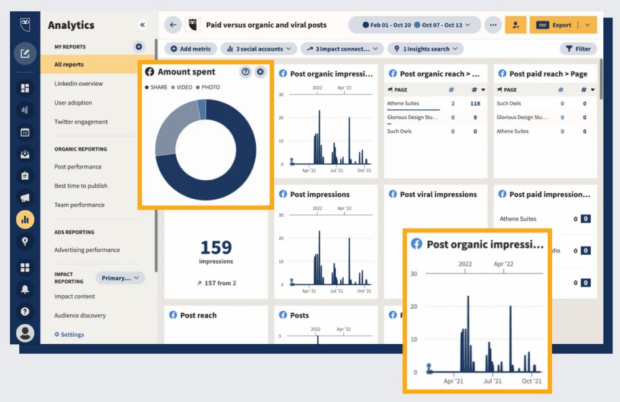
Furthermore, platforms like Hootsuite have responded to this demand by building "Advanced Analytics" that include built-in ROI analysis. These tools allow brands to track total spend against total return based on brand affinity, awareness, and intent, effectively taking the guesswork out of value calculations.

Implications: The Future of the Social Media Professional
The implications of this shift are profound for the workforce. The "social media manager" role is becoming increasingly technical. There is a growing demand for professionals who understand Google Analytics, CRM integration, and paid media scaling.
For the Organization: The transition to performance-based social media ensures that marketing budgets are protected. When social media can prove it generates $5 for every $1 spent, it is no longer viewed as an expense to be cut, but as an investment to be increased.
For the Consumer: As brands focus on performance and CRO, the user experience is likely to improve. Content will become more relevant, and the path from discovering a product on social media to purchasing it will become more seamless.
For the Industry: We are likely to see a consolidation of "organic" and "paid" social teams. In a performance-driven world, the distinction between a "post" and an "ad" matters less than the result both provide.

In conclusion, the era of social media as a "fun department" is over. In its place is a sophisticated, data-driven discipline that sits at the very heart of corporate growth. Those who embrace the performance model will find themselves with a permanent seat at the leadership table; those who don’t may find themselves without a budget.
 Basiran
  Asro
Asro 