
 By Nana Muazin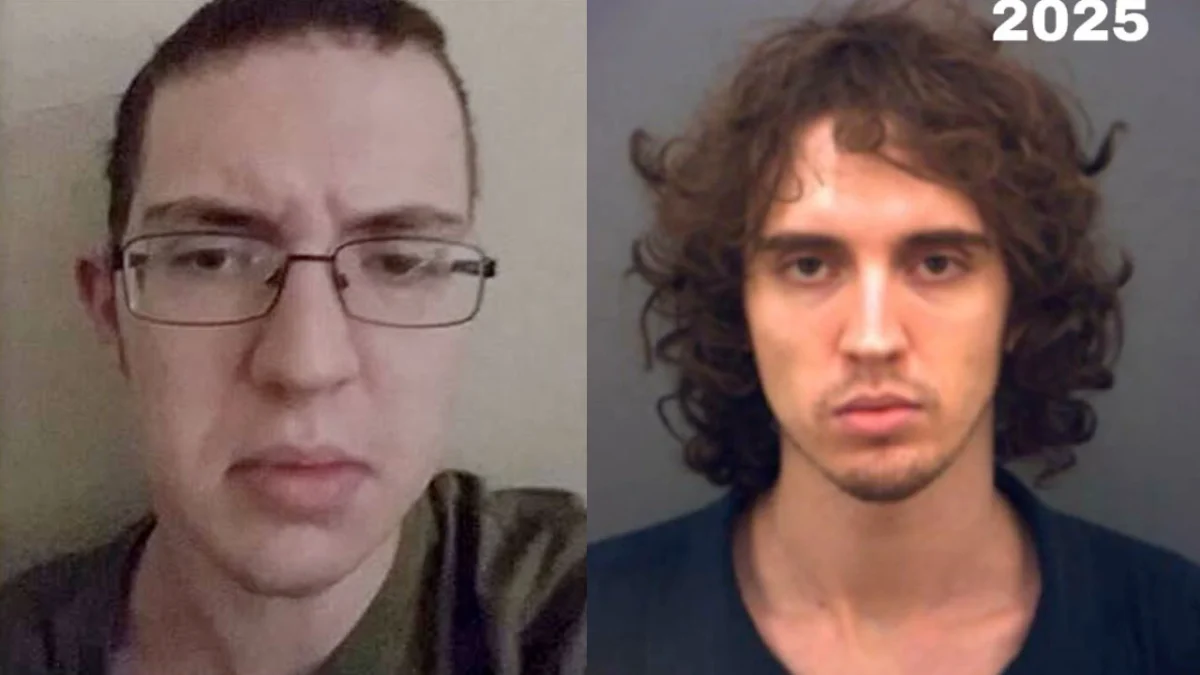
Introduction: The Digital Echoes of Tragedy and Transformation
In an increasingly digitized world where information spreads at unprecedented speeds, the lines between internet culture, dark humor, and profound real-world tragedy often blur. This complex interplay was starkly illustrated recently when a purported new photograph of Patrick Crusius, the perpetrator of the horrific 2019 El Paso Walmart shooting, began circulating online. The image, depicting a more "groomed" version of Crusius, quickly ignited a firestorm of discussion and controversy, particularly within the niche corners of the internet that had already immortalized him as "Chudjak"—a crude meme representing extremist ideologies.
The term "glow-up," typically associated with positive personal transformations, was ironically applied to Crusius, sparking a wave of disquieting jokes and memes. This phenomenon forced a renewed, albeit uncomfortable, examination of how online communities process, and often trivialize, figures associated with immense suffering. While some internet users engaged in this macabre humor, a more sobering reality persisted: Crusius is a convicted mass murderer, responsible for one of the deadliest hate crimes in recent American history, serving a lifetime sentence for his heinous acts. The viral moment underscored the profound chasm between internet irony and the devastating impact on victims and their communities, prompting critical questions about the ethics of online content creation and consumption in the face of unspeakable violence.
Main Facts: A Disturbing Resurgence in the Digital Sphere
The catalyst for this recent online maelstrom was the emergence of a photograph purportedly showing Patrick Crusius, the El Paso Walmart shooter, in a significantly altered appearance compared to his widely circulated initial mugshot. This image, which quickly gained traction across various social media platforms, depicted Crusius without his characteristic glasses, sporting longer, curly hair, and a nascent beard or facial scruff. The dramatic change from his previous public image led many internet users to ironically label it a "glow-up"—a term typically used to describe a marked improvement in appearance.
The photograph was first brought into public view on April 25th, 2025, by a Redditor identified as /u/uncanealguinzaglio. This user posted the image to the subreddit /r/masskillers, claiming it to be a new federal mugshot of Crusius, allegedly obtained through a Freedom of Information Act (FOIA) request. However, the accompanying details from the Redditor clarified that the image was reportedly taken around July 2023, coinciding with Crusius’s plea to federal charges, rather than the 2025 date initially misattributed by many online. Furthermore, the Redditor stated that while the photo pertained to his federal charges, it was taken by El Paso authorities while holding him for the federal government, not directly by federal officials. The initial Reddit post was swiftly removed, likely due to violations of the platform’s terms of service concerning content that could be seen as glorifying or trivializing violence.
Despite its quick removal from Reddit, the image had already escaped into the broader digital ecosystem. Two days later, on Sunday, X (formerly Twitter) user @TruueDiscipline reposted the photo with the provocative caption, "This is what chudjak looks like now… feel old yet?" This tweet rapidly went viral, accumulating over 1.2 million views and 17,000 likes within a mere 48 hours. The virality of the post was driven by the perceived transformation of Crusius and the pre-existing, albeit controversial, association of his image with the "Chudjak" meme.
Patrick Crusius is infamous for the August 3, 2019, mass shooting at a Walmart in El Paso, Texas, which resulted in the deaths of 23 people and injured many more. His actions were explicitly motivated by white supremacist ideology and anti-immigrant sentiment, detailed in a manifesto he posted online shortly before the attack. He has since been sentenced to 90 consecutive life sentences in federal prison after pleading guilty to 90 federal charges, including hate crimes resulting in death. The juxtaposition of his horrific crimes with the internet’s casual commentary on his appearance underscored a profound ethical dilemma inherent in contemporary online culture.
Chronology of a Digital Phenomenon
The rapid spread and subsequent discourse surrounding Patrick Crusius’s "new" image exemplify the volatile nature of information dissemination and cultural interpretation in the digital age. This timeline traces the emergence and evolution of the viral moment.
The Genesis of the Image
The journey of the controversial photograph into public consciousness began on April 25th, 2025. On this date, a user on Reddit, identified by the handle /u/uncanealguinzaglio, uploaded what they claimed was a recent federal mugshot of Patrick Crusius. The image was posted within the subreddit /r/masskillers, a community that often engages with sensitive content related to perpetrators of extreme violence. According to the Redditor, the photograph was obtained through a Freedom of Information Act (FOIA) request, implying an official source. Crucially, the user clarified that the image was purportedly from "circa July of 2023," coinciding with Crusius’s plea to federal charges, rather than the more recent date of its online release. They further explained that the photo was not taken directly by the federal government but by El Paso authorities who were holding Crusius for federal proceedings.
The initial Reddit post, despite its detailed context, was short-lived. It was quickly deleted, most likely for violating Reddit’s Terms of Service (TOS), which prohibit content that glorifies violence, promotes hate, or re-traumatizes victims. However, the digital genie was already out of the bottle; the image had been captured and began to circulate beyond the confines of the subreddit.
Viral Explosion on X
The image’s true viral explosion occurred just two days later, on Sunday, April 27th. X user @TruueDiscipline posted the photograph with a caption that proved to be a potent accelerant for its spread: "This is what chudjak looks like now… feel old yet?" The tweet immediately tapped into existing internet culture, referencing the "Chudjak" meme and the popular "Feel Old Yet?" format, which typically juxtaposes an older version of a recognizable figure with their younger self.
The post garnered immense attention almost instantaneously. Within a mere 48 hours, it had accumulated an astonishing over 1.2 million views and 17,000 likes. The image itself presented a strikingly different Crusius: his glasses, a defining feature in earlier mugshots, were absent; his hair was longer and curly, falling around his face; and he sported a noticeable amount of facial scruff. This transformation, perceived by many as a "glow-up," was the primary driver of the tweet’s virality, inviting both shock and dark humor from a broad spectrum of internet users.
Meme-ification and Reactions
Following the viral post, the internet quickly engaged in its characteristic process of "meme-ification." Users across X and other platforms responded in what the original article described as a "deranged fashion," reflecting a mix of disbelief, dark humor, and unsettling fascination.
- One notable example came from X user @Halsted_19, who posted a meme depicting women ostensibly "fawning" over the imprisoned "Chud," satirizing the bizarre online attraction some individuals develop towards notorious figures, even criminals.
- Another user, @hayasaka_aryan, pushed the narrative further, sharing a side-by-side comparison of Crusius’s old and new looks with the caption, "From chud to indie rock singer." This particular comparison highlighted the perceived aesthetic transformation, drawing parallels to a counter-cultural, often romanticized, persona.
- The widespread shock and surprise were also encapsulated by X user @Marcus_cel, who posted a panel from the classic "Cereal Guy" meme. In this iteration, the Cereal Guy spits out his breakfast in disbelief, a universally recognized symbol of profound shock, in response to Crusius’s updated appearance. These reactions, while framed as humor, collectively underscored a disturbing tendency within certain online communities to trivialise or even ironically humanize a perpetrator of mass violence.
Corrective Information and the More Recent Reality
Amidst the swirling vortex of memes and commentary, a crucial piece of corrective information emerged. Shortly after their initial viral post, X user @TruueDiscipline followed up with a clarification. They acknowledged that the widely circulated "glow-up" image was indeed purportedly from 2023, not a more recent capture.
Furthermore, @TruueDiscipline shared a genuinely more contemporary photograph of Crusius. This image depicted him wearing glasses and sporting a beard during a court hearing on April 21st, 2025, where he pleaded guilty to capital murder charges. This latter image presented a more somber and less "transformed" Crusius, offering a stark contrast to the viral "glow-up" photo. The clarification served as a vital, albeit often overlooked, counter-narrative, reminding users of the true context of Crusius’s legal proceedings and his ongoing reality, far removed from the fleeting aesthetics of internet memes. This chronological sequence highlights the speed at which misinformation and sensationalism can spread, even when accurate information is available, demonstrating the challenges of responsible digital discourse.
Supporting Data: The Anatomy of the "Chudjak" Meme and Online Extremism
The viral "glow-up" narrative of Patrick Crusius cannot be fully understood without delving into the origins and significance of the "Chudjak" meme itself, a potent symbol of online extremism and a disturbing example of how real-world atrocities are transmuted into digital artifacts.
Origins of Chudjak
The "Chudjak" meme first materialized in late 2019 on 4chan’s /pol/ board, notorious for being a hotbed of politically incorrect, far-right, and often extremist content. The "pol" in /pol/ stands for "politically incorrect," a euphemism for a space where hateful ideologies, conspiracy theories, and racist, antisemitic, and misogynistic rhetoric are openly shared and amplified. It was within this environment that the crude drawing known as Chudjak gained prominence.
Chudjak is a specific variant of the broader Wojak meme universe. Wojak, originally a simple, melancholic stick figure, has evolved into a versatile template used to express a wide range of emotions, archetypes, and social commentaries. Chudjak, however, is not merely an expression of emotion; it is a politically charged caricature. The drawing typically depicts a figure with exaggerated features: prominent glasses, deep nasolabial folds (lines extending from the nose to the mouth), and a perpetual frown or scowl. This visual representation became a stand-in for a specific type of internet user or ideological stance—often associated with the "CHUD" (Cannibalistic Humanoid Underground Dweller) pejorative, which some far-right users ironically adopted to describe themselves or their perceived enemies.
The "Billions Must Die" Mantra
What solidified Chudjak’s association with extremist ideology was its frequent pairing with the chilling mantra: "The West has fallen. Billions must die." This phrase, often presented as a caption or speech bubble alongside the Chudjak image, became a shorthand for online extremist hysteria. It encapsulates several key tenets of radical right-wing thought:
- "The West has fallen": This reflects a pervasive sense of cultural pessimism, a belief that Western civilization is in decline due to progressive policies, multiculturalism, and perceived threats to traditional values. It often ties into conspiracy theories like the "Great Replacement," which posits that white populations are being systematically replaced by non-white immigrants.
- "Billions must die": This is a genocidal sentiment, expressing a desire for widespread societal cleansing or violent upheaval. It hints at a revolutionary, often nihilistic, worldview where extreme measures are deemed necessary to "restore" a perceived lost order.
Patrick Crusius himself articulated similar sentiments in his manifesto, published online before the El Paso shooting. His writings explicitly detailed white supremacist, anti-immigrant views, expressing fears of a "Hispanic invasion" of Texas and echoing the "Great Replacement" theory. The Chudjak meme, with its "Billions Must Die" tagline, thus became a chillingly accurate, albeit caricatured, representation of the very ideology that motivated Crusius’s massacre. It functions as both an internal signal for those within extremist circles and a disturbing symbol for external observers of the dangerous ideas festering online.
The Broader Wojak Universe
To understand Chudjak’s impact, one must appreciate the versatility of the broader Wojak universe. Wojak memes operate as a form of visual shorthand, allowing complex ideas or emotional states to be conveyed instantly. There are countless Wojak variants—"NPC Wojak" for unthinking conformity, "Doomer Wojak" for existential despair, "Zoomer Wojak" for Gen Z stereotypes, and many more. This adaptability makes Wojak a powerful tool for communication, but also for the propagation of specific political or ideological messages. Chudjak weaponizes this versatility, transforming a neutral artistic template into a vessel for hateful and violent rhetoric. Its simplistic design makes it easily replicable and shareable, allowing its extremist message to permeate various online spaces, sometimes subtly, sometimes overtly.

The Phenomenon of "Dark Humor" and Glorification
The reaction to Crusius’s "glow-up" photo, particularly the "Chud to indie rock singer" type of commentary, highlights a dangerous aspect of internet culture: the blurring of lines between satire, dark humor, and implicit glorification or humanization of mass murderers. While some users might genuinely believe they are engaging in irony or "edgelord" humor—pushing boundaries for shock value—such content can have serious implications.
This type of online behavior risks:
- Desensitization: Repeated exposure to memes that trivialize horrific events or figures can desensitize users to the real-world suffering involved.
- Normalization: When a mass murderer becomes a meme, even ironically, it can normalize their existence in popular culture, potentially making their actions seem less abhorrent.
- Implicit Glorification: Applying terms like "glow-up" or framing a killer as "hot" or "cool" (e.g., "indie rock singer") can, intentionally or unintentionally, confer a perverse form of admiration or attention upon them. This taps into the unsettling phenomenon of fascination with notorious criminals, sometimes leading to "hybristophilia" or "prison wives" where individuals develop romantic or sexual attraction to perpetrators of heinous crimes.
- Recruitment: For extremist groups, such memes can serve as a form of cultural touchstone or even a subtle recruitment tool, drawing in individuals who are already susceptible to radical ideologies and find a sense of belonging in the "edgy" humor.
The "Chudjak glow-up" saga thus serves as a stark reminder of how digital culture, when left unchecked, can inadvertently provide a platform for the trivialization of real-world violence and the insidious normalization of extremist figures and their hateful ideologies.
Official Responses and Ethical Considerations
The emergence of Crusius’s "glow-up" photo and its subsequent meme-ification, while a viral internet phenomenon, intersects with serious issues of law enforcement, victim impact, and the responsibilities of digital platforms.
Law Enforcement and Correctional Perspectives
From the perspective of law enforcement and correctional facilities, the "new" photograph of Patrick Crusius is primarily an administrative record. The fact that it was reportedly obtained via a Freedom of Information Act (FOIA) request underscores its status as public information, subject to transparency laws. However, the subsequent online commentary—the "glow-up" jokes and the trivialization—stands in stark contrast to the gravity with which the justice system views Crusius and his crimes.
While there have been no direct "official responses" from law enforcement or correctional authorities specifically addressing the internet meme, their focus remains on the judicial process, public safety, and the proper incarceration of Crusius. The purpose of a mugshot or prison photo is for identification and record-keeping, not for public consumption as fodder for internet humor. The potential for such images to be co-opted for trivial or even glorifying purposes poses an implicit challenge to the solemnity of the justice system, though direct intervention against online memes is typically beyond their purview unless it escalates to threats or incitement. Law enforcement agencies often express discomfort or concern when serious crimes and their perpetrators are treated lightly online, understanding that such trivialization can undermine public trust and disrespect the judicial process.
Victim and Community Impact
Perhaps the most critical dimension of this incident is its profound impact on the victims, survivors, and the broader El Paso community. The El Paso Walmart shooting was a hate crime specifically targeting the Hispanic community, leaving an indelible scar of grief, trauma, and fear. For those directly affected, seeing the perpetrator of such immense suffering become the subject of casual internet jokes, or even perceived admiration through "glow-up" narratives, is not merely insensitive—it is a deeply re-traumatizing experience.
Each meme, each ironic comment, each "like" on a post celebrating Crusius’s appearance serves as a fresh wound for those who lost loved ones or endured the terror of that day. It represents a chilling disconnect between the virtual world and the lived reality of profound loss and pain. The trivialization of a mass murderer’s image by a distant online audience underscores a severe lack of empathy and can contribute to a sense of injustice and disrespect for the memory of the deceased and the ongoing suffering of survivors. This chasm between internet irony and real-world suffering highlights a critical ethical failing in much of online "dark humor."
Platform Responsibilities
The episode also brings to the forefront the complex and often contentious issue of social media platform responsibility in moderating harmful content.
- Reddit’s action: The quick deletion of the original Reddit post on /r/masskillers suggests that the platform recognized a violation of its Terms of Service. Reddit’s TOS generally prohibit content that promotes violence, hate speech, or harassment, or that could be seen as glorifying individuals who commit such acts. This immediate action, while often reactive, demonstrates a degree of commitment to preventing the overt spread of such material.
- X’s (Twitter’s) challenge: X, on the other hand, often faces criticism for its inconsistent and sometimes lax moderation policies, particularly when it comes to content that falls into grey areas, such as "dark humor" or memes. While X’s community guidelines also prohibit hate speech and glorification of violence, the sheer volume of content and the subjective nature of what constitutes "glorification" in a meme context make enforcement challenging. The viral nature of @TruueDiscipline’s tweet, reaching over a million views, indicates that it either did not trigger X’s automated moderation systems or was not reported sufficiently to warrant manual review and removal in its initial viral phase.
The challenge for social media companies lies in balancing freedom of expression with the imperative to prevent the spread of content that is harmful, hateful, or re-traumatizing. This incident underscores the difficulty of content moderation when context is lost or intentionally obscured by ironic layers, and how easily platforms can become unwitting conduits for the spread of disturbing narratives. The platforms’ role is crucial, as they are the primary gatekeepers of digital information, and their policies and enforcement mechanisms directly influence the ethical landscape of online discourse.
Implications: The Blurring Lines of Digital Culture and Real-World Violence
The viral spread of Patrick Crusius’s "glow-up" photo and the subsequent "Chudjak" meme resurrection are more than just fleeting internet phenomena; they carry profound implications for how society grapples with digital culture, online extremism, and the enduring scars of real-world violence.
The Desensitization Effect
One of the most insidious implications of such incidents is the desensitization effect that meme culture can exert on its participants. When figures responsible for immense suffering, like mass murderers, are transformed into ironic memes or subjects of superficial aesthetic commentary, the gravity of their actions can be diluted. Repeated exposure to such content, framed within the casual and often irreverent context of internet humor, can erode empathy and make individuals less responsive to the real human cost of violence. This normalization of extremist symbols and figures through humor creates a dangerous pathway where atrocities are no longer viewed with horror but as fodder for "edgy" entertainment, blurring the moral compass of digital citizens.
The "Glow-Up" Narrative and its Perils
The application of the "glow-up" narrative to a convicted mass murderer presents a specific and disturbing set of perils. It trivializes the very concept of incarceration and the justice system, turning a punitive consequence for heinous acts into an opportunity for aesthetic transformation. Such narratives send a dangerous message: that even perpetrators of the most abhorrent crimes can achieve a form of "redemption" or positive change in the public eye, detached from the immense suffering they caused.
Furthermore, this phenomenon taps into the unsettling psychological tendency to find fascination or even a perverse attraction to notorious figures. While not necessarily full-blown hybristophilia, the act of commenting on a killer’s appearance, even ironically, humanizes them in a way that shifts focus from their victims to their person. It risks creating a perverse sense of celebrity or notoriety, inadvertently rewarding horrific acts with public attention—attention that should rightfully be focused on remembrance, healing, and prevention.
The Enduring Challenge of Online Extremism
The "Chudjak glow-up" saga is a stark reminder of the enduring challenge posed by online extremism. Memes, particularly those like Chudjak and its associated "Billions Must Die" mantra, are not merely harmless jokes. They serve as potent cultural touchstones, inside jokes, and sometimes even recruitment tools for extremist groups. They allow hateful ideologies to be disseminated in a digestible, shareable, and often deniable format. When a mass murderer associated with such ideologies becomes a subject of viral attention, it can inadvertently amplify those extremist narratives, providing an opportunity for radicalized individuals to coalesce, reinforce their beliefs, and potentially draw in new recruits who are drawn to the "edginess" or perceived rebelliousness of such content.
Countering these narratives once they become viral is incredibly difficult, as they spread rapidly across decentralized networks, often evading traditional content moderation efforts. This underscores the critical need for robust media literacy and critical thinking skills among internet users, enabling them to discern propaganda and harmful content disguised as humor.
A Call for Empathy and Responsibility
Ultimately, this incident serves as a powerful call for empathy and responsibility in the digital realm. The human cost of the El Paso shooting—the lives lost, the families shattered, the community traumatized—must never be overshadowed by the fleeting and often callous dynamics of internet culture. It is imperative to remember the victims and their stories, to acknowledge their humanity, and to focus on preventing future acts of violence rather than inadvertently glorifying or trivializing their perpetrators.
Both content creators and consumers bear an ethical responsibility. Content creators must consider the real-world impact of their posts, especially when dealing with sensitive topics like mass violence. Consumers must engage with online content critically, question its underlying messages, and resist the urge to participate in trends that disrespect victims or normalize extremism. The "Chudjak glow-up" is not just a strange internet trend; it is a profound reflection of the ongoing struggle to balance digital freedom with ethical responsibility, and a stark reminder of the need to prioritize human dignity and remembrance over fleeting online notoriety.
Conclusion: A Stark Reminder
The viral circulation of Patrick Crusius’s "new" photograph and the ensuing "Chudjak glow-up" meme represent a disquieting intersection of internet culture, true crime, and the lingering shadow of white supremacist violence. What began as a mere image quickly metastasized into a digital spectacle, highlighting the internet’s capacity to simultaneously inform, entertain, and disturb. The phenomenon laid bare the often-unbridgeable gap between the casual, often irreverent, humor of online communities and the profound, enduring pain inflicted by real-world atrocities.
This incident serves as a stark reminder of the ethical responsibilities inherent in our increasingly interconnected world. It challenges us to reflect on how we consume and contribute to online narratives, especially when they involve figures responsible for immense suffering. While the internet offers unparalleled avenues for expression, it also demands a heightened sense of empathy and critical awareness. The El Paso Walmart shooting was a tragedy rooted in hate, and its perpetrator, regardless of his physical appearance, remains a symbol of that hate. Prioritizing sensationalism or ironic humor over the memory of the victims and the gravity of the crime risks not only re-traumatizing survivors but also inadvertently normalizing the very ideologies that fuel such violence. Ultimately, the "Chudjak glow-up" is a cautionary tale, urging us to remember that behind every meme and every viral trend lies a human reality that demands respect, solemnity, and a steadfast commitment to justice and remembrance.
 Nila Kartika Wati
  Azzam Bilal Chamdy