San Francisco, CA – In a highly publicized digital confrontation that has sent ripples across the internet, the official X account for the critically acclaimed Assassin’s Creed franchise recently engaged in a sharp, witty exchange with tech billionaire ElonMusk. The skirmish, which quickly went viral, saw the gaming giant leverage Musk’s past gaming controversies to defend a Twitch streamer he had publicly disparaged. This incident has reignited discussions about corporate social media strategy, celebrity authenticity in gaming, and the increasingly blurred lines between online culture and mainstream commentary.
The catalyst for this digital skirmish was Musk’s direct criticism of prominent left-leaning Twitch streamer Hasan Piker, whom he labeled a "fraud" and a "sell out" for promoting the upcoming title Assassin’s Creed: Shadows. Musk’s comments, made on his own social media platform, X, quickly drew the attention of the official Assassin’s Creed account, @AssassinsCreed. In a move that was both unexpected and strategically brilliant, the account responded by directly referencing Musk’s own embarrassing "fraud gamer" controversy involving Path of Exile 2 earlier this year.
The Assassin’s Creed tweet, which amassed over 400,000 likes overnight, asked Musk, "Is that what the guy playing your Path of Exile 2 account told you?" This pointed retort resonated deeply with the online community, particularly gaming enthusiasts, who quickly amplified the message and generated a barrage of memes and jokes at Musk’s expense. The incident serves as a potent reminder that in the hyper-connected world of social media, past digital missteps can quickly be brought back to the forefront, even for figures as globally recognized as Elon Musk.
Chronology of a Viral Feud: From Sponsorship to "Ratio"
The dramatic exchange unfolded against a backdrop of ongoing cultural debates within the gaming community, often fueled by differing political perspectives and perceptions of corporate influence. The precise sequence of events leading to the Assassin’s Creed account’s viral response illustrates the rapid-fire nature of online discourse and the strategic calculations involved in managing public image.
The Catalyst: Grummz and the Hasan Piker Sponsorship
The saga began not with Elon Musk, but with Mark Kern, widely known by his online handle "Grummz." Kern, a veteran game developer with credits on titles like Diablo II and StarCraft, has in recent years become a vocal and often controversial figure on social media, frequently criticizing aspects of the gaming industry he perceives as having become overly politicized or "woke."
Grummz initiated the debate by criticizing Ubisoft, the developer and publisher behind the Assassin’s Creed franchise, for sponsoring Hasan Piker to play Assassin’s Creed: Shadows. Piker, a highly popular Twitch streamer with a significant following, is known for his progressive political commentary and discussions, often intertwined with his gaming streams. For Kern and those who share his viewpoint, Ubisoft’s decision to collaborate with Piker was seen as an endorsement of specific political ideologies, potentially alienating a segment of their player base. The act of sponsoring a streamer to play a new game is a common marketing strategy within the industry, leveraging the influencer’s reach to generate hype and sales. However, when the influencer in question is also a prominent political commentator, such sponsorships can become lightning rods for controversy, especially in the current polarized digital landscape.
Musk Enters the Fray: Accusations of Fraud and Sell-Outs
It was at this juncture that Elon Musk, CEO of Tesla and SpaceX and owner of X, decided to weigh in. Known for his frequent and often provocative engagement on his platform, Musk responded to Grummz’s criticism by directly attacking Hasan Piker. He labeled Piker a "fraud" and a "sell out," asserting that the streamer was promoting a "terrible game just for the money."
Musk’s intervention escalated the situation significantly. His immense global platform and personal brand amplify any statement he makes, transforming a niche gaming debate into a mainstream talking point. His use of strong, pejorative terms like "fraud" and "sell out" was particularly impactful, setting a combative tone and drawing a clear line in the sand. This criticism echoed broader sentiments often expressed by those who view influencer marketing with cynicism, suggesting a lack of genuine enthusiasm in favor of financial gain. However, coming from a figure like Musk, whose business dealings and public persona are frequently scrutinized, these accusations carried an additional layer of irony, which the internet was quick to recognize.
Ubisoft’s Calculated Counter: The Assassin’s Creed "Ratio"
The official @AssassinsCreed account, managed by Ubisoft, was quick to react to Musk’s direct attack on a sponsored partner and, by extension, their own game. Rather than engaging in a lengthy defense of Piker or Assassin’s Creed: Shadows, the account chose a highly targeted and impactful response. They directly challenged Musk’s moral high ground by recalling his own recent "fraud gamer" controversy.
The tweet, "Is that what the guy playing your Path of Exile 2 account told you?", was a masterclass in social media engagement. It employed the internet phenomenon known as a "ratio," where a reply tweet garners significantly more likes and retweets than the original post it’s responding to, indicating widespread agreement with the reply and often signaling a public "win" for the replier. The Assassin’s Creed account didn’t just respond; it delivered a devastating counter-punch that immediately resonated with the online gaming community. This swift and direct response not only defended their brand and partner but also turned the tables on Musk, casting him as a hypocrite and providing immediate, viral entertainment for millions.
Supporting Data: Unpacking the "Fraud Gamer" Controversy
The effectiveness of the Assassin’s Creed account’s retort hinged entirely on public awareness of Elon Musk’s previous gaming scandal involving Path of Exile 2. For those unfamiliar with the intricate world of online gaming, understanding this prior controversy is crucial to grasping the depth of the "ratio" delivered by Ubisoft.
What is Path of Exile 2?
Path of Exile 2 is the upcoming sequel to Path of Exile, a free-to-play action role-playing game (ARPG) known for its immense depth, complex character customization, and challenging gameplay. Unlike many mainstream ARPGs, Path of Exile demands significant player investment, skill, and knowledge of its intricate mechanics to progress to high levels and tackle its most difficult content. Veterans of the game spend thousands of hours mastering its systems, making genuine high-level play a clear indicator of dedication and skill. This context is vital because it makes the subsequent revelations about Musk’s gameplay even more glaring.
The Player Observations: Blunders and Boosting Allegations
Earlier this year, Elon Musk began livestreaming himself playing Path of Exile 2, showcasing a high-ranking character. However, eagle-eyed Path of Exile veterans quickly noticed glaring inconsistencies between the character’s impressive in-game status and Musk’s actual gameplay. Despite ostensibly controlling a powerful, high-level character, Musk appeared to blunder across the map, exhibiting a fundamental lack of understanding of the game’s mechanics, character abilities, and strategic movement patterns – behaviors typical of a novice player, not a seasoned veteran.
Compounding these observations, players also noticed that publicly available game data indicated Musk was "playing from Asia or using a VPN to play from Asia." This detail immediately raised suspicions within the community. In competitive online gaming, playing from a different geographical region often implies the use of a VPN to mask one’s location or, more commonly in such high-level scenarios, the employment of an "account booster." An account booster is an individual hired to play on another person’s account, typically to rapidly increase its rank, acquire rare items, or complete challenging content that the account owner cannot or does not wish to do themselves.
The stark contrast between the character’s high achievements and Musk’s visibly amateurish play, coupled with the unusual geographical login data, led the Path of Exile community to widely conclude that Musk was not genuinely playing the high-level character himself. Instead, it was strongly suspected he had hired someone to "grind" the game for him, effectively faking his personal achievement within the game.
This sentiment was succinctly captured in a viral tweet by Alex Alarga, who posted on X:
"What an ego-trip… Elon Musk has been livestreaming himself playing overpowered Path Of Exile 2 character, proudly and seriously pretending that he got there himself, and actual POE veterans are laughing their asses off watching and dissecting that charade. Why Elon, why? 🤦♂️😂"
This tweet, which included video evidence of Musk’s gameplay, solidified the community’s perception of the "fraud gamer" controversy.
Musk’s Admission of "Account Boosting"
Faced with overwhelming evidence and widespread mockery from the dedicated Path of Exile community, Elon Musk eventually admitted to the practice of "account boosting." In a statement, he attempted to normalize the behavior, writing, "It’s impossible to beat the players in Asia if you don’t, as they do!" This admission, while confirming the suspicions of the gaming community, did little to quell the criticism. Instead, it was largely interpreted as an attempt to deflect from the core issue of misrepresenting one’s own gaming skill and achievement.
The practice of account boosting is widely frowned upon in competitive online gaming. It undermines the integrity of leaderboards, devalues the legitimate efforts of players who achieve high ranks through their own skill and dedication, and can create an unfair playing field. For Musk to criticize Hasan Piker as a "fraud" for a sponsored stream, while having recently been exposed for engaging in a practice widely considered fraudulent within the gaming community, created a powerful and undeniable narrative of hypocrisy. This perceived double standard was precisely what the Assassin’s Creed account so effectively exploited in its viral response.
Official Responses and Escalation: Beyond the Initial Ratio
While the Assassin’s Creed account’s "ratio" stole the immediate spotlight, the digital drama didn’t end there. The initial exchange prompted further responses and challenges, particularly from Hasan Piker, and illuminated the broader dynamics of celebrity feuds on social media.
Hasan Piker’s Direct Confrontation: The Elden Ring Challenge
Following Musk’s initial accusations and the subsequent Assassin’s Creed counter, Hasan Piker himself entered into a direct exchange with Musk, mediated in part by Grummz who continued to egg on the argument. Piker, known for his confrontational style, challenged Musk to a "duel" in Elden Ring.
Elden Ring is a critically acclaimed action role-playing game renowned for its challenging combat, intricate world design, and demanding skill ceiling. A duel in Elden Ring is a direct test of a player’s combat prowess, reflexes, and understanding of game mechanics. By challenging Musk to such a duel, Piker was directly calling into question Musk’s actual gaming skill, particularly in light of the Path of Exile 2 controversy. It was a challenge that directly addressed the core issue of gaming authenticity that Musk himself had raised.
Musk’s response to Piker’s challenge was to call him "chickens—" for blocking him on X. This deflection, rather than accepting or directly refusing the Elden Ring challenge, further fueled the perception that Musk was unwilling or unable to prove his gaming credentials. The exchange, captured in a series of screenshots shared widely online, showcased the raw, unedited nature of these high-profile online disputes. Grummz’s continued involvement, actively fanning the flames between the two, highlighted the role of internet provocateurs in escalating such celebrity feuds.
Musk’s Silence on the AC Ratio
Notably, while Musk was quick to engage in a back-and-forth with Hasan Piker, he did not issue a direct, public response to the official Assassin’s Creed account’s tweet. This silence, in contrast to his usual readiness to engage with critics and commenters on X, was interpreted in several ways. Some saw it as an acknowledgment of a "loss" in the online skirmish, recognizing that the Assassin’s Creed account had delivered an unanswerable, highly effective blow. Others speculated it was a strategic decision to avoid further amplifying a narrative that painted him as a hypocrite. Regardless of the intent, Musk’s lack of direct rebuttal to the Assassin’s Creed "ratio" solidified its status as a definitive moment in the online feud.
Implications and Public Reaction: The Echo Chamber of the Internet
The viral "ratio" by the Assassin’s Creed account and the subsequent fallout had immediate and far-reaching implications, extending beyond the individuals involved to touch upon broader themes of corporate communication, internet culture, and the shifting dynamics of public perception.
The Viral Success and Meme Economy
The Assassin’s Creed tweet quickly became a cornerstone of internet humor. The sheer audacity of a major corporate entity directly "roasting" one of the world’s wealthiest and most influential figures on his own platform resonated deeply with the "chronically online" community. The incident spawned a multitude of memes and jokes, with users creatively adapting existing templates and coining new phrases to lampoon Musk’s perceived hypocrisy. The speed and scale at which these jokes spread underscored the power of shared cultural understanding within online communities, where a single, well-placed reference can instantly unlock a torrent of collective amusement.
"I Was Unfamiliar with Your Game": A Concession of Respect
Among the most prevalent reactions was the use of the meme, "I owe you an apology, I wasn’t really familiar with your game." This phrase, often used ironically or genuinely to express a newfound respect for something previously dismissed or underestimated, was perfectly deployed in this context. Many internet users, perhaps initially skeptical of Assassin’s Creed: Shadows or critical of Ubisoft’s marketing, publicly conceded their admiration for the account’s sharp wit. It signified a moment where corporate social media, often criticized for being bland or overly cautious, managed to genuinely connect with and entertain its audience through bold, authentic engagement.
One notable example was X user @soundaholism, who publicly vowed to purchase Assassin’s Creed: Shadows without waiting for a sale, explicitly stating that their decision was "solely motivated" by the account’s successful ratio of Elon Musk. This anecdote highlights a fascinating potential outcome of such viral engagements: unexpected, positive commercial impact driven by brand personality rather than traditional advertising. It suggests that in an age of ad-blockers and content saturation, a clever, culturally relevant interaction can sometimes be more effective than a multi-million-dollar marketing campaign.
The Irony of Ownership: "Cooked on His Own Website"
Perhaps the most potent and widely circulated joke stemming from the incident revolved around the profound irony of Elon Musk paying $44 billion to acquire X (formerly Twitter), only to be "cooked" – an internet slang term for being thoroughly humiliated or defeated – on his own platform. This observation resonated deeply because it encapsulated the unpredictable and often unruly nature of social media, even for its owner. It underscored the idea that platforms like X, despite being privately owned, derive their value from the collective interaction and participation of their users, and that even the most powerful figures are not immune to the court of public opinion within that digital space. The visual of Musk, who often projects an image of technological dominance and intellectual superiority, being outmaneuvered in a quick-witted online skirmish by a video game account, provided a rich vein of satirical commentary.
Conclusion: The Shifting Landscape of Digital Accountability
The viral exchange between the Assassin’s Creed X account and Elon Musk is more than just another internet squabble; it’s a microcosm of several significant trends in contemporary digital culture. It demonstrates the increasing willingness of corporate entities to engage directly and often combatively with prominent figures, leveraging internet-native humor and references to bolster their brand image and defend their interests. This shift marks a departure from traditionally cautious corporate communication strategies, signaling a growing understanding that authenticity and bold engagement can often win over calculated neutrality.
Furthermore, the incident underscores the persistent scrutiny faced by public figures like Elon Musk in the digital age. His past gaming missteps, seemingly minor in the grand scheme of his business empire, were meticulously cataloged and readily deployed by the collective memory of the internet to highlight perceived hypocrisy. This "digital footprint" serves as a constant ledger, ready to be referenced whenever a public figure attempts to claim a moral high ground that their past actions might contradict.
Finally, this episode highlights the ongoing intersection of gaming, politics, and celebrity culture. What began as a criticism of a game sponsorship and a streamer’s political leanings quickly evolved into a broader debate about authenticity, accountability, and the power dynamics of social media. As these spheres continue to overlap, the digital arena will undoubtedly remain a fertile ground for such viral clashes, where wit, cultural currency, and the collective memory of online communities can often prove to be more potent than billions of dollars or vast influence. The Assassin’s Creed "ratio" of Elon Musk will likely be remembered as a standout example of how to win a modern online battle, reminding everyone that in the digital age, no one, not even the owner of the platform, is immune to getting "cooked."

 By Ammar Sabilarrohman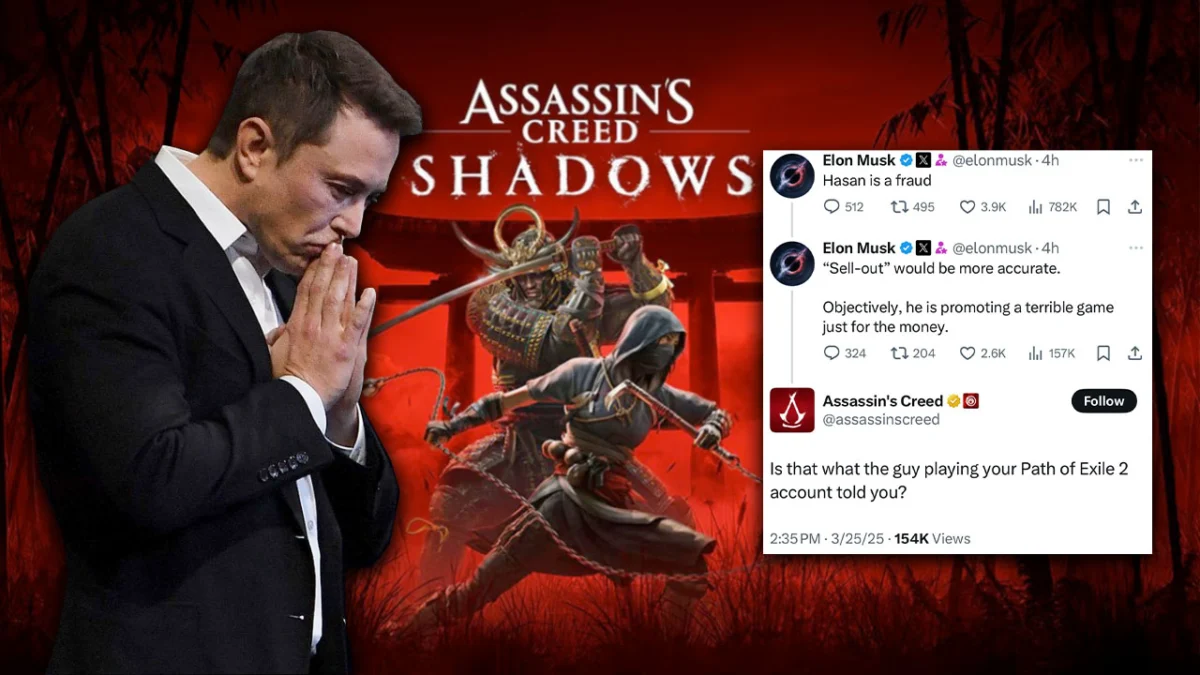

 rifanmuazin
  Nana
Nana  Iffa Jayyana