
 By Basiran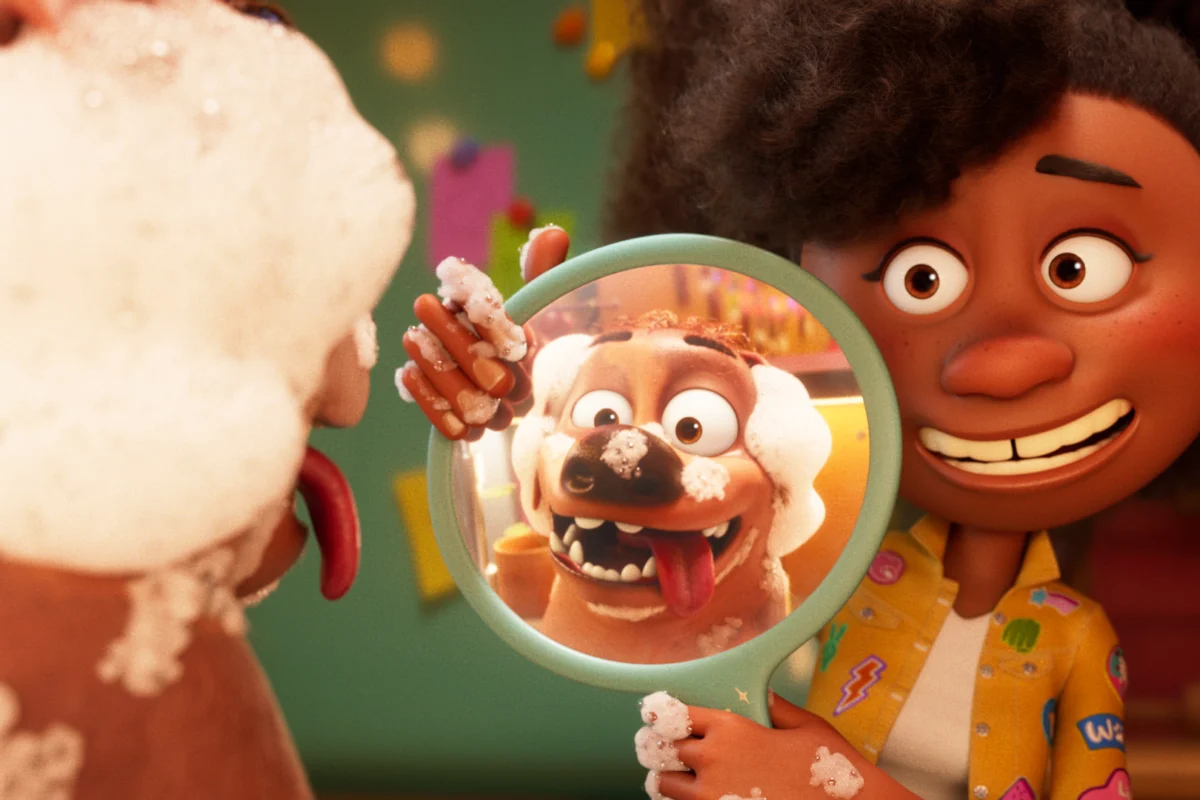
For the third consecutive year, the creative team at nWave Studios has made the pilgrimage from Brussels to the French Alps, trading the drafting desks of Belgium for the prestigious stage of the Annecy Animation Festival. However, this year’s journey feels markedly different. As the studio unveils its twelfth feature film, Yugly, they are not just presenting another entry in their growing catalog—they are introducing the world to a new, more ambitious standard for European CG animation.
Opening the "Annecy Presents" section at the iconic Bonlieu venue, Yugly marks a significant pivot for the studio. It is a heartwarming, high-stakes comedy about the world’s most unfortunate-looking mutt, who dares to dream of competing in the ultra-prestigious "Best in Dog Show." It is a classic underdog story—or rather, "under-mutt" story—that follows Yugly as he navigates a world of sophisticated canines and eccentric humans in search of the one thing that truly matters: a place to call home.
The Genesis of a Modern Canine Odyssey
The development of Yugly has been a three-year labor of love, characterized by a collaborative spirit that bridged the gap between seasoned industry veterans and rising creative talent. The film is the brainchild of a powerhouse creative team, co-directed by nWave veteran Jérémie Degruson—known for his work on Bigfoot Family and The Inseparables—and Yanis Belaid, the acclaimed filmmaker behind the poignant Les larmes de la Seine.
The screenplay was penned by Greg Brooker, the scribe behind the beloved Stuart Little, ensuring the narrative possessed the emotional resonance and witty charm required for a global audience. Produced by Matthieu Zeller and co-produced by nWave and Octopolis, the project was fueled by a budget of €25 million ($28.7 million) and brought to life by a dedicated team of 150 artists and technicians.
For producer Matthieu Zeller, the project represented a calculated risk that ultimately redefined the studio’s identity. "Matching those two directors from different generations—Jérémie, an nWave veteran, and Yanis, an upcoming young filmmaker—was a bet for the studio," Zeller recalls. "It was a bet that paid off handsomely. This film is the perfect illustration of what nWave has been aiming at for a long time: cutting-edge CG animation matching the standards of the global industry, blended with a unique European approach to storytelling that prioritizes depth and heart."
Chronology of a Collaborative Triumph
The journey to Yugly was far from a traditional top-down production. Instead, it was defined by a three-year period of iterative refinement and shared discovery.
Phase 1: Concept and Synthesis (Years 1-1.5)
Early in the process, the directorial duo realized that their disparate professional backgrounds were, in fact, their greatest asset. While Degruson brought the technical mastery of long-form animation, Belaid contributed a distinct perspective rooted in indie, live-action sensibilities. Their common denominator, however, was a deep, personal affection for dogs. "We had a shared language right from the start," Degruson notes. "Not only could we use our own pets as references, but we had similar emotional experiences that allowed us to ground the film’s humor and heart."

Phase 2: Narrative and Visual Refinement (Years 1.5-2.5)
As the script evolved, the directors pushed for a shift in how the studio approached visual storytelling. Historically, nWave films have been celebrated for their snappy, dialogue-driven pacing. With Yugly, however, the team pivoted toward a "show, don’t tell" philosophy. By focusing on staging and character expression rather than wall-to-wall dialogue, the team felt they could elevate the film’s emotional maturity. This phase saw the integration of key support, including CG and backgrounds supervisor Christopher Grao and character designer Kevin Hermans, whose work ensured that every dog in the ensemble cast possessed a distinct personality and visual silhouette.
Phase 3: The Global Premiere (Year 3)
The final product reached its crescendo this week at the Annecy Animation Festival. The world premiere at the Bonlieu stands as a testament to the studio’s endurance and their ability to scale their production values without sacrificing their artistic soul.
Supporting Data and Market Reach
The commercial viability of Yugly has already been established through a robust international distribution strategy. nWave, which handles its own international sales, has confirmed that the film has been picked up across a wide swathe of the globe.
Current confirmed territories include:
- France: SND
- Benelux: Independent Films
- Spain: ACF
- Scandinavia: Scanbox
- The Baltics: Ad Astra
- Africa (French and English-speaking): Les Films 26 and Pathé
Despite the breadth of these deals, the studio remains in active negotiations for key markets, including the United Kingdom, Germany, Italy, North and Latin America, and Australia/New Zealand. The appetite for European-made, high-budget animation continues to climb, and Yugly is positioned as a primary contender for family audiences looking for alternatives to the traditional Hollywood blockbuster.
Official Responses and Creative Philosophy
The directorial team and the studio leadership have been vocal about the necessity of a "horizontal" creative hierarchy. According to Belaid, the success of the film rests on the studio’s willingness to listen to its artists.
"From the start, we were involved in the writing process, which allowed us to hone our dialogue and make every single dog feel like a living, breathing character," Belaid explains. "We wanted to move away from the ‘babbling protagonist’ trope. We wanted a film that felt cinematic—one that relies on staging and environment to tell the story."

This sentiment is echoed by the production team, who emphasize that the creative tension between the directors—and between the directors and the supervisors—was the catalyst for the film’s polish. "There’s more in four heads than two," says Degruson. "Creative input at the right time is always welcome. When you have a crew of 150 people, you have to be open to the ideas that rise from the bottom up. It’s the best way forward for animation."
The festival leadership has also signaled their approval. Marcel Jean, the artistic director of Annecy, identified Yugly as a standout project early in the year, praising its narrative accessibility and its ability to balance comedy with genuine emotional depth.
The Implications: A New Era for nWave
The release of Yugly marks a watershed moment for nWave Studios. By successfully navigating a complex international co-production between Belgium and France, the studio has demonstrated that it can compete with global giants on both technical and emotional fronts.
For the European animation industry, Yugly serves as a proof-of-concept that high-budget, studio-quality CG is not the sole domain of American studios. The film’s focus on "benevolence and acceptance" suggests a conscious effort to craft stories that resonate with both children and adults, a trait that is becoming increasingly vital in a saturated animation market.
"To me, animation is all about sharing values," concludes Degruson. "With Yugly, we want to bring kindness and acceptance to the screen. If our film can provide happiness to children—and to people in general—then we have achieved exactly what we set out to do."
As the festival continues, all eyes will be on Yugly to see if its charm translates into long-term box office success. However, regardless of the final figures, the film has already succeeded in its primary goal: it has proven that nWave is a studio that has found its voice, learned to trust its creative teams, and, perhaps most importantly, learned how to tell a story that feels as big as the world it portrays.
 Asep Darmawan
  Azzam Bilal Chamdy