
 By Ali Ikhwan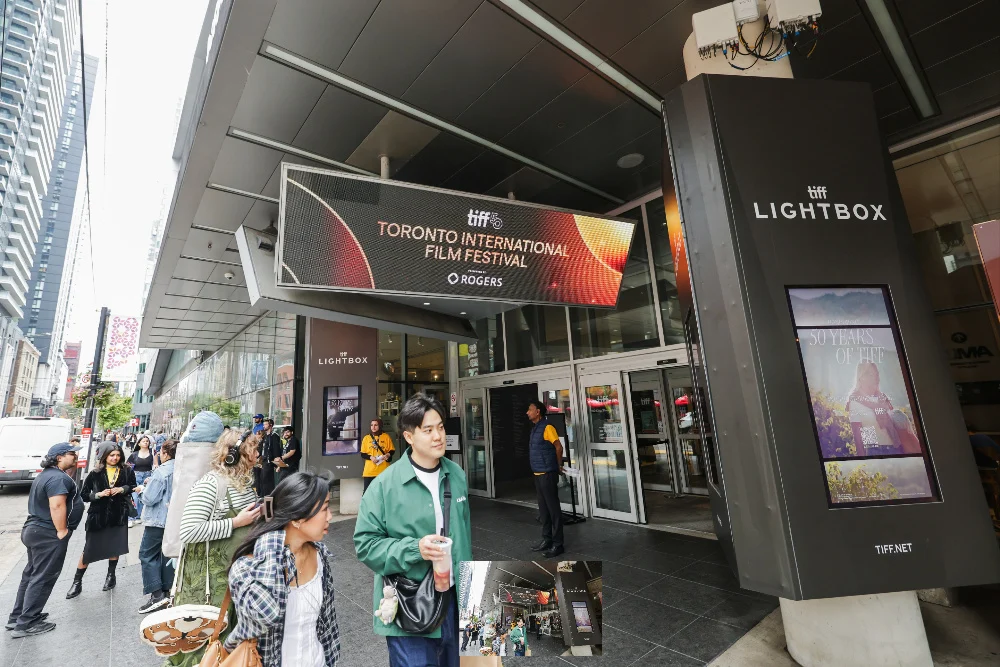
The global film industry is bracing for a tectonic shift in the way international cinema is bought, sold, and promoted. As the Toronto International Film Festival (TIFF) prepares to open its doors this September, the spotlight is shifting from the red carpets of King Street West to the strategic corridors of a brand-new professional hub: TIFF: The Market.
Representing a bold evolution for one of the world’s most influential cultural gatherings, the inaugural market—running from September 10 to 16—has already shattered expectations. With more than 150 sales companies and promotional bodies officially confirmed, the event is signaling that Toronto is no longer just a festival for premiere-seekers; it is now a powerhouse of global commerce.
The Main Facts: A Hub for Global Commerce
TIFF: The Market has officially arrived, and its scale is significant. Designed to integrate seamlessly into the existing festival infrastructure, the market serves as a centralized nexus for international film sales. The confirmed roster of exhibitors reads like a "who’s who" of the independent film world. Industry giants such as Goodfellas, Anton, Playtime, AGC Studios, CAA, Pyramide, XYZ Films, WME, FilmNation, and UTA have all signed on to maintain a physical presence.
The influx of industry professionals is not limited to the selling side. Last week, festival organizers confirmed that more than 130 buyers from 49 countries have already registered to attend. This diverse group of acquisition executives includes heavy hitters such as Metropolitan Film Export, Tobis, Eagle Pictures, and A Contracorriente. By creating a dedicated space for these entities to convene, TIFF is effectively shortening the distance between creative vision and global distribution.
A Chronology of Vision and Execution
The birth of TIFF: The Market did not happen overnight. It is the culmination of years of internal strategic planning by the Toronto International Film Festival leadership, aimed at recapturing the momentum of the autumn festival season.
While Toronto has long been a key destination for sales—frequently serving as the launchpad for Academy Award-winning films—the informal nature of these transactions often left room for improvement. In previous years, deal-making was scattered across hotel suites, private clubs, and crowded coffee shops.
The decision to formalize the market came as the Canadian government recognized the economic potential of the festival. Bolstered by a CAD 23 million ($16.4 million) investment and supported by Telefilm Canada, the project moved from concept to reality with lightning speed. The announcement earlier this year sparked immediate interest, and as the September 10 start date approaches, the organizers have successfully transitioned from a conceptual framework to a fully operational, high-stakes trade bazaar.
Supporting Data: Who Is Coming?
The diversity of the attendees is perhaps the most striking indicator of the market’s early success. Beyond the major Hollywood agencies and European sales houses, the list of confirmed participants showcases a truly global reach:
- Sales Agencies: The lineup includes international powerhouses such as Lucky Number, Filmax, CJ Entertainment, Global Constellation, Finecut, and SND.
- Returning Industry Leaders: Toronto has also confirmed that stalwarts who have traditionally navigated the festival on their own terms—including Lionsgate, Black Bear, Gaumont, Pathé Films, and Embankment Films—are returning to the fold, indicating a shift toward the market’s centralized structure.
- National Film Bodies: A crucial element of the market’s strength is the participation of national film commissions and promotional organizations. These bodies play a vital role in local production and international cultural exchange. The confirmed list features heavyweights such as Screen Australia, the Korean Film Council, Unifrance, ICEX (Spain), European Film Promotion, Unijapan, the BFI (UK), Screen Ireland, the Czech Film Centre, German Films, the Polish Film Institute, the AFCI, and TAICCA (Taiwan).
This high concentration of national bodies ensures that TIFF: The Market will be a focal point for international co-production discussions, not just the buying and selling of finished films.
Official Responses: The Philosophy of the Market
For Charles Tremblay, the head of TIFF: The Market, the goal was never just to add another event to the calendar, but to solve the logistical headaches that have plagued film markets for decades.
"We designed the market to meet the needs of a global sales community seeking more buyer engagement through access to premium screening facilities, cost-effective exhibition solutions, and a compact footprint that reduces travel time and maximizes opportunities for face-to-face meetings," Tremblay stated in a recent press release.
His focus on "compact footprint" and "cost-effective exhibition" speaks to a broader industry sentiment. As travel costs rise and corporate budgets tighten, the efficiency of a festival market has become paramount. By centralizing the market, TIFF is effectively offering a "one-stop shop" experience that respects the time of busy executives, allowing them to maximize their return on investment in the form of completed deals and networking connections.
Implications for the Film Industry
The launch of TIFF: The Market has profound implications for the film industry at large.
1. The Redefinition of the "Fall Festival"
The autumn festival circuit—traditionally dominated by Venice, Telluride, and Toronto—is fiercely competitive. By launching a formal market, Toronto is signaling that it intends to capture more of the business-side traffic that often gravitates toward the American Film Market (AFM) or the European Film Market (EFM) in Berlin. If successful, Toronto could become the definitive destination for high-end acquisitions before the year’s end.
2. Boosting the Canadian Economy
The CAD 23 million investment is a significant bet by the Canadian government. The expectation is that by facilitating international deals, the market will foster stronger ties between Canadian production houses and the global stage. It is an investment in the "soft power" of Canadian culture, ensuring that local talent has a direct line to the distributors who can take their films to global audiences.
3. Streamlining the Buying Process
In an era where streaming platforms and theatrical distributors are constantly shifting their strategies, the ability to engage in face-to-face meetings remains irreplaceable. The market’s emphasis on "premium screening facilities" suggests that TIFF is catering to the demand for high-quality, theatrical-first experiences. It reinforces the idea that despite the rise of digital platforms, the ritual of the "festival screening" remains the gold standard for creating buzz and market value for a film.
4. A Template for Future Festivals
The success of this market could serve as a blueprint for other festivals globally. If Toronto can prove that a compact, well-funded, and centralized market can thrive in the current climate, it may encourage other major festivals to restructure their professional arms to be more efficient and business-oriented.
Conclusion
As September 10 approaches, the industry’s eyes are fixed on Toronto. The launch of TIFF: The Market is a massive undertaking, but the early numbers suggest it is a risk well-calculated. By listening to the needs of the global sales community and providing a professional infrastructure that prioritizes efficiency and accessibility, TIFF is positioning itself to remain the North American epicenter of the film world.
With the backing of the Canadian government, the participation of the world’s most prestigious agencies, and a clear vision from its leadership, the market is poised to become an indispensable component of the annual cinematic calendar. For producers, buyers, and distributors, the message is clear: the conversation has changed, and it is happening in Toronto.
 Asep Darmawan
  Azzam Bilal Chamdy