
 By Nana Muazin
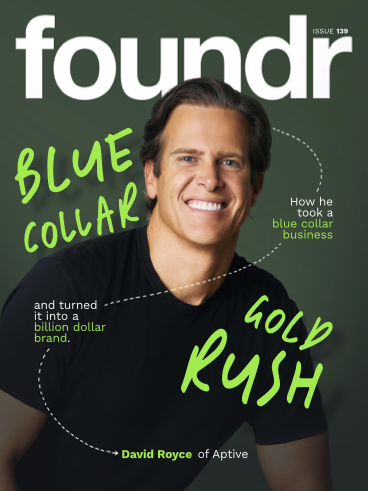
In the high-stakes world of entrepreneurship, the common narrative often fixates on Silicon Valley software unicorns, venture capital funding rounds, and disruptive tech innovations. Yet, David Royce, the founder and chairman of Aptive Environmental, has quietly built a massive fortune by focusing on an industry most finance-degree graduates would ignore: residential pest control.
Royce’s journey is not one of tech-driven disruption, but rather a masterclass in operational excellence, aggressive sales strategy, and the ability to find "sexy" margins in the most mundane sectors. Today, Aptive stands as the third-largest residential pest control service in North America, a testament to Royce’s theory that true business success comes from doing what others refuse to do—for long enough to become the best in the world at it.
The Genesis of a Wealth Builder: From Doubt to Discipline
Long before he was managing nine-figure exits, David Royce was a student who struggled to find his footing. "I struggled in school because I couldn’t focus unless I cared deeply," Royce explains. Without the vocabulary to describe his experience at the time, he assumed he simply wasn’t "smart." It wasn’t until his adult years that he understood he had ADHD—a condition he now views as a "double-edged sword."
"In boring environments, it’s brutal," he says. "But in environments I care about, it’s a superpower."
His turning point came in the sixth grade, courtesy of a teacher named Mrs. Luft. She saw potential in him that he hadn’t yet recognized in himself. That validation ignited a drive for academic performance, but the true crucible of his entrepreneurial spirit would be found on the doorsteps of suburban homes.

The Door-to-Door Crucible
Royce entered the pest control industry by accident, following a friend’s lead. His first week in Sacramento was a disaster. He made zero sales, earning nothing in a commission-only role. While his peers were closing deals, Royce was effectively performing "free cardio."
Rather than quitting, he retreated to a bookstore, purchased a stack of sales literature, and committed 90 minutes every day to deliberate practice. By the end of the summer, he was the top sales rookie in a company of 200. His takeaway? "Persistence is genius in disguise."
Chronology: Building the Empire
Royce’s path to the top was marked by a series of strategic pivots and a relentless focus on the "unsexy."
- The Early Years (College): Royce spent four summers in door-to-door sales, earning enough capital ($300,000) to fund his first venture, bypassing the traditional route of an MBA.
- The First Ventures: Guided by his mentor—who had recently sold his own pest control firm for $10 million—Royce launched his own company. He spent his early days cataloging every pain point his mentor had experienced, effectively shortcutting the learning curve.
- The Cash Flow Crisis: During his first year in Los Angeles, Royce experienced the classic entrepreneur’s trap: he grew too fast. By closing 7,500 accounts—nearly double his target—he faced a massive cash flow deficit because commissions were paid before revenue was realized. He had to negotiate with his team, offering interest on delayed bonuses, a move that solidified his commitment to financial discipline.
- The Aptive Era: Applying the lessons from three previous exits to the same strategic buyer, Royce founded Aptive. He utilized an asset-deal structure, selling the recurring revenue stream while keeping his "golden goose"—his leadership and sales team—intact to start the next iteration of the business.
Supporting Data: The Power of "Boring" Businesses
The perception of "glamour" in business often masks the reality of profitability. Royce points out that many of the wealthiest individuals in the United States operate in industries that are far from the limelight.
"Among the top 0.1% of income earners in the U.S.," Royce notes, "roughly 43% are in what most people would call boring, blue-collar industries."

The math supports this:
- Recurring Revenue: Unlike one-off product sales, pest control offers consistent, predictable revenue models.
- Recession-Proofing: As Royce famously puts it, "Bugs don’t read The Wall Street Journal." Essential services remain essential, regardless of macroeconomic volatility.
- The Generational Wealth Gap: With millions of baby-boomer-owned service businesses facing a lack of succession, the market is ripe for consolidation by those who understand modern operational efficiency.
Official Insights: The Pillars of Aptive
When asked how he managed to grow seven to ten times faster than the industry average, Royce highlights three specific pillars that form the spine of his operations.
1. The Sales Machine
Aptive turned sales into a high-octane, gamified process. By utilizing proprietary software and nationwide tournaments, they lifted productivity by 30% on peak days. Reps switching to Aptive from competitors frequently saw a 70% increase in production, proving that the system, not the individual, was the driver of success.
2. The "RAC" Methodology
Training at Aptive is built on clear, actionable scripts:
- Option Closes: Moving away from yes-or-no questions to "three or five, which works better?"
- RAC: Resolve the doubt, provide an "ace" (a new piece of information), and close again.
- Non-Verbal Communication: Royce taught his team that their body language often sabotaged them before they spoke. "You’re not losing because your script is bad; you’re losing because your face is saying ‘please don’t hurt me.’"
3. Culture as Design
Royce eschewed the "ping-pong table" version of culture, opting for genuine investment in his people. He famously gave away 25% of his company to employees. When the business scaled to $500 million in annual revenue, this equity distribution resulted in life-changing payouts for his staff, effectively eliminating the need for gimmicky retention tools.

Implications: Knowing When to Stop Being the Hero
Perhaps the most challenging aspect of Royce’s career was the transition from "hero" to "architect." As the founder, the impulse to micromanage is a constant threat to growth.
The Cost of Executive Misalignment
Royce candidly discusses a failure involving a high-level CFO hire. By bringing in an executive from a "billion-dollar tech company" who lacked an understanding of the granular, day-to-day cash flow of a service business, Royce’s company missed forecasts during a critical sales process.
The lesson was twofold:
- Trust but verify: Never assume a resume replaces the ability to run the specific mechanics of your business.
- Market Readiness: A failed exit is not a permanent defeat; it is a diagnostic tool that reveals exactly what buyers are looking for.
The Role of the Architect
Royce’s ultimate success came when he stepped aside as CEO, replacing himself with a protégé he had trained for over a decade. He realized that if a business cannot function without the founder’s daily intervention, the founder has not built a company—they have built a dependency.
"I had to stop being the hero and start being the architect," Royce says.
Conclusion: The Summit is a Moving Target
Looking back at twenty years of building, selling, and scaling, David Royce maintains that entrepreneurship is less about the final dollar amount and more about the character forged in the climb.
"Success has always been a moving target," he reflects. When asked about the "number" needed for financial freedom, he suggests that the answer is always "just a little more." For those looking to replicate his success, the path is clear: stop seeking the "impressive" industries and start seeking the ones that provide the most value.
In a world obsessed with the next big digital disruption, David Royce stands as a reminder that there is still massive wealth, innovation, and leadership to be found in the service of the home—provided you are willing to do the work that everyone else is trying to avoid.
 Neng Nana
  Basiran
  Azzam Bilal Chamdy