
 By Pevita Pearce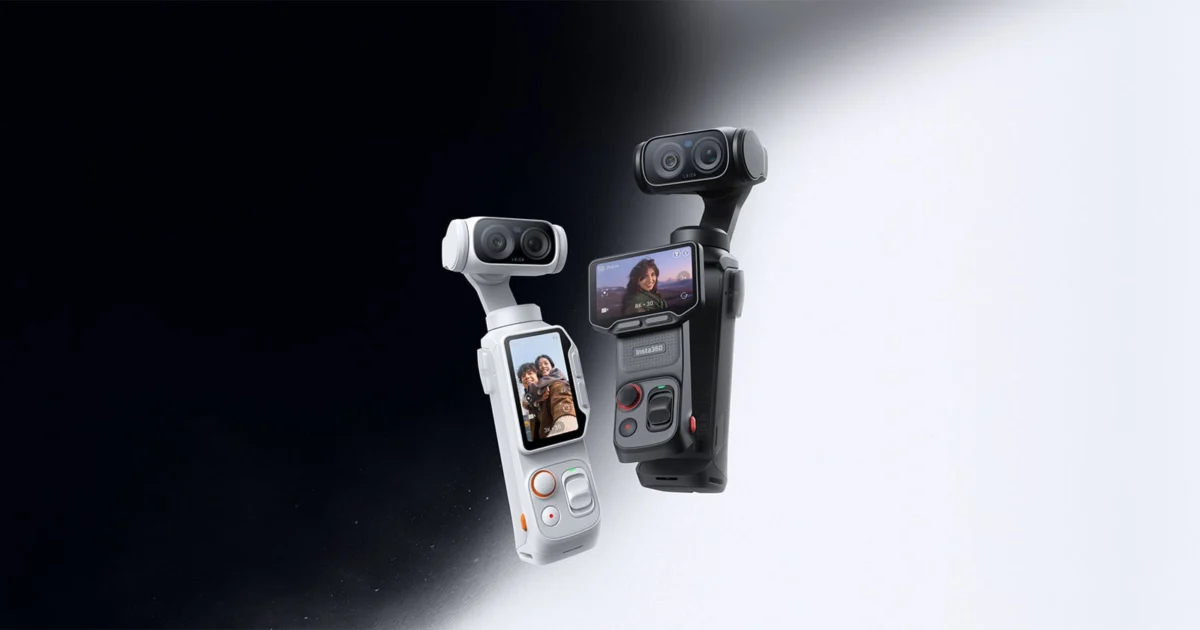
In the rapidly evolving landscape of consumer electronics, camera companies have spent decades obsessed with the "arms race" of technical specifications: higher megapixel counts, increased frame rates, and larger sensor sizes. However, at the helm of Insta360, CEO Liu Jingkang—widely known as JK Liu—is pivoting the industry toward a radically different North Star. His goal is not to build a more powerful camera, but rather to build a camera that eventually disappears entirely.
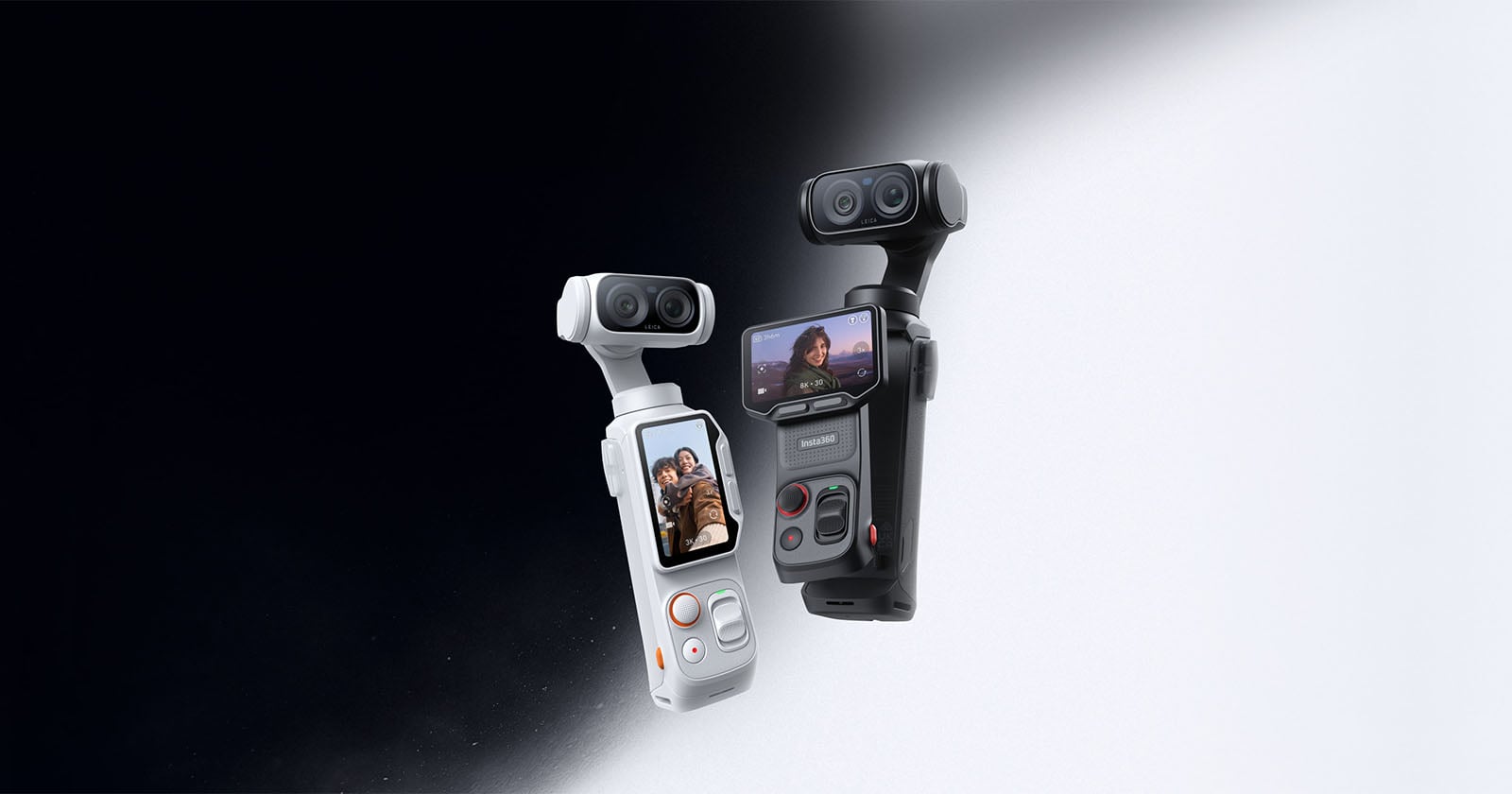
Following the recent launch of the Insta360 Luna and the flagship Luna Ultra, Liu has articulated a philosophy that challenges the very premise of modern photography: he believes that users should be able to "forget cameras even exist."
The Genesis of a Philosophical Shift
The inspiration for this shift was not born in a sterile laboratory, but in the chaos of a real-world experience. During a personal trip last year, Liu was testing a prototype of the Luna Ultra when he encountered an enthralling street performance. He instinctively pulled out the device to record, but quickly found himself trapped behind the monitor.
"Instead of enjoying it, I spent the whole time looking at the monitor, worried about losing the subject or missing the frame," Liu revealed in an exclusive follow-up with PetaPixel. "That moment stayed with me because it exposed a real tension in imaging: I picked up the camera because I didn’t want to miss the moment, but by focusing on the camera, I missed it anyway."
This realization serves as the cornerstone of Insta360’s current product roadmap. It is the driving force behind features like the "POV Tracker" for the Luna Ultra, which allows the device to follow a user’s head movements and capture footage hands-free. For Liu, the ultimate objective is to remove the "operator" from the equation, allowing the technology to act as a surrogate professional cinematographer.
Chronology of a Vision: From Hardware to Intelligence
The evolution toward the "autonomous cameraman" has been a deliberate, multi-year journey for Insta360.
- The Foundational Years: Since its inception over a decade ago, the company focused on 360-degree imaging. Unlike traditional cameras that capture a "keyhole" view of reality, 360-degree systems record the entire environment. This provided the raw spatial data necessary to eventually train AI models.
- The Era of Computational Imaging: As the company matured, it introduced "FlowState" stabilization and "shoot first, frame later" workflows. These were not merely gimmicks; they were critical steps in decoupling the act of recording from the act of composition.
- The AI Integration Phase: With the arrival of the Luna series, the focus shifted from raw hardware to on-device intelligence. By leveraging AI to understand depth, motion, and subject intent, the cameras began to take on the cognitive load of a human operator.
- The Future Horizon: The company is currently investing heavily in "panoramic depth foundation models" and "Diffusion Transformer" architectures, aiming to move beyond simple tracking into true scene comprehension.
The Pillars of the "Future Cameraman"
To achieve the goal of a fully autonomous imaging system, Liu identifies three non-negotiable pillars: the ability for a camera to see, understand, and act.
Seeing: The Importance of Full Context
Traditional cameras are constrained by their field of view. If the subject leaves the frame, the moment is lost. Liu argues that 360-degree imaging is the only logical foundation for an autonomous system because it preserves the entire scene. By capturing everything, the camera (and its AI brain) can retrospectively choose the best angle, tracking the action even if the user didn’t point the device perfectly in the moment.
Understanding: Spatial Intelligence
Recording pixels is insufficient; a modern camera must possess "spatial intelligence." It needs to understand the relationship between objects, the depth of the environment, and the intent of the subjects. This is where the integration of 3D Gaussian Splatting (3DGS) and deep-learning models comes into play. The camera is being taught to perceive the scene as a human would, identifying what is "important" versus what is background noise.
Acting: Real-Time Execution
A cameraman is only as good as their reaction time. The system must process data in real-time, predicting movement and adjusting composition instantly. If there is latency, the illusion of an autonomous partner breaks. Insta360 is currently optimizing its hardware-software synergy to ensure that these filming decisions—composed, stabilized, and focused—happen at the speed of life.
Supporting Data and R&D Investment
While skeptics might view the "autonomous cameraman" as a marketing abstraction, the technical foundation Insta360 is building suggests a concrete path forward. The company is no longer just a camera manufacturer; it is increasingly a software and AI research firm.
Insta360’s current R&D focuses on three specific frontiers:
- Panoramic Depth Foundation Models: These models allow the device to build a 3D map of its surroundings, which is essential for obstacle avoidance and sophisticated subject tracking.
- Diffusion Transformer Architecture: By applying generative AI architectures to video, the camera can better predict lighting, texture, and motion patterns, allowing it to "anticipate" where the action will go next.
- Unified Monocular 3DGS: This allows the device to reconstruct 3D environments from a single lens, significantly reducing the complexity and size of the hardware while maintaining professional-grade spatial awareness.
These technologies are already appearing in "hidden" ways within existing products. Every time a user employs automatic editing or AI-powered subject tracking, they are interacting with an early iteration of this perception system.
Implications for the Creative Industry
The transition toward autonomous imaging raises significant questions for the future of professional photography and videography. If a camera can frame, focus, and track as well as a human, what becomes the role of the creator?
Liu’s response is optimistic: he believes the technology will expand the creative palette rather than diminish it. By offloading the "mechanics of capture" to the camera, the creator is free to focus on the "content of the moment."

"The best technology doesn’t ask for your attention. It gives it back," Liu says.
This philosophy suggests that the next generation of creative tools will be defined by their ability to reduce friction. In this vision, the camera becomes an active creative partner—an extension of the user’s intent rather than a tool they must master. For professionals, this could mean the automation of tedious tasks like multi-cam synchronization or complex tracking shots, allowing them to focus on storytelling and directorial choices. For the casual user, it means finally being able to participate in their own memories without the constant interruption of equipment management.
Conclusion: The Ultimate Goal
The tension between "living the moment" and "recording the moment" has haunted photography since the first daguerreotype. By attempting to solve this through AI and robotics, Insta360 is aiming for the holy grail of tech: the invisible interface.
As we look toward the next five years of imaging, the definition of a "better" camera will likely change. It will no longer be measured by the sharpness of its glass or the speed of its sensor, but by its ability to perceive the world with "taste."
While a fully autonomous, robotic cameraman that follows you through life remains a goal for the future, the building blocks are already in our pockets. We are witnessing the slow death of the "camera" as a standalone object and the birth of the "perception system." As JK Liu puts it, the goal is simple: the best camera is the one that disappears. When the equipment stops demanding our attention, we are finally free to record the world exactly as we experience it.
 Raul Delapena Setiawan
  rifanmuazin
  Ammar Sabilarrohman