
 By rifanmuazin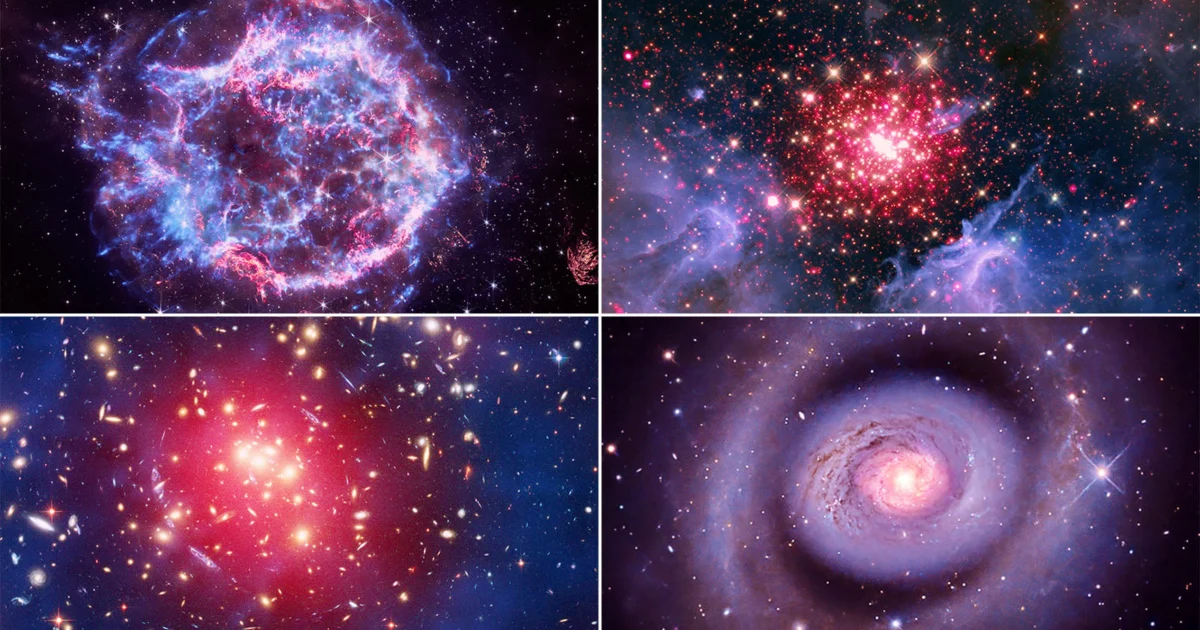
As the United States reaches its historic 250th anniversary, NASA has looked beyond the terrestrial celebrations to commemorate the milestone with a gift from the heavens. In a stunning display of scientific prowess and artistic mastery, the agency has released four new composite images from the Chandra X-ray Observatory. These images, rendered in a resplendent palette of red, white, and blue, do more than just pay homage to the American flag—they offer an unparalleled look into the violent, creative, and mysterious processes that govern our Universe.
By blending high-energy X-ray data with infrared, optical, and ground-based observations, NASA’s imaging team has created a visual narrative that bridges the gap between the invisible forces of space and the human eye.
The Four Wonders: A Deep-Space Retrospective
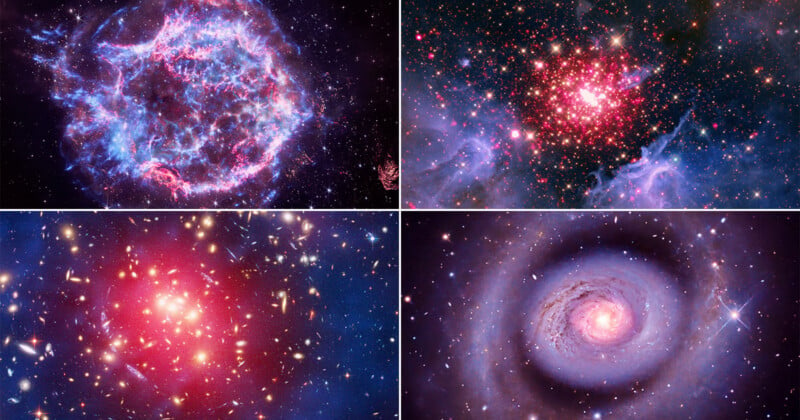
The four images released by NASA feature "cosmic heavy-hitters," each selected for its scientific significance and visual grandeur. These targets represent different stages of stellar life and galactic evolution.
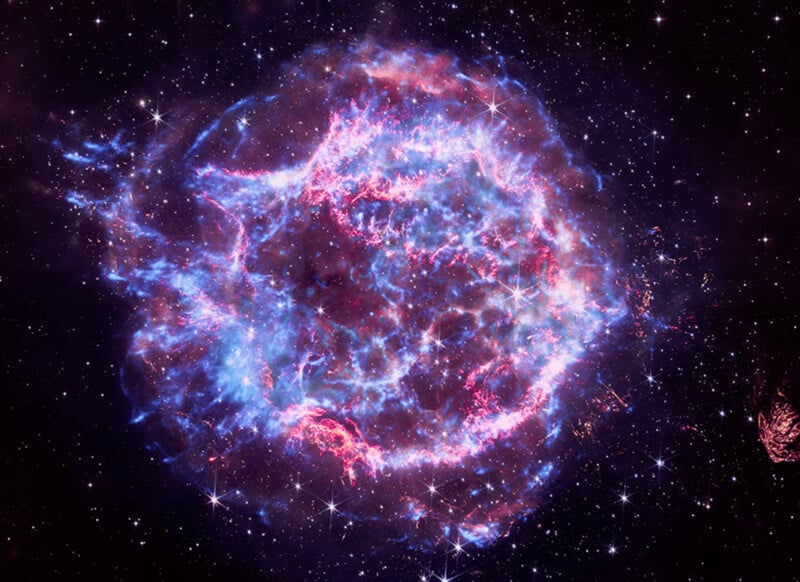
1. Cassiopeia A: The Aftermath of Destruction
The first image captures Cassiopeia A, the remnant of a supernova explosion that occurred centuries ago. By combining Chandra’s X-ray data—depicted in shades of deep blue and purple—with the infrared clarity of the James Webb Space Telescope (JWST) in red and white, scientists have mapped the anatomy of a stellar death.
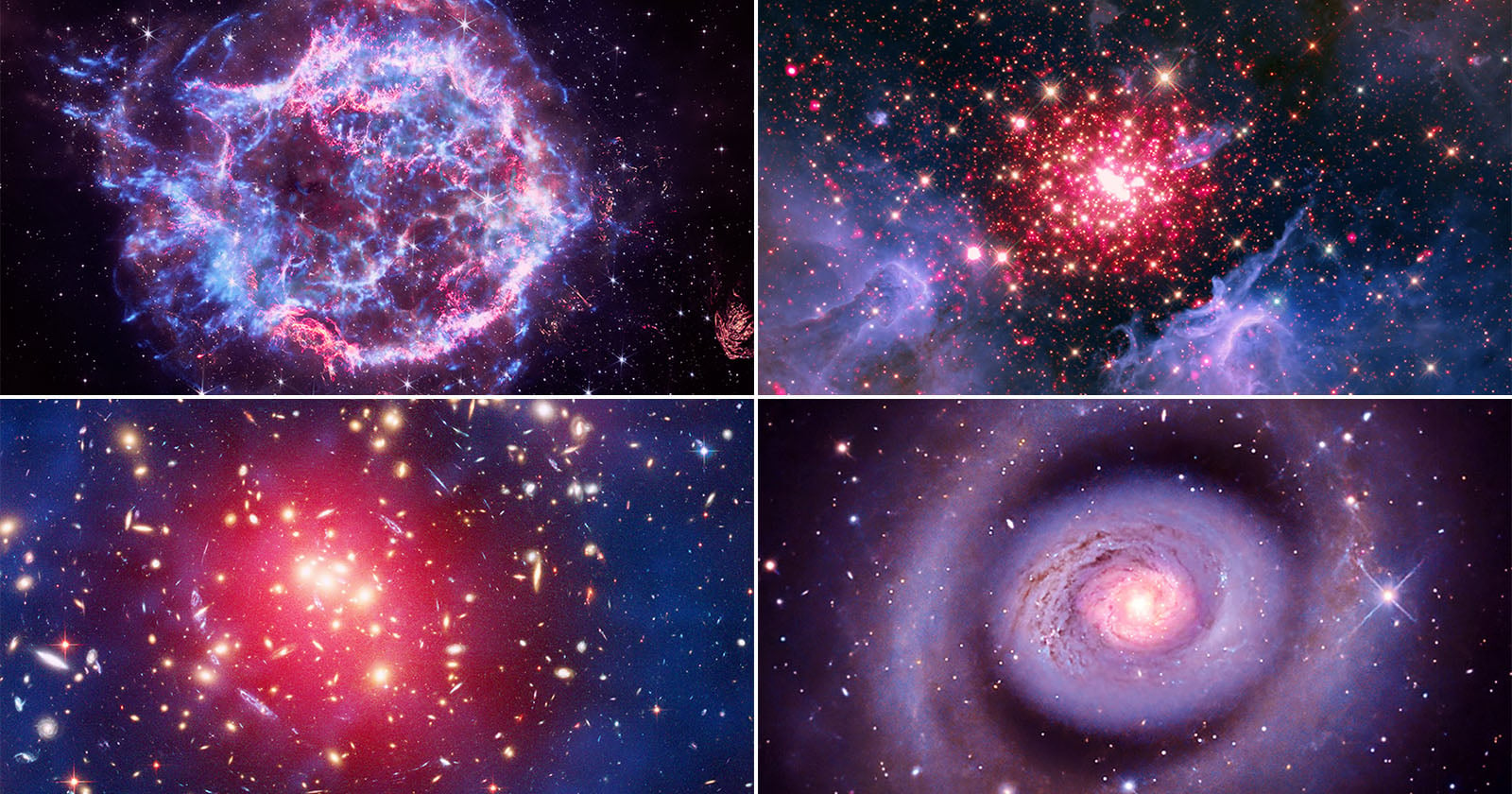
NASA explains that Chandra’s X-ray vision reveals the high-energy blast wave that shredded the star, alongside heavy elements such as iron, calcium, and silicon. Meanwhile, Webb’s infrared instrumentation captures the expanding shell of debris and the cooling cosmic dust, painting a comprehensive picture of how stars recycle their material back into the galaxy.
2. NGC 3603: The Stellar Nursery
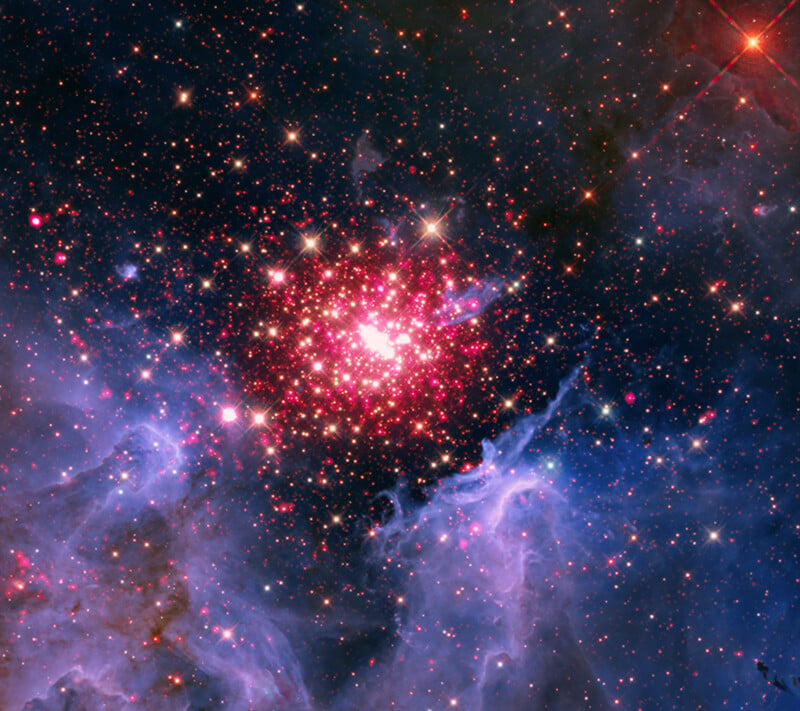
Located deep within the Carina spiral arm of the Milky Way, NGC 3603 serves as a stark contrast to the destruction seen in Cassiopeia A. Often described by astronomers as a "colossal star factory," this region is one of the most active nurseries in our galaxy.
In this composition, the central portion—captured by Chandra—glows in a fiery red, representing the dense, sparkling swarm of young, massive stars. The surrounding "pillars" of gas and dust were captured via Hubble’s optical imaging, showing the raw materials from which new suns are born. It is a portrait of cosmic potential, showing the relentless cycle of birth that keeps our galaxy vibrant.
3. Messier 94 (NGC 4736): The Spiral Starburst
Messier 94 is a striking spiral galaxy known for its distinct "starburst ring." In a unique collaborative effort, this image synthesizes X-ray data from Chandra with visible light observations provided by citizen scientists. By utilizing ground-based telescope data, the image displays the galaxy’s structure in a vivid blend of red, green, and blue. The starburst ring, a bright inner band of intense stellar formation, acts as the heart of the galaxy, where gas is being compressed to ignite new generations of stars at a furious pace.
4. ZwCl 0024+1652: The Dark Matter Enigma
Rounding out the quartet is a look into the extreme distance of the cosmos. ZwCl 0024+1652 is a galaxy cluster that has long been a focal point for researchers studying the "invisible" side of the Universe: dark matter.
This composite uses processed data from Chandra (red) and Hubble (blue and yellow) to reveal a vast reservoir of superheated gas trapped within the gravitational well of the cluster. The existence and distribution of this gas, coupled with the gravitational lensing effects captured by Hubble, provide direct evidence of the dark matter that acts as the "glue" holding this gargantuan structure together.
Chronology of Cosmic Discovery
The Chandra X-ray Observatory, launched in 1999 aboard the Space Shuttle Columbia, has spent over a quarter-century fundamentally altering our understanding of the high-energy Universe. The creation of these commemorative images is the culmination of years of data acquisition and processing.
- 1999–2005: The initial deployment and calibration of Chandra allowed scientists to identify the primary targets for long-term study, including the remnants of supernovae like Cassiopeia A.
- 2006–2015: The era of multi-wavelength synthesis. Astronomers began combining Chandra’s X-ray data with Hubble’s optical imagery, allowing for the first "true-color" representations of complex clusters like ZwCl 0024+1652.
- 2021–2025: The integration of the James Webb Space Telescope. The addition of JWST’s infrared capabilities has allowed for unprecedented detail in imaging, particularly regarding the dust and cold molecular gas found in star-forming regions like NGC 3603.
- July 2026: To mark the 250th anniversary of the United States, NASA’s Chandra X-ray Center officially released this curated "Red, White, and Blue" collection, representing the pinnacle of two and a half decades of observational synergy.
The Science of Sonification: Turning Data into Sound
In an innovative leap, NASA has not only provided visual representations but has also introduced "sonification" for three of these images. This process involves translating the digital data points of the telescope images—specifically their brightness, location, and energy levels—into audio frequencies.
This technique is part of a broader push to make astrophysics more accessible. By mapping the "brightness" of the data to pitch and volume, listeners can hear the "sparkling" of stars in a cluster or the "roar" of a supernova remnant. It transforms the cold, silent data of space into an immersive auditory experience, allowing for a sensory exploration of the Universe that transcends the limitations of traditional imagery.
Official Responses and Scientific Context
Dr. Kimberly Arcand, the visualization lead for NASA’s Chandra X-ray Center, noted that the project was specifically curated to highlight the aesthetic beauty of scientific data. "When we process these images, we are looking for the ‘Red, White, and Blue’ of the Universe—the iron and oxygen, the cooling gas, and the intense radiation of young stars," she stated in a recent press briefing.
The scientific community has lauded the release, noting that these images are not merely "pretty pictures." Each represents hundreds of hours of exposure time across multiple platforms. By layering the infrared data from Webb with the high-energy X-rays from Chandra, researchers can perform "multi-messenger" astronomy, identifying exactly where heavy elements are being synthesized and dispersed into the interstellar medium.
Implications: Why These Images Matter
The release of these four images carries profound implications for both the public and the scientific community.
Democratizing Science
By involving data from citizen scientists—as seen in the Messier 94 image—NASA is signaling a shift toward more participatory research. The ability for amateur astronomers to contribute data that is then professionally processed and presented alongside NASA’s flagship observatory data underscores the growing power of the global astronomy community.
Understanding Our Origins
These images are not just distant lights; they are the history of the materials that make up our planet and our bodies. The "elements in the debris field" mentioned in the Cassiopeia A data—iron, calcium, and oxygen—are the exact same elements found on Earth. As NASA frequently reminds the public, we are quite literally made of stardust. Seeing the violent events that forged these elements provides a humbling perspective on the history of the cosmos.
Looking Toward the Future
The 250th anniversary celebration is also a bridge to the future. As NASA moves toward new missions and potentially new X-ray observatories, the work done by Chandra remains the foundation upon which future discoveries will be built. The agency’s ability to weave together disparate data sources into coherent, understandable, and stunning imagery ensures that the public remains engaged with the costly, complex, and essential work of space exploration.
In conclusion, these four images serve as a testament to human ingenuity. They reflect a quarter-millennium of American history, mirrored by a quarter-century of humanity’s most sophisticated effort to listen to, look at, and understand the vast, dark, and beautiful expanse that surrounds us. As the United States looks forward to its next 250 years, the mysteries captured by the Chandra X-ray Observatory stand as a reminder that there is always more to discover, more to learn, and always more to explore.
 Raul Delapena Setiawan
  Ammar Sabilarrohman