
 By Ammar Sabilarrohman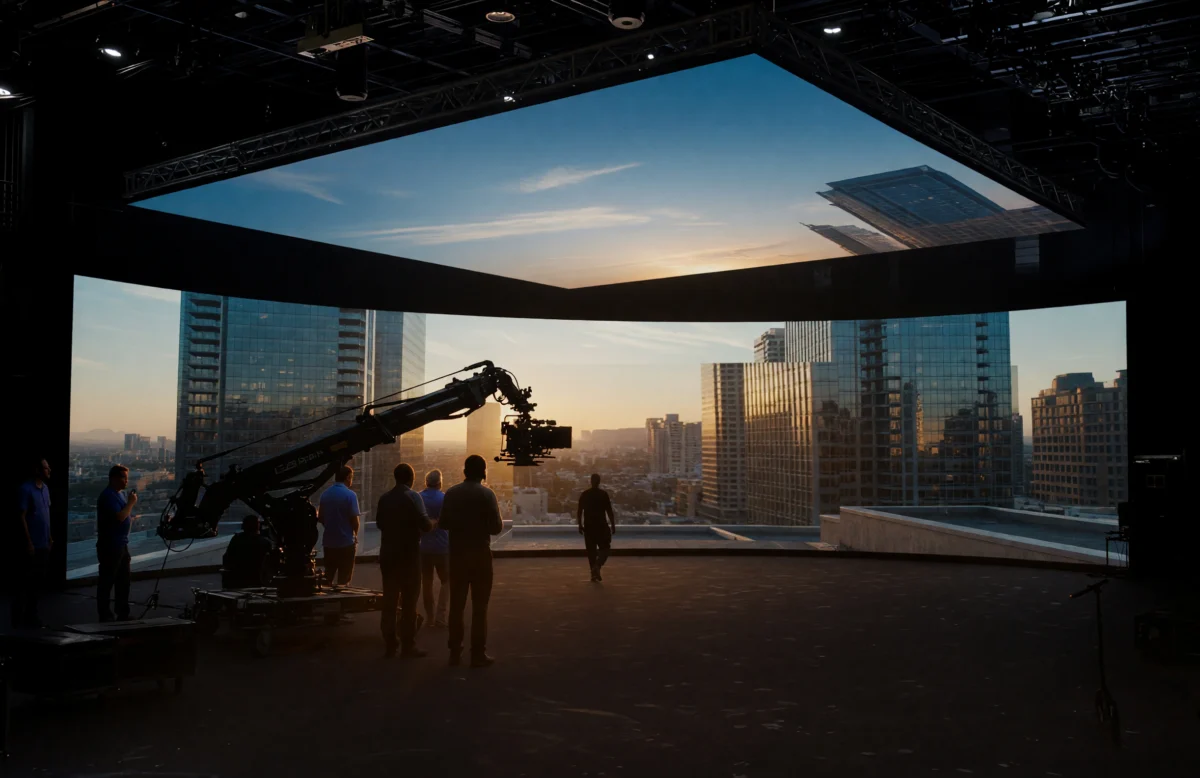
In a strategic move designed to anchor the future of entertainment within the historic heart of Los Angeles, Television City has announced a landmark partnership with Orbital Studios. The collaboration will see the installation of a state-of-the-art virtual production LED volume at the iconic 7800 Beverly Boulevard lot. This infusion of cutting-edge technology into one of Hollywood’s most storied production facilities represents a significant attempt to modernize the industry’s infrastructure while simultaneously combating the growing trend of “runaway production.”
The Evolution of 7800 Beverly: Merging History with Future-Tech
Television City, an architectural and cultural landmark that has served as the cradle for decades of American television history, is undergoing a profound transformation. By integrating an industry-leading LED volume, the studio is signaling a shift from traditional set-building to the immersive, real-time capabilities of virtual production.
Virtual production, which utilizes high-resolution LED screens to display photorealistic environments in real-time, allows filmmakers to capture complex exterior scenes without the logistical hurdles of location shooting. This new volume at Television City is built to the highest technical standards, ensuring that it can support a wide array of projects—from intimate indie dramas to massive, effects-heavy blockbusters.
A Chronology of Innovation
The partnership between Television City and Orbital Studios is the culmination of a broader industry shift toward digital integration.
- The Rise of Virtual Production (2019-2022): Following the success of pioneering virtual sets in series like The Mandalorian, the industry saw a rapid adoption of LED volumes. Studios globally began investing heavily in “The Volume” technology to reduce travel costs and improve visual fidelity.
- The Los Angeles Challenge (2022-2023): As production hubs like Georgia, New Mexico, and Canada gained traction through tax incentives, Los Angeles faced a crisis of identity and economic stability.
- The Orbital Pivot (2023): Orbital Studios solidified its reputation as a leader in the field, working on high-profile projects such as Justified: City Primeval and the ambitious World War II with Tom Hanks. Their success in digital environment recreation caught the attention of the leadership at Television City.
- The Formalization (2024): Television City announced the partnership, marking the beginning of a site-specific installation that aims to marry the "weight of the past" with the "possibilities of the future."
The Technological Edge: How Orbital is Changing the Workflow
Orbital Studios has distinguished itself not merely by owning LED screens, but by their prowess in digital environment creation and AI-assisted workflows. Their recent work on the Netflix series Nemesis stands as a testament to their technical capability; the team successfully rebuilt vast swathes of downtown Los Angeles using precise digital scans. This process allowed the production to film in a controlled studio environment while maintaining the hyper-realistic look of the city’s actual streets.
The technology at Television City will feature a seamless integration of high-fidelity LED panels, motion-tracking cameras, and game engine software. This setup allows directors to see the final composition in-camera during the shoot, eliminating the "fix it in post" mentality that has plagued productions for years. By leveraging AI artists and advanced real-time rendering, Orbital provides a comprehensive ecosystem that goes beyond hardware—it is a full-service creative partnership.
Official Responses: Bridging the Legacy-Technology Divide
The stakeholders behind this project are acutely aware of the cultural gravity inherent in the Television City lot. Anthony Mazziotti, the executive director of stage operations and marketing at Television City, expressed profound optimism regarding the partnership.
“We could not be more excited to welcome Orbital Studios to Television City,” Mazziotti stated. “Their work puts this lot among the most advanced production environments anywhere, while honoring everything these stages have stood for. This is exactly the kind of partnership that keeps Television City both iconic and essential.”
A.J. Wedding, the founder and CEO of Orbital Studios, echoed these sentiments with a focus on the responsibility of operating within such a legendary space. “Walking these stages, you feel the weight of what was made here,” Wedding remarked. “Generations of crews poured everything they had into these rooms. That legacy makes us determined to get it right. We’re bringing the latest in virtual production technology and the most talented virtual art and AI artists inside spaces that helped define American television, because the best way to honor a storied place is to make sure the next great stories happen there, too.”
Economic Implications: Fighting Runaway Production
Perhaps the most significant aspect of the Television City-Orbital deal is its economic strategy. For years, the "runaway production" phenomenon has seen California-based crews and vendors lose significant work to international and domestic competitors that offer aggressive tax incentives.
By enabling productions to replicate any global location—from the streets of Paris to the Martian surface—within the Fairfax District, this partnership provides a compelling alternative to travel. If a showrunner can capture the "look" of a foreign location in a Los Angeles studio, the production remains in California. This keeps crew jobs, equipment rental dollars, and post-production spending within the local economy, potentially serving as a stabilizer for the local labor force.
Supporting Data: The Scope of Orbital’s Ambition
Orbital Studios’ portfolio provides a clear roadmap of their capability. Their current production slate, which includes the FX series The Drop: A Snowfall Saga, showcases a commitment to high-stakes, high-quality storytelling. Previous credits highlight their versatility:
- Justified: City Primeval: Utilizing virtual production to maintain the gritty, authentic feel of the Detroit-based narrative.
- History’s Greatest Heists: Demonstrating the ability to use LED volumes for historical recreations.
- World War II with Tom Hanks: A complex 20-part docuseries that required massive scale and historical accuracy, proving that Orbital can handle the logistical demands of premium documentary filmmaking.
These credits serve as a proof-of-concept for the new facility at Television City. The studio is not merely testing a new system; they are importing a proven, high-functioning workflow into one of the industry’s most high-traffic nodes.
The Road Ahead: What This Means for Filmmakers
For producers, directors, and cinematographers, the arrival of this volume at Television City creates a new nexus for creative efficiency. The primary benefits include:
- Reduced Travel Costs: Massive savings on location scouting, permits, and international logistics.
- Creative Control: The ability to manipulate weather, lighting, and time of day instantaneously, independent of the real-world clock.
- Collaborative Workflow: The integration of art, visual effects, and cinematography into a single phase, fostering a more unified vision for the project.
- Preservation of Local Jobs: Maintaining the viability of the L.A. studio system as a global competitor.
Conclusion
The partnership between Television City and Orbital Studios is more than just a tech upgrade; it is a defensive and offensive maneuver for the Los Angeles entertainment industry. As the line between physical set construction and digital environment creation continues to blur, studios that fail to adapt risk becoming relics. By embedding this technology into the bedrock of Television City, the stakeholders are ensuring that the future of Hollywood remains in Hollywood.
The "weight of the past" mentioned by A.J. Wedding is now being used as the ballast for a new era. As The Drop and other future productions utilize this facility, the industry will be watching closely to see if this model can effectively reverse the tide of production flight. If successful, the LED volume at 7800 Beverly Boulevard will stand as the blueprint for how a legendary studio can reinvent itself for the next century of storytelling.
 Siti Muinah
  Layla Zulfa